Archive by Author

Stogie Reviews: Benchmade Cazadore

8 Feb 2011

When I reviewed this bargain smoke shortly after its introduction in 2008, I wondered whether Don Pepin Garcia’s operation would be able to maintain consistency and quality in a mixed-filler cigar. Based on several recent examples, I needn’t have worried.

The latest Benchmade is every bit the cigar its predecessors were and still manages to come in with a price tag under $3. Frankly, I found no more difference in this line over time than in most long-filler cigars that cost two or three times more. Mind-boggling.

For those who haven’t tried this cigar, here are the basics: It’s a Nicaraguan puro made in five sizes by Pepin for Ashton. The Cazadore is 6.5 inches with a ring gauge of 46. All have pigtail caps and are said to utilize some long-filler at the head to minimize tobacco bits on the tongue common to short-filler cigars.

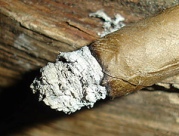
As you’d expect, the burn is fairly quick, the draw is loose, and the ash doesn’t hold particularly well. You’ll need to smoke slower than with a long-filler cigar or you’ll almost certainly overheat the tobacco and spoil the taste. The Benchmade has some of the taste and pepper found in many of Pepin’s sticks, but lacks the complexity, smoothness, and depth of his top lines.

This isn’t the cigar you’ll reach for when you want to sit quietly and luxuriate in a great smoke or celebrate a milestone in your life. But if you’re looking for one to enjoy on the golf course or to get you through watching the fourth quarter, you could hardly do better.

As I did before, I continue to recommend you give it a try, and give the Benchmade Cazadore three and a half stogies out of five.

[To read more StogieGuys.com cigar reviews, please click here.]

George E

photo credit: Stogie Guys

Stogie Commentary: Don’t Go Untreated

1 Feb 2011

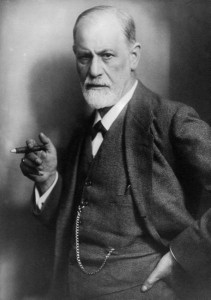
With a self-diagnosis the other day, I discovered that I suffer from two cigar maladies: extreme aging disorder (EAD) and specialosis occasionism (SO).

These conditions can induce feelings of confusion and indecision, create overcrowded humidors, and limit smoking enjoyment. Perhaps you, or someone you know, is afflicted by one or both of these and may not even be aware of it. But don’t despair. There is hope. These infirmities can be cured.

Bear in mind that EAD and SO are related and can strike individually or in unison. And, like many dangers, they often start with good intentions, only to later develop into full-blown maledictions.

First, let’s look at EAD. Those who are afflicted often say something like this: “Oh, no, I can’t smoke that. It’s aging.” This despite the fact that the cigars in question have been in the humidor since Jimmy Carter was in the White House.

Aging cigars, of course, isn’t a bad thing in and of itself. However, what happens with a person suffering from EAD is that the part of the brain that recognizes cigars are supposed to be smoked becomes crippled.

This change can be charted with brain scans and sometimes leads to the individual morphing from a cigar smoker to a cigar collector. Their humidors are often stuffed with names such as Opus X, Cuban Montecristo, and Padrón Anniversary.

Sufferers of SO usually have a far-off look in their eye as they anticipate something like a wedding, anniversary, or special birthday. Such occasions are the only time they’ll light up a high-quality stick. “Oh, no, I’m saving that one,” you may hear them say when they open their humidor.

Just like their brethren beset by EAD, those with SO sustain brain changes, too. It’s just in a little different spot, the area that controls the capacity to enjoy the 350 or so days each year that have no major significance.

Now, let’s talk about cures. They can be simple and effective, especially when applied consistently.

When faced with EAD, the first step is to ask forcefully: “Which one do you want to get too old to smoke first: you or your cigars?” Then point out that some cigars don’t improve with age. Finally, lift a cigar from the box and gently say, “Even as you smoke this one, all the others are still getting older.”

For those with SO, the prescription is considerably simpler. Apply and repeat as necessary: “A great cigar makes any day a special occasion.”

Though EAD and SO can be serious conditions, in most cases they can be treated successfully. And, of course, success should be celebrated with a cigar.

George E

photo credit: Wikipedia

Stogie Reviews: Alec Bradley Family Blend VR1

24 Jan 2011

There are a few cigar makers whose products I rarely pick up. Sometimes it’s because they market so many different sticks I can’t remember which ones I like and which ones I don’t; sometimes it’s because I’ve smoked a number of their cigars and didn’t find any appealing, so I gave up.

Alec Bradley falls into the second category. My experience with The Freak was typical: “I certainly wouldn’t call this a bad cigar; it’s just not a cigar I’m particularly interested in smoking again.”

But after reading and hearing good things about the Family Blend, including a rank of 16 in Cigar Aficionado‘s best cigars of 2009, I thought I’d give it a try. According to Alec Bradley’s website, the cigars were created “expressly” for the fathers of the firm’s three top execs. I’ve read also that they were handed out, unbanded, at events. Initially, only a robusto (5.5 x 50) was produced. Now, there are four other sizes (though the website still says it’s only available as a robusto).

The blend combines Honduran and Nicaraguan filler tobaccos with an Indonesian binder and a Honduran wrapper. Purchased as a single, the robusto, known as the VR1, sells for about $6.50. I’ve smoked a couple of robustos, the MR23, and the six-inch BX2.

I found all similar in taste, appearance, and performance. Each experienced minor burn problems along the way, with none burning straight from beginning to end and at least two requiring relights. The sticks also produced fairly thin, light smoke.

Unfortunately, I find myself with thoughts similar to those I had for The Freak: an OK cigar, but not particularly interesting or compelling. I wanted to smoke a few Family Blends before reaching any conclusions, and I feel I have done that. My conclusion: I don’t plan to smoke any more.

Again, this isn’t a bad cigar. Just not one that appeals to me. Obviously, others feel differently and you might, too. For me, though, it fits squarely in the three stogies out of five rating range.

[To read more StogieGuys.com cigar reviews, please click here.]

George E

photo credit: Ning

Stogie Commentary: A Reviewer’s Dilemma

17 Jan 2011

The other day I lit up a cigar I was looking forward to: a Los Blancos Nine Torpedo with a dark wrapper that’s said to be used just before turning to a full maduro.

The pre-light aroma was enticing and, when lit, the Nine produced lots of smoke and the six-inch stick burned slowly. From what I’d heard and read, I anticipated a ligero-powered, Nicaraguan sizzler.

Nope. What I found was a bland, one-dimensional cigar about which the only noticeable element I could find was a spicy finish. And therein lies my dilemma, expressed in a simple question with a not-so-simple answer: Do I want to review the Nine? There are any number of issues to consider.

First, I’d have to smoke at least a couple more because it wouldn‘t be fair to judge the cigar by one stick. I might want to seek them out at different shops, since it’s possible the box from which my Nine came had experienced some problem. That means I’d spend about $8.50 each for at least two more Nines and, perhaps more importantly, spend time going through cigars I probably won’t enjoy—two times. Since I rarely smoke more than one cigar a day, that means something to me.

The upshot of all this is that, while I’m always on the lookout for new cigars and a pretty high percentage of those I light up are done so with the idea of a review, in many cases it goes no further than the initial experience.

Here at StogieGuys.com, we take our reviewing seriously, and we try to be transparent. On the site, you’ll find a clear explanation of our ratings system. And earlier this year, one of my colleagues wrote at length about the nature of reviews.

I hope this sheds a little more light on the process.

George E

photo credit: Flickr