Archive by Author

Commentary: Big Questions for the 2015 Cigar Trade Show

16 Jul 2015

IPCPR15

On Friday I’ll be flying to New Orleans for the annual International Premium Cigar & Pipe Retailers Association (IPCPR) Trade Show. It’s always a flurry of activity, not to mention a great way to take the pulse of the cigar industry and see many friends.

We’ll have lots of coverage (check back Saturday for more details). But in preparation I’ve been thinking about the questions that will come up repeatedly. While part of our coverage will, of course, be getting the scoop on the new cigars being introduced, I also anticipate these three questions coming up a lot:

What’s hot?

What’s good? What’s getting the buzz? What new cigar surprised you (in a good way)? After a day or two talking with people you tend to get an idea for which cigars have the most buzz. Two days out, we already know many of the new cigars that will be introduced, but there are still many that won’t be known until the show floor opens Saturday.

Here’s an early prediction for “buzziest” cigar: Padrón’s new Connecticut line. Full new lines are few and far between for Padrón, which makes this one highly anticipated. Until attendees get a chance to smoke it, though, you never know what the reaction will be. Inevitably, at the cigar shops and bars after the show floor closes, when the booze starts flowing, you get the unvarnished opinions about what’s surprisingly good and what’s underwhelming.

When do we go back to Las Vegas?

I’ve attended two previous Trade Shows in New Orleans, one in Orlando, and three in Las Vegas. Every time the show isn’t in Las Vegas, you hear complaints about how it should be. (Not to mention the humidity of New Orleans in the dead of summer.) Invariably, manufacturers say foot traffic and attendance are better in Sin City. Plus, let’s face it: The entire city is built to host such events, with limitless hotels, restaurants, and venues for events large and small.

So why isn’t the Trade Show in Las Vegas every year? IPCPR officials have their reasons. They want the show to be closer to East Coast, and they want to vary the off-site entertainment offerings (not everyone loves Las Vegas) especially since many retail shop owners bring their spouses along who aren’t all that interested in spending every hour of the day negotiating cigar deals.

Still, I think there is an even more fundamental reason why the Trade Show doesn’t just stay in Vegas every year. There are only a few places large enough to host the show that also allow for smoking in the convention center, and moving it around keeps the potential hosts in line. Officials in Las Vegas and New Orleans know their city could be eliminated from consideration if their anti-smoking policies go too far, so keeping multiple places in the mix serves an important purpose. Nevertheless, next year the show will be back in Las Vegas, and I’m sure most manufacturers will be happy to be back.

Ready for the FDA?

As my colleague pointed out last month, FDA regulation is the cloud that hangs over everything at this year’s convention. The regulations were due in June and could drop at any moment. I look forward to asking cigar makers about what preparations they are making. For example: Have they begun to think about which post-2007 cigars they will push for FDA approval if the process costs hundreds of thousands of dollars as expected, and which will they simply just stop selling in the U.S.?

I’ve already noted how prices are likely being impacted by the pending regulations. If the FDA adopts Option Two with an exemption for cigars over $10, it will encourage more $10+ cigars, but at that price consumers expect something special. Every year a significant number of new releases disappear, or are at least relegated to the discount bins before the next show. My biggest worry is that most new cigars from this year’s Trade Show are just walking dead, not because of natural competition, but because even cigars that have limited success won’t be worth the high cost of attempting to seek the FDA approval necessary to keep them on the market under the FDA regime.

Exactly how prepared the industry is remains to be seen. I suspect some companies are flying by the seat of their pants, while others have been working FDA regulation into their plans for years. It is certainly something I look forward to asking cigar makers about. I only hope the answers are comforting about the future of the industry.

–Patrick S

photo credit: IPCPR

Quick Smoke: JFR XT Corojo 654

12 Jul 2015

Each Saturday and Sunday we’ll post a Quick Smoke: not quite a full review, just our brief take on a single cigar.

JFR-XT-Corojo-654

The 654 (6 x 54)  is the only normal-sized cigar in the JFR (“Just for Retailers”) XT line made by Casa Fernandez; the others are 660 (6 x 60) and 770 (7 x 70). Billed as the most full-bodied JFR, the XT features a Corojo wrapper (there’s also a San Andrés maduro version) around Nicaraguan binder and filler tobaccos. The box-pressed smoke starts out with a surprisingly tame combination of leather, sawdust, and roast nuts. As it progresses, mild spice is added to the medium-bodied smoke. Construction is superb, and the price ($6.92) is reasonable. But that describes many Casa Fernandez smokes. This one, while not unpleasant, isn’t a standout.

Verdict = Hold.

–Patrick S

photo credit: Stogie Guys

News: House Appropriations Bill Would Lessen FDA Devastation to Cigar Industry

9 Jul 2015

Yesterday, the House Appropriations Committee took an important first step toward fixing one of the most outrageous aspects of the proposed rules to regulate cigars under the Food and Drug Administration (FDA).

Fdaprotect

The appropriations bill passed the Committee yesterday for next year’s funding of the FDA, included a funding rider to stop the FDA from retroactively regulating cigars and other tobacco products introduced since February 2007. Under the legislative fix, the new date existing products would be grandfathered in as exempt from the costly and difficult FDA pre-approval process would change from February 15, 2007 to the date (likely later this year) when the proposed regulations are finalized.

While cigars introduced after the FDA’s cigar regulations go into effect would still be subject to FDA approval before being marketed or sold—a process that likely would take months or years and could cost an estimated $400,000 per each new cigar blend and size—the change would be a significant improvement from the current situation. Absent any change, under current law, most or every cigar introduced since February 15, 2007 would be subject to the FDA pre-approval process, with the likely impact of permanently making illegal most cigars introduced in the past eight years.

The key language in the appropriations bill still has a long way to go before becoming law. Having successfully passed the House Committee, including surviving an amendment vote 23-26 to strip the FDA regulation date change out of the bill, the bill now goes to the House floor for passage.

If it passes the House, the next step would be a companion bill from the Senate Appropriations Committee. There, Kansas Senator Moran, a co-sponsor of the Traditional Cigar Manufacturing and Small Business Jobs Preservation Act, is chairman of the subcommittee with oversight over the FDA and could be key to ensuring the language eliminating the February 2007 date is included in the Senate bill.

If such language passes out of the full Senate Appropriations Committee, next step would be the full Senate, after which the bill would go to President Obama’s desk to be signed into law or vetoed.

Analysis

With the Traditional Cigar Manufacturing and Small Business Jobs Preservation Act seemingly stalled for the immediate future, this is a significant and serious attempt to address the devastating impact of the proposed FDA regulations. Still, it faces  major challenges, not the least of which is the fact that the proposed FDA regulations could become finalized any day now—before any appropriations bills are passed.

According to an agenda issued last year, the deadline for the FDA regulations was June 2015, and in Senate testimony in March FDA Commissioner Margaret Hamburg reiterated that now-passed goal. In addition to time constraints, two other issues complicate the process significantly.

First, while cigar industry representatives work to protect cigars from the damaging impact of the regulations, the elephant in the room is e-cigarettes. A large part of the agitation for these regulations by anti-tobacco activists is because the deeming rule would effectively ban e-cigarettes and vaping devices—which they view, almost certainly incorrectly, as having negative public health implications.

While, in theory, new cigars could be approved by the FDA as “substantially equivalent” to grandfathered cigars, the e-cigarette industry was almost nonexistent in February 2007, meaning approval of e-cigarettes and other vaping products would be even more difficult than the already arduous process that new cigars would face. This hardens the anti-tobacco opposition to a change in the cutoff for grandfathered tobacco products, but it also means the growing e-cigarette industry could be a key ally for cigars in pushing for a change.

The second complication has nothing to do with specific issues of tobacco regulation but is the often dysfunctional federal budget process. While the system is set up for 12 appropriations bills, frequently budget showdowns due to fiscal deadlines lead to continuing budget resolutions and omnibus spending bills that combine various appropriation bills into one large spending bill. To ease passage, appropriations riders, like the one on FDA regulation approved yesterday by the House Appropriations Committee, can get stripped out of the final bill, especially if leadership doesn’t make their inclusion a priority.

Ultimately, while this rider can alleviate some of the damage FDA regulation of cigars will cause, it doesn’t fix the larger issue: The vibrant handmade cigar industry will come to a screeching halt if new cigars are forced to go through an FDA approval process that takes months (or years) and cost hundreds of thousands of dollars. To fix this bigger problem, cigar smokers must work towards passage of the Traditional Cigar Manufacturing and Small Business Jobs Preservation Act to remove the FDA’s authorization to regulate handmade cigars.

–Patrick S

photo credit: Best Price Cigars

Exclusive News: Drew Estate Prepares to Release Undercrown Shade, Plus New Cigars from La Palina and A.J. Fernendez

6 Jul 2015

undercrown-shade

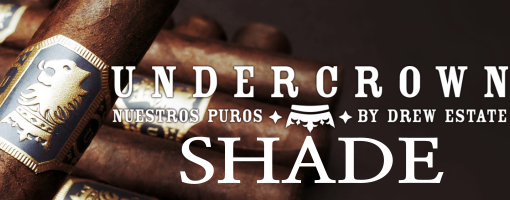
Drew Estate is poised to release Undercrown Shade, a new line based on the Undercrown blend featuring a No. 1 grade shade-grown Connecticut wrapper.

Here is Drew Estate’s description of the new line, which StogieGuys.com uncovered in the recently distributed 322-page Tobacco Retailer’s Almanac, sent to members of the International Premium Cigar & Pipe Retailers Association (IPCPR):

More than just a wrapper swap, this ‘Crown was a three-year process working from the ground up using the finest blend of well-aged, long leaf tobaccos from our vast holdings in Estelí, Nicaragua. Finished with a No. 1 golden shade wrapper, the most sought-after leaf in the world, Undercrown Shade is a naturally sweet, earthy smoke with satisfying body for any time of day.

The line will be available in boxes of 25 in the same six regular production vitolas as the original Undercrown line:

Belicoso 6 x 52
Corona Doble 7 x 54
Corona 5.38 x 46
Gordito 6 x 60
Gran Toro 6 x 52
Robusto 5 x 54

References to “the most sought-after leaf in the world” and “shade” imply the blend uses a Connecticut-grown wrapper leaf, as opposed to an Ecuadorian-grown Connecticut wrapper, which Drew Estate uses on Herrera Estelí. Ecuadorian wrapper isn’t usually grown under shade netting because of the natural cloud cover that produces a similar leaf without it.

Jonathan Drew hinted on Facebook that a Connecticut shade-grown wrapper project was in the works last August when he wrote: “Historically, Drew Estate has always used the Shade Leaf from Ecuador, but this Connecticut leaf is mad juicy and getting me crazy. I mean like… well… what’s a couple thousand pounds of this juicy leaf going to taste like with a tweaked Undercrown Blend…. Oh wait, maybe a tweaked Rustica… Oh shucks, ima get all kind of flack for this post.”

La Palina Introduces Red Label

Also listed in the Tobacco Retailers Almanac is a previously unannounced La Palina Red Label. The line will comes in four sizes: Gordo (6 x 60), Toro (6 x 50), Robusto (5 x 52), and Petit Lancero (6 x 40). All are listed as shipping in boxes of 20. Although no other details are printed, a recent posting announcing the selections for Cigar Dave’s cigar of the month club reveal more details about the Dominican-made blend, which features a Ecuadorian Habano wrapper, Ecuadorian binder, and Nicaraguan and Dominican filler.

AJ Fernandez Enclave

enclave

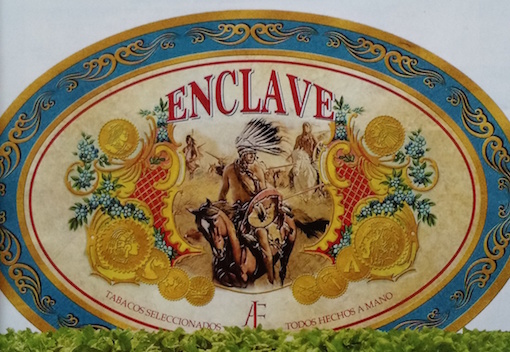
Although no other details are revealed, we do have artwork (above) to share for the upcoming Enclave cigar by A.J. Fernendez. The ad appears in the Tobacco Retailer’s Almanac. A February article in the publication BayouLife mentioned the project, though the blend was still being tweaked at the time. More details, presumably, will be unveiled between now and the start of the IPCPR Trade Show.

–Patrick S

photo credits: Stogie Guys/Drew Estate/A.J. Fernandez

Commentary: Prediction for IPCPR 2015 — $10 Cigars

2 Jul 2015

Ten-dollar-cigars

The annual International Premium Cigar and Pipe Retailers Association (IPCPR) Trade Show opens just two weeks from tomorrow in New Orleans. Many new cigars that will debut at the show have already been announced, with even more to come in the next two weeks.

Looking at the trends among new cigars is always interesting because it tells you the answer to this question: What do cigar makers think cigar smokers will buy? Many cigar makers are very passionate about their craft, but they are still businessmen (and women) and, ultimately, the idea is to make cigars that will sell.

Steve Saka, formerly of Drew Estate, who will be launching his new cigar venture called Dunbarton Tobacco & Trust, recently kicked off a discussion about the trends expected at the show with a question on Facebook about what cigar smokers want to see, and what they expect to see.

My colleague responded to the latter question with the following: “More San Andrés, less Conn. Broadleaf. More thick cigars, but also a few lanceros too. More cigars packaged in 5- or 10-count boxes, rather than 20+.”

In terms of the cigars we’ll see, I agree. But I would add another prediction, this one about price: Get ready for lots of cigars with a retail price of $10 or more.

This prediction isn’t about what cigar makers think cigar consumers want (although the trend towards higher-priced cigars has been going for a while now) but rather a reaction to the pending FDA regulation of cigars.

As we’ve explained, under the regulations which may go into effect any day now, every new cigar will be subject to FDA pre-approval before it can be brought to market. The only possible exception is under “Option 2” of the proposed regulation which calls for an exemption for cigars with a retail price of $10 or more. (Although, I’ve spoken with people familiar with the federal rulemaking process who say a small change to that number could be implemented without the need for an additional comment period, such as a change from a retail price limit to an equivalent wholesale price of, for example, $5.)

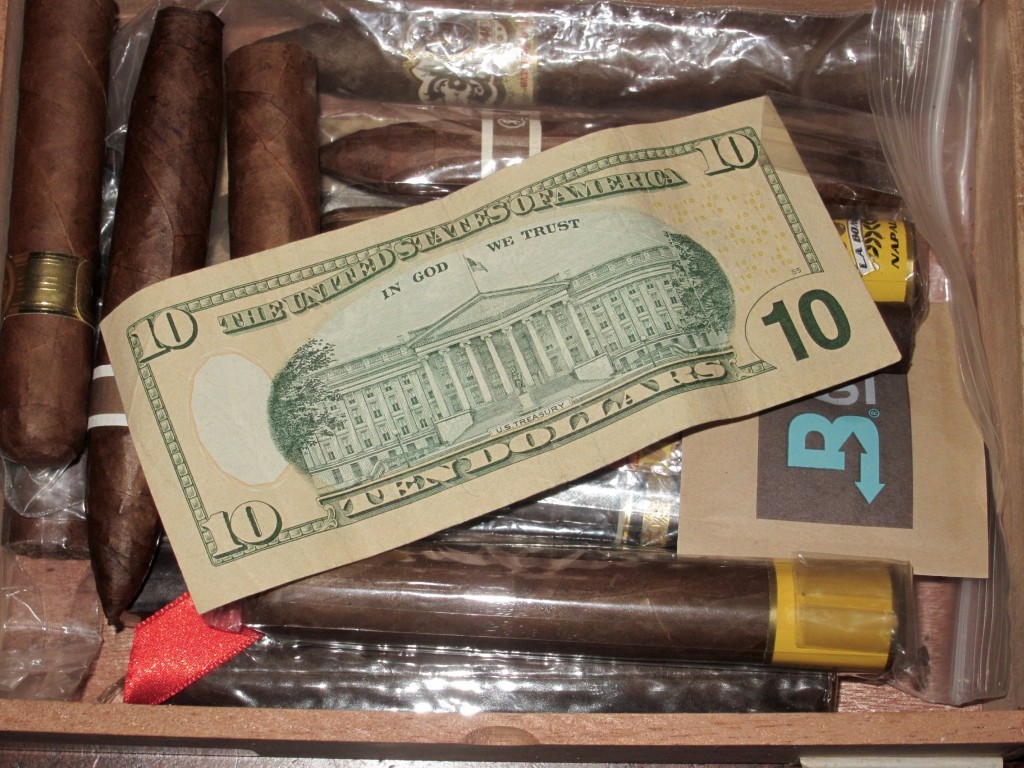
Still, right now the best hope of escaping a costly and time-consuming FDA pre-approval process—assuming most cigars could get through it at all before going bankrupt—is to set your retail price at $10. It’s as natural as it is depressing, and it will especially impact cigars that might otherwise sell for a few dollars under the $10 cap.

So while other new cigar trends, whether we like them or not, are a natural response to what consumers want and what cigar makers can make with the tobacco they have available, maybe the most distinctive trend from the 2015 IPCPR Trade Show will be overpriced cigars. Not because cigar makers want to gouge their customers; because of the inevitable response to FDA regulations that haven’t yet gone into effect.

–Patrick S

photo credits: Stogie Guys

Cigar Spirits: I.W. Harper 15 Year Straight Kentucky Bourbon

30 Jun 2015

IW-harper-15

If Americans suddenly doubled their demand for vodka it would take the vodka makers only months, or at most a year or two, to increase their supply to match the new demand. Not so for bourbon. When the public suddenly wants more well-aged bourbon, increasing distilling capacity today won’t do anything to change supply for a decade.

The formula is simple: Want 15-year-old bourbon? It has to rest in barrels for at least 15 years. Which makes the introduction of I.W. Harper 15 Year somewhat remarkable. This particular offering is new, but the brand certainly isn’t, something I covered in my write-up of the non-age statement version of the I.W. Harper:

I.W. Harper has an interesting and complex story. Originally introduced in 1879, the brand was discontinued in the U.S. market around 1990 but continued to thrive in the Japanese market. I.W. Harper is owned by Diageo, the largest spirits company in the world, but a company that has a long, though often puzzling, history in the American bourbon market.  Currently, Diageo’s American whiskey portfolio consists of George Dickel, Bulleit, and the Orphan Barrel series.

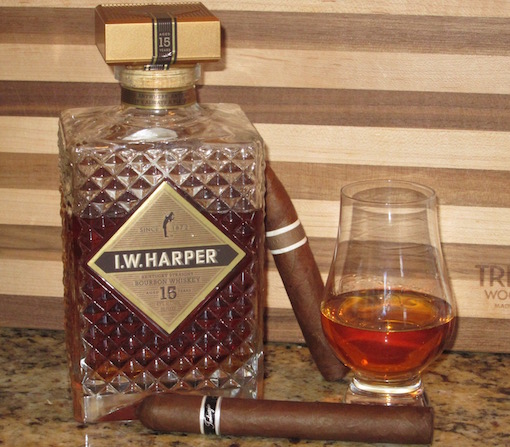
This bourbon was distilled at the New Bernheim distillery, which is currently owned by Heaven Hill, owner of Elijah Craig, Evan Williams, and many other brands. The mashbill used is 86% corn, 6% rye (a very low rye percentage), and 8% barley and it is bottled at 86-proof. Suggested retail price is $75 a bottle, although you might see it anywhere from $60-90 in a throwback decanter-style bottle that is certainly eye-catching.

Inside is a bronze-colored bourbon with a nose of vanilla, cotton candy, brown sugar, and fresh corn. It starts out light on the palate with lots of sweetness, apples, and a little creaminess, but it also shows a bigger, thick woody edge. The finish is long with more oak and spice.

The low rye content of the I.W. Harper 15, combined with the relatively low 86-proof, creates a soft, complex, finessed bourbon, especially given the age. It pairs well with a mild cigar. Think a creamy Connecticut Shade.

Good, old bourbon is increasingly hard to find at a reasonable price, and the I.W. Harper fits that description. In addition, it would make an excellent gift. The seasoned bourbon drinker will appreciate the juice, but a more novice bourbon fan can still appreciate the fancy bottle and relatively old age (which, rightly or wrongly, is often seen as a indicator of quality).

–Patrick S

photo credit: Stogie Guys

Quick Smoke: Montecristo Petite Edmundo

28 Jun 2015

Each Saturday and Sunday we’ll post a Quick Smoke: not quite a full review, just our brief take on a single cigar.

Montecristo-Petit-Edmundo

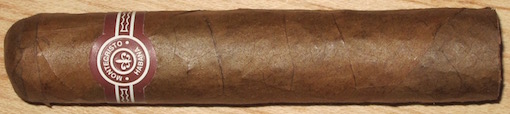
When it first came out, the Petite Edmundo was one of my favorite Cuban smokes, although later boxes proved to be less consistent. This particular stick had been resting in my humidor for the better part of three years, so it should hardly suffer from the ill-effects of under-aged tobacco, as Cubans sometimes do. It was well-constructed with notes of roast pecan, hay, coffee, sweetness (especially towards the second half), and intense cedar. Maybe it’s just nostalgia, but I still remember enjoying the Petit Edmundos seven or eight years ago better. Still, with proper age, this Cuban is quite tasty.

Verdict = Buy.

–Patrick S

photo credit: Stogie Guys