Archive by Author

Commentary: Are Cuban Cigars Really Legal? Or Special?

23 Dec 2014
cubanflag

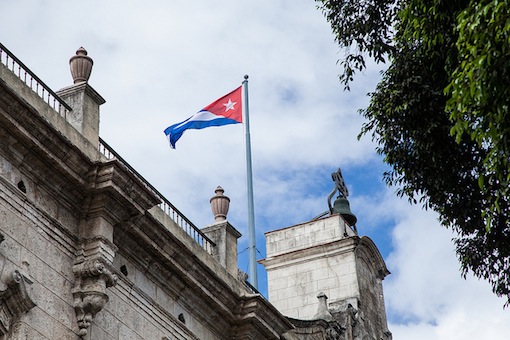
No, you cannot legally import Cuban cigars unless you are a licensed visitor to Cuba.

The recent announcement about relaxed restrictions for the importation of Cuban cigars has some people (and media) confused. To clarify, the rule will allow officially licensed travelers to import $100 worth of Cuban cigars or Cuban rum into the U.S. (as part of a $400 total import allowance). This is change from the previous policy which didn’t allow any Cuban cigars to be imported.

However, travelers to Europe, Canada, Mexico, or other countries where Cuban cigars are legally sold still cannot legally import any Cuban cigars. This was confirmed for StogieGuys.com by a U.S. Treasury Department spokesman who made it clear the new rules only apply to authorized travelers going to Cuba; they do not apply to travelers going to third countries. So don’t hit the duty-free shop in Heathrow for $100 worth of Cuban cigars before returning to the U.S. because of the announcement last week. It’s still illegal, and if you get caught ignorance of the law will be no excuse.

Are Cubans really all they’re hyped to be?

It’s almost inevitable: When a non-smoker or infrequent cigar smoker discovers I smoke a lot of cigars and write about cigars, I get asked some variety of this question: Are Cubans really the best? Or is it just because they’re illegal in the U.S.? Normally, it happens a couple times a month. In the past week, since Obama announced a move towards normalized U.S. relations with Cuba, I’ve been asked this question almost daily.

So here’s my response: The best Cuban cigars are without a doubt some of the finest cigars in the world. But many Cuban cigars are not world-class, and a significant percentage of Cubans are not even particularly good.

There are two primary reasons for this. First, the rest of the world has stepped up its game since the Cuban embargo was signed into law (after President Kennedy reportedly had his press secretary procure 1,200 Cuban cigars). When the embargo became law, most of the world’s premium handmade cigars were either made in Cuba or made elsewhere with Cuban tobacco. These days, great cigars are made in many countries, in particular the Dominican Republic, Nicaragua, and Honduras, where many Cubans who fled Castro’s Cuba brought their expertise after the Cuban government nationalized the Cuban cigar industry. These cigars also are often a better value than Cubans for the same cost.

Second, the authoritarian Cuban government has limited the ability of Cuba to consistently produce excellent cigars. Without the competition of the free market and with the Cuban government owning all aspects of the Cuban cigar industry, Cuban cigars have been able to rest on their reputation. But quality control has suffered greatly and Cuban cigars are notorious for inconsistent construction, and for needing considerable aging because often the cigars are made before the tobacco has had enough time to age properly.

Still, there is no denying Cuba can produce some of the best cigar tobacco. Cigar tobacco depends on micro-climates for its flavor and quality, and parts of Cuba are indisputably some of the finest places for growing tobacco. It’s the equivalent of the Bordeaux or Burgundy regions in France for wine, and despite the Cuban government’s interference, the pride and tradition of Cuban cigars still creates some fantastic cigars.

This is compounded by the Cuban government’s need for hard currency to pay for needed imports. Cigars are one of the most valuable exports the country has, and the government still has an incentive to make cigars that they can charge top dollar for in free markets around the world. This produces enough world-class cigars to boost the reputation of all Cuban cigars.

Ultimately, it’s too simple to say that Cuban cigars’ reputation is solely based the mystique of being a forbidden fruit to Americans. There are still enough excellent Cubans, especially high-end and limited cigars, sold to keep up the reputation for excellence, even though most Cuban cigars wouldn’t be particularly noteworthy if you didn’t know where it was made.

Patrick S

photo credit: Flickr

Quick Smoke: La Flor Dominicana Double Ligero “A” Oscuro Natural L.E. 2013

21 Dec 2014

Each Saturday and Sunday we’ll post a Quick Smoke: not quite a full review, just our brief verdict on a single cigar of “buy,” “hold,” or “sell.”

LFD-DL-A-LE-2013

On a whim I recently lit up this super-sized (9 x 47) smoke, one of only a few “A” size cigars in my humidor. The cigar was given to me while visiting the La Flor Dominicana booth at the 2013 IPCPR Trade Show. It features an oscuro-colored Ecuadorian Sumatra wrapper around binder and filler grown at La Flor’s Dominican farms. Despite the limited release’s special size, the flavors are pretty standard Double Ligero: woodiness, spice, and a little coffee. The medium- to full-bodied profile is very consistent throughout the two-hour smoke, and construction is flawless. Judging “A” sizes is hard, since it’s more of a celebratory, special occasion cigar than something you might smoke more regularly. Still, this is a good example of the elegant format, and the $15 price is not unreasonable.

Verdict = Buy.

Patrick S

photo credit: Stogie Guys

Cigar Spirits: Teeling Small Batch Irish Whiskey

16 Dec 2014

For the dozens and dozens of fine bourbons, ryes, and single malt scotches I’ve tried, I could count on my fingers the number Irish whiskeys I’ve sampled. Fact is, variety is tough to find when it comes to Irish whiskey, even at liquor shops that have an excellent selection of other whiskeys. These days you’ll often find more Japanese whiskey on the shelves.

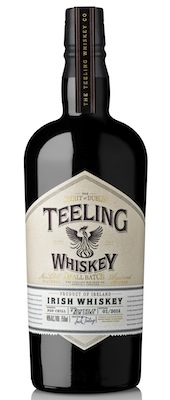
Teeling Small Batch 750ml WhiskeyStill, there’s a lot to Irish whiskey beyond Jameson (not that there’s anything wrong with Jameson). And Teeling seems intent on proving that. Which is why I took Teeling’s marketing company up on an offer to try a bottle, which is relatively new to the U.S. market.

While Teeling is a new whiskey, the Teeling name is anything but. Walter Teeling founded a distillery in Dublin in 1782. More recently, John Teeling bought a potato alcohol plant in 1987 and converted it into the acclaimed Cooley Distillery, which he subsequently sold to Jim Beam in 2011. John’s son Jack Teeling got back into the business soon after the sale with plans for a Dublin distillery with former Cooley whiskey man Alex Chasko as master distiller. In the meantime, the whiskey currently being bottled for Teeling is sourced from the Cooley Distillery, which supplies 16,000 barrels that were reportedly added to the $95 million purchase price.

Once the barrels are in their hands, Chasko and Teeling put their own stamp on the product with a rum barrel finish, which is almost certainly a first for Irish whiskey even though rum barrel finishes are commonplace elsewhere. Teeling Small Batch ($40) is then bottled without chill filtration at a 92-proof, a nice bump from the fairly standard 80-proof in Ireland. (Other Teeling offerings are made but currently none are available in the U.S.)

The dark bottle hides a light, straw-colored whiskey. The nose features lemon, honey, and malty sweetness. On the palate, I find dried fruit, malt, and a prominent woodiness, plus tropical citrus and spice likely influenced by the rum casks. The medium-length finish has a tinge of spice along with smooth wood and caramel.

Teeling will probably catch most people off-guard, and it will certainly surprise you if your idea of Irish Whiskey is Jameson shots. It has loads of sweetness, good balance, and plenty of complexity for a blended Irish whiskey.

To pair Teeling with a cigar, turn to a milder smoke. A balanced Connecticut-wrapped cigar like the Cabaiguan Robusto Extra, Davidoff Colorado Claro Short Perfecto, or Paul Garmirian Gourmet hits the spot without overwhelming your drink, which should be enjoyed neat.

Irish whiskey is on the rise. In 2000, there were three Irish distilleries. Now there are nearly a dozen. The whiskey they produce is more varied and more interesting than ever, and the rum cask-finished Teeling Small Batch is no exception to that Irish whiskey renaissance.

Patrick S

photo credit: Stogie Guys

Cigar Review: Tatuaje Verocu No. 9

11 Dec 2014

I joined Tatuaje’s Saints & Sinners Club in its inaugural year, and I’ve been happy to renew every year since. The club includes access to a private cigar forum and an annual shipment of cigar swag and a box of 15 cigars.tatuaje-verocu-no-9-sq

tatuaje-verocu-no-9The smokes alone are worth the price, as every year the selection has been an interesting mix of that includes rare Tatuajes, one-offs, and test blends. This year’s shipment included two different exclusive sizes of the Tatuaje Havana VI Verocu blend.


Smoking them reminded me so much of how I enjoy the blend, which over the years has come out in a number of different sizes. The originals were a Verocu No. 1 (Exclusivo Lado Occidental) and No. 2 (Exclusivo Zona del Este), both of which earned perfect 5-stogie ratings. A tubo torpedo came later, and the only regular release still shipping is the No. 5, a petit corona (4 x 40) size that comes in boxes of 50.

The forgotten member of the Verocu line is No. 9, a 4.5-inch, 49-ring gauge robusto sold exclusively by the Philadelphia-based Holt’s retailer. Reminded by the excellence of the line, I recently picked up a 10-pack of the No. 9 size for just $45 (normal price is $130 for a box of 20).

Like the rest of the line, No. 9 uses Nicaraguan filler and binder with a dark, oily Ecuadorian Habano wrapper. It is intended to be a more full-bodied edition of the normal Havana VI line, and it hits that mark dead on. It starts with lots of dark cocoa, oak, and earth. There’s a little pepper spice. Body is medium-full, sometimes bordering on completely full. As it progresses, a little more spice emerges.

The well-made smoke produces tons of thick smoke on the palate. Each of the four cigars I smoked for this review had a perfectly straight burn, easy draw, and a sturdy white ash.

If I had to find a flaw, it’s that there’s not a ton of transition here. But that’s not a big deal as this is an all-around excellent cigar. It’s also the type of smoke that, perhaps counter-intuitively, would be good for relatively new cigar smokers looking to expand their horizons with a smooth yet full-bodied smoke.

I really can’t find much wrong with the Verocu No. 9, except perhaps that it is not more widely available. At $4.50, it’s a steal, and even at regular price it’s a good value. That, combined with excellent, full-bodied flavors, earns the Tatuaje Verocu No. 9 a formidable rating of four and a half stogies out of five.

[To read more StogieGuys.com cigar reviews, please click here.]

Patrick S

photo credit: Stogie Guys

Cigar Tip: Host a Whiskey Tasting

9 Dec 2014

Tasting multiple cigars in a sitting can be tricky. An entire cigar needs to smoked for it to be properly judged, but smoking full cigars one after another can overwhelm your palate.

Most cigar tastings, to the extent they aren’t just a single cigar, will consist of several specially made mini pure grade cigars (made entirely of one type of tobacco). This is a valuable educational experience, but what you taste isn’t actually a finished cigar.

whiskey-tasting

Whiskeys, on the other hand, are perfect for tasting side by side. Pick two whiskeys, or five, or a dozen, and get to it. Observe the color, take in the nose, experience the taste (on the palate and the finish), and keep notes so you can come back to them later. While the basics aren’t hard to understand, here are a few tips to improve your whiskey tastings:

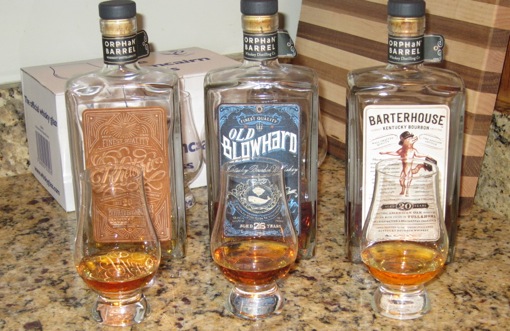
Select the right whiskeys – It sounds obvious, but it’s also crucial. Tastings are great because you can compare and contrast, so focus on a selection with both similarities and differences. Here are just a few suggestions: wheated bourbons, Indiana-distilled ryes, barrel-proof bourbons, sherry cask-aged single malts, etc. In the photo above, I decided to taste the first three Orphan Barrel bourbons, all of which are at least 20 years old.

Proper glassware – I’m a big fan of Glencairn whiskey glasses, which were specially designed for whiskey tasting. You don’t have to go that route, but tasting from similar glasses is important because the shape will impact what you pick up. Along those lines, shot glasses or big tumblers are poor choices, but a medium or small wine glass can work well.

Keep your palate fresh – Much like cigar tasting, I like to use club soda or sparkling mineral water to cleanse the palate. You’ll also want some spring water on hand. No ice is allowed (it dulls your taste). Try and taste it all neat first, then add a drop or two of water at a time to see how that impacts flavor. For a food to help keep your palate fresh, keep some bread or lightly salted crackers on hand.

Bring friends  – Of course, drinking with good friends is fun, but there are more reasons why this is preferable. First, you can compare notes. Second, with the help of friends, all but one person can taste blind. Because that’s the real test: Do you enjoy a particular whiskey even without knowing what it is and what it costs?

Patrick S

photo credit: Stogie Guys

Quick Smoke: Espinosa Habano Robusto

7 Dec 2014

Each Saturday and Sunday we’ll post a Quick Smoke: not quite a full review, just our brief verdict on a single cigar of “buy,” “hold,” or “sell.”

Erik Espinosa’s “Espinosa” cigar was released at the 2012 IPCPR Trade Show. The Nicarauan puro has a Habano wrapper and is made at La Zona in Estelí. The medium-bodied cigar is well-constructed and features paper, wood, pepper, and coffee notes. All and all, there’s nothing to complain about, but there’s nothing particularly remarkable either (and I find other La Zona-made blends much more interesting).

Verdict = Hold.

Patrick S

photo credit: Stogie Guys

Cigar Spirits: Maker’s Mark Cask Strength Bourbon Whisky

2 Dec 2014

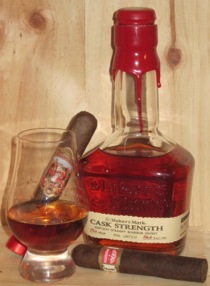
Maker’s Mark has been making good bourbon since 1954, but to say the company rarely comes out with a new offering is an understatement. In fact, the only time Maker’s ever expanded its standard U.S. offerings was the Maker’s Mark 46 in 2010 (if you don’t include their brief announcement in 2013 to reduce proof from 90 to 84, which was soon retracted after consumers rebelled).makers-mark-cask-strength-sq

makers-mark-cask-strengthPerhaps it was seeing this outrage that made Maker’s Mark decide to introduce a new cask-strength offering. A more cynical drinker would suggest lowering the proof was a brilliant marketing ploy designed to stoke demand and pave the road for a premium-priced, limited, cask-strength edition.

Whatever the reason, Maker’s began selling the cask-strength bourbon in its distillery gift shop earlier this year for $45 per 375 ml. bottle, which is half the standard size. The cask-strength bottles are now being distributed more widely, and I recently bought one at a shop in New York City for $40.

Maker’s Mark Cask Strength is bottled at 113.2-proof, which while hardly lightweight isn’t actually all that high for a cask-strength offering (my bourbon shelf currently has at a half-dozen open bottles that are at least 120-proof). Recall that Maker’s Mark is that it is a wheated bourbon, as in wheat, not rye, is the secondary grain, which generally means a sweeter profile. While wheated bourbons are a minority, they make up many well-known bourbons including Pappy, Weller, Larceny, and Old Fitzgerald.

The cask-strength Maker’s Mark offering has deep caramel color. The nose is more muted than you might expect from a cask-strength offering, but it still has quite a bit of honey, cherry, and clove notes. It really shows its colors on the palate. There you start to get the intensity of this whisky (as Maker’s spells it). It features a lush combination of vanilla, caramel, and cinnamon. There are some roasted nut notes, and a hint of dried fruit. The finish is long with loads of spice and thick caramel.

Maker’s Mark has something of a reputation as a beginner’s bourbon, but this cask-strength offering blows that reputation away. It’s the perfect pairing for a maduro cigar, wither a Broadleaf-wrapped smoke like the Liga Priavada or a Mexican-wrapped cigar like La Aroma de Cuba Mi Amor or Dante.

While the price is high ($80 when extrapolated out for a 750 ml. bottle) the Maker’s Mark Cask Strength is still a tasty new addition to the ever-expanding bourbon landscape. I’d recommend it to two types of bourbon drinkers in particular: First, fans of cask-strength bourbon will want to pick this one up; second, if you’re a fan of Maker’s Mark (and Maker’s 46) and looking to expand your bourbon horizons, this cask-strength offering is the perfect vehicle for doing so.

Patrick S

photo credit: Stogie Guys