
Archive | Cigar Reviews RSS feed for this section

Cigar Review: Viaje Skull and Bones (FOAB)

21 Mar 2012

Viaje has made a name for itself creating extremely limited production cigars. In fact, Viaje’s cigars are made in such limited quantities that they often sell out in mere days.
Since chances are the Viaje cigar you have your eye on will be sold before you have a chance to sample one, purchasing many is pretty much an act of faith. Maybe Viaje’s small batches are a brilliant marketing strategy (some might call it a gimmick) but the incredibly small size of the release drives demand for these rare cigars.

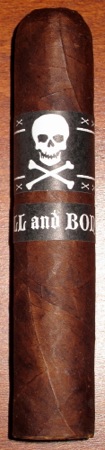
That is certainly the case with the Skull and Bones series, of which the three new editions of only 300 boxes of 25 (7,500 total cigars) were released. Two of those were a second edition of a cigar released a year ago: the WMD “Weapon of Mass Destruction” (3.75 x 54) and the MOAB “Mother of All Bombs” (4.5 x 52). A third, the FOAB “Father of All Bombs,” was a new addition to the Skull and Bones line.

FOAB is slightly fatter than the MOAB with a 56 ring gauge and the same 4.5 inches in length. Like all Viaje cigars, it is made at the Raices Cubana factory in Honduras, which also produces cigars for Illusione, Padilla, Alec Bradley, La Palina, and others. The Viaje FOAB is an all Nicaraguan blend with a dark sun-grown criollo wrapper. The cigar sells for $9.20 each ($230 for a box of 25), a substantial price for a cigar you might call a petite robusto.

With a name like Father of All Bombs, you’d expect a full-bodied a bomb of a cigar, and while FOAB is definitely full-bodied (no matter what your definition is), it isn’t overwhelmingly so. Perhaps that’s why Viaje owner Andre Farkas says he doesn’t include the FOAB (or MOAB) in the Skull and Bones red line, because MOAB and FOAB aren’t nuclear but conventional weapons.

The cigar features charred oak, chocolate, and dark coffee. There’s also bready and roasted nuts present, notes you wouldn’t usually identify with a full-bodied smoke. It’s surprisingly well-balanced, though the flavors don’t change much throughout.

Construction was excellent for each of the three cigars I sampled with a solid gray ash, firm-but-not-difficult draw, and straight burn. Given that this little cigar costs almost $10 each, it would have been very disappointing if it weren’t well-constructed.

I only picked up a five-pack (it cost me $46), and there are very few left so I look forward to seeing how my remaining cigars deal with a bit of age (and I should note that I smoked these within days of receiving them). Ultimately, though, I really did enjoy the FOAB. I was pleasantly surprised to find this cigar not overwhelmingly strong. It may not be a cigar for beginners, but it has enough balance to be enjoyed by a seasoned smoker. That earns the Viaje FOAB (“Father of All Bombs”) a rating of four stogies out of five.

[To read more StogieGuys.com cigar reviews, please click here.]

Patrick S

photo credit: Stogie Guys

Cigar Review: La Palina El Diario KB

19 Mar 2012

This new addition to La Palina’s El Diario line has been anticipated since late last summer. KB, short for “Kill Bill,” is a small corona (4.5 x 40).

The name is a reference to the cigar’s strength and La Palina owner William Paley, who is called Bill or “Little Bill” to his family. As the re-founder of La Palina (his grandfather Samuel Paley founded the brand in 1896 but Bill Paley re-established it a few years ago) explains in this video, it is La Palina’s strongest cigar yet.

Like the other El Diario sizes, the blend is a collaboration between La Palina and Alan Rubin of Alec Bradley. Paley used Rubin as his point man to produce the cigars at the Raices Cubana factory in Honduras, where many Alec Bradley cigars are made, in addition to such highly regarded cigars as Illusione, Viaje, and many of the Padilla lines.

The cigar features Nicaraguan and Honduran tobacco. The wrapper is an oily Honduran corojo ’99 rosado leaf. Underneath are dual Honduran criollo ’98 binders that surround the Nicaraguan filler composed of corojo ’99 and criollo ’98 leaf.

Paley is right about this being the most potent La Palina yet. Even though the blend is the same, the size intensifies the flavors. There’s a spicy dark chocolate flavor that’s reminiscent of Mexican mole. Additionally, there’s a syrupy sweetness, oak, and dark charred notes.

Construction was perfect in each of the two samples I smoked, which you’d expect from a $9 cigar. The KB comes in a four-pack ($35 MSRP) and has just shipped to retailers who will get sleeves of five four-packs (20 cigars each). The sixth size in the El Diario line will be regular production, but is only being made in limited numbers right now.

While not perfectly balanced, KB makes up for it with bountiful flavors and a substantial nicotine kick. This new smoke is my favorite vitola in the El Diario line. That earns the La Palina El Diario KB an impressive rating of four and a half stogies out of five.

[To read more StogieGuys.com cigar reviews, please click here.]

Patrick S

photo credit: Stogie Guys

Cigar Review: VegaFina Sumum Edición Especial 2010

14 Mar 2012

VegaFina is a brand made by tobacco giant Altadis that usually takes a backseat to the more prominent names in the Altadis portfolio, including Montecristo, H. Upmann, and Romeo y Julieta. The Sumum Edición Especial 2010 aims to change that.

Released last month in the U.S.—it is already among the most popular Dominican cigars in Europe—Sumum is a 2010 vintage that’s made at Tabacalera de Garcia. It is crafted “with the best premium tobaccos, hand-selected for their unique characteristics and aged with care, for a one-of-a-kind smoke with distinct body, toasty aroma, and rich flavors,” according to the Altadis website.

The Sumum (Latin for “summit”) recipe calls for a dark, two-year-old Ecuadorian wrapper, a three-year-old Dominican binder, and a three-year-old filler blend of Nicaraguan, Peruvian, and Dominican tobaccos. It is sold in only one size (5 x 54) for $6.75.

The Sumum Edición Especial 2010 is an incredibly attractive cigar with an oily wrapper, a finely constructed triple cap, and a firm feel from head to foot. The pre-light aroma smells of syrup and musty earth. After cutting, I find a moderate draw that imparts some sweetness on the lips. A profile of coffee, citrus, cream, and roasted nuts emerges after establishing an even light. There’s also a fair amount of raisin present, an all-too-rare flavor that’s usually reserved for the likes of Fuentes and Padróns. The texture of the smoke is thick and silky and the aftertaste has a dry, woodsy spice.

Into the midway point and beyond, the aforementioned core flavors are complemented by notes of French vanilla and caramel. There’s plenty of complexity in the mix—enough, in my opinion, to merit a higher price, which makes the Sumum Edición Especial 2010 an excellent buy. All the while the physical properties are good, including a solid white ash and a mostly straight burn.

Altadis is a large company, and that tends to make its sticks less favorable among seasoned cigar veterans in contrast to many of the smaller, more fashionable boutique outfits. Perhaps justifiably so. But I’ll go out on a limb and say the Sumum Edición Especial 2010 is one of the finest smokes I’ve had from Altadis in a long time, especially when you consider its affordable price. I can only feel remorse for those who pass up on this outstanding creation, one that’s worthy of four stogies out of five.

[To read more StogieGuys.com cigar reviews, please click here.]

Patrick A

photo credit: Stogie Guys

Cigar Review: Intensa Tabacon

12 Mar 2012

Winter is a season for short cigars. Unless you have an indoor cigar sanctuary to call your own, smoking bans likely force you outside to enjoy premium tobacco. And no one wants to stand out in the cold for hours on end.

As spring approaches here in Chicago, we start to get warmer days from time to time. And on rare nights when I can sit comfortably outside, this time of year I find myself reaching for larger smokes that have been patiently resting in hibernation—not many of which are larger than the Intensa Tabacon.


This hefty cigar weighs in at six inches long with a ring gauge of 60. It is one of four sizes available in the Intensa series, the others being Gran Robusto (5.24 x 54), Toro (6 x 50), and Belicoso (6.25 x 54). They are all the result of a partnership between Casa Fernandez and the Corona Cigar Co. to “create a cigar that would not only be a full-bodied powerhouse, but a cigar with rich, decadent flavors.” Arsenio Ramos is said to have blended this line using nothing but Angosura tobacco from Nicaragua. It features a reddish ’99 corojo wrapper with a maduro binder and filler comprised of corojo viso and corojo ligero leaves.

I was weary of lighting up such a huge cigar that is intended to “push the limits of the palate” and reportedly “had our entire tasting panel reeling,” according to the Corona Cigar Co. website. A smoke of this size is a time commitment, and I’ve never understood the concept of power for power’s sake. So it was with some trepidation that I clipped the Tabacon’s pigtailed cap and set an even light on the foot.

I was surprised when the initial flavor was balanced and anything but overpowering. The profile consisted of dry wood, nuts, and creamy notes with a somewhat spicy aftertaste. I was even more surprised when there was hardly any increase in boldness towards the midway point. In the final third, I started to feel the strength of the cigar as all of the flavors started to intensify and the nicotine kick ratcheted up to the next level. At no point, however, did I feel like the Intensa Tabacon had the boldness that’s advertised. That’s a good thing, in my book.

With excellent physical properties—including a straight burn and a smooth draw—this two-hour smoke is better and more balanced than I was expecting. It may not have loads of complexity or nuance, but the per-cigar cost of $6 to $7.40 is a fair price given the amount of tobacco and the time it takes to plow though the Intensa Tabacon. That earns it a fair rating of three stogies out of five.

[To read more StogieGuys.com cigar reviews, please click here.]

Patrick A

photo credit: Stogie Guys

Cigar Review: Para Ti Canonazos

8 Mar 2012

Though you might not know it, Tatuaje creator Pete Johnson is a cigar distributor as well as a brand owner. And he doesn’t just distribute his own cigars, which are made in Miami and Nicaragua, but also those from a small cigar factory in the Dominican Republic.

Para Ti is the project of Pete Johnson’s friend, Fred Schrader, maker of some of the most highly-regarded Napa Valley wines. A cigar enthusiast in addition to a vinter, Schrader has created two cigars at his small factory, both distributed exclusively by Pete Johnson’s Havana Cellars.

Says Pete of Para Ti: “I’m only doing the distribution, but it’s a trip for me because it’s a completely different country for me to be working with. This is their blend, I OK’ed it; I told them I’d be happy to sell it because the product is good. I don’t know a lot about the factory except that it’s called Para Ti and it’s very small. This is a way for me to help out a friend in the industry, but also, people have asked me to do this before and I never really wanted to do it and this one just seemed to fit right.”

With Johnson handling distribution, Schrader has created two cigars. Extremely hard to find, limited, and expensive ($25 each) is the Schrader Hispaniola Sparky Doco-Est MMIX, named after Schrader’s most exclusive wine. His other cigar, the subject of this review, is the Para Ti, a Dominican puro available in four sizes: Hermosos (4.5 x 52), Perlas (5 x 40), Prominentes (6 x 60) and Canonazos (6 x 48).

To evaluate the Para Ti, I smoked four of the toro-sized Canonazos, which retail for around $8 each. The cigar has as rough, rustic appearance with a medium brown wrapper that has both an oily sheen and many veins. It is firmly constructed, and produces an even burn and sturdy ash.

Para Ti (“for you” in Spanish) starts with forward and simple woody notes, but soon develops into a more complex medium-bodied cigar. It has a strong flavor of roast cashew that combines with dried fruit for a flavorful, balanced blend. Towards the final third it becomes more woody. It has a clean flavor profile with a soft finish.

Considering that I knew little about this Dominican before I smoked it, I found it to be an impressive creation. It’s one of those rare cigars where after smoking one, you’d consider lighting up another almost immediately. With bold, balanced favors and good construction, it earns a most impressive rating of four and a half stogies out of five.

[To read more StogieGuys.com cigar reviews, please click here.]

Patrick S

photo credit: Stogie Guys

Cigar Review: Ortega Serie D No. 12 Maduro

5 Mar 2012

As we reported in early February, Eddie Ortega, co-founder of EO Brands along with Erik Espinosa, announced he was leaving EO to start his own outfit called Ortega Cigars. The news came 20 months after Rocky Patel bought a 50% share in EO Brands.

The blends in the EO Brands portfolio—including 601, Cubao, Murcielago, and Mi Barrio—are all made at Don Pepin Garcia’s My Father Cigars factory in Nicaragua. So it comes as no surprise that the first line from the Ortega Cigar Company is also made by Pepin at My Father Cigars. Called “Serie D,” the blend boasts a Mexican maduro leaf from the San Andreas Valley surrounding Nicaraguan binder and filler tobaccos. “We are using some fillers from Jalapa and Estelí that are crazy good and help create a profile that is full-bodied with lots of spice, flavor, and aroma,” Ortega told us via email. “I know the consumer will love this one.”

Serie D is available in five sizes that are just starting to hit select retailers: No. 6 (4.5 x 48), No. 7 (5 x 46), No. 8 (5.5 x 50), No. 10 (6 x 52), and No. 12 (5 x 52). The No. 12 is a dark, oily stick with a firm feel, a slight box press, and pre-light notes of sweet cocoa. It retails for about $7 apiece.

The initial taste is very dry with a burning wood characteristic. It is not nearly as sweet or as chocolaty as you might expect. Instead, the defining trait of the Serie D is its chalky, mouth-coating texture—one that isn’t dissimilar to the Murcielago. Another unique attribute is a sour mustiness on the finish. Throughout the syrupy smoke, flavors of dark chocolate, black coffee, and fig come and go. But the chalky, woodsy core remains consistent from light to nub.

The dark, rich aromas of the cigar are just as enjoyable as the taste. I smoked the No. 12 in my den, allowing the thick smoke to hang heavy in the air. This added to the experience, as did the excellent physical properties. While Eddie Ortega has acknowledged some draw inconsistencies in the first shipment of these cigars, I found no issues in the samples I smoked for this review.

Distribution of Ortega Cigars is done in-house and, for now, is not widespread. Ortega says he is in talks with distributors to bring his cigars to more areas of the country. If you find the Serie D at a shop near you, be sure to pick up a few sticks to try for yourself. The No. 12 is priced appropriately and worthy of four stogies out of five.

[To read more StogieGuys.com cigar reviews, please click here.]

Patrick A

photo credit: Stogie Guys

Cigar Review: La Palina Family Series Alison

29 Feb 2012

Let me start by saying that Bill Paley’s La Palina Cigars has been a longtime supporter of StogieGuys.com. My colleagues and I pride ourselves on offering honest, trustworthy reviews of cigars, and that’s what I’m going to give you today. But I wanted to mention this at the outset in the interest of full disclosure. Especially since I really, really like this cigar.

Now on to the smoke. La Palina was reborn in early 2010, 84 years after the original company (founded by Bill’s grandfather, Samuel Paley) closed its doors. Bill called the first cigar “1896” to honor the year Samuel founded the Congress Cigar Company. Then, later in 2010, La Palina launched its second blend: the Family Series.

Like 1896 (and unlike El Diario), the Family Series is made at Graycliff’s factory in The Bahamas. Two of the vitolas in this four-size line come with a Costa Rican wrapper—Pasha (7.25 x 50) and Babe (5.25 x 50)—surrounded by a Costa Rican binder and filler tobaccos from Honduras and Nicaragua. The other two sizes—Alison (6 x 52) and Little Bill (4.5 x 52)—feature the same binder and filler tobaccos wrapped in an Ecuadorian wrapper for “added intensity.”

Alison, according to La Palina’s website, is “dedicated to Bill’s wife, Alison Van Metre Paley, whose support and encouragement have made La Palina’s revival possible.” It is a handsome, toothy torpedo that retails for $22 apiece. Firm to the touch with a beautiful cross-section of tobaccos at the foot, the cold draw is smooth and easy.

After establishing a straight burn, the pre-light aroma of syrup transitions to a profile of leather, dry wood, and a whole assortment of tastes from the spice rack. But trying to identify individual flavors is a bit of a fool’s errand. The torpedo is balanced and nicely complex. You’ll have more fun if you just sit back and enjoy the ride. That ride starts in the full-bodied range and leans in the salty direction. But as the straight burn works its way from the foot and the gray ash builds in volume, the Alison becomes more medium-bodied. Floral notes and hints of sweetness become more pronounced.

My overall assessment of this cigar is that it’s a traditional-tasting smoke that forgoes bells or whistles to deliver a balanced, complex taste. If I pay $22 for a cigar, I expect a whole heck of a lot. You should too. Fortunately, the La Palina Family Series Alison delivers in a big way. Its cost may place it well out of range for my regular rotation, but this is a great special occasion smoke in the same class as the PG 15th Anniversary or some of the finer Cubans on the market. That earns it a rare four and a half stogies out of five.

[To read more StogieGuys.com cigar reviews, please click here.]

Patrick A

photo credit: Stogie Guys



