Search results: site-policy/images

Cigar Spirits: Orphan Barrel Project Rhetoric 21 Bourbon

27 Jan
OB-Rhetoric-21

Formally announced in 2014, the Orphan Barrel Project has been one of the biggest, albeit sometimes divisive, developments in the high-end bourbon market in recent years. The project of industry giant Diageo has brought a number of well-aged bourbons to the marketplace at a time when such releases are becoming very rare and expensive.

The first releases were the 20-year Barterhouse and 26-year Old Blowhard, the latter being one of the oldest bourbons to be sold. Next came Rhetoric 20, a 20-year bourbon distilled at the New Bernheim distillery in Louisville, which is now owned by Heaven Hill, maker of Elijah Craig and Evan Williams.

Next up was the 22-year Lost Prophet and 15-year Forged Oak. The latest release is a 21-year version of Rhetoric, which is part of a planned annual release that will show off the evolution of the bourbon as it ages, perhaps up to 26 years. (Another Orphan Barrel release, Gifted Horse, is due out soon; it will be a combination of 4-year bourbon and corn whiskey blended with 17-year bourbon.)

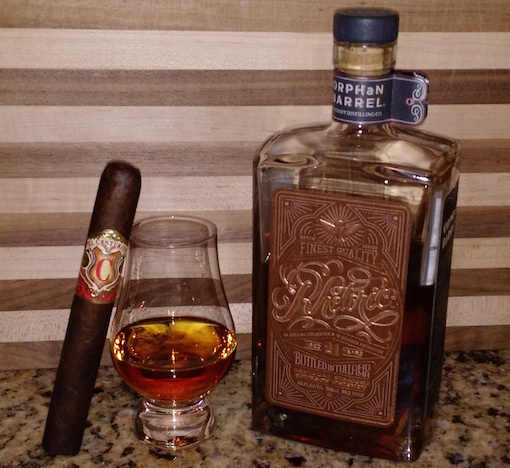
Rhetoric 21 is 90.2-proof, a smidge higher than the 20-year version (90-proof). It sells for around $100, and I picked up my bottle for $93 online after tasting a sample provided by Diageo.

Rhetoric 21 pours a deep copper color and has a nose that shows off its age with damp wood, vanilla, and green apple taffy. On the palate, the bourbon tastes of oak, baking spices (clove, cinnamon, nutmeg), vanilla, orange peel, and burnt sugar. The finish is long with cornbread, charred wood, and clove.

At times, the flavors feel slightly muted with the exception of the deep woodiness (over-oaked, perhaps) which is why I prefer the Lost Prophet and Forged Oak. Still, fans of oaky, ultra-aged bourbon will find Rhetoric fits the bill in a way that very few bourbons (you can actually find) will.

For cigar pairings, I think the light wood and sweet spice style of Mexican-wrapped cigars matches up nicely. Specifically, try the Illusione *R* Rothchildes, Room 101 San AndrésTatuaje The Face, and Drew Estate’s Undercrown.

–Patrick S

photo credit: Stogie Guys
Cigar Review: CAO Pilón Robusto

25 Jan

20160118_044238000_iOS

Few cigar brands are as diverse as the current portfolio from CAO. Flathead and Steel Horse are built to attract blue-collar tough guys who fancy muscle cars, pinup girls, and motorcycles. Margaritaville would be most at home with the baby boomer dads and grandpas who occasionally smoke as they grill dinner on the back deck while wearing a Hawaiian shirt. Then there’s Flavours, the country-specific blends (Brazilia, Italia, Colombia, etc.), and holiday limited editions like Angry Santa and Evil Snowman.

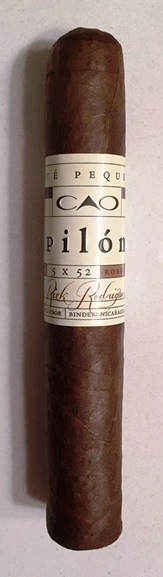
CAO PilonOne of the 2015 releases from CAO caught my eye. Called CAO Pilón, the line seems intended for more serious cigar smokers who care about tobacco and probably spend a good portion of their cigar budgets on boutique-made smokes. CAO classifies Pilón in the Classic quadrant of its lineup, which also includes Gold and La Traviata.

Behind the Pilón name is an antique fermentation technique that, according to CAO, comes from eighteenth century Cuba. “This method involved hemming tobacco leaves together and stacking them, layer by layer, in a circular pattern,” reads the CAO website. “While building and tending to the round pilón took as much patience as it did skill, this method of natural fermentation maximized the flavor and color of the leaves.” Over time, “less costly fermentation methods were explored and the standard rectangular pilón was born.”

Crafted by Master Blender Rick Rodriguez, whose name and recipe adorns the attractive CAO Pilón band, the blend consists of an Ecuadoran Habano wrapper around Nicaraguan binder and filler tobaccos. Three sizes are available in the affordable $6 to $7.25 range: Corona (5.5 x 44), Churchill (7 x 48), and Robusto (5 x 52).

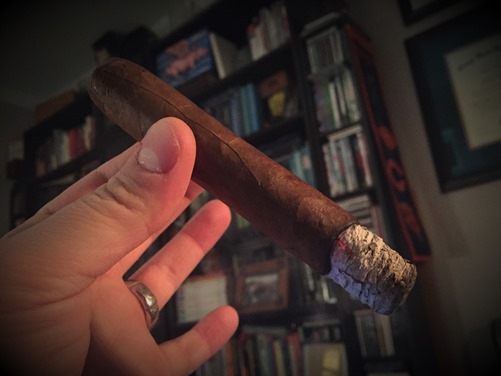
The latter makes a good first impression with a clean, seamless exterior that’s both smooth and dry. Firm to the touch, the Robusto’s foot shows a well-packed cross-section of tobaccos that exude pre-light notes of cocoa powder and musty earth. The head clips easily to reveal a stiff cold draw with a slight sweetness on the lips. I appreciate that the two ends of the band are joined by an external band sticker—which both makes the band easy to remove and prevents any errant adhesive from making its way to the wrapper.

At the outset, the medium-bodied profile carries notes of dry wood, leather, coffee, and sweet cream. The overall effect might be best summed by the phrase “warm tobacco.” The aftertaste leaves considerable cedary spice on the tongue, while the retrohale enables you to pick up a little dried fruit and nuts. As the cigar progresses, I find the flavors remain fairly consistent, save for an increase in intensity in the final third that brings a dose of black pepper.

From light to nub, the burn line remains straight and the gray ash holds well off the foot. However, I find the tight draw and low level of smoke production to be frustrating. These physical attributes were similar across the three samples I smoked for this review.

Draw and smoke production aside, this is an enjoyable—albeit straightforward—cigar with a mellow profile that renders it approachable and somewhat classic-tasting, especially for the friendly price. Some will find it just their speed, others will say it lacks pop and complexity. In my book, the CAO Pilón Robusto is worthy of three stogies out of five.

[To read more StogieGuys.com cigar reviews, please click here.]

–Patrick A

photo credit: Stogie Guys

Quick Smoke: La Flor Dominicana La Nox Toro

23 Jan

Each Saturday and Sunday we’ll post a Quick Smoke: not quite a full review, just our brief take on a single cigar.

With a multi-national combination of tobaccos—a dark Brazilian wrapper, Mexican San Andrés binder, and Dominican filler—La Nox is a strong, satisfying smoke. The Toro (6.5 x 52) is ideal for the cigar to develop along the way. For instance, it begins with a combination of spice and earth and maintains a rich, spicy finish for a third or so. Then sweetness mixes in, toning down the finish and allowing other flavors to come to the fore. Tony Gomez, son of La Flor Dominicana’s founders, has certainly created a fine limited cigar, well worth its $11 price tag.

Verdict = Buy.

–George E

photo credit: Stogie Guys


Tip: How to Take Care of Your Butane Lighter

20 Jan

Did Santa leave you a new lighter under the tree? A butane-burning beauty that will make you feel like a true connoisseur when you light up your prized cigars?

Congratulations. Now it’s up to you to treat it right.

We’ve all read and heard sad tales of expensive lighters that too soon ended up as non-functional paperweights. The good news is that these days lighters seem to perform much better than they did not so long ago.

You can increase the likelihood that your new lighter will age into a reliable, trusted old friend through the years by following a few simple tips.

Read the instructions. Yes, I know this runs counter to just about everyone’s instincts. But spending a few minutes to familiarize yourself with the lighter’s ins-and-outs will pay off in the long run. After all, do you really want to set your hair on fire because you turned the flame adjustment the wrong way?

Use top-grade, multi-refined butane. It is expensive, but worth it in the long run. Butane lighters have tiny openings and the smallest bits can create clogs. Butane that has been refined multiple times means cleaner fuel.

Pay attention to the fill indicator. Don’t increase pressure by trying to squeeze in more fuel than the lighter is designed to hold. It might not cause damage, but why take the chance?

Bleed before refilling. Usually this is accomplished by pressing the fill valve and allowing the remaining butane to escape, but be sure to follow your manufacturer’s directions. Again, ignoring this might not create a problem, but investing a few seconds can’s hurt.

Compressed air is a great tool. A quick blast from the can periodically will keep the lighting mechanism clean and reduce the possibility of a clog.

Finally, enjoy your lighter. And if Santa missed you this year, you can always buy yourself the gift you want.

–George E

photo credit: Stogie Guys

Cigar Review: Sobremesa Gran Imperiales

18 Jan

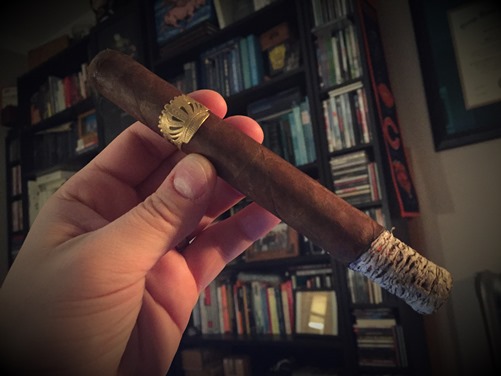
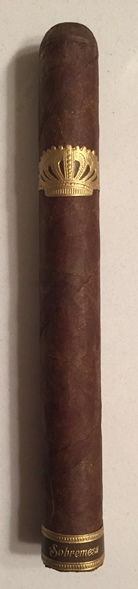
Sobremesa

I don’t buy many full boxes of cigars. I especially don’t often buy boxes that retail for over $300, or when the only vitola in stock is not one (or unlikely to be one) of my favorites. But in the case of Sobremesa—the debut blend from Steve Saka’s Dunbarton Tobacco & Trust—I’m apparently willing to make an exception.

Gran ImperialesIn December, Florida-based online retailer Smoke Inn had 25-count boxes in the Gran Imperiales (7 x 54) size for just under $303.95, or about $12.16 per stick. It was the only vitola in stock at the time. Normally I’d wait for a smaller size to become available, since my tastes usually skew towards thinner, shorter cigars. After such good experiences with the Cervantes Fino and El Americano, though, I jumped at the chance to stock up on the blend—even if the large size isn’t something I’d typically go for, especially in a box purchase.

After smoking my way through eight Gran Imperiales, I’ve concluded I absolutely enjoy this cigar immensely and do not regret the box purchase in the slightest. That said, the largest Sobremesa vitola is not my favorite format in which to experience the blend, though I’ll relish firing up my remaining stash.

Like its Sobremesa brethren, Gran Imperiales boasts an Ecuadorian Habano Rosado wrapper, a Mexican binder, and a filler blend of Pennsylvania Broadleaf Ligero with four different Nicaraguan tobaccos (Gk Condega C-SG Seco, Pueblo Nuevo Criollo Viso, La Joya Estelí C-98 Viso, and ASP Estelí Hybrid Ligero). It is handmade at Joya de Nicaragua.

More than the smaller Sobremesa formats, the Gran Imperiales looks a little more rustic with its prominent seams and network of veins on full display. Across the samples I’ve smoked, several have had minor imperfections (a tiny hole in the thin wrapper leaf, a little errant adhesive, some ruggedness at the head or foot), but nothing that really detracts from the smoking experience.

Once an even burn is established, pre-light notes of cocoa powder and earth transition to a profile that’s becoming dangerously familiar and pleasing to my palate. Simultaneously creamy, smooth, sweet, and well-balanced, the most noticeable flavors include cocoa, café au lait, cinammon, and nuts, along with hints of both red and black pepper. Sometimes I pick up green raisin, other times caramel or honey.

Notably, in comparison to the Cervantes Fino, the intensity and concentration is toned down. This is the softest Sobremesa in the portfolio so, when you select it, you’re trading strength and fullness for more subtlety and (obviously) a longer smoking experience. Whatever size you choose, though, construction will be perfect. Literally every time I’ve had a Sobremesa—including the eight Gran Imperiales I smoked for this review—the combustion qualities were nothing short of top-notch.

My pledge is to review the remaining Sobremesa vitolas this year (it’s a tough job, but somebody’s got to do it). Many of you, I suspect, are eager to get your hands on this blend if you haven’t already done so, and I’d like to help you select the best size for your palate. In this case, the Gran Imperiales would be your choice for smoothness, intricacy, and approachability. Just make sure you have enough time to smoke before you light it up; you won’t want to extinguish this large smoke before you hit the nub. This awesome cigar is worthy of four and a half stogies out of five.

[To read more StogieGuys.com cigar reviews, please click here.]

–Patrick A

photo credit: Stogie Guys

Quick Smoke: Tatuaje H-Town Lancero (Stogies World Class Cigars Exclusive)

17 Jan

Each Saturday and Sunday we’ll post a Quick Smoke: not quite a full review, just our brief verdict on a single cigar of “buy,” “hold,” or “sell.”

Tat HTown Lancero

Some of my favorite Tatuaje cigars have been from the Exclusive Series (for example, the Barclay Rex and TAA 2015) so I was interested to see how this Lancero stacked up. Once lit, it showed roasted coffee notes, clove spice, and intense leather that borders on bitter, especially towards the first half. Construction on the medium- to full-bodied smoke was flawless. I like lanceros, and I’ve generally been very impressed by the Tatuaje Exclusive Series cigars, but I’m just not sure this size showed off the best of the blend, which was pleasant but not outstanding.

Verdict = Hold.

–Patrick S

photo credit: Stogie Guys
Quick Smoke: La Aurora Preferidos 1903 Edition Diamond

16 Jan

Each Saturday and Sunday we’ll post a Quick Smoke: not quite a full review, just our brief take on a single cigar.

Diamond

Encased in the perfecto-style tube that distinguishes this high-end line, the Diamond smokes as good as it looks. A dark Connecticut Broadleaf wrapper, a Dominican maduro binder, and Dominican filler combine for a rich, thick, tasty smoke with a pearl-white ash. The Diamond, often called “Black” after the tube color, is fairly small (5 x 54). The only real negative is the hefty price, which runs about $18-$20 individually, though I’ve seen it as low as about $12.50 when purchased by the box of eight. Worth the money, especially as a celebratory stick.

Verdict = Buy.

–George E

photo credit: Stogie Guys