
Search results: site-policy/images

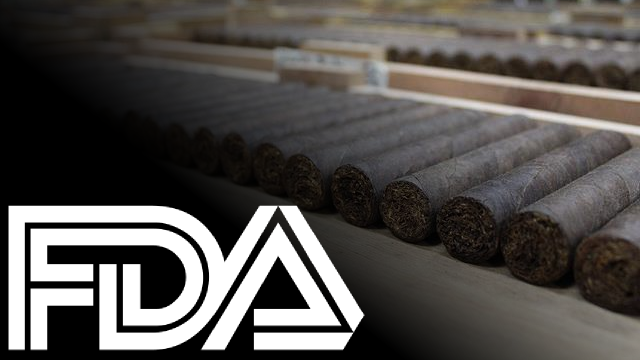
Commentary: The Truth About Cigar Studies

18 Nov
FDA-cigars-large

By now, you’ve probably heard or read about the findings of a new long-term study of cigar smoking that generated headlines like this one from Fox News: “Cigars just as harmful to health as cigarettes, study says.” Well, don’t toss your Davidoffs in the dustbin just yet.

A closer look inside the numbers, along with some helpful responses from the study’s lead researcher, show that the results aren’t nearly that clear for those of us who enjoy premium, hand-rolled, all-tobacco cigars.

First, and perhaps most importantly, the study made no distinction between those who smoke machine-made cigars and those who smoke premium cigars. In fact, that information wasn’t even collected in the survey of 25,522 subjects for the 1999-2012 National Health Nutrition and Examination Survey, Dr. Jiping Chen, an epidemiologist in the Food and Drug Administration’s Center for Tobacco Products, told me in an email.

Consequently, there was also no consideration of differences in smoking, such as inhaling/not inhaling or the frequency of consumption, Dr. Chen said. “No information was collected in the study on the types of cigars smoked or reasons why cigars were smoked.”

So, someone who sucks down a half-dozen White Owls a day is a “cigar smoker,” the same as someone who lights up an Arturo Fuente Hemingway once a week. “All cigar smokers were treated as a single group,” Dr. Chen said of the survey that was the basis for the cigar study.

This is important because, without getting overly technical, the study compared levels of five “biomarkers”—substances scientists use to measure things like disease or environmental exposure—found in cigar smokers and non-smokers. To get the measurements for cigar smokers, she said, researchers took “the average levels of biomarkers of all cigar smokers.”

Now, to put that in perspective, bear in mind there are roughly 350 million premium cigars sold annually in the United States. Machine-made cigars are sold in the billions. In other words, the premium cigar market is just a tiny fraction of the cigar market.

So it stands to reason that the cigar-smoking group in the study would be vastly tilted toward those who smoke machine-made cigars, and it’s also as likely that an overwhelming percentage of them utilize cigars as do those who smoke cigarettes—as a nicotine delivery system, not for enjoyment, as do most premium-cigar smokers.

Averaging things like this can be dangerous. If, for example, you take the average of Bill Gates’ assets and my assets, we both appear to be very wealthy men.

One other point from the research that I find worth noting is the fact that there was no assessment of the impact of the 2009 SCHIP tax increases. Those undoubtedly led an unknown number of cigarette smokers to turn to machine-made “cigars” because they were taxed at a lower rate and offered a cheaper alternative. To my mind, while these people may now be classified as cigar smokers, they’re really cigarette smokers under a different name.

This contention was at least partly supported, I think, by findings that cigar smokers who were former cigarette smokers had higher levels of the two biomarkers found only in tobacco than did those who hadn’t smoked cigarettes before.

Now, let’s be honest. I don’t think anyone could reasonably dispute the notion that if you smoke cigars like cigarettes you’re almost certainly engaging in the same highly risky behavior as a cigarette smoker. And I can’t imagine that, in this day and age, that would surprise anybody. But that isn’t even remotely the way nearly all of us who smoke premium cigars actually smoke them. We don’t inhale, we don’t smoke all day long, and we aren’t addicted to nicotine.

We do recognize that there is some added danger to smoking premium cigars, but we also know that it is relatively small, and it’s a risk we’re willing to take. Just as we willingly take many other risks in our lives to do things we enjoy.

And as the FDA continues to consider its position on regulating cigars—and whether to grant an exemption for premium cigars—the distinctions I’ve pointed out could make a world of difference. It would be more than a shame for this research to help derail the efforts to secure that exemption because I believe it clearly isn’t applicable.

One bright spot in all this is that the very helpful FDA press officer who helped arrange my email exchange with Dr. Chen told me she will forward this to those involved in the consideration of cigar regulations.

Hopefully, they’ll read it and reach the right conclusion.

–George E

photo credit: Stogie Guys

Cigar Review: Black Label Trading Company Salvation Toro

17 Nov

Once again I will be eating my words at the beginning of this review. When I reviewed the Swag Black, I laughed at the name—until I realized it’s actually a solid cigar. Well, with the Black Label Trading Company Salvation I did the same thing.

BLTC Salvation ToroWhen my cigar shop ordered these, we were sent decals and patches with the Black Label logo, and I couldn’t help thinking they were trying to appeal to a hard-rock/biker group of smokers. Which, to clarify, is not a bad thing. I just don’t like gimmicky marketing. So, anyway, I began working my way through the six different lines in Black Label’s portfolio, and each time I had to admit to myself I should not have written these off based on appearance.

Today, I’d like to talk specifically about the Black Label Trading Company Salvation Toro. Toros are not a size I traditionally enjoy, but with all the fantastic box-pressed Toros that have been released this year, I find the vitola growing on me, in both the box-pressed and standard parejo formats.

The Salvation Toro features a beautiful, reddish-brown Ecuadorian sun-grown Habano wrapper, tightly rolled around a Honduras binder with Nicaraguan filler tobaccos. I’ve said it before, and I’ll say it again: Nothing matches the aesthetic appeal of a sun-grown wrapper to me. This cigar has a slight oil to it with a nice natural sheen that makes it catch your eye.

I smoked three Toros for this review. I cut two with my standard guillotine cutter, and V-cut another. I did not notice a difference from either cutting method; both produced a nice amount of smoke on an easy, slightly tight draw. In terms of consistency, I did notice that the third cigar got harsh in the last third, which did not happen in the other smokes. But I am not sure if this was the fault of the cigar, the lighter, the storage, or some other variable.

The flavor from cigar to cigar was consistent—an attribute I expect from a $10 stick. There is nothing worse than loving a single, picking up a five-pack, and being disappointed by the rest.

The flavor starts off as a solid, medium-bodied, leathery experience, with the nice light earth and natural tobacco flavors that sun-grown wrappers normally carry. As the cigar develops, it gains a unique, pleasant herbal spice on the retrohale, almost like an Italian spice mix. It’s a really cool taste that becomes the forefront for the second half of the smoking experience. As the cigar finishes, a lot of the leather comes back, and the body and flavor step up to medium- to full-bodied for the final inch or so.

This is a very enjoyable cigar, and would serve as a great introduction to the Black Label Trading Company. Like all Black Label products—including Redeption—only 1,000 boxes of Salvation are being produced. So, while they certainly are not as rare as some smokes, they are not available everywhere. If you do find one, be sure to pick this stick up. You’ll find a unique, albeit non-complex, flavor at a $10 price point that stands up to most of its competition. Overall, this cigar scores four stogies out of five.

[To read more StogieGuys.com cigar reviews, please click here.]

–Joey J

photo credit: Stogie Guys

Quick Smoke: Curivari Buenaventura BV 560

16 Nov

Each Saturday and Sunday we’ll post a Quick Smoke: not quite a full review, just our brief verdict on a single cigar of “buy,” “hold,” or “sell.”

Want a recommendation for a good cigar for under $5? The Curivari Buenaventura BV 560 (if you shop around you can get a box of 10 for under $50) fits the bill. With a simple band and a matte wrapper, the Nicaraguan puro doesn’t look fancy. But don’t let that fool you. The medium-bodied, box-pressed smoke features the two things I most want in a cigar: balance and complexity. The multi-level flavors include milk chocolate, coffee, bread, and cedar. Combine that with solid construction and you get a very solid buy.

Verdict = Buy.

–Patrick S

photo credit: Stogie Guys

Quick Smoke: Emilio AF1 Corona

15 Nov

Each Saturday and Sunday we’ll post a Quick Smoke: not quite a full review, just our brief verdict on a single cigar of “buy,” “hold,” or “sell.”

Emilio AF1 Corona

Ever been disappointed by an AF1 from Emilio? Me either. This Corona (5.5 x 44) would be no exception. Made in Estelí by A.J. Fernandez—for whom the cigar is also named—the blend sports a dark, toothy San Andrés wrapper around Nicaraguan tobaccos. The balanced, full-bodied flavors include black pepper, espresso, and creamy nut. The texture is thick and leathery. This is my favorite size in the AF1 portfolio, and well worth the reasonable asking price of about $6.

Verdict = Buy.

–Patrick A

photo credit: Stogie Guys

Cigar Review: E.P. Carrillo La Historia Doña Elena

13 Nov

la-historia

The 5th Year Anniversary Limitada wasn’t the only new cigar from E.P. Carrillo (EPC) recently. The company also released La Historia, its first box-pressed cigar.

While details are murky so far, and while these things have a way of changing, it has been suggested this line will be the first in a new series of EPC of releases called “The Generations” series. The names of La Historia also pay tribute to multiple generations, with the sizes being named after Ernesto Perez-Carrillo’s father, wife, and son, respectively: El Senador, Doña Elena, and E-III.

I sampled the Doña Elena (6.1 x 50), smoking four cigars from the ornate box pictured above. La Historia uses a Mexican Maduro wrapper around an Ecuadorian Sumatra binder. According to the EPC website it has only Nicaraguan fillers. However, nearly every retail website (such sites generally get their info directly from the company) lists fillers as coming from both Nicaragua and the Dominican Republic.

The cigar comes in a very elegant, ornate presentation. It’s a far cry from the original EPC packaging and it looks very sharp, although the large box isn’t exactly an efficient use of your humidor space for just 10 cigars.

Pre-draw, there’s a very unique plastic-like flavor. I thought at first it was from the plastic tray at the bottom of the box, but even the two cigars I set aside for a month had the same element. It’s not something that bothers me, or is even unpleasant, but it’s definitely different.

Once lit, you can clearly taste the Mexican wrapper. The cigar produces thick, dense smoke that’s packed with a mix of chalk, milk chocolate, almond, and roasted flavors. The medium- to full-bodied smoke really coats the palate. Construction is flawless.

La Historia Doña Elena is a complete 180 from the EPC 5th Anniversary cigar, but good in its own way. All things being equal, I’ve never been a big fan of Mexican wrappers, and this cigar is dominated by it’s wrapper. Yet it’s still easy to appreciate the roasty flavors, voluminous smoke production, and excellent construction. That earns the E.P. Carrillo La Historia Doña Elena a rating of four stogies out of five.

[To read more StogieGuys.com cigar reviews, please click here.]

–Patrick S

photo credit: Stogie Guys

Cigar Spirits: Kilkerran Work In Progress 6 Sherry Matured

11 Nov

Once called the “Whiskey Capital of the World,” the number of whiskey distilleries in Campbeltown has dwindled from its peak of over 30. Today there are only three: Springbank, Glen Scotia, and Glengyle, the latter of which is where Kilkerran is distilled.kilkerran-wop6-sherry-sq

kilkerran-wop6-sherryIn fact, it has been suggested that Campbeltown (one of four major scotch whiskey regions along with Highlands, Lowland, and Islay) will be folded into the larger Highland region because of the small number of remaining Campbeltown distilleries. That dearth of Campbeltown distilleries is probably why I’m drinking Kilkerran today.

Glengyle, which calls its whiskey Kilkerran to distinguish it from Glengyle vatted whiskey (which is owned by another distillery), hadn’t produced whiskey since the 1920s until it resumed production in 2004 with the assistance of Springbank Distillery staff (whose owners are associated with Glengyle). Springbank is almost certainly motivated by the threat to the Campbeltown designation for its support of the relaunch of the Glengyle Distillery.

A regular-production Kilkerran Single Malt is due in 2016, but a few “Work in Progress” single malts have been released starting in 2009. That makes the Work in Progress 6, released earlier this year, a 10-year scotch aged exclusively, as the name suggests, in sherry casks. (A bourbon cask Work in Progress is also available.)

On the nose, Kilkerran is forward with its creamy sherry-ness, which is joined by a hint of pear. The palate features more rich sherry that hits the front and middle of the palate. Oak is apparent, too, as are dried fruits. The finish is more of the same with dates and sherry coating the roof of the mouth.

The 94-proof Kilkerran may be a “Work in Progress” in name, but it’s every bit a finished, well-rounded whiskey. It pairs perfectly with a fine Ecuadorian Habano-wrapped cigar like a My Father or CAO Concert, or if you want to go the Cuban route try a Romeo y Julieta Wide Churchill.

Fans of sherry-forward single malt shouldn’t hesitate to pick up the Kilkerran Work In Progress 6 Sherry Matured, which retails for around $65. But even if you decide to pass on this limited offering (or you can’t find one of the limited bottles) definitely be on the lookout for the regular release when it comes out in 2016. I know that if they say this is only the work in progress, I can’t wait to pick up the finished product.

–Patrick S

photo credit: Stogie Guys

Cigar Review: Azan Maduro Natural Campana

10 Nov

About a month ago, I reviewed the Premium Line, the most expensive brand to date from Roberto P. Duran Premium Cigars. Impressed, I set out to round off our coverage of the company’s Azan line by trying the Azan Maduro Natural for the first time.

Azan Maduro Natural CampanaAzan is an old Cuban cigar brand that was revived by Roberto Pelayo Duran and reintroduced at the 2013 industry trade show. Azan was originally started by a Chinese immigrant who produced handmade cigars in the Manicaragua area of Cuba prior to Castro taking control. He eventually won a lottery and invested the money in his tobacco operation, only to have the Cuban government nationalize his business.

Today, Roberto P. Duran offers three variations on Azan: White, Burgundy, and Maduro Natural. Maduro Natural includes filler tobaccos from Estelí and Jalapa, a Nicaraguan binder, and a dark Ecuadorian Corojo wrapper that reportedly takes over 22 months to process. “This Maduro wrapper is very oily and naturally dark [hence, “Maduro Natural”] while maintaining the sweetness of the Corojo,” according to the manufacturer. “The beauty of the wrapper comes absolutely natural without any additive.”

Azan Maduro Natural comes in two sizes: Robusto Extra (5.5 x 52) and a belicoso called Campana (5.5 x 52). The latter retails for about $10 and comes complete with a well-executed cap, a firm packing of tobaccos, and pre-light notes of espresso, leather, and earth. The cold draw is moderately tight.

After setting an even light, a spicy, full-bodied profile abruptly announces itself. There’s no easing into this smoke. Right at the outset, bold, rich flavors of coffee bean, roasted nut, and black pepper hit the palate with a thick, leathery texture.

Background tastes include sweet cream and cinnamon. Aside from the additions of cocoa and warm tobacco in the final third, I don’t find many changes from light to nub.

While the complex flavor leaves little to be desired, the two samples I smoked for this review did not perform as well in the construction department. For one, the draw is stiffer than I would like (even though the smoke production is solid). Second, the burn line is often ill-behaved, requiring touch-ups along the way to stay even. That said, flavor is king. And the Azan Maduro Natural Campana has flavor in spades. As an after-dinner smoke and a complement to bourbon, this belicoso is an excellent choice and worthy of four stogies out of five.

[To read more StogieGuys.com cigar reviews, please click here.]

–Patrick A

photo credit: Stogie Guys