Search results: site-policy/images

Quick Smoke: Avo Heritage Toro Tubo

10 Aug

A couple times each week we’ll post a Quick Smoke: not quite a full review, just our brief verdict on a single cigar of “buy,” “hold,” or “sell.”

Introduced last year, this Avo Heritage vitola can be tough to find. It doesn’t seem to appear on the brand’s website, and a lot of shops don’t have it in their inventory. That’s a shame. It is a terrific cigar, and a near-prefect example of what Avo set out to accomplish with the Heritage line: a stronger smoke that retained the best of Avo. With a sun-grown Ecuadorian wrapper and Dominican binder and filler tobaccos, it begins with familiar notes of grass, mushrooms, and a hint of spice. Along the 6-inch, 50-ring gauge frame those flavors wax and wane as they interact with sweetness, a little chocolate, and some pepper. I found it stronger and bolder than other Heritage sizes I’ve smoked, but Davidoff assured me the blend is the same. At $10, the Heritage Toro Tubo is a bargain.

Verdict = Buy.

–George E

photo credit: Stogie Guys

Cigar Review: Villiger Flor de Ynclan Lancero Especial

8 Aug

Last summer, Villiger Cigars introduced the Flor de Ynclan line. Actually, it was more of a re-introduction. Villiger originally debuted the line, which takes its name from an old Cuban brand, back in 2007.

Eleven years ago, a “small batch” of La Flor de Ynclan was crafted by Villiger with unsatisfactory results, leading to a decision to cease production. The 2017 re-introduction, therefore, wasn’t merely a second go-around with the same recipe. It had been re-blended by José Matias Maragoto—overseer of all Villiger-made product in the Dominican Republic—to feature an Ecuadorian wrapper, Indonesian binder, and Nicaraguan and Dominican filler tobaccos.

Villiger got it right this time, according to Heinrich Villiger, chairman of Switzerland-based Villiger Soehne AG: “The La Flor de Ynclan cigar has been an ongoing labor of love for us. We feel that there is a difference between a good and great cigar, [and] Matias Maragoto and I hope you feel the same.”

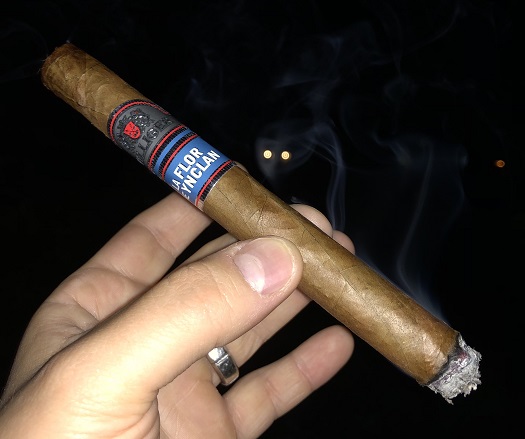
La Flor de Ynclan is handmade at the ABAM Cigar Factory in the Dominican Republic. It has three regular-production formats: Robusto (5 x 50, $11), Torpedo (5 x 52, $12), and Churchill (7 x 48, $12).

In addition, this year a limited edition Lancero Especial (6.75 x 43, $11) was added; only 500 boxes of 25 will be made annually. This vitola has a pigtail cap and, like its 2017 predecessors, sports a metallic band of silver, blue, red, and black (in case you’re wondering, the 2007 La Flor de Ynclan band depicts an enrobed woman posing with two spears and one hand atop a globe).

In terms of flavor, the Lancero Especial can be thought of as a more concentrated, slightly stronger version of the Toro I reviewed over a year ago. The core profile of oak, cream, and cinnamon is very similar, though the body is decidedly medium instead of mild- to medium-bodied. In the background, attentive smokers will notice hints of citrus, vanilla, and almond. The texture is bready.

The cinnamon spice becomes more prevalent toward the midway point. Here, I also find a taste of white pepper. In the final third, there is a shift back to oak and citrus, and the spice is more reminiscent of black pepper.

Across both samples I smoked for this review, the physical properties left little to be desired. Despite being spongy to the touch, the Lancero Especial exhibits a near-perfect burn behind a sturdy ash. The draw has some resistance but is mostly clear. The smoke production is average.

All told, I give the slight edge to the Lancero Especial over the Churchill—but not enough of an edge to change the overall score. I’m sticking with my (very admirable) rating of four stogies out of five.

[To read more StogieGuys.com cigar reviews, please click here.]

Patrick A

photo credit: Stogie Guys

Cigar Tip: Evaluating New Cigars

6 Aug

After smoking several thousand cigars and reviewing hundreds, I have a pretty good idea of what I do and don’t like. That, of course, doesn’t make my opinions any more valid that yours or anyone else.

But it does mean I have a lot of experience. And some of what I’ve learned might help you in evaluating cigars you’re trying for the first time.

These three tips are among those I consider most important.

— Unless you thoroughly dislike a cigar from the get-go, I recommend you hold off on making a determination from a single sample. Most reviewers smoke several cigars, and there’s good reason for that. Obviously, premium cigars are a handmade product and, therefore, subject to some differences along the production line. A poor burn, for example, could be because the cigar was too wet or because a leaf was improperly placed in the bunch. There’s another reason that can be even more important. The situation in which you smoke can exert a profound influence on how you feel about the cigar. Lighting up a celebratory stick after getting that promotion you wanted? It’s almost certain to go well. Trying to smoke while being interrupted by phone calls, unexpected diversions, or your neighbor jackhammering his patio will invariably make the experience less than ideal. An easy way to see this is to picture yourself lighting up as you watch your favorite sports team. They’re off to an early lead and play superbly to the end. Good cigar, right? Now, imagine that same cigar as your team is down almost immediately and hammered constantly to the end. Not nearly as enjoyable a smoke, is it?

— Beware of confirmation bias, the psychological term for the all-too-human tendency toward wanting something to be true and, therefore, deciding it is without weighing the evidence. With cigars, this occurs most often when one of your favorite manufacturers has a new release. You love their cigars, and you know you’re going to love this one, too. Maybe. But maybe not. The reverse can also happen. You pick up one from a brand you haven’t enjoyed—or maybe have just heard or read negative things about—and you subconsciously conclude beforehand that it isn’t good.

— Concentrate, but don’t go overboard. Not only will this help you deal with confirmation bias, it will also put you in a much better position to reach a reasonable conclusion. Getting in the isolation booth and doing nothing but puffing may help you find a somewhat obscure flavor or two, but that isn’t how most of us smoke cigars. I think that approach can actually diminish your evaluation. Smoking cigars should be about pleasure, not subjecting yourself to a tobacco version of the SAT. Enjoy yourself, enjoy your smoke.

And when you’re done, hopefully you’ll have a good idea of whether you want to smoke more of those cigars or not.

–George E

photo credit: Stogie Guys

Quick Smoke: Flor de las Antillas Toro

5 Aug

A couple times each week we’ll post a Quick Smoke: not quite a full review, just our brief verdict on a single cigar of “buy,” “hold,” or “sell.”

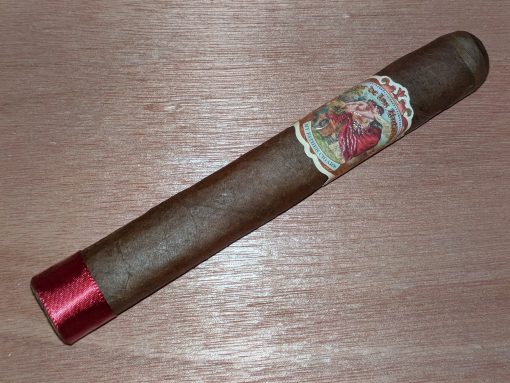
My Father’s Flor de las Antillas blend is a Nicaraguan puro from the Pepin family featuring a sun-grown Nicaraguan wrapper around Nicaraguan binder and filler tobaccos. The cigar has garnered high ratings from both Cigar Aficionado (which named it the top cigar of 2012) and Stogie Guys. The 6-inch, 52-ring gauge, box-pressed Toro features notes of coffee, earth, nutmeg, bread, and a hint of damp cardboard. Combustion is excellent, but I can’t help but feeling that this cigar doesn’t fully deliver compared to past editions.

Verdict = Hold.

–Patrick S

photo credit: Stogie Guys

Quick Smoke: E.P. Carrillo Capa de Sol Sultan

3 Aug

A couple times each week we’ll post a Quick Smoke: not quite a full review, just our brief verdict on a single cigar of “buy,” “hold,” or “sell.”

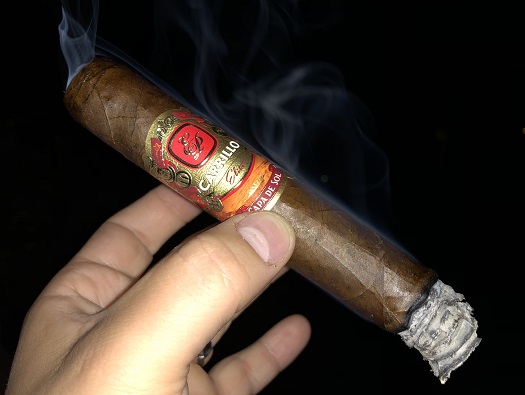
Until a few nights ago, this specimen had been resting in one of my humidors for about two years. Part of E.P. Carrillo’s “Elite Series,” the Capa de Sol blend sports a dark Ecuadorian leaf around Nicaraguan binder and filler tobaccos. In its three other sizes, which range in ring gauge from 52 to 54, I suspect the line is significantly stronger and denser. The Sultan (6 x 60) format, however, renders the blend cool, airy, and slightly subdued. Flavors include sharp red pepper, chalky earth, sweet cocoa, and a bit of black pepper spice. Expect the price to be in the $9 to $10 range. I’d like to try some of the other Capa de Sol sizes because my main reason for not fully recommending this cigar has to do with construction (flaky ash, somewhat burdensome burn) and the fact that it tends to overstay its welcome. If you’re a fan of the gordo size, however, take my criticism with a grain of salt; this just might be up your alley, and there’s a lot to like here flavor-wise.

Verdict = Hold.

–Patrick A

photo credit: Stogie Guys

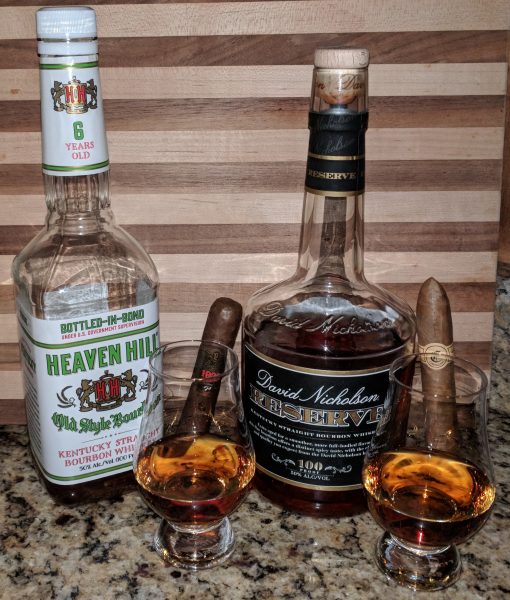
Cigar Spirits: Heaven Hill Bottled-in-Bond 6 Year Bourbon & David Nicholson Reserve Straight Kentucky Bourbon Whiskey

1 Aug

The soaring popularity of bourbon has resulted in high-end bourbon getting more and more expensive. Today, we’re ignoring the premium-priced whiskey and looking for some value bourbon options, both 100-proof Kentucky straight bourbons.

Heaven Hill Bottled-in-Bond 6 Year Bourbon is sold only in Kentucky for the value price of around $13 a bottle. Made by Heaven Hill (who makes Elijah Craig and Evan Williams), it uses a mashbill of 75% corn, 13% rye, and 12% malted barley. It’s a standout because, while there are many bottom-shelf bourbons in the same price range, none carry an age statement of six years (meaning all the whiskey in the bottle has been aged at least six years).

David Nicholson Reserve Straight Kentucky Bourbon Whiskey is also bottled at 100-proof, although it doesn’t carry an age statement. The brand was owned by the Van Winkle family until it was sold to Missouri-based Luxco in 2000. David Nicolson’s 1843 brand utilizes a wheated mashbill (as is the standard for Van Winkle bourbons), but the $30 Nicholson Reserve features a more traditional mashbill with rye along with corn and malted barley.

Heaven Hill Bottled in Bond 6 Year Bourbon
Color: Light amber.
Nose: Vanilla, brown sugar, burnt corn, citrus.
Palate: Butterscotch, spice, wood.
Finish: Long with cinnamon and burnt sugar.
Verdict: Just a solid, if unexceptional, classic bourbon. Good enough to sip neat, but perfectly priced and proofed for cocktails or other mixed drinks.

David Nicholson Reserve Straight Kentucky Bourbon Whiskey
Color: Orange copper.
Nose: Candied apple, spice, and leather.
Palate: Plenty of spice and vanilla with apple and red fruit.
Finish: Intense but short finish with fruit and spice.
Verdict: Though not for everyone, this is a unique and largely enjoyable sipping bourbon. There’s a short sweetness that is enjoyable and can work in the right cocktail.

In terms of price-to-value ratio, Heaven Hill Bottled in Bond 6 Year Bourbon is hard to beat, which is why it is a bourbon I try (despite being sold only in Kentucky) to keep on hand when I can. David Nicholson Reserve is more expensive, but also more unique. It’s worth a try, despite falling into a more competitive price range that includes such excellent bourbons as Eagle Rare 10 Year, Elijah Craig, and others.

These are both versatile bourbons that pair with excellent cigars. Heaven Hill Bottled in Bond 6 Year Bourbon pairs well with most balanced cigars, while the spiciness of David Nicholson Reserve is more apt towards a medium- to full-bodied cigar, like El Güegüense, Litto Gomez Diez Small Batch, Muestra de Saka, or Warped Futuro.

–Patrick S

photo credit: Stogie Guys

Cigar Review: Joya de Nicaragua Clásico Toro

30 Jul

About a month ago, Joya de Nicaragua announced the reintroduction of the Clásico line to the U.S. market. The move to bring back “the first Nicaraguan cigar ever” seems fitting at a time when the company is celebrating its golden anniversary.
“Clásico goes back to America at a moment when we have reached the highest quality standards at the factory in our 50-year history,” said Mario Perez, sales director for Joya de Nicaragua. “But we kept the same blend that the founders of the company created, the blend that once captivated world leaders when it was the official cigar of the White House back in the 70s.”

In a departure from the powerful smokes for which the company is known, Joya is marketing Clásico as “mild” and “creamy.” There are 6 formats, each packaged in 25-count boxes: Churchill (6.9 x 48, $8.50), Toro (6 x 50, $8.15), Consul (4.5 x 52, $7.00), Torpedo (6 x 52, $9.50), Número 6 (6 x 41, $6.50) and Señorita (5.5 x 42, $5.50).

The recipe remains the same as it did decades ago. The wrapper is Cuban-seed Ecuadorian Connecticut, and the binder and filler tobaccos are, of course, Nicaraguan.

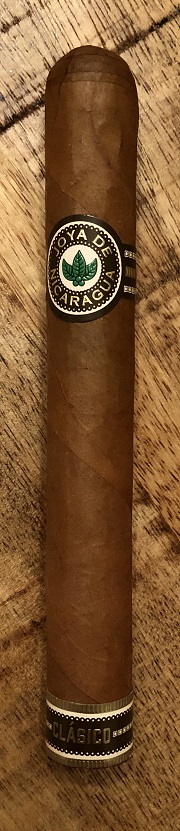
I sampled the Toro for this review. In addition to traditional, understated, and—in my opinion—beautiful bands that nicely highlight the golden color of the smooth, buttery wrapper, this cigar has bright, crisp pre-light notes of sweet hay at the foot. The cap clips cleanly to reveal a smooth cold draw.

Once an even light is established, I find a creamy texture and a medium body to the smoke. The flavors include white pepper, oak, and café au lait. Roasted peanut comes to the fore after half an inch; this is the most enjoyable segment of the cigar.

About a third of the way in, there is a notable decrease in what was already a soft spice, and the creaminess ramps up. The profile teeters between mild and medium once you reach the halfway mark. Here, the roasted peanut is now a creamier peanut, and the former base of white pepper and oak is mostly oak. At times, I can pick up hints of melon.

The finale is mellower than I expected. There is no spice, and the overall taste is somewhat papery with a subdued creaminess. As a result, I found myself setting the cigar down earlier than I do with most smokes.

The construction is in line with the standards that are characteristic of Joya de Nicaragua: straight burn, smooth draw, sturdy ash, and voluminous smoke production.

I enjoy mild cigars, but mild cigars need to have flavor. The Clásico Toro has flavor. At times it shines, and at times—especially the final third—it falls a little short. I’m going to try the other sizes to see if this is true across the board, or if other formats behave differently in this regard. For now, I’m awarding the Joya de Nicaragua Clásico Toro three stogies out of five.

[To read more StogieGuys.com cigar reviews, please click here.]

Patrick A

photo credit: Stogie Guys