Search results: site-policy/images

News: FDA Again Considers Premium Cigar Exemption

26 Mar

FDA-cigars-large

Handmade cigar industry groups supported President Trump’s appointment of Dr. Scott Gottlieb as the head of the U.S. Food & Drug Administration (FDA). Now they will see if that support was deserved.

On Friday, the agency announced its intent to seek comments about reconsidering existing regulations of premium cigars. The 90-day comment period opens today (Monday, March 26) and runs through June 25.

Here is the FDA’s summary of its action:

The Food and Drug Administration (FDA) is issuing this advance notice of proposed rulemaking (ANPRM) to obtain information related to the regulation of premium cigars under the Federal Food, Drug, and Cosmetic Act (FD&C Act), as amended by the Family Smoking Prevention and Tobacco Control Act (Tobacco Control Act), and regulations regarding the sale and distribution of tobacco products. Specifically, this ANPRM is seeking comments, data, research results, or other information that may inform regulatory actions FDA might take with respect to premium cigars.

In the notice, the FDA asks for “comments, data, research results, and other information related to the following topics: (1) definition of premium cigars, (2) use patterns of premium cigars, and (3) public health considerations associated with premium cigars.”

The request for comments also zeros in on an issue regarding the definition of youth (something we raised about the original 499-page deeming document): “Please provide any evidence or other information supporting your comments. Also, provide the definition of ‘premium cigar,’ ‘youth,’ and ‘young adult’ used for the studies, information, or views provided in your responses.”

The document specifically asks for additional research that might not have been considered when the FDA made the decision to not exempt premium cigars from their deeming rules in 2016. It specifically notes the PATH study published last September that reinforced the idea that different types of cigars have vastly different usage patterns.

Simply considering a premium cigar exemption, of course, doesn’t guarantee that the FDA will ultimately adopt one. The FDA notably considered and rejected such an exemption in its original regulation of cigars.

However, the willingness of the new FDA leadership to spend time and resources considering rolling back its regulations is a good sign for those who make, sell, and enjoy handmade cigars. Over the next 90 days, expect a big push from the handmade cigar industry for comments urging the agency to adopt a premium cigar exemption.

–Patrick S

photo credits: Stogie Guys

Quick Smoke: MBombay Corojo Oscuro Robusto

25 Mar

Each Saturday and Sunday we’ll post a Quick Smoke: not quite a full review, just our brief verdict on a single cigar of “buy,” “hold,” or “sell.”

This cigar punches well above its weight. It is strong, flavorful, and satisfying—a complex blend in a slow-burning short robusto format. With a dark, oily wrapper from Ecuador and filler melding Dominican, Ecuadorian, and Peruvian tobaccos, the Corojo Oscuro Robusto (4.5 x 50) retails for $6.99. I experienced an excellent draw and burn, with smoke that was thick and rich. The cigar begins with a bit of char, some cedar, and a long finish. The cedar remained constant throughout, becoming mixed with notes of chocolate, coffee, and a nice tobacco sweetness. All in all, an excellent cigar.

Verdict = Buy.

–George E

photo credit: Stogie Guys

Quick Smoke: Aladino Robusto

24 Mar

Each Saturday and Sunday we’ll post a Quick Smoke: not quite a full review, just our brief verdict on a single cigar of “buy,” “hold,” or “sell.”

Described as a “classic old fashioned cigar” by Julio R. Eiroa, Aladino makes full use of Honduran-grown Corojo tobacco, the wrapper leaf once used extensively in Cuba. It makes for an interesting medium-strength smoke. The predominant flavors are a moderate level of spice and natural tobacco sweetness. Along the way, I also found some charred wood, nuts, and a little leather. Aladino comes in many sizes, each said to be blended for a somewhat different strength level. The Robusto (5 x 50) sells for about $10.

Verdict = Buy.

–George E

photo credit: Stogie Guys

Commentary: What the FDA’s New Nicotine-Reduction Proposal Could Mean for Cigars

21 Mar

FDA-cigars-large

Last week, the U.S. Food & Drug Administration (FDA) announced the start of a new comment period on proposed rules regarding how the agency regulates tobacco products, including possibly cigars.

Through June 14, 2018, the FDA is accepting public comments relating to a new proposal for reduced nicotine cigarettes. The strategy is part of the agency’s new harm reduction approach to regulating tobacco products. Cigarette regulations were mandated by the Tobacco Control Act (TCA), which was signed into law by President Obama in June 2009, and the FDA formally expanded tobacco regulations to include cigars in May 2016.

Although the rule largely deals with cigarettes (the primary target of FDA regulation under the TCA), the new rulemaking could have a significant impact on cigars. The Advanced Notice of Proposed Rule Making asks for comments about creating regulations that would reduce the amount of nicotine in cigarettes on the grounds this would make it easier for those who want to quit smoking.

Harm reduction as a whole has drawn praise from many who see it as a more scientific approach than the FDA under the Obama Administration, which focused on stopping new products from reaching the market. Still, the nicotine reduction approach has its critics, including those who say mandating reduced nicotine cigarettes would result in black markets and international smuggling.

Part of the rulemaking notice addresses the potential impact on premium cigars and how they should be treated under a nicotine reduction approach:

Some suggest that large cigars and those cigars typically referred to as “premium” cigars should be regulated differently from other cigars, asserting that they are used primarily by adults and their patterns of use are different from those of regular cigars (81 FR 28973 at 29024). FDA requests information and data on whether large and/or so-called premium cigars should be excluded from a possible nicotine tobacco product standard based on asserted different patterns of use, and whether large and/or so-called premium cigars would be migration (or dual use) candidates if FDA were to issue a nicotine tobacco product standard that excluded premium cigars from its scope. FDA also requests data and information on whether and how there is a way that, if FDA were to exclude premium cigars from the scope of a nicotine tobacco product standard, FDA could define “premium cigar” to include only unlikely migration or dual use products and thereby minimize such consequences.

In response, Dr. Gaby Kafie, president of Kafie Trading Company, LLC (maker of Kafie 1901 cigars), responded with an open letter to FDA Commissioner Scott Gottlieb, whose appointment by President Trump was supported by many cigar industry groups. Kafie, a physician, addressed the issue of nicotine in handmade cigars and why cigars are fundamentally different from cigarettes and many other tobacco products:

It is known throughout the premium cigar industry (cigar factories) that our tobacco products do not cause addiction. Addiction is directly related to nicotine levels absorbed in the process of smoking. Unlike cigarettes, the tobacco used in premium cigars is fermented for long durations of time (6 – 18 months or longer). The fermentation process is done to specifically remove ammonia from the tobacco. This removal of ammonia from the tobacco reduces nicotine absorption by cigar connoisseurs.

I have always had certain beliefs about premium cigars, tobacco, ammonia, and nicotine absorption and efficacy in humans. I have always known that premium cigars are a poor nicotine delivery method to humans.

The last part of that passage is key to the opportunity this new FDA approach provides to handmade cigars who have been uniquely restricted by FDA regulation, since thousands of new cigars have been introduced every year, unlike cigarettes where new products are relatively rare.

Handmade cigars, because of their artisanal nature, the techniques used to make them, and the costs associated with them, are an inherently inefficient way to deliver nicotine. Unlike cigarettes, traditional cigars are produced to achieve flavor and combustion qualities, not  manipulated for nicotine levels.

While handmade cigars do contain nicotine since they are made of 100% tobacco, adults who choose to smoke handmade cigars do irrespective of their relative nicotine content. In fact, as Dr. Kafie observes, the production techniques that make premium cigars attractive to smokers tend to reduce cigars’ ability to deliver nicotine.

This is compounded by the fact that, when used properly, cigars are not inhaled, which also reduces nicotine absorption.

In the coming weeks, we’ll have more on what consumers should include in their comments to the FDA about this new proposal. In the meantime, know that this new FDA approach represents both a threat and a possible reprieve for handmade premium cigars.

Should the FDA more forward with its nicotine reduction proposal without exempting cigars, it would create massive compliance costs that could further reduce the introduction of new cigars, which largely use the same production techniques as cigars have used for hundreds of years (and therefore effectively the same levels of nicotine). Subjecting handmade cigars to nicotine reduction regulations would crush the creativity that drives the premium cigar industry and leave what little new cigar production that could survive such regulation in the hands of scientists and bureaucrats, rather than master cigar makers with skills handed down through generations.

Meanwhile, the upshot is the new proposed reduced nicotine regulations seem to recognize the regulatory framework that might make sense for cigarettes can’t and won’t work for cigars, especially under an FDA regime focused on harm reduction. The cigar industry should embrace the opportunity to point out again (as it did when the FDA created the current framework for cigar regulation) that cigars are a unique, handmade product, and that cigar smokers don’t smoke cigars for their ability to deliver nicotine but because they appreciate the unique aspects of this artisanal handmade product.

–Patrick S

photo credits: Stogie Guys

Cigar Review: Romeo San Andrés Toro

19 Mar

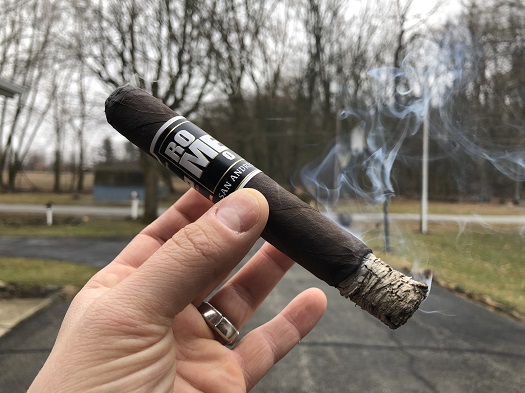
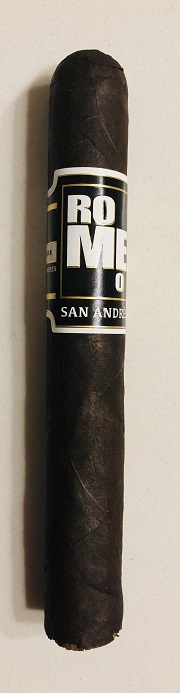
Earlier this month, Altadis unveiled the latest in the seemingly never-ending expansion of its highly visible Romeo y Julieta brand. This one is Romeo San Andrés, a collaboration between Rafael Nodal and A.J. Fernandez that adheres to the modern packaging of the Romeo line that was launched about six years ago (and, later, Romeo Añejo and Romeo 505 Nicaragua).

“This elegant cigar, crafted in Estelí, Nicaragua, brings today’s connoisseurs a contemporary take on the rich and robust profiles of the Romeo y Julieta collection,” reads a press release. “This exceptional premium offering employs an aged San Andrés wrapper, considered one of the most flavorful leaves used in today’s premium cigar market.”

In addition to the dark, Mexican wrapper, Romeo San Andrés sports a Nicaraguan binder and filler tobaccos from Nicaragua and the Dominican Republic. It comes in four sizes that range in price from $9.35 to $9.85: Robusto (5 x 50), Pirámides (6.1 x 52), Short Magnum (5.5 x 60), and Toro (6 x 54).

The latter is a firm, dense, handsome cigar with ultra-thin veins and smooth seams. At the foot, I find mouth-watering pre-light notes of dark chocolate and espresso bean. Once the rough cap is clipped, the cold draw is effortless.

The Toro starts full-bodied and strong with a hearty dose of black pepper spice, espresso, and leather. Background notes of dried fruits (fig and apricot, namely) add balance.

After only a quarter of an inch, there is a noticeable transition. As the spice begins to fade, flavors of cream and roasted cashew emerge. Here, I’d downgrade the body to medium, though the strength remains quite full.

At the midway point and thereafter, there is less and less spice. In its place, there are notes of café au lait, warm tobacco sweetness, earth, leather, and some rustic grit.

All the while, construction is impeccable. The straight burn requires zero touch-ups along the way, the draw is clear, the smoke production voluminous, and the gray ash holds exceptionally well off the foot.

San Andrés can be a polarizing wrapper. I know cigar enthusiasts who love it, and those who dislike it. If you’re in the former camp, give the Romeo San Andrés a try. It’s a very respectable San Andrés specimen and, in my estimation, worthy of three and a half stogies out of five.

[To read more StogieGuys.com cigar reviews, please click here.]

Patrick A

photo credit: Stogie Guys

Quick Smoke: La Palina Classic Lancero

18 Mar

Each Saturday and Sunday we’ll post a Quick Smoke: not quite a full review, just our brief verdict on a single cigar of “buy,” “hold,” or “sell.”

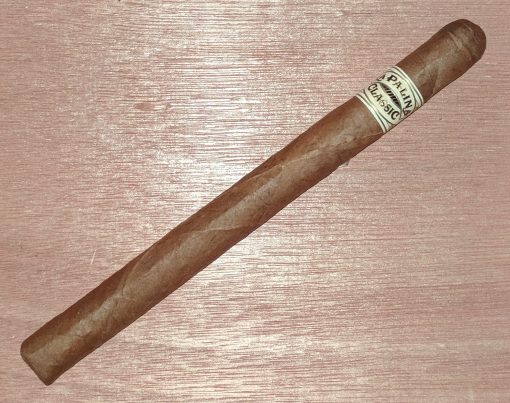
Often overlooked in La Palina’s now-expansive portfolio is the La Palina Classic. The line has been updated with three wrapper varieties (Rosado, Maduro, and Connecticut) in three sizes each (Robusto, Toro, Lonsdale) made at General Cigar Dominicana. Today, though, I’m smoking the orginal Classic blend in a Lancero size ($8), which was made at PDR Cigars with a Brazilian Habano wrapper, Ecuadorian binder, and Dominican and Nicaraguan filler tobaccos. The cigar features balanced, medium-bodied, roasted notes: coffee, cream, milk chocolate, cashews, and light cedar. Lanceros have a tendency for finicky construction, but this one was razor straight from start to finish.

Verdict = Buy.

–Patrick S

photo credit: Stogie Guys

Quick Smoke: Oliva Gilberto Reserva Toro

17 Mar

Each Saturday and Sunday we’ll post a Quick Smoke: not quite a full review, just our brief verdict on a single cigar of “buy,” “hold,” or “sell.”

This cigar is another in Oliva’s budget presentations, going for about $5 each by the box of 20. It’s got an Indonesian Sumatra wrapper with an Ecuadorian binder and Nicaraguan filler. My first impression was a not-too-pleasant mineral/medicinal taste, which backed off a bit but never fully went away as I later encountered some spice and a little leather. It burned OK, but smoke production was average at best. I like a lot of Oliva’s cigars, but this Toro (6 x 50) didn’t live up to others I’ve smoked.

Verdict = Hold.

–George E

photo credit: Stogie Guys