Search results: site-policy/images

Commentary: A Closer Look at the Impact of the FDA Cigar Pre-Approval Process

10 Aug

FDA-cigars-large

The Food and Drug Administration’s cigar regulations officially took effect on Monday, August 8, a date that will likely live in infamy for the handmade cigar industry. If you follow the industry by reading sites like this one, or if you spend a lot of time in cigar shops, you probably have heard that these regulations will be very bad for premium cigars. That’s true. But the full story is complex.

For starters, the full impact of the rules will take years to see. The various components of the new rules are wide-ranging with differing impacts. Warning labels, ingredient disclosures, sample bans, advertising regulations… Each create burdens for cigar companies, most of which can be passed to consumers. (The only rule change that likely won’t have any real impact is the part of the rule that sets the minimum age for purchasing cigars at 18, since that is the law everywhere already.)

The Biggest Change: FDA Pre-Approval Requirements

By far the biggest change is in what it takes to sell a new cigar in the United States. Before the FDA rules took effect, if you wanted to sell a new cigar, the process for doing so was relatively straightforward.

Basically, if you wanted to bring a new cigar to market and you didn’t own your own cigar factory, you found someone who did and struck a deal. Work out quantities, delivery date, and terms of payment and, depending on how active a role you wanted in blending and quality control, you could have a new cigar for sale in a matter of weeks or months if you were willing to pay for it. (Of course, there are more details and paperwork left out here but, fundamentally, that’s what it took.)

With the FDA rules having gone into effect on Monday, now, before you can sell or market that new cigar in the United States, the FDA must give you its permission. (Within two years, every cigar introduced after February 2007 will have to go through the same process.)

Estimates for the cost of obtaining that permission vary widely from $20,000 to $100,000 or more. Each cigar product (including each size and each packaging option) would need its own approval, though the FDA says the cost per approval should decrease if approval requests are bundled together, presumably as in multiple new sizes of the same blend.

Ultimately, whether the higher or lower estimates prove correct will have a huge impact, with the higher the costs the larger the barrier for new cigars. But just as important, if not more important, is the cost associated with how long the process takes. The FDA told us that the agency has a goal of acting on Substantial Equivalence approval requests (which are the route most cigars are expected to use) within 90 days. That may be the stated goal, but it is one many are skeptical the FDA can achieve, especially when you consider that many of the first cigarette approval requests took years for the agency to act on.

Uncertainty is the Biggest Cost

Talking with those in the cigar industry, I don’t think it would be an understatement to say that uncertainty of how the rules will be applied is almost worse than the impact of the rules themselves. Planning an ongoing business while facing unknown but potentially devastating regulations is all but impossible.

Hypothetically, if by spending $40,000 on the first application and $5,000 on additional sizes of the same blend guaranteed approval in six months, the impact would be bad, especially for smaller companies. But at least it would be known. What is scarier for a company, especially a small business, is spending that money on an application and then potentially having the FDA reject it, or sit on it for years without taking action. This is especially true since you already paid money to have the cigar made for testing and would have to spend more money to secure tobacco to make more when the approval is granted, if it is granted at all.

It’s easy to see how this uncertainty would be paralyzing to a cigar business that already has enough challenges making cigars that appeal to fickle consumers.

Loopholes in the FDA Pre-Approval Regime

I’ve never liked the word loophole when applied to complying with government rules. It implies there is something wrong with complying with the law to the letter, even if it isn’t in the exact way the regulators intended. But whatever you call it, as with any complex law, from the moment the FDA rules were written those affected naturally started to look for ways to lessen the impact.

The most obvious way to avoid or delay the full brunt of the FDA rule was to get cigars on the market prior to August 8. The flood of new cigars this summer suggests many companies took this approach, which buys them 18 months to see what the FDA approval process looks like, and another six months after that to sell their cigars without FDA approval.

Some companies are taking this even further with what are being called “stealth cigars,” which are cigars being delivered to one or a few retailers prior to the deadline without any fanfare with the intention of announcing the “new” cigar publicly at a later date when they are ready for wider distribution and marketing. Although I haven’t seen any examples as of yet, smart companies that were selling cigars in 2007 should have seen the possibility of the grandfather date issue, and made sure that cigars that normally may have been discontinued were kept alive with a small token amount of sales just to keep their options open.

Another possible loophole would be selling limited editions and other cigars overseas where retailers there could then sell them into the United States absent FDA regulations. Since the FDA regulations only apply to cigars made in the U.S., or imported or distributed into the U.S., direct-to-consumer sales from overseas could potentially legally bypass the FDA. Currently, many shops overseas are willing to ship Cuban cigars into the United States, and although the recipient may be violating the U.S. embargo on Cuban products, there isn’t any prohibition on buying cigars for personal use that aren’t of Cuban origin.

Judging the Impact

The full impact of the FDA regime will take at least two years to judge. Because of the flood of new cigars in advance of the rule’s effective date, we are entering a long period of transition. Further, until cigar makers have an idea of how much the approval process will cost and how long it will take, it will be too soon to know how they will react.

Any prediction made now is purely speculative, and absent enactment of the Traditional Cigar Manufacturing Preservation Act, the best we can do now is hope for the best and prepare for the worst.

–Patrick S

photo credits: Stogie Guys
Cigar Review: Davidoff Colorado Claro Aniversario No. 3

8 Aug

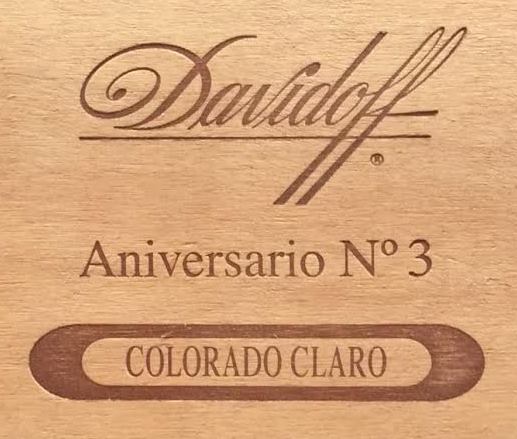
Box

The Short Perfecto in this line is one of my all-time favorite cigars.

UntitledSo, I couldn’t help but approach the larger Aniversario No. 3 with a bit of trepidation. Would this version—a 6-inch, 50-ring gauge toro—have the same pleasing impact?

I’ve smoked a few of the other Colorado Claro vitolas in addition to the Short Perfecto. But with this box of the Aniversario No. 3, it’s the first time I’ve been able to evaluate one on a consistent basis.

Davidoff first released the Colorado Claro in the early 2000s, then brought it back in 2009. It’s something of a spinoff of the Special Series, with its own lovely Ecuadorian Connecticut wrapper that Davidoff describes as “a very rare wrapper that makes all the difference in taste.” The binder and filler are from the Dominican Republic, where the cigars are rolled.

Retail price for the Aniversario No. 3 is about $25, and the toro comes packaged in boxes of ten. There are currently five vitolas in the line.

With the many new Davidoff productions in recent years, such as the Winston Churchill, Yamasá, and the soon-to-be-gone Puro d’Oro, the Colorado Claro’s strength no longer stands out as it once did.

What does stand out, however, is the fine balance among the flavors. The cigar begins with a delicate mix of tobacco sweetness and pepper, which holds on through the finish. Along the way, I also found nuts, wood, a bit of coffee, and the occasional note of that typical Davidoff mustiness.

As expected from Davidoff, the basics are first-class: construction, burn, smoke production, and draw were excellent in each of those I smoked.

All in all, it is an excellent cigar, one with the complexity and strength to please a seasoned smoker while remaining accessible to a newcomer.

For myself, I would rate the Aniversario No. 3 just a shade below the Short Perfecto. I believe that compact size and shape combine for a little more punch that sets it apart. Remember, though, I’m talking only a matter of degrees.

And none of that should detract from the Aniversario No. 3. It’s an extraordinary cigar that I rate four and a half stogies out of five.

[To read more StogieGuys.com cigar reviews, please click here.]

–George E

photo credit: Stogie Guys

Quick Smoke: Tatuaje Black Tubo

7 Aug

Each Saturday and Sunday we’ll post a Quick Smoke: not quite a full review, just our brief verdict on a single cigar of “buy,” “hold,” or “sell.”

Tatuaje-Black-Tubo

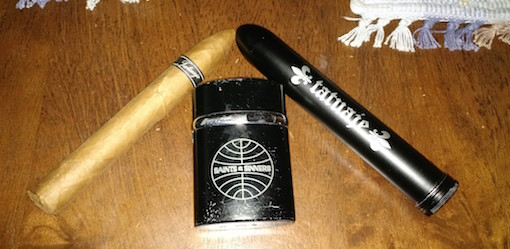
Released in 2009, this cigar had the better part of the decade to rest. It was the second Tatuaje Black Label (said to be Pete Johnson’s personal blend), following the original, now somewhat mythical, Corona Gorda jar release. The torpedo-shaped cigar features a good bit of black pepper combined with paper and bread. Not as full-bodied as more recent Black Label Tatuajes, it is lighter with more straightforward spice. I’ve smoked quite a few Petit Lanceros and Corona Gordas recently, and although the Black Tubo is enjoyable, the more current vintage Tatuaje Black cigars are smoking better.

Verdict = Hold.

–Patrick S

photo credit: Stogie Guys

Quick Smoke: Arturo Fuente Flor Fina 8-5-8

6 Aug

Each Saturday and Sunday we’ll post a Quick Smoke: not quite a full review, just our brief verdict on a single cigar of “buy,” “hold,” or “sell.”

Arturo Fuente Flor Fina 8-5-8

This isn’t the first time we’ve written about this cigar, and it probably won’t be the last, either. Because as much as it’s important to try the exciting and new, it’s equally important to connect with old favorites—particularly those smokes that offer great bang for the buck. The Flor Fina 8-5-8 (6 x 47) from Arturo Fuente costs around $5, yet it boasts a spicy, toasty aroma with notes of pine, nuts, and herbs. Construction is excellent. Work this smoke into your rotation the next time you have the chance, even if it isn’t sexy or trendy.

Verdict = Buy.

Patrick A

photo credit: Stogie Guys

Cigar Review: Crux Guild Robusto Extra

3 Aug

Guild 2

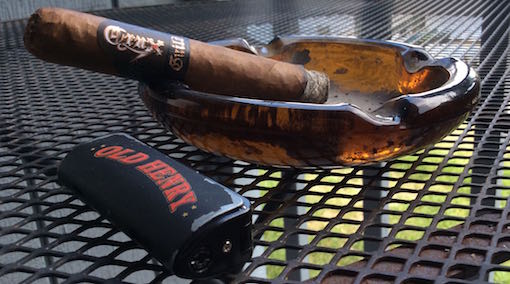
Crux, a boutique brand based in Minnesota, continues to bring new cigars to retailers’ shelves. Guild, announced a while back, is among the latest. And among the best.

Crux GuildIt is a full-bodied cigar with a lot of flavor and an opening punch that reminded me of Don José “Pepin” Garcia’s early releases in that it instantly grabs your attention with a spicy start that doesn’t let go.
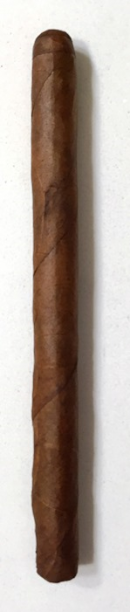
The blend features an oily Ecuadorian Habano wrapper that gives off a pre-light barnyard aroma. The binder is Nicaraguan, as are the filler leaves, though Crux offers no further information about their makeup. Like other Crux productions, these are rolled by Plasencia.

All five vitolas come in 20-count boxes with the cigars in four individual five-packs. The 5.25-inch robusto extra, which I smoked courtesy of Crux, is, at 54, the largest ring gauge of the bunch.

Each of the sticks I sampled had a near-perfect burn, excellent draw and lots of smoke production. The Robusto Extra costs $9.50.

This is a balanced and complex smoke that presents a variety of flavors and textures. After the spicy start dials back a bit, a nuttiness comes to the fore. That’s followed by rich cedar and a bit of tea. Other flavors I found included cinnamon, leather, and a sweet tobacco taste.

Crux co-owner Jeff Haugen is serious about the cigar business, which he’s also involved in as a store owner. When I spoke with him after the U.S. Food and Drug Administration rules came down in May, he was adamant that Crux would continue as a viable company.

He was equally resolute in his determination that Crux will release cigars when they are ready, not according to a timetable dictated by the FDA.

In this case, the wait for Guild was worthwhile. I give this cigar four stogies out of five.

[To read more StogieGuys.com cigar reviews, please click here.]

–George E

photo credit: Stogie Guys

Cigar Review: Ouroboros Lancero (Blue Havana Exclusive)

1 Aug

Lancero

In 2013, two of my favorite cigars happened to be Abaddon and Ouroboros, both of which are made exclusively for Blue Havana, a tobacconist in the Lakeview neighborhood of Chicago (not far from where I live). They were blended by Chris Schedel with help from Skip Martin of RoMa Craft Tobac. Both are made at Martin’s Fabrica de Tabacos Nica Sueño in Estelí. And both are to blame for sparking my admiration for RoMa—a healthy obsession that continues to this day.

Ouroboros LanceroRoMa’s fine cigar brands—including Intemperance, CroMagnon, and Aquitaine—are available at many tobacconists (a number, I’d bet, that’s growing, if Skip Martin’s Facebook posts from the just-concluded IPCPR Trade Show are any indication). For a time, Abaddon and Ouroboros could only be purchased in-person at the Chicago shop. Now, fortunately, everyone has access to these exclusive blends via Blue Havana’s online store.
That’s definitely good news.

Abaddon is named for the dwelling place of the dead in the Hebrew Bible and features a Nicaraguan hybrid (Criollo/Corojo) wrapper. Ouroboros is named for an ancient symbol of a dragon eating its own tail and is wrapped in a Brazilian Mata Fina leaf. Until last fall, both were only available in a single size (6.25 x 52). Now they are also available in a Lancero format.

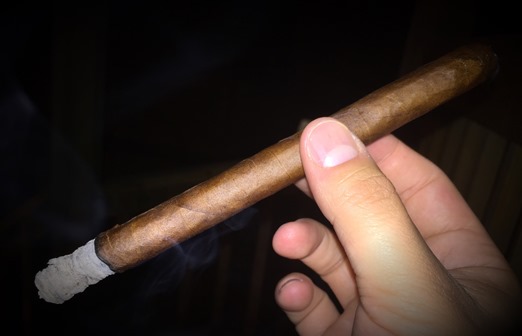
Covering the Ouroboros Lancero’s Indonesian binder and filler tobaccos from Nicaragua and the Dominican Republic is a rustic, lumpy wrapper with few veins and highly visible seams. Pre-light notes of smoky molasses emanate from the closed foot. A V-cut is all that’s needed at the head to reveal a smooth cold draw.

The opening flavor is gritty with ample pepper spice and black coffee. The sandy texture fades after a half-inch, giving way to a creamier mouthfeel while still maintaining full body. Espresso, roasted nut, cayenne heat, earth, and paprika come and go.

Like the original Ouroboros size, the Lancero does not increase in intensity in the final third; rather, the finale is characterized by the welcome additions of cream and cedar. That’s a nice change of pace. And I think most seasoned cigar veterans will agree this cigar is teeming with strength, balance, and complexity.

With superb combustion properties and a price tag around $9, this isn’t a cigar you want to miss—especially if, like me, you’re a fan of RoMa Craft Tobac. I continue to love this blend, and the thin, elegant format serves it well. The Ouroboros Lancero is worthy of a stellar rating of four and a half stogies out of five.

[To read more StogieGuys.com cigar reviews, please click here.]

–Patrick A

photo credit: Stogie Guys

Quick Smoke: Nomad Dominican Classic Line Renegade

31 Jul

Each Saturday and Sunday we’ll post a Quick Smoke: not quite a full review, just our brief verdict on a single cigar of “buy,” “hold,” or “sell.”

20160731_034521000_iOS

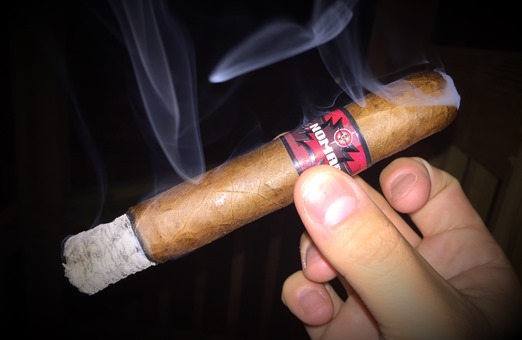
This robusto-sized cigar had been in my possession for about 18 months. That modest amount of time seems to have done it some good. The Renegade (5.25 x 54) is creamier and nuttier than I remember, though all of the other flavors from my April 2015 review still hold true: bread, woody spice, earth, and a touch of bitterness on the finish. I paid $9 for this well-constructed Ecuadorian Habano-wrapped Dominican. That’s a fair price, and it’s a good value if you can exercise some patience. (For what it’s worth, if this were a full review, I would bump up my rating from three-and-a-half to four stogies out of five.)

Verdict = Buy.

Patrick A

photo credit: Stogie Guys