Archive by Author

Cigar Spirits: Forged Oak Kentucky Straight Bourbon Whiskey

14 May 2015

The Orphan Barrel Series is an easy target for some bourbon aficionados to turn their nose up at. First there was the claim, or at least the implication, that these whiskeys were lost and found (Here’s a hint: No company big or small just loses hundreds or even thousands of barrels, especially since they are responsible for taxes on them). Then there are some strange or even goofy names: Lost Prophet, Rhetoric, Old Blowhard.
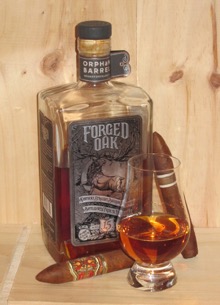
forged-oakAnd yet, despite those fair criticisms, I think Diageo (who owns the Orphan Barrel line, along with George Dickel, Bulleit, and I.W. Harper) is doing the bourbon world a great service with these old bourbons. In a time when extra-aged bourbon is in very high demand, they’ve released 15- to 26-year-old bourbons that, with a little work, can actually be found at retail prices.

For example, Rhetoric and Barterhouse are 20-year-old straight bourbons selling for under $100, notable at a time when most similarly aged whiskey costs at least twice that (more like $800+ or some drop-everything-and-head-to-Vegas luck for Pappy Van Winkle 20). The newest and youngest of the 5-bourbon line (at least for now) is Forged Oak, a 15-year-old straight bourbon which sells for $65-75 a bottle.

Diageo doesn’t currently own and operate a full-scale Kentucky distillery (though that’s changing), but we know Forged Oak was distilled at the New Bernheim Distillery, which Diageo’s corporate predecessor sold to Heaven Hill (maker of Evan Williams and Elijah Craig) later. At some point, the aging bourbon was then transferred to the aging houses at the famed Stitzel-Weller distillery, where the rickhouses remain the site of lots of aging bourbon, although the facility is no longer running new whiskey off its famed stills.

The 90.5-proof Forged Oak has a deep copper color. The nose is classic with caramel, dry spice, and a hint of orange. On the palate, it’s light clove, wood (not in overwhelming amounts), roast nuts, and light caramel. The finish is long with winter spices.

In many ways Forge Oak is a very classic bourbon. It features the oak you’d expect from an older bourbon but it’s tempered and balanced. I’d particularly recommend it to Elijah Craig 12 fans who want to see what a bit of extra age can do to a bourbon’s flavors (no coincidence as they come from the same distillery).

Pair it with a spicy cigar like the Arturo Fuente Opus X Perfecxion No.2, Litto Gomez Diez Small Batch No. 2, Ramón Allones Specially Selected (Cuban), or My Father El Hijo.

Once you’ve hit the highlights of the sub-$30 bourbons, this is the next step in age (and price). I’ve tasted all the Orphan Barrel bourbons and, despite being the least expensive, Forged Oak is, in my opinion, second only to the limited release 22-year-old Lost Prophet.

–Patrick S

photo credit: Stogie Guys
Cigar Review: L’Atelier Imports Travailleurs

12 May 2015

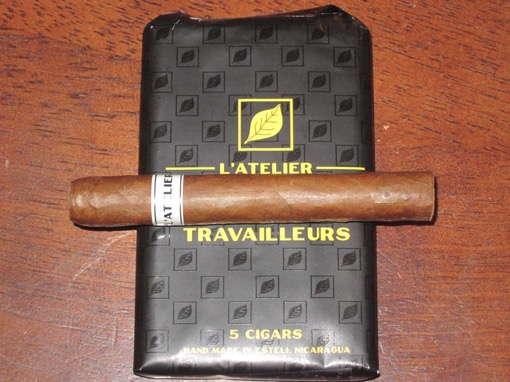
latalier-travailleurs

With the cold of winter and heat of summer, sometimes the ideal cigar is one that doesn’t last much more than 30 minutes. Because of this, I find I’m always in search of a good, reasonably priced little cigar.

In that search, the relatively new L’Atelier Travailleurs seemed like a promising new addition to the little cigar category. In particular because the full-size L’Atelier blend, on which the Travailleurs is based, is a cigar I enjoy. (The blend uses an Ecuadorian Sancti Spiritus wrapper over Nicaraguan filler and binder tobaccos.)

The challenge, however, seems to be taking a full-sized blend and miniaturizing it without losing complexity and nuance. It sounds simple enough, but experience suggests it isn’t, at least not while keeping the cigar affordable enough to peak consumers’ interest.

Introduced at last summer’s trade show, the Travailleurs, along with mini (4.5 x 38) versions of the Surrogates (Animal Cracker), El Suelo, and Trocadéro, started shipping earlier this year. All the L’Atelier brand minis come in five soft-packs and have a recommended price of $14.50 per pack ($2.90 per cigar).

No cutting of the cap is needed as it comes pre-cut. Once lit, I find medium-bodied smoke. There are doughy bread and hay flavors, hints of graham cracker, cream, and leather notes, and a persistent dry sawdust finish. There’s little variation beyond that profile, but the result is a consistent, tasty smoke for 30-40 minutes. The cigar is a little soft to the touch, but that isn’t to the detriment of construction. The burn is even and the draw isn’t too tight (a common problem for small cigars).

While my quest for the perfect mini cigar may not be over, this new offering is a welcome addition. The L’Atelier Travailleurs is a straight-forward but tasty, well-constructed, medium-bodied little smoke offered at a very reasonable price, and that earns it a rating of three and a half stogies out of five.

[To read more StogieGuys.com cigar reviews, please click here.]

–Patrick S

photo credit: Stogie Guys

Quick Smoke: Don Pepin Garcia Cuban Classic 1950

10 May 2015

Each Saturday and Sunday we’ll post a Quick Smoke: not quite a full review, just our brief verdict on a single cigar of “buy,” “hold,” or “sell.”

don-pepin-cuban-classic-1970

As Don Pepin was bursting onto the cigar scene nearly a decade ago, I remember smoking quite a few Cuban Classics known  simply as the Black Line. Billed as Pepin’s most full-flavored cigar at the time, it was also the Pepin cigar most likely to be had for sale and frequently available for around $4. Though I haven’t smoked many lately, I did recently light up this toro. Hardly the full-bodied cigar I remembered, (makes you wonder: Has the cigar changed, or something else?) it’s more medium-bodied with hay, salted butter, mild earth, and wood spice. Still, it’s a enjoyable cigar and if you find one on sale it’s unlikely to disappoint.

Verdict = Buy.

–Patrick S

photo credit: Stogie Guys

Cigar Spirits: I.W. Harper Kentucky Straight Bourbon Whiskey

7 May 2015

Like so many old bourbon brands, I.W. Harper has an interesting and complex story. Originally introduced in 1879, the brand was discontinued in the U.S. market around 1990 but continued to thrive in the Japanese market.

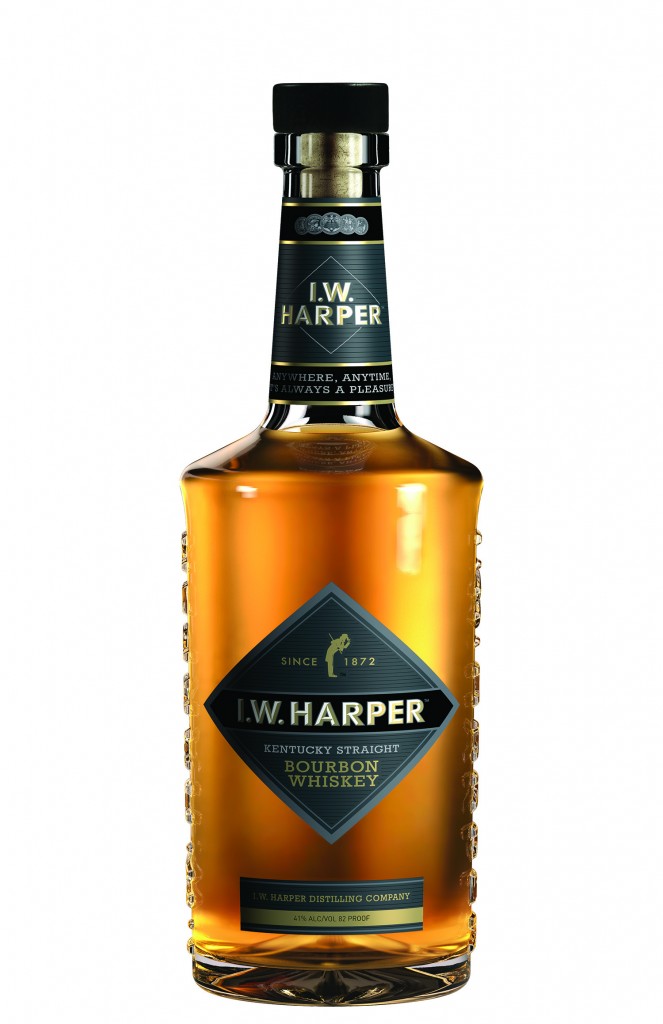
IW-HARPERI.W. Harper is owned by Diageo, the largest spirits company in the world, but a company that has a long, though often puzzling, history in the American bourbon market. (It’s a history that is too long and complicated to recount here, but if you want the full story, I highly recommend Chuck Cowdery’s book Bourbon Strange.) Currently, Diageo’s American whiskey portfolio consists of George Dickel, Bulleit, and the Orphan Barrel series.

Now you can add two I.W. Harper bourbons to that list. A 15-year-old limited edition is coming soon, and a non-age statement version that will is arriving on shelves now. Today I look at the regular release, which sells for $35 per bottle.

The bourbon is a blend that, according to some reports, has at least a small amount of the 15-year-old bourbon. It is a light bronze color and made at the New Bernheim distillery, formerly owned by Diageo and now home to Heaven Hill (maker of Elijah Craig and Evan Williams). The nose is delicious and inviting with fresh corn, oak, and black cherry.

On the palate, I.W. Harper features buttered popcorn, caramel, subtle oak, and a bit of creaminess. The finish is very short and clean.

I.W. Harper is surprisingly lively for just 82-proof. At the price ($35) there are plenty of excellent other bourbons, but this one isn’t out of place. It doesn’t taste particularly old or young. Instead, it’s mostly just subtle, sweet, and clean. It may not be the first bourbon I’d recommend, but it will be pleasing for both the bourbon novice and the aficionado.

Pair it with a milder cigar, ideally one with some creaminess. I’d recommend the Illusione Singular 2014, Tesa Vintage Especial Rothchild, or Cuban Cohiba Behike.

–Patrick S

photo credit: Diageo

Commentary: Thoughts About Mexican Tobacco on Cinco de Mayo

5 May 2015

mexico-cigar-flag

It’s Cinco de Mayo, a day that celebrates the Mexican victory in the Battle of Puebla, where the Mexican army defeated the imperial ambitions of Napoleon III’s France. You more likely know it as the time of year when advertisements for Mexican beer are everywhere and margaritas and tequila are over-represented at bars.

But I’d like to use the opportunity to talk about Mexican tobacco.

A few days ago, my colleague mentioned his preference against San Andrés wrapper—”I’m more than ‘not a fan’ of the Mexican San Andrés wrapper” he wrote—and I find myself in much the same boat. Tell me nothing more about two cigars than one has a San Andrés wrapper and one does not, and I’ll pick the non-Mexican leaf.

My problem, and this a personal preference, is with the gritty, dry flavors frequently absent any significant sweetness and occasionally with a acidic twinge. For a while I thought this may have been a historic bias against Mexican tobacco, but I’ve tasted enough cigars (including blind) to know it is an accurate perception.

Mexican tobacco’s history plays a role in its reputation for rough, gritty cigars. For years, while the country did export tobacco to be used as a component in many well-known cigars (Macanudo, for example uses a San Andrés binder), cigars produced in Mexico were almost exclusively puros, because tax rates on imported tobacco were prohibitively high.

The result was puros (primarily Te-Amo, which had a big following; if you grew up in New York City in the 80s and 90s, as I did, Te-Amo was a name you saw prominently featured at bodegas and newspaper stands) made by the Turrents, the first family of Mexican tobacco. Those cigars were notably rough and strong, and had only a niche following.

Today the Turrents are severing old ties and rebranding (and I look forward to seeing what they produce next). Mexican wrappers are being used more than ever, but less than ever in Mexican puros. The price of Connecticut Broadleaf has turned many cigarmakers to Mexican San Andrés wrappers as a source of Maduro.

To that end, some cigars with San Andrés wrappers are some of my favorites, including Drew Estate’s Undercrown, Illusione *R* Rothchildes, and Tatuaje’s The Face Halloween blend. These cigars, whether through aging or blending, overcome the aspects of the San Andrés wrapper that I often find off-putting. Not to mention the persistently whispered rumors that Padrón uses Mexican Maduro wrappers without disclosing it, although significant skepticism is advised since no one seems willing to put their name to the claim.

So I’ll continue to try new cigars with San Andrés wrappers or other Mexican components. In fact, I wish cigarmakers were experimenting more with different wrappers grown in San Andrés like the Habano wrapper used in the A. Turrent Revolution. And yet (just as my taste in red wine is generally not for merlot, although occasionally one really impresses me) I remain slightly biased against San Andrés wrapped cigars, not because they are bad, but because my personal preference is such that it takes an exceptional example to impress me.

P.S. For a more traditional Cinco de Mayo reference, checkout my Margaritas recipe.

–Patrick S

photo credit: iivangm (Flickr)

Quick Smoke: La Dueña Belicoso

2 May 2015

Each Saturday and Sunday we’ll post a Quick Smoke: not quite a full review, just our brief verdict on a single cigar of “buy,” “hold,” or “sell.”trinidad-reyes-sq

la-duena-belicoso

I noted last year that although I really enjoyed La Dueña when it was first released, the later iterations didn’t quite hit the mark in the same way. With that in mind, I revisited the cigar this week by smoking the Belicoso size. The Broadleaf-heavy line still features dry chocolate flavors, wood, and black coffee. What’s missing is the sweetness and depth that really made it a standout. Ultimately, this Belicoso version is not as good as I remembered (hard to say if it’s time or just the vitola), but the conclusion is inevitable. In it’s current form it’s a solid smoke but hardly a standout.

Verdict = Hold.

–Patrick S

photo credit: Stogie Guys

Cigar Spirits: Five Best Buy Bourbons for the Kentucky Derby, or Any Day

28 Apr 2015

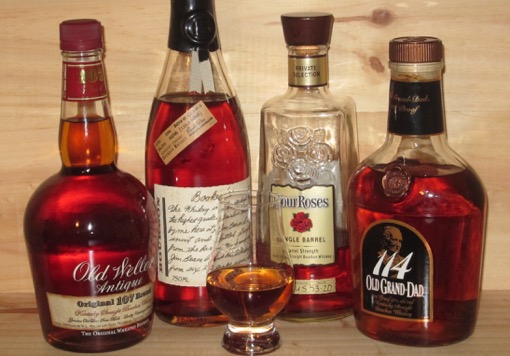
best-buy-bourbons

The Kentucky Derby is as close to a bourbon holiday as we have in America. So if you’re thinking of running to the liquor store to pick up some bourbon for the Run for the Roses, here are five best-buy bourbons, plus some honorable mentions worth consideration.

What do I mean by a best buy? I mean bourbons that over-perform their retail price and aren’t overly difficult to find. While you wouldn’t find a $200 bottle of bourbon on this list, Elmer T. Lee ($32), Pappy Van Winkle 15 ($80), or George T. Stagg ($80) would all make this list if you could easily find find them at suggested retail price. (Elmer T. Lee has been missing from most shelves for around six months at least, and Pappy and George T. Stagg have been highly allocated for years and regularly sell for many times their retail price.)

So without further ado, here are five best buy bourbons that provide good bang for the buck.

Old Grand Dad 114 – Costing barely more than $20, this is a connoisseur’s bourbon at nearly bottom-shelf prices. It features intense flavors, high proof, complex wood, and sweetness. (FYI: Old Grand Dad 114 is essentially a less diluted version of the 80-proof Basil Hayden, which sells for double). My only hesitation with putting it on this list is that sooner or later enough people will discover what a gem this OGD114 is and it will become overly difficult to find.

Weller 107 – Two or three years ago, Weller 12 ($30) would take this spot, but now people are buying every bottle they come across at retail price. This 107-proof “Weller Antique” is itself quickly becoming a little harder to find, but at $25-30 it remains a quality example of the slightly sweeter stye of wheated bourbon that makes people drool when it’s in a bottle with the words Van Winkle on it.

Buffalo Trace – It’s not a small batch or single barrel, nor does it carry an age statement guaranteeing a certain number of years in the barrel, but the eponymous bourbon of the famed Buffalo Trace Distillery delivers the goods. Vanilla, toffee, wood, and fruit make it pleasant neat, and the price ($25) makes it easy to pour into a cocktail.

Booker’s – I’ve noted before that Booker’s ($50-60) is a bit underrated, and I stand by it. Brash vanilla and wood mean it isn’t for beginners, but it is dangerously tasty and, best of all, available at almost every decent liquor store or bar with more than a handful of bourbon offerings.

Four Roses Private Barrel Selection – The entire Four Roses line is excellent (even the standard Yellow Label) but the Private Barrel Selections ($50-70) are truly world class. Because each barrel is a store pick, this is a bit tougher to find, but fortunately it isn’t impossible yet. Each of Four Roses’ ten recipes takes on its own character, but none that I’ve come across have disappointed.

Honorable Mentions: Old Forester, Very Old Barton, Jim Beam Black 8 Year, Bulleit, Eagle Rare 10 Year, Blanton’s.

For more excellent bourbons, see my lists of Five Good Bourbons Under $30 and Five Good Value Bourbons Under $20.

–Patrick S

photo credit: Stogie Guys