Archive | Cigar Reviews RSS feed for this section

Cigar Review: Nat Cicco HHB 56

2 Jul 2013

If you’ve heard of Nat Cicco Cigars, it’s most likely for the “Rejects” value-oriented lines. Lately, though, the company has been moving into the more exclusive end of the market.

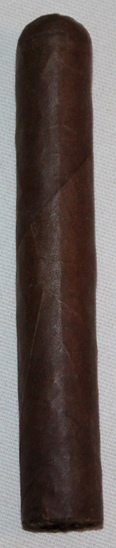
Nat-Cicco-HHBTheir most ambitious move to date is the Nat Cicco HHB, about which the company brags, “Just compare it… Especially to Cuba’s Cohiba Behike.” That’s quite a suggestion considering the Cohiba Behike is considered by many to be one of the finest cigars made, and it commands an astronomical $40 (or more) price.

At least before smoking one, there are plenty of similarities to the the most expensive widely distributed cigar in the world. Like the Cuban Behike, the HHB features a gold and black band, a black lacquer flip top box of ten, a high price (although the HHB only runs $14), and it comes in three sizes built around ring gauges of 52, 54, and 56. (Not to mention HHB is sufficiently similar to the BHK moniker Behike goes by.)

I smoked three of the 56-ring gauge variety for this review, which runs 6.25 inches in length and has a closed foot. Like the Behike, it has a pigtail cap and a Cuban triple-cap. The Ecuadorian wrapper, which surrounds Nicaraguan filler and binder tobaccos, is nearly flawless with shine, making for an excellent-looking cigar.

Enough about presentation. Fancy looks and packaging are easy to do when the price is more than a 3D movie ticket. The important question is: How does it smoke? The answer is pretty well. Pleasant, balanced, and mellow are all adjectives that come to mind. It’s not super complex, but it does feature mild- to medium-bodied roast peanut, cedar, and cream notes that stay uniform. And construction is flawless with an even burn, sturdy ash, and good draw. I could definitely see myself lighting one up on a weekend morning with the paper and a good cup of coffee.

Nat Cicco’s corporate owner Zander-Greg wants me to “just compare it” to Behike, so here goes: While there are some similarities, you won’t confuse this with the richer, more complex Cuban. What is similar is that, like the Behike, it’s a good cigar but hard to justify due to the price.

Despite the over-the-top comparisons, this is an admirable effort for a company not known for super-premium cigars. And while it would be easier to recommend if it was $5 cheaper, it still earns a most respectable rating of three and a half stogies out of five.

[To read more StogieGuys.com cigar reviews, please click here.]

Patrick S

photo credit: Stogie Guys

Cigar Review: Casa Miranda Chapter Two Toro (Pre-Release)

1 Jul 2013

Two years ago, Miami Cigar & Co. debuted Casa Miranda at the IPCPR Trade Show, a “small-batch, ultra-premium” line comprised of an Ecuadorian Habano wrapper around Nicaraguan tobaccos. Shortly after the convention, the man responsible for blending the highly anticipated release, Willy Herrera, left El Titan de Bronze—the Miami factory where the cigar is made—for Drew Estate before Casa Miranda even came to market.

Casa Miranda Chapter Two ToroNotwithstanding Herrera’s departure (and subsequent success with the Herrera Estelí line), Miami Cigar is expected to introduce the Casa Miranda Chapter Two at next month’s convention. I was sent a pre-release sample by Miami Cigar to make this review possible.

Unlike Chapter One, Chapter Two is made at the My Father Cigars factory in Estelí, Nicaragua. It boasts a Nicaraguan Corojo wrapper around tobaccos from Brazil, Nicaragua, and the Dominican Republic. “Just like any great novel, our story continues to gain momentum with the release of Chapter Two at this year’s IPCPR,” said Jason Wood, vice president of Miami Cigar. “I look forward to…feedback on this medium-bodied beauty.”

Four sizes will be available: Robusto (4.5 x 50), Corona Gorda (6 x 46), Toro (5.5 x 54), and Gran Toro (6 x 60). Prices will range from $6.35 for the Robusto to $8 for the Gran Toro.

As this is a pre-release review, I was only able to smoke one Toro for today’s article. The cigar is quite soft in some spots—and the foot suggests a slightly loose packing of tobaccos—yet the overall feel is one of quality. The wrapper has a noticeable absence of large veins and ample oils. The pre-light notes are faint and earthy.

The texture of the flavor is defined by the incredibly easy draw and significant smoke production. Billowy, almost airy, the taste has a spicy Corojo punch offset by a syrupy sweetness, damp earth, and creamy peanut. On the finish, the spice lingers on the tip of the tongue and the roof of the mouth. The resting smoke is particularly fragrant and sweet. The final third is leathery.

My single sample displays wonderful combustion qualities, including a straight burn and a gray ash that holds well off the foot. My only complaint might be that the Toro burns rather quickly (undoubtedly a result of the effortless draw, which might be a little too effortless).

Keep an eye out for this cigar post-IPCPR. Judging by my single pre-release experience, it’s a well-made, balanced smoke with interesting flavors and a terrific aroma. And the price point of $7.60 renders it an excellent value. I look forward to revisiting the Casa Miranda Chapter Two Toro in the near future, and am pleased to award it four stogies out of five.

[To read more StogieGuys.com cigar reviews, please click here.]

Patrick A

photo credit: Stogie Guys

Cigar Review: Perdomo Lot 23 Robusto

27 Jun 2013

Lot 23 RobustoTastes change. At least mine do.

More than six years ago, I reviewed the then-new Ecuadorian Connecticut-wrapped Lot 23 Toro with Nicaraguan filler and binder from a Perdomo farm. I wasn’t particularly impressed.

For whatever reason, I rarely delve into Perdomo’s extensive offerings (more info on the various brands here), so it didn’t take much for Lot 23 to slip from my consciousness after that.

Recently, though, I picked up ten Robustos at what seemed a bargain price, under $3 per stick. Something made me want to give this cigar another try. I’ve smoked a few from this new batch, and I’m glad I decided to revisit the cigar. I’ve enjoyed each of them.

For one thing, I think the Robusto (5 x 50) is better suited to the Lot 23 blend than the inch-longer Toro. I also haven’t noticed the dryness that bothered me before.

But more importantly, I believe my tastes are not the same as they were in 2007. I think I was smoking a lot of stronger cigars back then. My selections ran more toward Don Pepin Garcia, Tatuaje, La Flor Dominicana, and other potent sticks.

I also don’t think I was as open to a milder cigar. Although I continue to smoke many strong cigars, these days I seem to have moved to a different taste plane where I can appreciate subtlety and nuance as well, particularly as a change of pace.

So for this review, I’ll revise my earlier rating of the Lot 23 and award it a very solid four stogies out of five. Who knows what I’ll find if I smoke a Lot 23 in 2019?

[To read more StogieGuys.com cigar reviews, please click here.]

George E

photo credit: Stogie Guys

Cigar Review: Vegas Cubanas (CRA Exclusive)

24 Jun 2013

A few weeks back, I received a notice from Cigar Rights of America (CRA) that my membership was up for renewal. I’ve been a member pretty much since CRA’s inception, and am happy to support their efforts to defend cigars and battle against bans and taxes.

Vegas Cubanas CRAFor renewing my membership, CRA sent me two complimentary cigars. One was the Vegas Cubanas by Don Pepin Garcia. Like the other cigars CRA members are entitled to, it is not available anywhere else. From what I can tell, while the makeup of the cigar is the same as the standard Vegas Cubanas blend that’s been on the market since 2005, its proportions (6 x 52) are unique, though very similar to the Generosos vitola (6 x 50), which retails for about $7.

Information is scarce about this CRA offering. Again, though, I have no reason to believe the tobaccos are any different than the original Vegas Cubanas. If that’s the case, this cigar boasts Cuban-seed corojo long-fillers, a Habano Rosado claro wrapper, and a Nicaraguan binder. It is made at El Rey de Los Habanos in Miami.

Like the other Vegas Cubanas cigars I’ve smoked over the years, the pale wrapper is slightly wrinkled, mostly dry, and has a bit of a reddish tinge. The feel is consistently soft from the foot to the triple-cap. Only the faintest pre-light notes of sweet hay are apparent. A double guillotine cut reveals a surprisingly stiff draw.

Once lit, a profile of nuts, coffee, bread, and cedar spice emerges. The spice is dominant, and heavily concentrated on the tip of the tongue. It is offset by sweet honey and a little cream. I don’t think I’m grasping at straws when I say the aftertaste reminds me of graham cracker.

Some of the spice starts to dissipate at the midway point, yet the core flavors remain. All the while the cigar’s physical properties are excellent. The draw opens significantly to enable solid smoke production, the burn line is straight, and the gray ash holds well off the foot.

Truth be told, Vegas Cubanas is not a line that’s been on my radar for some time. So credit is due to CRA for reminding me why I used to light up this line with some regularity. If you’re renewing your CRA membership—or becoming a new member for the first time—you have no way of controlling what they send you. If you happen to get this smoke, you won’t be disappointed. Either way, if you haven’t had a Vegas Cubanas in a while, pick one up. I award this size four stogies out of five.

[To read more StogieGuys.com cigar reviews, please click here.]

Patrick A

photo credit: Stogie Guys

Cigar Review: Camacho Connecticut Toro

17 Jun 2013

As we reported in our last Friday Sampler, the Davidoff-owned Camacho brand is essentially reinventing itself. Camacho’s reputation for full-bodied smokes is being embraced like never before, including new scorpion-themed packaging and claims like “bold is back with a vengeance.” And the Camacho portfolio is being narrowed down from 11 blends to 6.

Camacho ConnecticutMost of the blends that made the cut—Corojo, Corojo Maduro, Connecticut, Criollo, Triple Maduro, and Diploma—are getting more than just a marketing makeover. They’re getting completely re-blended and re-introduced at next month’s IPCPR Trade Show in Las Vegas.



Since it came out in 2009, I’ve been a fan of the Camacho Connecticut. So I was pleased to learn it is one of two lines (along with the Triple Maduro) to not get a re-blend. Looks like all I’ll have to get used to is the new look. Hopefully the price point won’t increase.

Just in case, I picked up a handful of Camacho Connecticut Toros (6 x 50) at my local shop for $6 apiece. Like the Monarca, it has a dry, pale Ecuadorian Connecticut wrapper around a Honduran binder and Honduran and Dominican long-filler tobaccos. Hardly any veins are visible. The pre-light notes remind me of sawdust and hay.

One reason I always liked the Camacho Connecticut is it brings more to the table than just classic Connecticut flavors—and it does so with a little gusto. The Toro is no exception. At the outset, a zesty profile of spice, oak, and black pepper sets a bolder tone that you might expect from a typical Connecticut smoke. Then, just when you start second-guessing the makeup of the blend, more traditional tastes emerge, including cream and roasted nut. The finish witnesses a reprise of spice.

Throughout, construction doesn’t pose any issues. Every time the burn line starts to waver, it self-corrects before I reach for a wooden match to execute a touch-up. The gray ash holds firmly off the foot. The draw is smooth. And the smoke production is excellent.

The powers that be at Davidoff and Camacho made a smart decision when they opted to leave the Connecticut blend as-is. The Toro is tasty, affordable, interesting, and an excellent companion to a cup of coffee. For that, it earns a commendable rating of four stogies out of five.

[To read more StogieGuys.com cigar reviews, please click here.]

Patrick A

photo credit: Stogie Guys

Cigar Review: Arturo Fuente King T Rosado Sun Grown

13 Jun 2013

Fuente King TEven for Fuente, this 2012 release is loaded with bells and whistles, like a brilliant red aluminum tube and a cloth foot band. You sense it’s something special before you light up. And when you do, there’s no doubt.

From the first rich puffs to the finger-burning last, the cigar is a powerful pleasure. The 7-inch King T line is normally encased in a Connecticut shade wrapper (check out a review here). But this line uses a sun-grown rosado wrapper. Maybe it’s true, as has been written, that this was a mistake at the factory that was allowed to go forward. But with the sterling Fuente reputation for quality, I find it hard to believe.

Whatever the reason, the result is a stunning cigar, worthy of its $10-plus price tag. The 49-ring gauge is comfortable, it burns slowly (I enjoyed one through an admittedly unusually fast baseball game) and the smoke volume is excellent. Cedar is predominant throughout, not a surprise considering the tube is lined with a Spanish cedar sheet that’s handy for lighting.

I found it to be a strong cigar, a bit more so than its royal-named siblings and others in the Chateau Fuente line. The strength, however, doesn’t come with any harshness or unpleasant bite. Surprisingly, the finish is rather light.

With the tube, the extra band, and the fairly high-dollar price, you might think of this King T as a special occasion cigar. There’s no question it can fill that role with ease. Limit it to such appearances, though, and you’ll deny yourself a treat that you undoubtedly deserve more often.

Considering what this cigar delivers, it is worthy of a rare five-stogie rating.

[To read more StogieGuys.com cigar reviews, please click here. A list of other five-stogie rated cigars can be found here.]

George E

photo credit: Stogie Guys

Cigar Review: Drew Estate Herrera Estelí Short Corona

12 Jun 2013

When I visited Drew Estate’s operations in Estelí in May 2012, Willy Herrera was the tall, soft-spoken individual who was anything but the center of attention. At the time, he was still new to Drew Estate, fresh off his tenure as master blender at El Titan de Bronze in Miami’s Little Havana. He was nice enough to hang around the Cigar Safari crew for much of the trip, but he seemed content to let Jonathan Drew and Steve Saka do most of the talking.

Herrera Short CoronaI couldn’t personally make it to this year’s Cigar Safari (though my colleague did attend). I imagine Willy was a little more in the spotlight this time around. After all, now his inaugural blend for Drew Estate—Herrera Estelí—is on the market, and by every measure I can find, it seems to be a resounding success. The online cigar community has overwhelmingly embraced it, and even the mainstream media is starting to give it the attention it deserves. Cigar Aficionado recently awarded the Piramide Fino a score of 93.

So it will come as no surprise that I’m a big fan of the blend. True, Drew Estate is an advertiser with StogieGuys.com. And true, Drew Estate did provide samples of the Short Corona to me to make this review possible. But anyone who dismisses my praise of the cigar on these grounds (neither impacts my review, of course) is doing himself a disservice. I highly suggest you seek out Herrera Estelí. I wouldn’t be surprised if it makes it to my list of the top smokes of 2013.

When you do locate the cigar, the Short Corona (4.9 x 46) will be a good choice. One of five vitolas, this blend of Ecuadoran, Honduran, and Nicaraguan tobaccos has a clean, golden wrapper, a gorgeous cap, a moderately firm feel, and pre-light notes of hay and molasses. A simple punch cut clears the way for a smooth draw.

Right off the bat, it’s easy to see how Herrera Estelí is a departure from other Drew Estate creations like Liga Privada No. 9, T52, and Undercrown. While there’s plenty of flavor, the spice and body are toned down significantly. Syrup, creamy nut, dry wood, and white pepper characterize the profile. At no point do I grow bored. In fact, this is one of those cigars you’ll smoke and then consider lighting up another right away. I don’t get that feeling too often.

Construction is predictably excellent, as is to be expected from La Gran Fabrica Drew Estate. The burn line is straight with a thick, black mascara, the white ash holds firm, and the entubado rolling technique results in an easy draw and thick smoke with each puff.

We recently reported that a maduro variation of the Herrera Estelí is in the works at Drew Estate. That will be something to keep an eye out for, and we’ll provide more details as they become available. For now, this “Cubanesque” Short Corona is a wonderful buy for the going rate of $8, and it’s definitely worthy of a rare rating of four and a half stogies out of five.

[To read more StogieGuys.com cigar reviews, please click here.]

Patrick A

photo credit: Stogie Guys