
Cigar Review: Partagas Serie P No. 2 (Cuban)
31 Oct 2012
Here’s one of those instantly recognizable cigars that needs no introduction, a Cuban that has received its fair share of praise since it was released as the “Partagas Pirámide†in 2000.
 Notable among the Partagas Serie P No. 2’s commendations is the number four spot on Cigar Aficionado’s list of the best cigars of 2011. “The cigar shares the same dimensions as all of Cuba’s pirámides, and the Partagas Serie P No. 2 is currently smoking better than all of them, even the legendary Montecristo No. 2,†wrote the magazine. “It has been transformed into something incredible, a perfect example of the level of top-quality smokes that are being made in Cuba today.â€
When CA rated the Serie P No. 2, it was examining samples with box dates of March 2011. I don’t have the luxury of knowing the box date of the two samples I’m smoking for this review. While I’m very confident in the authenticity of the cigars, I did not acquire an entire box. I hope you’ll forgive me since each No. 2 costs about $18.
Carefully sliding the Cuban out of its black, cedar-lined aluminum tube, the first thing I notice is the tremendous amount of oils on the mottled Colorado wrapper. I also take note of the substantial weight of the cigar (6.1 x 52), which is explained by the dense cross-section of filler tobacco that’s visible from the foot. Pre-light the aroma is of hay and syrup.
After lighting the foot, the initial flavor is very well balanced with tastes as varied as white pepper, cream, and roasted nut. The texture is bready. I find a little spice and some kick, but the profile is decidedly medium-bodied. It’s the sort of start you hope for if you spend $18 on a single.
So I wasn’t terribly disappointed to find the Serie P No. 2 remaining consistent in flavor from light to nub. Aside from a gradual increase in intensity as the end draws near, there aren’t many discernible changes in taste, save for a texture change from bready to syrupy. Construction was OK, but the burn—which requires a few touch-ups along the way to stay even—leaves something to be desired.
I guess I was hoping for something a little more exciting given the Serie P No.2’s reputation and price. While I enjoyed the cigar thoroughly, I’m taking into account the fact that you can buy better (non-Cuban) smokes for a fraction of the price when I award it four stogies out of five.

[To read more StogieGuys.com cigar reviews, please click here.]
photo credit: Stogie Guys
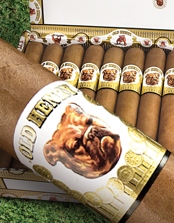 With the Connecticut wrapper, it is, as you’d expect, a bit milder than the original corojo-wrapped Old Henry. But only a bit, and in some ways the Gold Label blend accentuates the pepper and spice from the Nicaraguan filler. I used a V-cut to slice the pointed head perfectly, and my lips were tingling before I put flame to the foot. To me, it’s a medium strength cigar that’s full of flavor.


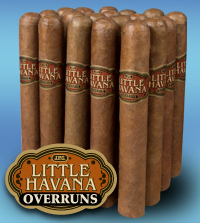 First, they’re produced by Jose “Pepin†Garcia (the J.P.G. in the title), the master blender behind quite a few of Holt’s/Ashton big name cigars, such as La Aroma de Cuba and San Cristobal. Second, the Overruns are said to be rolled “in the heart of Little Havana†where Pepin established his reputation—this despite the fact that Don Pepin’s operation moved from Miami to Doral, Florida, sometime back.) And finally, the Overruns name lends itself to the belief that the cigars are somehow related to one of Garcia’s high-priced, more famous cigars.
 Melanio does the job. It’s a fairly strong cigar that’s both tasty and smooth, combining an Ecuadorian-grown Sumatra-seed wrapper with a mix of Nicaraguan filler in a Nicaraguan binder. You’d be hard-pressed to find a better constructed cigar, from the sharp burn to the excellent draw. Two standout components are massive smoke production and a fine, lingering finish to treat the palate.
 I feel the need to state all of these things for the record because I really, really like this cigar. Of course, my colleagues and I would never allow advertising, contest sponsorship, or complimentary samples to impact a cigar’s rating. We have too little to gain and far too much to lose—namely, your trust—to adopt that practice. Honesty has always been our policy. I hope this goes without saying.
 The Pinolero makes a strong first impression with its colorful band reminiscent, to me at least, of Antonio Gattorno’s style. The scene depicts two women, I believe, grinding corn. That would tie it to the cigar’s name, which I understand is a term that refers to someone from Nicaragua and derives from pinol, a corn-based flour.
 Patrick Ashby
Co-Founder & Editor in Chief
Patrick Ashby
Co-Founder & Editor in Chief Patrick Semmens
Co-Founder & Publisher
Patrick Semmens
Co-Founder & Publisher George Edmonson
Tampa Bureau Chief
George Edmonson
Tampa Bureau Chief