
Commentary: Random Thoughts from the Humidor (XIII)
15 Nov
In this latest segment of Random Thoughts from the Humidor, I ponder the evolution of Drew Estate and if larger cigar companies that buy smaller ones are getting good value.
Rebirth of Drew Estate
 Drew Estate’s tagline is “the rebirth of cigars,” but the most impressive rebirth is that of Drew Estate itself. It’s easy to forget, but no cigar company has changed more in recent years than Drew Estate. I was recently searching for some information and found a thread on a message board consisting almost entirely of seasoned cigar smokers complaining about Drew Estate.
The complaints consisted of rants about gimmicky flavored cigars (though Drew Estate calls their cigars “infused”). Today that complaint would be inconceivable, but back then Drew Estate hadn’t introduced Chateau Real yet, let alone Liga Privada or Undercrown. For me, reading through that thread was a stark reminder of how Drew Estate has reinvented itself in a relatively short period of time to become a leader in the industry when it comes to “traditional” cigars, while still dominating the “infused” cigar market.
Thinking About Industry Consolidation
Along with the emergence of Drew Estate, we’ve seen many cigar makers reemerge from “retirement” to start their own companies. Some—Ernesto Perez-Carrillo and Cristian Eiroa—”retired” after selling their brands to larger companies. The newer, smaller, family-run companies are now creating innovative cigars, but my question is: Do the large cigar companies (General Cigar and Davidoff, in these examples) left owning their original brands (La Gloria Cubana and Camacho, respectively) get good value even after the principles who built the brands leave?
Certainly they feel the brands they purchase fill a void in their portfolio that they want to fill, and if they can keep the quality of the cigars high, they will keep a significant percentage of the customers who are loyal to those brands at least for a while. I suspect, though, that this type of consolidation isn’t as profitable as it once was. These days cigar smokers, particularly those that smoke cigars with the most regularity, are less loyal to any particular brand, and seem more interested in trying different cigars.
If the people most responsible for creating the identity of a given brand are no longer active in the brand (or even creating cigars for another company) is buying a smaller company still worth it? It seems perhaps that four or five years later all they are left with is a trademark and a list of customers. I don’t discount the largest cigar companies’ marketing expertise and distribution advantages, but I’d wonder if that is enough to make shelling out millions for a smaller brand worthwhile.
Maybe the future isn’t buying cigar brands or factories wholesale for millions of dollars, but partnering with companies to help them market and distribute their cigars. One example is Don Sixto, made by Plasencia and marketed and distributed by General Cigar. This may be a template for future partnerships.
photo credit: Drew Estate
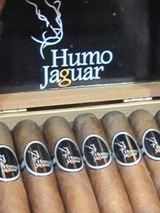 Speaking of cigars with unique names, I was skeptical when I was first told about
 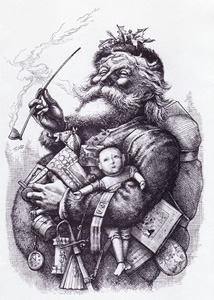 Santa Smokes
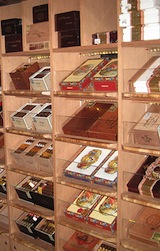 When I say OCD, I mean it in a good way. Lots of cigar smokers worry about summertime temperatures increasing the chances of a beetle attack. But you’re more likely to see your sticks ruined in the winter from extremely low humidity drying them out beyond repair. Even if you have mild winters, humidity levels will be low and the heat will drive them down even further. Check the hygrometer in your humidor frequently—every couple of days isn’t too often—and add distilled water when necessary.
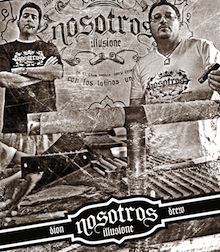 It’s sad to see Nosotros, the joint project of Illusione Cigars and Drew Estate, ending. The announcement came when Illusione’s Dion Giolito
  Patrick Ashby
Co-Founder & Editor in Chief
Patrick Ashby
Co-Founder & Editor in Chief Patrick Semmens
Co-Founder & Publisher
Patrick Semmens
Co-Founder & Publisher George Edmonson
Tampa Bureau Chief
George Edmonson
Tampa Bureau Chief