Search results: site-policy/images

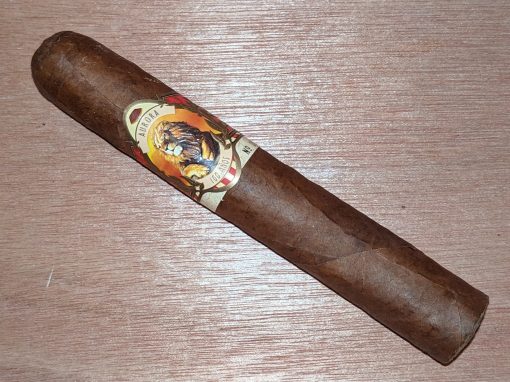
Quick Smoke: La Aurora 100 Años Robusto

28 Jul

A couple times each week we’ll post a Quick Smoke: not quite a full review, just our brief verdict on a single cigar of “buy,” “hold,” or “sell.”

Not the oldest cigar in my humidor, but probably among the dozen or so oldest. La Aurora celebrated its 100th anniversary in 2003 with 100 Años. The Dominican puro (fitting, given La Aurora’s status as the oldest Dominican cigar maker) features an oily Corojo wrapper. Remarkably full-bodied given its age, the Robusto sports robust leather, roast nuts, and hints of green pepper. Good luck finding 100 Años, but if you happen across one, smoke it.

Verdict = Buy.

–Patrick S

photo credit: Stogie Guys


Quick Smoke: Todos Las Dias Half Churchill

26 Jul

A couple times each week we’ll post a Quick Smoke: not quite a full review, just our brief verdict on a single cigar of “buy,” “hold,” or “sell.”

A couple months ago, I wrote that, while Steve Saka “has been at the helm of many cigars I love,” I like—I don’t love—the Todos Las Dias Robusto. I cited the cigar’s sometimes overbearing strength and body as justification for my position. And yet, over the past few weeks, I seem to have cozied up to the Half Churchill vitola (4.75 x 48, $10.45). The notes of charred wood, black pepper, and espresso are still present, but they seem less intense and better balanced against a sweet, creamy sensation. The Todos Las Dias Half Churchill sports a Cuban-seed, sun-grown wrapper over tobaccos from Jalapa and Estelí, as well as superb construction. Lately, it has been my companion of choice for an after-dinner smoke with a serving of sipping rum.

Verdict = Buy.

Patrick A

photo credit: Stogie Guys

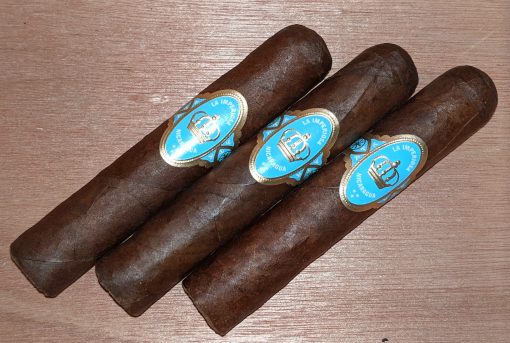
Cigar Review: Crowned Heads La Imperiosa Magicos

24 Jul

It may sound obvious, but it’s a big decision. If you’re a brand owner that doesn’t own a cigar factory, you have two choices: (1) partner with one factory/cigar maker to produce your cigars exclusively, or (2) produce different cigars at different factories. There are clear pros and cons to each strategy.

In the former, you have a partner who, if times get tough, you can work with knowing your businesses rise and fall together. In the later, you get the variety of experience and diversification to make particular blends at a factory where each style excels.

For the first few years after Crowned Heads was launched in 2011 by CAO veterans John Huber and Mike Conder, the company partnered exclusively with Ernesto Perez-Carrillo’s Tabacalera La Alianza S.A., and seemed content doing so. That changed with the introduction of Las Cavaleras in 2014, made at the Garcia Family’s My Father Cigars S.A. factory in Estelí, Nicaragua.

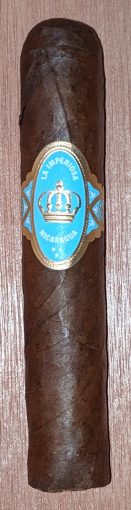
The cigar proved so popular it became a regular offering in 2015, in part due to demand from cigar retailers. La Imperiosa features the same components: a dark oscuro Ecuadorian Habano wrapper around Nicaraguan filler and binder.

The sizes are different from Las Cavaleras, with a Dukes (5.5 x 54), Corona Gorda (5.75 x 46), Double Robusto (6.4 x 50), and Magicos (4.5 x 52), the latter being the subject of today’s review. Suggested retail is $9 to $10 per cigar, though you may be able to pick up a five-pack for $20 to $25 if you search around online.

The short robusto starts out with a burst of spice but quickly settles into a more medium- to full-bodied combination of roast nuts, black pepper, bread, and charred oak. Particularly interesting is a peanut butter flavor that coats the roof of your mouth.

The finish is long with oak and coffee. The cigar’s construction is flawless, with a dark, oily wrapper (framed nicely by a teal band), an even burn, and a sturdy, light gray ash.

My Father Cigars S.A. makes a lot of cigars that use oscuro Ecuadorian Habano wrapper with Nicaraguan binder and filler tobaccos. This is a classic Garcia combination. A natural question is how La Imperiosa measures up to others. Personally, I slightly prefer the Tatuaje Havana VI Verocu and My Father Le Bijou 1922, but that is more a matter of personal taste than a measure of quality.

La Imperiosa is well-made, rich, and classically Garcia and Nicaraguan. (This makes it very distinct from the previous Crowned Heads blends made by Ernesto Perez-Carrillo’s Tabacalera La Alianza.) That impressive combination earns Crowned Heads La Imperiosa Magicos a rating of four stogies out of five.

[To read more StogieGuys.com cigar reviews, please click here.]

–Patrick S

photo credits: Stogie Guys

Cigar Review: Southern Draw Jacobs Ladder Robusto

22 Jul

The phrase “Jacob’s ladder” has many meanings. At least two novels, two films, nearly a dozen places around the world, a plant, and at least a dozen songs borrow the name. The genesis of the name (pun intended) is “a ladder leading to heaven that was featured in a dream the biblical patriarch Jacob had during his flight from his brother Esau in the Book of Genesis,” according to Wikipedia. “The significance of the dream has been debated, but most interpretations agree that it identified Jacob with the obligations and inheritance of the people chosen by God, as understood in Abrahamic religions.”

Along with Rose of Sharon, Austin-based Southern Draw Cigars introduced the Jacobs Ladder (sans apostrophe, for some reason) blend in 2016. At first it was a limited release, but it grew into full production in 2017.

Like all Southern Draw creations, Jacobs Ladder is made at Tabacalera A.J. Fernandez Cigars de Nicaragua S.A. in Estelí. It sports a Pennsylvania Broadleaf wrapper, an Ecuadorian binder, and “double Ligero” filler tobaccos from the Estelí and Jalapa growing regions of Nicaragua. Much like Jacob’s biblical ladder, the Southern Draw website calls this line “bold, but approachable.”

There are three standard vitolas: Robusto (5.5 x 54), Toro (6 x 52), and Gordo (6.5 x 60). Three additional sizes (including a Lancero and two perfectos) are classified as “limited.”

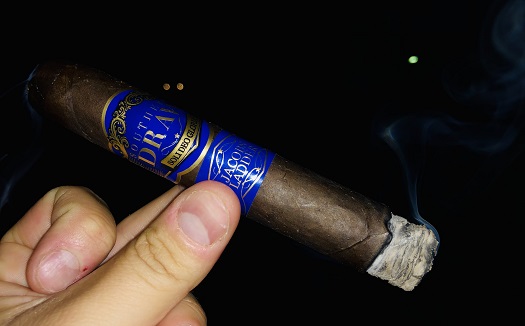
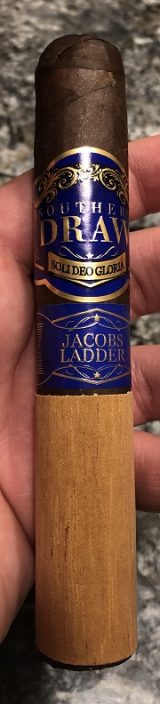
I sampled three Jacobs Ladder Robustos for this review. This cigar features a dark, moderately oily wrapper with few veins and tight seams. The foot is closed, and the cap is a bit rough around the edges. Dual bands of dark blue (purple?) and gold decorate the top half, while a cedar sleeve covers the bottom. The pre-light notes are rich and reminiscent of cocoa powder and baking spices.

Once underway, I find a powerful yet well-balanced profile with notes ranging from dark chocolate and roasted peanut to black cherry and leather. On the palate, Jacobs Ladder finishes in a rich flourish of sweetness and black pepper. The texture is thick and syrupy.

Things settle down considerably towards the midway point in terms of body. The flavor seems creamier and less intense here. But the strength—and by that I mean the nicotine kick—seems to grow with every puff. With other cigars, 19 times out of 20 I don’t notice the nicotine at all. But the Jacobs Ladder Robusto brings it in a heavy dose that’s impossible to ignore.

Throughout, the combustion properties are solid, including a smooth draw, straight burn line, generous smoke production, and a white ash that holds firmly off the foot.

The Jacobs Ladder Robusto retails for $9-10. But I wouldn’t suggest it to the faint of heart at any price. If you’re a seasoned cigar veteran with a full stomach and a nicotine itch that needs to be scratched, though, look no further.

This bold, imposing cigar earns three and a half stogies out of five.

[To read more StogieGuys.com cigar reviews, please click here.]

Patrick A

photo credit: Stogie Guys

Quick Smoke: La Sirena Merlion Robusto

18 Jul

A couple times each week we’ll post a Quick Smoke: not quite a full review, just our brief verdict on a single cigar of “buy,” “hold,” or “sell.”

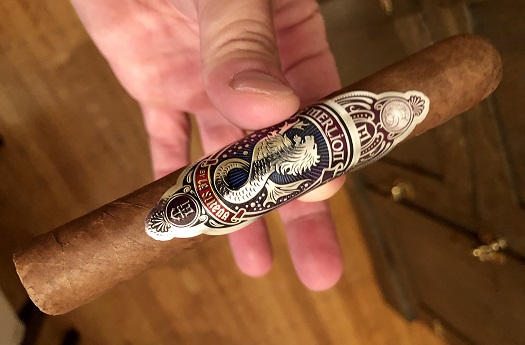
There’s no telling how long this Merlion Robusto had been resting in one of my humidors before I fired it up recently. But I guess you have to hand it to its obnoxiously large band (two bands, actually); once the cigar came into view, it caught my eye. The Robusto (5 x 50) retails for about $9 and sports an Ecuadorian wrapper around a Brazilian binder and filler tobaccos from Nicaragua, Brazil, and the Dominican Republic. The flavor is dry and a bit salty. I can pick out notes of oak, café au lait, white pepper, and warm tobacco. Construction is solid, but I am stopping short of a full recommendation since the taste hits my palate in a way that’s too straightforward and too dry for my liking.

Verdict = Hold.

Patrick A

photo credit: Stogie Guys

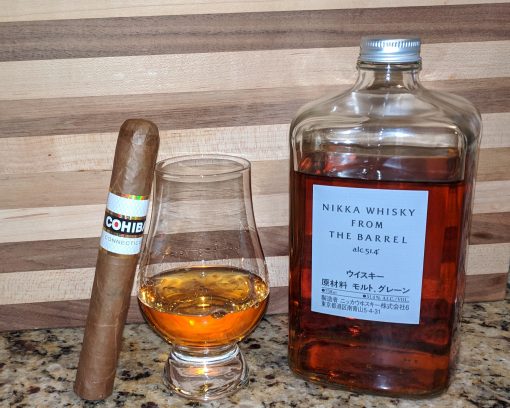
Cigar Spirits: Nikka From The Barrel

17 Jul

Bubble. Boom. Whatever you want to call it, whiskey has been on the upswing for years. And, recently, Japanese whiskey in particular has been a victim of the realities of supply and demand.

Some combination of branding, style, distribution, and long-overdue recognition has catapulted Japanese whiskey from an oddity to a sought-after luxury in recent years. That culminated last year when Nikka From the Barrel was designated 2018 Whiskey of the Year by Whiskey Advocate.

The 51.4% ABV spirit demonstrates many of the mysteries and anomalies of Japanese whiskey. The blended whiskey is produced by Nikka Whisky Distilling, but few details are available beyond that.

While all Japanese whiskey meets the legal definition of whiskey (distilled malt or grain aged in oak barrels), the fact is there are few requirements beyond some step in the process taking place in Japan. Japanese whiskey can be single malt, grain whiskey, or a blend, and it can even be aged or distilled in Japan or elsewhere. (Yes, that Japanese whiskey you are drinking may have started in Canada, Ireland, or Scotland.)

In short, it’s the wild west (or perhaps wild far east) of whiskey. The reputation of what’s in the bottle is far more dependent on the label than the region or Japanese designation. With supplies of Japanese-distilled whiskey dwindling, there is every reason for consumers to be skeptical of that new Japanese whiskey you come across.

However, Nikka From The Barrel doesn’t suffer any lack of reputation or pedigree, as detailed in Whiskey Advocate‘s write-up: “In 1985, Nikka Whisky Distilling Company’s blending team, led by Shigeo Sato, designed this whisky using both malt and grain whiskies produced at Nikka’s Yoichi and Miyagikyo Distilleries. When taking into account the full array of casks—bourbon barrels, sherry butts, refill hogsheads, and more—over 100 different constituent whiskies are enlisted.”

The result is an amber whiskey with a rich nose full of sherry and bourbon-y vanilla with hints of hints of seaweed and sulphur. On the palate you’ll find a balanced, complex combination of flavors with ginger, stonefruit, oak, tobacco, and red fruit. The finish is clean and balanced with lingering ginger and light wood spice.

It is without a doubt an enjoyable whiskey, and the price ($80) isn’t unwarranted given the hype of Japanese whiskey (though, at that price, there are quite a few scotch single malts I’d prefer). With this bottle being increasingly hard to find, you certainly shouldn’t be eager to pay more than that suggested retail price.

Pair it with a medium-bodied or even mild cigar if you want to appreciate all the nuanced flavors that Nikka From The Barrel can reveal. Some suggestions include: Aging Room Bin No. 1 B Minor, Cabaiguan, Cohiba Siglo, Illusione Epernay, Paul Garmirian Gourmet, and Warped Futuro.

–Patrick S

photo credit: Stogie Guys

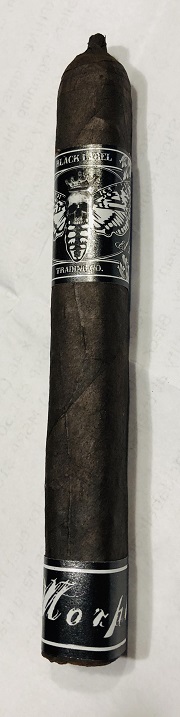
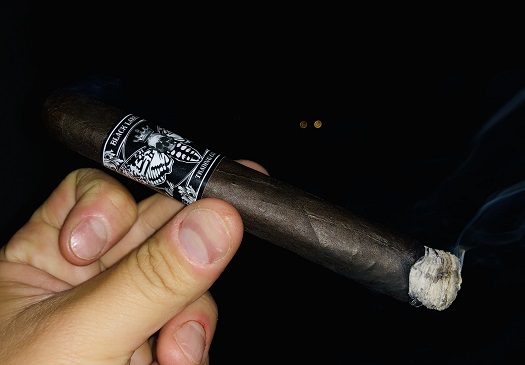
Cigar Review: Black Label Trading Company Morphine 2019 Corona Gorda

15 Jul

Black Label Trading Company (BLTC) creator James Brown calls the 2019 iteration of Morphine “one of the best yet.” Each year, this blend—which was introduced in 2014 as a fuller-bodied addition to the BLTC portfolio—has a different vintage. What sets this one apart, according to Brown, are “rich and earthy” flavors “with bold spice on the retro.”

Morphine sports a Mexican San Andrés maduro wrapper around a Nicaraguan Habano binder and Nicaraguan filler tobaccos. It is handmade at BLTC’s factory in Estelí, which goes by the name Fabrica Oveja Negra.

There are three Morphine vitolas available in 2019: Lancero (7 x 38, $11.50, 12-count boxes), Short Robusto (4.5 x 50, $10.50, 20-count boxes), and box-pressed Corona Gorda (5.5 x 46, $10.50, 18-count boxes). Only 450 boxes of each were produced. I’ll save you some math: That amounts to a total run of 5,400 Lanceros, 9,000 Short Robustos, and 8,100 Corona Gordas.

The Lanceros are likely to be the most sought-after, and not just because they comprise the stingiest production; I imagine BLTC’s core audience is comprised of seasoned cigar veterans who appreciate small-batch, boutique cigar operations. If I know these folks—and I’d like to think I do—I can safely say they like their lanceros.

After taking a handful of Corona Gordas for a test drive, I am happy to report this is not a Morphine vitola to overlook. Beneath its macabre, Silence of the Lambs-esque dual bands of black and white is a firm, dark, moderately oily cigar with thin veins. At the foot, I find heavy, rich pre-light notes of molasses and dry wood. The pigtail cap clips easily to reveal a slightly stiff cold draw that imparts some spice on the lips.

Once lit, the introductory flavor is intense and concentrated. Expect to find a hearty dose of black pepper spice, espresso, and warm tobacco. In the background linger subtler, sweeter notes, including raisin and cocoa. The texture is thick and chalky. And, yes, as Brown claims, the retro-hale is bursting with palate-coating spice.

Typically, at this point in a review, I write about how the intensity of a full-bodied cigar pulls back and the taste becomes a little softer and creamier. Not here. There are few changes along the way. And, frankly, that’s OK with me. I appreciate this cigar’s textures and tastes. And the small, compact format helps ensure the flavor doesn’t overstay its welcome.

In terms of construction, the burn line tends to meander a bit, and several touch-ups are needed keep things running smoothly. Aside from that, I have no complaints. The smoke production is good, the ash holds firm, and the draw is moderate.

The 2019 Morphine Corona Gorda is unapologetically San Andrés. If you like that rich, earthy flavor—and I do—you’ll not want to miss this. It’s a great example of how to leverage many of the best qualities of Nicaraguan tobacco with a Mexican wrapper. Kudos to Brown and the folks at BLTC. This powerful treat is worthy of four stogies out of five.

[To read more StogieGuys.com cigar reviews, please click here.]

Patrick A

photo credit: Stogie Guys