Search results: site-policy/images

Quick Smoke: Tatuaje Exclusive Series TAA 51st

12 Jul

A couple times each week we’ll post a Quick Smoke: not quite a full review, just our brief verdict on a single cigar of “buy,” “hold,” or “sell.”

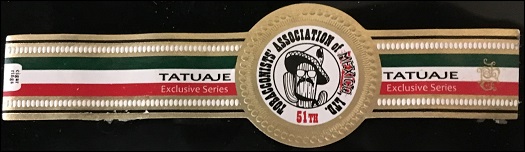
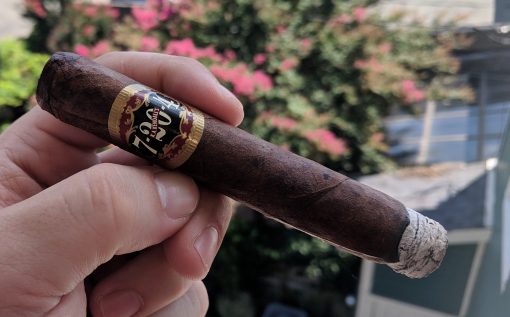
I’ve found another cigar with a Mexican San Andrés wrapper that I like. With Nicaraguan binder and filler tobaccos, it’s a rich, creamy smoke with chocolate and espresso overtones and none of the dirt taste I often associate with the San Andrés leaf. In addition to the wrapper, the band is also a major departure from Tatuaje’s past exclusives. This limited edition of 60,000 sticks—Tatuaje’s ninth for the Tobacconists’ Association of America (TAA)—comes as a robusto (5 x 52) with a retail price of about $12 each. This is one I highly recommend.

Verdict = Buy.

–George E

photo credit: Stogie Guys

Cigar Tip: Cure Your Lighter Woes with the Z-Plus 2 Lighter Insert

8 Jul

If there’s one thing most cigar smokers can agree on, it’s that, while butane torches are great for lighting up, they can also be among the finickiest, most unreliable, most erratic of accessories. Finding one that works well is often a quest.

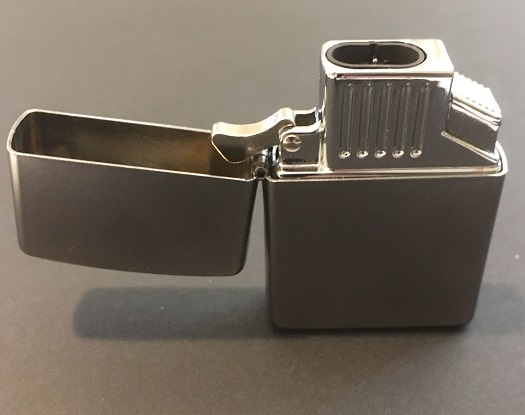
For several months, I’ve been using a Z-Plus 2 insert in a Zippo case. I’ve been impressed.

Z-Plus inserts come in single- and double-flame varieties with a price difference of only a couple of dollars. I paid less than $25 for both a new Zippo and a double-flame insert. (Note: This article is not the result of any request by a manufacturer, distributor, or any other entity besides my own curiosity; I paid for the inserts myself.) I chose a standard Zippo brushed chrome case that doesn’t appear to have changed since I carried one in high school to light Marlboro cigarettes.

One of the first things most cigar smokers learn is to not use a conventional lighter with petroleum-based liquid fluid. The concern is that the fluid’s smell can get transferred to the tobacco. Butane, on the other hand, is an odorless gas at room temperature and has virtually eliminated lighter fluid as the preferred fuel supply for cigar lighters.

But, as noted earlier, butane lighters can be dicey to keep working over the long haul—or sometimes even over the short haul. Most use an electronic spark to ignite the butane, and that can become misaligned. Or the flame valves can get clogged. Sometimes, though, it’s nearly impossible to figure out what’s wrong, other than the darn thing won’t light. It can be terribly frustrating, especially since many of these lighters cost an arm and a leg.

My Z-Plus has ignited consistently. The only lighting problem I’ve encountered was my own fault. After filling the lighter and sliding it into the case, I found the flame would die only a few seconds after igniting. Finally, it dawned on me that it was probably shipped with the flame at its lowest setting and should be adjusted. Since adjusting that? No problems.

They’re made by the Lotus Group, one of the major lighter and accessory manufacturers. There’s little visual difference in the single- and double-flame models, though the single’s casing is opaque so you’re not able to see the fuel level.

Another attraction of the Z-Plus insert and competitors such as Vector’s Thunderbird line is for collectors. The variety of Zippo cases is seemingly endless.

Zippo itself tried the butane market a few years ago with a distinctive lighter it called Blu. Apparently, it never really caught on and even ran into legal trouble over the name. Finally, the lighter, by then called the more-prosaic Zippo Butane Fueled Lighter, was discontinued in 2016. (My colleague, Patrick A, had a Blu, but it was eventually confiscated by a TSA agent.)

I have only one real complaint with the Z-Plus, and it’s rather minor. Though there’s no problem depressing the ignition when the lighter is upright, it can be a little tricky to keep your fingers out of harm’s way when used at an angle for a touch-up.

Overall, I highly recommend the Z-Plus 2 as a low-cost butane torch. It’s worth a try—especially if, like me, you’ve had problems with other torches.

–George E

photo credit: Stogie Guys

Quick Smoke: Plasencia 146 Cosecha La Vega

7 Jul

A couple times each week we’ll post a Quick Smoke: not quite a full review, just our brief verdict on a single cigar of “buy,” “hold,” or “sell.”

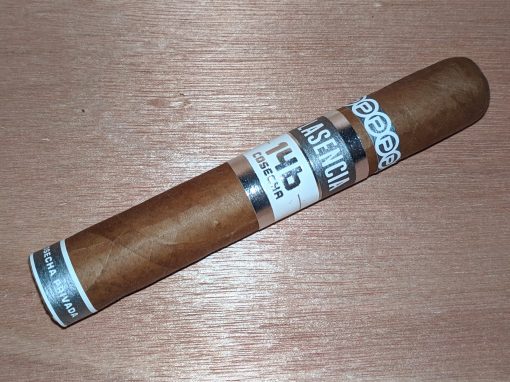
It’s almost a surprise it took the Plasencia family this long to start making cigars under their own name (though the 2012 Don Sixto was named after the family patriarch). The Plasencias have been making excellent cigars for other brands for many years now. Cosecha features a flawless medium-brown Honduran wrapper, Nicaraguan binder, and filler from both countries. The well-constructed robusto gordo (5.25 x 52) is medium-bodied with spice cake flavors of brown sugar, cinnamon, clove, and oak.

Verdict = Buy.

–Patrick S

photo credit: Stogie Guys

Quick Smoke: Illusione *R* Rothchildes

5 Jul

A couple times each week we’ll post a Quick Smoke: not quite a full review, just our brief verdict on a single cigar of “buy,” “hold,” or “sell.”

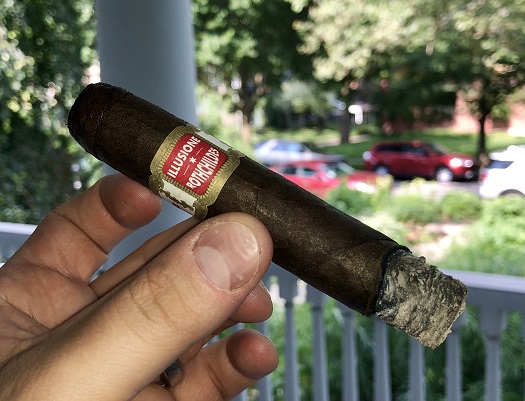
The secret seems to be out. Six years ago, when Illusione launched the *R* Rothchildes (4.5 x 50), you could find it for about $4. These days, the price tag is likely to be in the $5-6 range. That’s still a great bargain, though. Made at Tabacos Valle de Jalapa S.A. (TABSA) in Nicaragua, this Illusione creation’s Mexican San Andrés wrapper combines with Nicaraguan binder and filler tobaccos to yield a medium-bodied profile and a balanced taste of roasted nuts, sweet cream, earth, cocoa, and warm tobacco. It’s surprisingly satisfying and balanced for the price and the small format, which will only take about 45 minutes to smoke. The smart play is to invest in a box of 50 and always have some on hand when time is short, or to hand out to friends.

Verdict = Buy.

Patrick A

photo credit: Stogie Guys

Cigar Spirits: Rabbit Hole PX Sherry Cask Finished Straight Bourbon Whiskey

3 Jul

Cigars and bourbon are an excellent pairing, so collaborations between cigar makers and bourbon distillers are only natural. The A.J. Fernandez-made Diesel Whiskey Row did just that last year, aging binder tobaccos in used bourbon barrels that formerly held Rabbit Hole bourbon.

After the debut Whiskey Row was a hit, a follow-up was inevitable. That came last month with the introduction Diesel Whiskey Row Sherry Cask, which features a Brazilian Arapiraca binder leaf aged in barrels that were originally used for sherry and later to finish bourbon. (I reviewed the Diesel Whiskey Row Sherry Cask last month.)

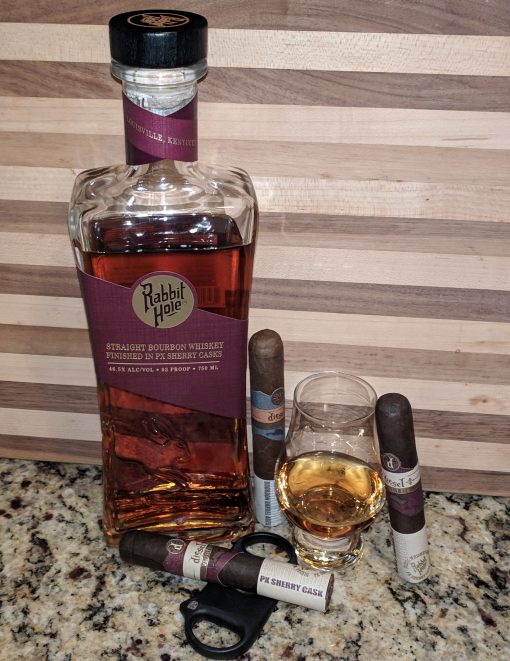
That bourbon–Rabbit Hole’s PX Sherry Cask Finished Straight Bourbon Whiskey–is also Rabbit Hole’s most premium offering ($80 per bottle). Using sourced wheated bourbon (Rabbit Hole’s Louisville distillery only opened last year) with a mashbill of 68% corn, 18% wheat, and 14% malted barley, it is aged five years before going into sherry casks previously used to make super sweet Pedro Ximenez sherry for decades.

The amber-colored bourbon has a nose with vanilla, dried fruit, and subtle cherry notes. On the palate, sherry melds with classic bourbon flavors, with caramel, dates, dried cherries, wine, sharp oak, and musty barrels. The finish is dry with just the slightest hint of more red fruit.

It’s an enjoyable bourbon, best enjoyed neat, that pairs well with a full-bodied, rich cigar like the Diesel Whiskey Row Sherry Cask. Other suggested cigar pairings include the Drew Estate Liga Privada, Muestra de Saka Nacatamale, and Paul Garmirian 25th Anniversary.

I should admit I’m a fan of sherried single malts and have also found myself enjoying what other few sherry-finished bourbons I’ve tried: Belle Meade Sherry Cask Bourbon and Wild Turkey Master’s Keep Revival. (I’m looking forward to trying the new Angel’s Envy Sherry Cask, though the $200 price tag is a bit daunting.)

With that background, perhaps unsurprisingly, I enjoyed the Rabbit Hole PX Sherry Cask Finished Straight Bourbon Whiskey for it’s rich, fruit-filled flavors. If you like sherried whiskeys, it’s worth seeking out a bottle. Otherwise, try some at a bar before going all-in on a bottle. This was the first Rabbit Hole product I’ve tried and it certainly makes me want to try their other offerings.

–Patrick S

photo credit: Stogie Guys

Cigar Review: Charter Oak CT Shade Grande

1 Jul

If you’ve ever met Nicholas Melillo, popularly known as “Nick R. Agua” on Facebook and Twitter, you know he is Connecticut through and through. I can recall talking with him about college hoops when I was in Estelí for a Drew Estate Cigar Safari (this was years ago, long before Melillo left Drew Estate to found the Connecticut-based Foundation Cigar Co.). He was boasting of the success of UConn. A few years later, while I wasn’t with him at the time but, I’m sure he was smiling extra wide when both the UConn men and women won NCAA national titles in the same year (2014).
Melillo, who got his start at a cigar shop near New Haven, Connecticut, established Foundation Cigar Co. in 2015. His portfolio of cigar brands now includes El Güegüense, The Wise Man Maduro, Tabernacle, Tabernacle Havana Seed, The Upsetters, Highclere Castle, and Charter Oak.

The latter, like Melillo, has its roots firmly in the Nutmeg State. It is named for The Charter Oak, an “unusually large white oak tree growing on Wyllys Hyll in Hartford, Connecticut… from around the 12th or 13th century until it fell during a storm in 1856,” reads a Wikipedia article. “According to tradition, Connecticut’s Royal Charter of 1662 was hidden within the hollow of the tree to thwart its confiscation by the English governor-general. The oak became a symbol of American independence and is commemorated on the Connecticut State Quarter.”

The Foundation Cigar Co. website provides more color: “Charter Oak cigars hail from the same fertile valley in Connecticut that native son and master blender… Nick Melillo was born and raised. [They] feature some of the most prized and sought-after Cuban-seed leaf varieties from the exquisite Estelí and Jalapa regions of Nicaragua.”

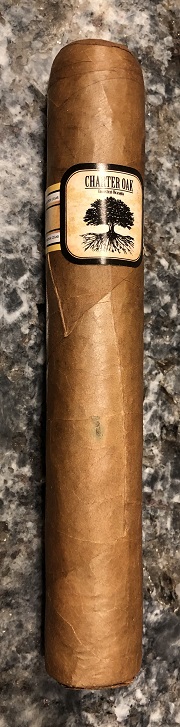
The filler may be Nicaraguan, and the binder Sumatran, but the centerpiece of the blend—the wrapper—is a golden Connecticut Shade leaf (Charter Oak is also available in a dark Connecticut Broadleaf variety that swaps the Sumatra binder for a Habano binder from Nicaragua). Five sizes are available, all made at Tabacalera A.J. Fernandez Cigars de Nicaragua: Toro (6 x 52), Grande (6 x 60), Lonsdale (6.25 x 46), Petit Corona (4.25 x 42), and Rothschild (4.25 x 50).

The Grande retails for about $6, which makes it highly affordable. Off the bat, there are a couple signs that might lead you to believe this is not a terribly expensive smoke. For one, the band—while pleasant in color and design—has no raised lettering and a minimalist approach. Second, one of the three samples I examined for this review had a prominent “frog eye” on the front of the cigar. This discoloration is harmless and typically indicates the presence of a water droplet during the fermentation process. That said, I suspect a more expensive cigar with a similar discoloration might have been caught in its quality control process and never made it to shipment, instead being labeled a “segundo.”

Despite a closed foot, the cold draw is easy once the cap is clipped. The pre-light notes are delicate and reminiscent of sweet hay and almond—classic Connecticut Shade aromas.

Once lit, the moderately spongy Grande emits a mild- to medium-bodied profile of cream, white pepper, peanut, and café au lait. It’s pleasant, albeit straightforward. And that’s essentially what this cigar has to offer, light to nub.

Construction is solid throughout the long smoke—including a straight burn line, smooth draw, solid ash, and generous smoke production. But the unchanging, unpretentious taste tends to overstay its welcome, especially when you consider the Grande’s large format.

Normally, I wouldn’t reach for a cigar of this girth. But my retailer only had Charter Oak CT Shade in this format, and I wanted to give it a try. After three Grandes, I’m anxious to try the blend in a different, thinner vitola. I suspect it would score better.

Charter Oak CT is Melillo’s attempt at an affordably priced, everyday cigar for any time of day. In my opinion, it’s best suited as a golf course smoke. It changes very little throughout, and does not require your full attention. That’s ultimately why I’m settling on a rating of three stogies out of five.

[To read more StogieGuys.com cigar reviews, please click here.]

Patrick A

photo credit: Stogie Guys
Quick Smoke: 7-20-4 Robusto

30 Jun

A couple times each week we’ll post a Quick Smoke: not quite a full review, just our brief verdict on a single cigar of “buy,” “hold,” or “sell.”

I’ve long enjoyed the original 7-20-4 line. It’s flavorful, well-made, and affordably priced. The Robusto is no exception. With its Brazilian Mata Fina wrapper, Costa Rican binder, and filler from Nicaragua, Honduras, Mexico, and Columbia, it features leather, wood, and clove flavors with white and green pepper notes. While I slightly prefer the smaller ring gauge versions of this blend (the Lancero and eponymous corona, particularly), with flawless construction and medium- to full-bodied flavors, the Robusto is still easy to recommend.

Verdict = Buy.

–Patrick S

photo credit: Stogie Guys