Search results: site-policy/images

Quick Smoke: Pinar del Rio 1878 Capa Madura Robusto

3 May

Each Saturday and Sunday we’ll post a Quick Smoke: not quite a full review, just our brief verdict on a single cigar of “buy,” “hold,” or “sell.”

PDR Capa Madura

Five dollars doesn’t go as far as it used to. Someone needs to tell this to Abe Flores, head of Pinar del Rio Cigars, who has built a portfolio of tasty, consistent smokes that don’t break the bank. Light up a dark, Brazilian Arapiraca-wrapped 1878 Capa Madura Robusto (5 x 52) and you’ll have a hard time imagining how a cigar this good can cost little more than $5. This medium-bodied treat is packed with Criollo ’98 tobaccos from Nicaragua and the Dominican Republic, and it boasts a balanced profile of creamy nut, cocoa, black pepper, and dry wood. What’s more, construction is perfect. And the easy draw—thanks to the entubado bunching technique—produces tons of flavorful smoke.

Verdict = Buy.

–Patrick A

photo credit: Stogie Guys

Commentary: Why the FDA’s $10 Exemption Proposal is More Dangerous than You Realize

1 May

When the Food & Drug Administration (FDA) announced a willingness to exempt premium cigars from forthcoming regulations, it seemed the multi-year campaign to educate regulators about the differences between handmade cigars and most other tobacco products had paid off. Then it became evident that attached to the potential exemption was a devastating definition of premium cigars, including a $10 minimum retail price.

FDA-cigars-large

As explained previously, an exemption that includes a $10 minimum price would exclude 85% or more of handmade cigars. The 85% figure comes from numbers put together by Gary Griffith of Emilio Cigars using a sample of 26 stores, but I strongly suspect the real percentage is even higher. For example, $1-2 bundle cigars and factory seconds, which are made with the same techniques as higher cost cigars, are sold in higher numbers through the internet and catalogs. These aren’t fully represented in the 85% figure.

Without the exemption, new cigars (and those introduced since February 15, 2007) would need approval from an FDA that has shown no willingness or ability to do so. The agency has only approved 17 of 4,000 applications in the previous few years (2 were cigarettes, the other 15 applications were for things like wrapping papers). Effectively, there would be no new cigars introduced under an FDA-defined price floor for premium cigars.

The simplest way to look at the $10 figure is as follows: Whoever proposed it is completely ignorant of the handmade cigar market. Not only is there no scientific basis for such a cutoff (nobody can logically claim that a cigar that sells for $10 has public health implications different from one that sells for $9.99 or even $3), but it doesn’t reflect the reality of the handmade cigar market either.

The idea that the very agency authorized to regulate cigars proposed such an unsupported, arbitrary, and even ignorant rule is a scary thought. But as scary as it is, the alternative might be even worse. After all, you can at least educate the ignorant.

While I fully expect that FDA regulators don’t “get it” when it comes to why we enjoy cigars (the experience, the ritual, the camaraderie… the flavor being important and not the nicotine), I doubt they are so ignorant as to genuinely think that $10 is a reasonable line between “premium” and non-premium cigars given the current state of the cigar market.

This is politics—that’s why you hire lobbyists, not scientists, when you’re facing a rule-making process—and the FDA’s proposal is a classic political position: the ultimate threat paired with an offer to “negotiate” for something less devastating.

I’ve heard throughout the FDA process representatives of the cigar industry have been pressured to adopt a definition that included a minimum price. They’ve correctly resisted, because there is no scientific or public health reason to create an arbitrary price. Supposedly the FDA is still interested in truth and health.

Ned's_execution

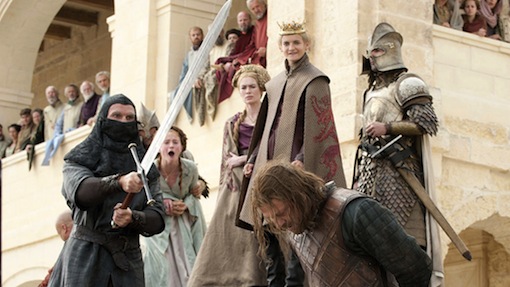
Fans of the Game of Thrones HBO series will instantly recognize the image above. (If you haven’t read the first book or seen the show, I’m about to spoil the ending of the first season.) It’s the moment just before hero Eddard Stark is beheaded, after confessing to a crime he didn’t commit in order to protect his daughters and have his life spared.

If the FDA’s proposal is as calculated as I’m afraid it might be, then the handmade cigar industry shares many similarities to Stark’s dilemma. In its deeming document, the FDA pointedly left open “Option 1,” which would regulate all cigars, effectively killing the development of all new cigars.

“Option 2” is an exemption for some “premium” cigars, but the FDA is signaling that that it might be merciful, especially if the industry agrees to embrace an arbitrary, artificial, and unscientific price floor. In other words: If your false confession doesn’t sufficiently please us, we’ll just cut off your head. It didn’t work out well for Stark.

The cigar blog Halfwheel made the point yesterday that the $10 rule seems unlikely to survive, and it’s certainly true that a definition that uses “retail price (after any discounts or coupons)” is impractical. But that’s not necessarily a reason to rejoice.

In fact, it’s likely part of the set-up. A common negotiating tactic is a wildly low-ball opening offer, so the person you’re negotiating with feels they’ve won something when they agree to the real price you had in mind all along.

That may be what’s really going on here. If I told you a week ago that the final exemption would only apply to cigars with a wholesale price above $3 (roughly $6 at retail), you might have responded: That’s crazy! There are tons of handmade cigars that cost less than that and no public health reason to treat them differently than a cigar that costs more. Now, with the sword hovering over all cigars, some might think $3 a reasonable compromise to embrace.

The fact is, without an artificial price in the rule, there’s still a natural limit to how inexpensive a handmade cigar can be and still meet the rest of the requirements in “Option 2” of the proposed rule (some of which have their own problems that can be addressed in a future article). A completely handmade cigar, made primarily with long-filler tobacco, will have to cost a certain amount or it won’t be economically viable, and those looking just for nicotine will still find that pre-2007 cigarettes or other non-handmade cigars do a more efficient, cheaper job of delivering that. Further, even if unforeseeable developments prove this to be wrong, then the FDA can always do more rule-making to deal with any remaining issues.

Maybe I’m just jaded and the $10 requirement was born out of ignorance, and a thorough effort to educate the FDA will make the final rule reality-based. We should be so lucky, but I’m not sure I’d bet on it.

More likely I’m afraid we’re being set up to accept, perhaps even advocate for, drawing a line that doesn’t exist. And then feeling like we’ve won something when we get an arbitrary line that isn’t as bad as it could have been.

The FDA’s regulation of tobacco is supposed to be a fact-based process. By acknowledging the fact that premium cigars are different, the agency has implied that a reality-based line should be drawn, and I expect the handmade cigar industry will respond with comments showing why an arbitrary price definition is not based in science.

If the FDA ignores those comments and demonstrates that it is just playing politics, the result will be terrible. Not only would it destroy a thriving industry that caters exclusively to adults and provides thousands of American jobs, but it would betray the mandate that Congress gave the FDA to create reasonable regulations based in science and logic.

–Patrick S

photo credits: Stogie Guys / Game of Thrones

Cigar Review: Joya de Nicaragua Celebración Toro

30 Apr

If you peruse Joya de Nicaragua’s website, you’ll see pages dedicated to Antaño 1970, Antaño Dark Corojo, Cabinetta, CyB, and the company’s other core blends. What you won’t find is any information about Celebración.

JdN Cele ToroNicaragua’s oldest cigar maker launched Celebración in 2004 as a less powerful version of Antaño 1970. It was crafted by Manuel Quesada (known for the Quesada and Fonseca brands), who toned down the ligero to achieve the intended result. Today it’s still made in Estelí at Fábrica de Tabacos Joya de Nicaragua.

Celebración is marketed as a more approachable alternative to the strong smokes Joya de Nicaragua is known for—as well as a way to get Nicaraguan depth without the full body that some smokers find too power-forward. Remember that ten years ago not only did Cabinetta and CyB not yet exist, but there were far fewer Nicaraguan-made cigars in the American market. These days it’s a much different story, witnessed by the latest figures suggesting Nicaragua will soon surpass the Dominican Republic as the top source of cigars to the U.S.

The Celebración recipe includes a Habano Criollo wrapper around Nicaraguan Habano-seed binder and filler tobaccos. The puro comes in six sizes: Churchill (6.9 x 48), Consul (4.5 x 52), Corona (5.5 x 42), Gordo (5.5 x 60), Toro (6 x 50), and Torpedo (5 x 52). Prices range from $5 to $8 per cigar.

With a moderately oily, clean wrapper and a well-executed cap, the Toro is a handsome smoke. It’s firm to the touch except at the foot, which shows a cross-section of lightly packed tobaccos. The pre-light aroma is sweet and the cold draw is moderate in resistance.

While definitively more subdued than Antaño 1970, this cigar isn’t necessarily mild. It trends toward the medium-bodied spectrum with a fair amount of dry, woody spice. Interestingly, more than any other smoke I can remember, the spice tends to creep up in the aftertaste, creating an intensity on the top of the tongue only after the smoke has been released from the mouth.

Background flavors include syrupy sweetness, earth, cream, and peanut. While a little flat at first, they build into the second third. The finale of the Toro (the part I like the best) is characterized by increases in heat and spice. All the while the construction is top-notch. The burn stays even, the draw smooth, the ash holds firm, and each puff yields ample smoke.

With an MSRP below $7, this is a good—albeit less-than-memorable—cigar that serves as somewhat of a bridge between the Cabinetta and Antaño 1970 lines in the Joya de Nicaragua portfolio. Given a choice between the two, I’ll take CyB every time (I really like that blend). But the Celebración Toro is a nice bargain and worthy of three stogies out of five.

[To read more StogieGuys.com cigar reviews, please click here.]

–Patrick A

photo credit: Stogie Guys

Primer: What the FDA ‘Deeming Document’ Means for Cigars

29 Apr

On Thursday, the Food & Drug Administration (FDA) took the long-expected action of invoking its authority to regulate cigars and other types of tobacco. We’ll be exploring why the action would be disastrous for handmade cigars in he coming days and weeks, but first it’s important to get an understanding of what exactly has been proposed.
FDA-cigars-large

Legislative Background

In 2009, Congress passed, and President Obama signed, the Tobacco Control Act, which directed the FDA to regulate cigarettes, as well as cigarette tobacco, roll-your-own tobacco, and smokeless tobacco. Under current regulations, all new cigarettes require FDA approval before they can be sold, and flavored cigarettes (with the exception of menthol) are banned for sale in the U.S.

The bill also authorized the FDA to regulate other types of tobacco (including cigars), but leaves it up to the agency through its rule-making mechanisms to decide if it will regulate tobacco other than cigarettes and, if so, what form that regulation will take. In order to assert its authority to regulate cigars, the FDA must go through a federal rule-making process.

Deeming Document

Last Thursday, the FDA took a big step towards regulating Other Tobacco Products (OTP) including cigars, by proposing to assert the FDA’s authority to regulate OTP by deeming them under the Tobacco Control Act. According to the document, “once a tobacco product is deemed, FDA may put in place ‘restrictions on the sale and distribution of a tobacco product,’ including age-related access restrictions and advertising and promotion restrictions, if FDA determines the restrictions are appropriate for the protection of the public health.”

Specifically, this means the following six regulations (that currently apply to cigarettes) would also apply to the additional products subject to the FDA’s deeming, including cigars:

(1) Enforcement action against products determined to be adulterated and misbranded; (2) required submission of ingredient listing and reporting of harmful and potentially harmful constituents (HPHCs) for all tobacco products; (3) required registration and product listing for all tobacco products; (4) prohibition against the use of modified risk descriptors (e.g., “light,” “low,” and “mild” descriptors) and claims unless FDA issues an order permitting their use; (5) prohibition on the distribution of free samples (same as for cigarettes); and (6) pre-market review requirements.

Some of these would cause significant disruption in the way new cigars are brought to market with costs of compliance ultimately passed on to consumers. While each of the six actions would cause some upheaval, experts seem to agree the requirement for FDA approval of new products would completely change the way the handmade cigar world works.

The FDA Approval Process

When finalized, the law would require every new tobacco product, including cigars, introduced after February 15, 2007, to be approved by the FDA. Products currently on the market but introduced after that date could be sold while the FDA rules on approval.

The FDA approval process has two methods to approve new products (which includes changes to existing products). Completely new products would require extreme amounts of scientific data and research, which would effectively stop new products from coming to market. The other route to approval is by proving that a new product is substantially equivalent to a product either introduced prior to February 15, 2007, or approved by the FDA since.

“Substantial equivalence” sounds like a process that should be relatively easy for approving new cigars—after all new cigars are generally just new blends of same types of tobacco that are already used in existing cigars—but the FDA approval process for cigarettes has demonstrated that it is anything but easy or quick. In fact, it’s effectively impossible. To date, the agency has only ruled on 34 products (approving 17 and rejecting 17) of the roughly 4,000 pending applications.

With hundreds of new cigars coming out every year (many thousands if each size is considered a new product) there is little reason to think the FDA approval process would do anything but effectively halt the introduction of new cigars.  The 150 or so FDA employees tasked with approvals have only managed to respond to fewer than 1 in 100 applications since 2009, and there is no extra budget for dealing with the increased applications that would come from this rule.

Option for Limited ‘Premium Cigar’ Exemption

In response to lobbying from premium cigar advocacy organizations and others (including cigar allies in Congress) the FDA proposed two options for regulating cigars. The first—opposed by cigar associations—would subject all cigars to the burdensome regulations described above, while “Option 2” would create an exemption for cigars defined by the FDA as “Premium Cigars.”

While Cigar Rights of America and others have long promoted legislation to exempt traditional and premium cigars from FDA regulation, the definition proposed by the FDA under “Option 2” is far more restrictive than the one contained in the “Traditional Cigar Manufacturing and Small Business Jobs Preservation Act.” The FDA deeming document proposed eight criteria (all of which must be met) in order for a cigar to meet the “Premium Cigar” exemption under this option:

(1) Is wrapped in whole tobacco leaf; (2) contains a 100 percent leaf tobacco binder; (3) contains primarily long-filler tobacco; (4) is made by combining manually the wrapper, filler, and binder; (5) has no filter, tip, or non-tobacco mouthpiece and is capped by hand; (6) has a retail price (after any discounts or coupons) of no less than $10 per cigar (adjusted, as necessary, every 2 years, effective July 1st, to account for any increases in the price of tobacco products since the last price adjustment); (7) does not have a characterizing flavor other than tobacco; and (8) weighs more than 6 pounds per 1,000 units.

Item 8 (“6 pounds per thousand”) is identical to a provision in the industry-supported legislation (and would effectively mean that a cigar four inches with a 38 ring gauge would definitely meet that criteria). Criteria 1-5 differ slightly from the legislation, which is designed to protect American jobs in the cigar industry (which allows for U.S.-made cigars to use homogenized binders as long as the wrapper is applied by hand).

Number 7, the prohibition on “characterizing flavor other than tobacco” raises significant issues. Not only would an infused cigar presumably not meet the exemption even if there is no scientific reason for excluding them, but the FDA has thus far refused to say what the definition of “characterizing flavor” is, and wouldn’t even say if aging tobacco in cedar qualifies. Given traditional techniques like barrel-aging tobacco, using betunes with wine, and newer developments like using maple or hickory in the curing process, this would surely stifle innovation in the industry.

By far the most threatening to the handmade cigar industry is item 6, which says for a cigar to meet the “Premium Cigar” exemption it must retail for $10 or more. The cigar industry has long taken the position that handmade traditional or premium cigars are about the production process, not about any arbitrary cost threshold, and there is no reason to believe that the health implications of a handmade $4 cigar are any different from a $10 one.

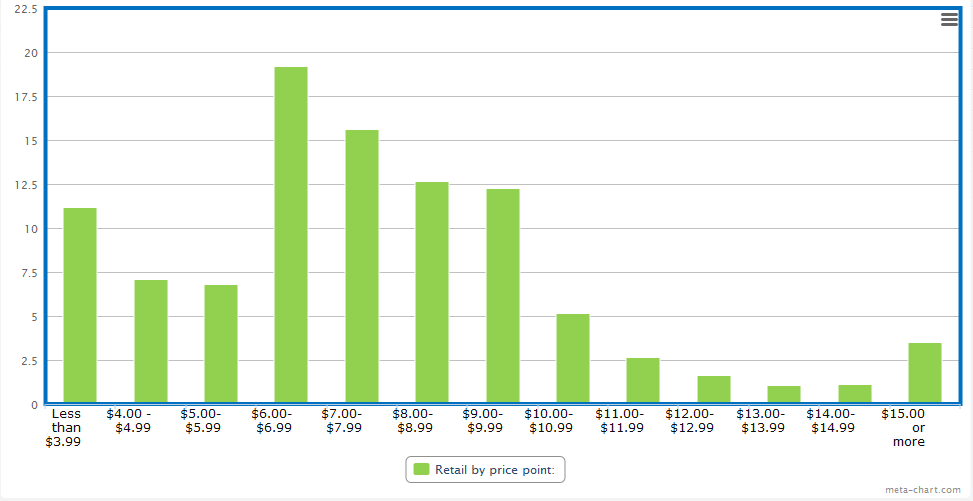
Estimates vary about how much of the handmade cigar market would fail to meet the $10 retail price, but a survey produced by Gary Griffith of Emilio Cigars of 26 stores in four states with varying demographics and tobacco tax rates found that only around 15% of cigars sold were above that price, while 60% of cigars sold in the $6-9.99 range and the remainder sold for less than $6.
fda-retailchart

What Now?

As of now, these are the rules the FDA has proposed; they are not yet finalized. Currently, the FDA is accepting public comments on the proposals for 75 days ending July 9, after which it will consider the public comments and likely then issue a final rule.

It will be critical that cigar smokers use the public comment period to make their voices heard, especially to advocate for an exemption for premium cigars that does not arbitrarily eliminate a significant percentage of cigars currently being sold based on a price. Otherwise, the innovation and creativity that makes the handmade cigar industry so great will come to a grinding halt.

In the coming days and weeks, we’ll have more to say about this critically important issue, including suggested points to make when you file a public comment. So please check back often and consider signing up for our free email newsletter for critical updates and reminders.

–Patrick S

photo credits: Stogie Guys /Gary Griffith

Cigar Insider: Jeff Mouttet of Riverside Cigar Shop and Lounge

28 Apr

Recently, Jeff and Sara Mouttet, owners of Riverside Cigar Shop and Lounge in Jeffersonville, Indiana, across the Ohio River from Louisville, sent us a couple of samples of their new House Blend.

Jeff Mouttet

I always find the story of a new cigar intriguing, so I posed some questions about this venture to Jeff via email. And, indeed, it turns out to be an interesting story.

Stogie Guys: Your website shows a very extensive selection of top boutique cigars. What made you decide you needed to add your own line?

Jeff Mouttet: There were several factors that led us to the decision, but first and foremost, we always wanted our own blend and always planned on doing one as soon as the time was right. Additionally, we’ve made good friends with many outstanding boutique cigar makers (Skip Martin and Mike Rosales, Sean Williams, Gary Griffith, Chris Kelly, Enrique Sanchez, Noel Rojas, Sam Leccia, etc.) and we wanted to work with them to do something for us. Lastly, it’s a good business move. We’ve been fortunate to build a loyal clientele over the last three years, and it’s surprising how many people ask if we have our own cigars. Well, now we do.

SG: Walk us briefly through the process of going from idea to cigars on the shelf.

JM: It’s kind of funny, because I had Manny Iriarte design the band over two years ago, but the cigar just now happened. Noel Rojas came through the store on a trip through the area and House of Emilio asked if we minded if he stopped by for a night and did a quick rolling demonstration and, being up for most anything, we said yes. So during the course of the night, after everybody raved about how good Noel’s cigars were, Noel and I sat down and talked numbers, blends, volumes, etc., and we decided right then and there to go ahead and do it. As far as the process, I leaned pretty heavily on Noel’s expertise. I’m a cigar smoker—have been for 30 years—but I’m no blender. Not even close. Maybe one day, but at this point, we left most of that to Noel, and I’ve got to say, I’m glad we did, because he did a fantastic job.

Riverside House Blend

SG: Did you have a specific profile in mind from the start, or did you explore a variety of blends until you found one you liked?

JM: We did have a specific strength profile in mind, not so much a flavor profile. We tried several blends, and ended up with the Ecuador Habano with Nica filler and binder.

SG: What has been the most difficult part? The biggest surprise?

JM: Waiting, shipping, customs, and “Central American Time” have been the most difficult parts of the equation. Well, those, and getting the bands to Nicaragua. The biggest surprise has been the reception of the cigar. We’ve sold nearly 1,500 cigars (all we had made for the first run) in a little less than a month, and that’s just on-premise sales.

SG: Do you have a plan to produce more cigars, maybe distribute them, or will this be it?

JM: Our goal over the next 2 years is to introduce at least two more cigars to the market. We’ve talked to both RoMa Craft and Tesa Cigars about an ongoing manufacturing relationship and both are receptive to the idea. Ideally, we’d like to have “house blends,” or Riverside exclusive blends, make up around 30-40% of our boutique line sales. Distribution is a little trickier if we keep the Riverside name on the cigars, but that may be something we address in the future. I know I would have trouble justifying somebody else’s store name in my humidor, so let’s just say we’re sensitive to that issue. At the same time, I think the quality of the cigars we’re making merits distribution, so we’ll explore that when it looks more feasible.

SG: Are you doing any mail-order or telephone sales for those outside your area who want to try the Riverside House Blend?

JM: Yes. You can call 812-284-6198 or email me at jeff@riversidecigars.com and we’ll be glad to ship. Given all the recent credit card issues we can only take Visa over the phone, but we do have a PayPal account for the store, too, so we have a couple of ways you can pay.

–George E

photo credit: Riverside Cigar Shop

Quick Smoke: Drew Estate Liga Privada Único Serie Dirty Rat

27 Apr

Each Saturday and Sunday we’ll post a Quick Smoke: not quite a full review, just our brief verdict on a single cigar of “buy,” “hold,” or “sell.”IMG_3778 - Version 2San-Lotano-Oval-Conn-sq

Liga-Unico-Dirty-Rat

The corona-sized Dirty Rat is one those cigars that I really enjoy yet don’t actually smoke too often. A large part of that is the very limited availability of this cigar, and the fact that when a store does get them in, they’re likely gone very quickly. The cigar bellows smoke as it imparts a complex blend of creamy earth, chocolate, and cinnamon and clove spice. It’s balanced, perfectly made, full-bodied, and complex, and certainly worth seeking out. It’s probably second only to the Velvet Rat as my favorite in Drew Etate’s Único Serie.

Verdict = Buy.

–Patrick S

photo credit: Stogie Guys


Quick Smoke: Nomad Connecticut Fuerte Toro

26 Apr

Each Saturday and Sunday we’ll post a Quick Smoke: not quite a full review, just our brief verdict on a single cigar of “buy,” “hold,” or “sell.”

Nomad

Fred Rewey, founder of the Orlando-based Nomad Cigar Co., will tell you that blending the Connecticut Fuerte line has been one of the toughest challenges in his company’s two-year history. That’s because his approach to the line was to create a standout smoke, not just another Connecticut on the shelf. The result is a four-vitola line that boasts a clean Ecuadorian Connecticut wrapper, an Ecuadorian Habano binder, and a filler blend from Nicaragua and the Dominican Republic. The Toro (6 x 52), which sells for about $8, has near-perfect construction. Flavors range from cinnamon and white pepper to cream and roasted nuts. I think Rewey’s hard work is paying off.

Verdict = Buy.

–Patrick A

photo credit: Stogie Guys