Search results: site-policy/images

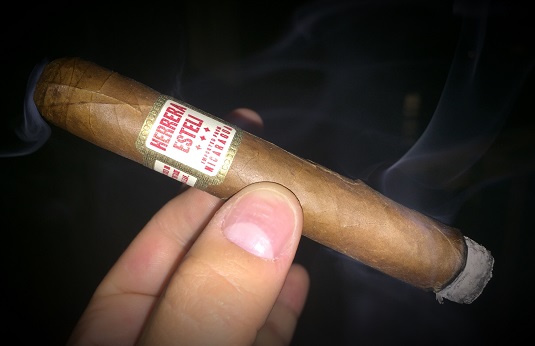
Quick Smoke: Drew Estate Herrera Estelí Short Corona

3 Feb

A couple times each week we’ll post a Quick Smoke: not quite a full review, just our brief verdict on a single cigar of “buy,” “hold,” or “sell.”

This cigar frequently gets called “Cubanesque” and I suppose that’s correct but really what makes it stand out is the excellent balance. The original Herrera Estelí (the line has since been expanded) was blended by Willy Herrera using Ecuadorian, Honduran, and Nicaraguan tobaccos. It has a complex, medium-bodied profile with  cedar and cafe-au-lait flavors and hints of pepper and honey. With excellent combustion, I’m reminded that whenever I return to try this blend my appreciation for it is reinforced.

Verdict = Buy.

–Patrick S

photo credit: Stogie Guys

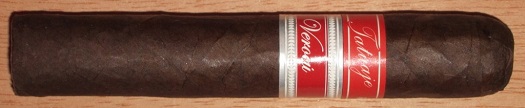
Quick Smoke: Tatuaje Verocú No. 1

1 Feb

A couple times each week we’ll post a Quick Smoke: not quite a full review, just our brief verdict on a single cigar of “buy,” “hold,” or “sell.”

The other day I was wandering around the humidor of a local shop on the lookout for something new and intriguing. Nothing seemed to pique my interest. Then, I spotted an old favorite: Tatuaje’s Verocú line. I loved this cigar in all its iterations, as previous reviews confirm. On the other hand, I hadn’t smoked one in years. I picked up this 6.25-inch beauty with a 52-ring gauge, wondering whether I’d feel the same. The short answer is yes, without question. It is a balanced, smooth, and slow-burning cigar. Strength lies in the medium range and flavors include floral notes, pepper, and coffee mingled with rich tobacco sweetness. With a $10 price tag, the Verocú toro grande is truly one of the great cigar bargains.

Verdict = Buy.

–George E

photo credit: Stogie Guys

Cigar Tip: Four All-Time Great Cigars Before They Were Discontinued

31 Jan

Most discontinued cigars were discontinued because they didn’t sell. Look at the cigars introduced at the IPCPR Trade Show five years ago and you’ll find many that aren’t around anymore, or have been relegated to close-outs.

But other cigars have been discontinued for other reasons. Today we look at four cigars that were discontinued despite being considered excellent.

Cuban Bolivar Gold Medal

This Cuban lonsdale was a cigar connoisseurs appreciated, even though it apparently never was a big seller. Not only is it a bold and full-bodied Cuban, it features iconic gold foil packaging. The pre-1960 release was first discontinued in 1992 only to be brought back in 2007 and then dropped again in 2011. Given its history, don’t be shocked if it makes it back as a limited edition release.

Cuban Davidoffs

Legendary cigars until they were discontinued in 1991, Davidoff was the last company that wasn’t controlled by the Cuban government to make cigars with Cuban tobacco. Davidoff pulled out of Cuba in 1991 because of reportedly sub-standard tobacco, which Zino Davidoff dramatically and symbolically burned to show that it wasn’t up to his standards. Still, prior to that, Davidoff Cubans were the perfect combination of capitalist production standards and the ideal climate for growing tobacco. Today, old Cuban Davidoffs are a preview of what could come when Cuba finally embraces economic liberalization.

Pepin-made Padilla 1932

Production of the Padilla 1932 didn’t stop when Pepin stopped making Padilla cigars in 2008, but the cigar has never been the same. Later versions of the Padilla 1932 were nice cigars, but the original 1932 was one that made me appreciate just how complex, balanced, and exquisite a cigar really can be. (If you want to identify the Pepin-made Padilla 1932, look for “Padilla” in block letters, as opposed to script in later versions.) I smoked many of these cigars before they were discontinued; I wish I had scooped up a few more boxes when I had the chance.

Tatuaje Black Corona Gordo “Ceramic Jar” Release

Not so much discontinued but introduced as a limited edition, the Tatuaje Black line has only expanded over the years, but none match the original 2007 Ceramic Jar release. (Not even the follow up jar release.)  Only 1,000 original jars of 19 were made and, from the dozen or so I smoked, no other Tatuaje quite compares (high praise when you look at all the high ratings Tatuaje has received). One of the overlooked facts about early Tatuajes is that before Pepin and Eduardo Fernandez’s 2010 lawsuit, these cigars included tobacco from Aganorsa farms. As good as many of today’s Tatuaje cigars are, the combination of Aganorsa and Pepin was something really special, even though the subsequent litigation means it probably won’t happen ever again.

–Patrick S

photo credit: Stogie Guys

Cigar Tip: Can That Excess Humidity

28 Jan

For a lot of you, high humidity isn’t much of a concern, except in the depths of summer. Here in Florida, though, it is basically a year-round problem.
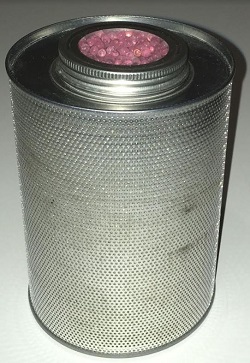
I’ve been fighting—and usually losing—the battle against high humidity ever since we moved here in 2005. Finally, I believe I’ve found a weapon that works: a desiccant canister designed primarily for gun safes from Liberty Safe and Security Products.

Now, I’m not a fanatic about humidity levels. For one thing, years of monitoring have shown me that it is virtually impossible to maintain an exact point. But there is certainly a danger in cigars being ruined by far too much or too little humidity. Generally, I aim for a range of about 61-67% relative humidity. However, achieving that is no small task.

Since high temperatures are also a major concern here, I’ve used a cooling unit from the start. I ran through a couple of coolidors, which did OK, but didn’t seem to last too long. Then, about seven years ago, I purchased a Cooled 1200 Refrigerated Cigar Cabinet from Avallo Humidors in Nashville. I’ve been pleased with the unit and the service from Matt Allen, the owner of Avallo.

In addition to cooling, the Avallo also has an automated system to measure and add humidity. Of course, it’s rare that I have to add moisture. Getting rid of it is my problem.

The list of what I’ve tried seems endless: tons of beads, mountains of kitty litter, jars and jars of gel, a self-contained dehumidifier—and anything else that seemed like a possible solution.

None of it really worked.

I have a Xikar PuroTemp Wireless Hygrometer System with a sensor on each of the two sliding shelves to monitor temperature and humidity so I can easily tell when either is getting out of control.

For the past couple of years, I have resorted to DampRid or a similar absorbent material when humidity spiked. While it does reduce humidity, it also involves guessing how much to use and frequently checking the rising water level to make sure it doesn’t overflow.

Recently, I did another internet search to see if there was something I hadn’t tried. That’s when I spotted the Liberty canisters.

They come in three sizes (40 grams, 450 grams, and 750 grams), with prices ranging from $6.49 to $15.99. Rather than wait for an online order, I checked gun shop websites for local availability. Fortunately, a shop nearby stocked them, and I bought the large canister. All that was required to put it to use was to heat it in the oven for a couple of hours while the material inside dried out.

When it was cool, I put it in the humidor and… Voila! It sucked the moisture out of the air. I removed the canister when the humidity was down to an acceptable level, ready to re-heat and re-use again when necessary.

So far, I’ve employed it several times, and it has worked like a charm. No worry about water spilling, no wondering why nothing is happening.

Right now, it’s my favorite cigar accessory.

–George E

photo credit: Stogie Guys

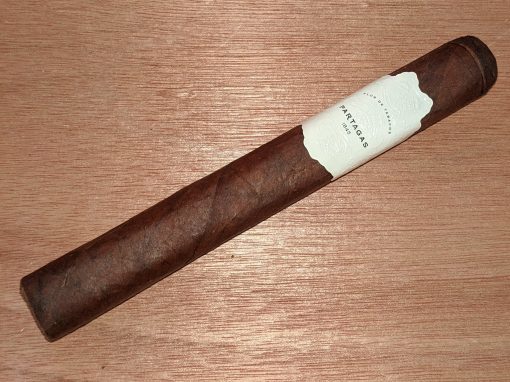
Quick Smoke: Partagas Legend Toro Leyenda

27 Jan

A couple times each week we’ll post a Quick Smoke: not quite a full review, just our brief verdict on a single cigar of “buy,” “hold,” or “sell.”

Introduced at the 2018 IPCPR Trade Show, Legend is the newest line extension from General Cigar’s non-Cuban Partagas brand. The cigar features a Connecticut Broadleaf wrapper around a Honduran Olancho San Agustin binder and Dominican Piloto Cubano filler. The medium- to full-bodied cigar features woodsy flavors with black coffee and leather notes. Combustion is flawless, and while it isn’t my favorite non-Cuban Partagas, it’s worth checking out.

Verdict = Buy.

–Patrick S

photo credit: Stogie Guys

Quick Smoke: Partagas Serie P No. 2 (Cuban)

25 Jan

A couple times each week we’ll post a Quick Smoke: not quite a full review, just our brief verdict on a single cigar of “buy,” “hold,” or “sell.”

Serie P No. 2

I don’t smoke many Cubans. While there are definitely good Cuban cigars, on the whole they can be expensive, relatively difficult to find, inconsistent, and typically require significant aging post-purchase. Digging through one of my humidors, the first Cuban I came across was a Partagas Serie P No. 2 (6.1 x 52) that had been resting for about three years. Like most other Cubans, it pays to age this pirámide instead of smoking it fresh. If you can invest the time, you’ll be rewarded with a rich, medium-bodied, well-balanced treat of cinnamon, white pepper, nuts, cream, and cedar spice. In other words, this is one of the good ones.

Verdict = Buy.

Patrick A

photo credit: Stogie Guys

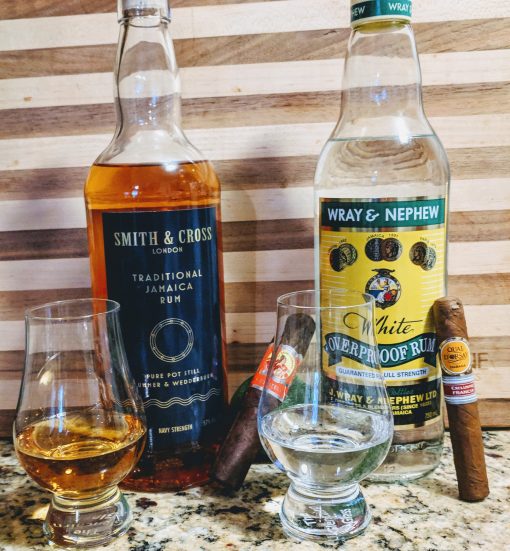
Cigar Spirits: Wray & Nephew White Overproof Rum, Smith & Cross Traditional Jamaican Rum

24 Jan

One of the most interesting, unique, and perhaps divisive flavors in all of spirits is “hogo.” Hogo is Creole slang for “haut gout” (a French term for “high taste”) and its most closely associated with the funky characteristic that is identified with many Jamaican rums.

Describing hogo (that Jamaican funk) is not easy (it’s easier experienced than described) but you can think of a rotting or overripe element ranging from blackened bananas to spoiled red meat. The mystique behind hogo is full of unsubstantiated, misleading rumors (like the use of goat heads or dead bats), but the science is more about long pot-still fermentation, the careful use of leftover dunder (or muck), and the creation of esters that impart the funky hogo characteristics.

Jamaica’s Hampden Estate is known for producing funky Jamaican rum. Which is why today we’re looking at two Hampden Estate-made rums that are relatively easy to find:

Wray & Nephew White Overproof Rum

Billed as “the world’s top-selling overproof premium white rum,” this inexpensive ($20-25) Jamaican staple reportedly accounts for 90% of all rum sales on the island.

Nose: Raw dry-aged ribeye, fresh roast corn, and the raw alcohol of 126-proof unaged rum.

Palate: Crisp apple, pineapple, fresh cut grass, and alcohol heat.

Finish: Short and sharp with more subtle guava and pineapple notes.

Between the proof and the youth, I wouldn’t recommend this as a rum to sip neat, but it can shine in a cocktail. It’s not for everyone, but I love it in a funky traditional daiquiri and it’s an obvious candidate for tiki drinks.

Smith & Cross Traditional Jamaican Rum

This 57% ABV “navy proof” rum is a mix of two of Hampden’s distillation styles (Wedderburn and Plummer) mixed together after 1 to 3 years of aging. Expect to pay around $30 for a bottle.

Nose: Brown banana peel, oak, and brown sugar.

Palate: Crisp tropical fruit (pineapple and mango) followed by clove, molasses, sugar cookies, and ginger with an oily mouthfeel.

Finish: Long and lush with tobacco, nutmeg, burnt caramel, and a hint of powdered chocolate.

Many will probably reserve Smith and Cross for cocktails, but think it’s quite enjoyable neat. Try it that way or on the rocks, but if 114-proof is too intense for you, I especially like the funky notes swapped in for gin in a classic negroni recipe.

Assuming you are using Wray & Nephew in cocktails (especially sweet tiki concoctions), you can pretty much pick out any cigar you like, with the general rule that the stronger the flavors, the more full-bodied the cigar. Smith and Cross deserves to be enjoyed neat (or with a drop of water or an ice cube or two) and with an earthy, full-bodied cigar like the Padrón Serie 1926, Tatuaje Havana VI Verocu, or Dunbarton Tobacco & Trust Umbagog.

–Patrick S

photo credit: Stogie Guys