
Search results: site-policy/images

Cigar Insider: Chris Kelly of the Tesa Cigar Company

5 May

Headquartered in a lounge on the Near North Side of the Windy City, the Tesa Cigar Company is led by Chicago native Chris Kelly. Chris is an “atypical” cigar maker who meticulously creates blends from Tesa’s own factory in Estelí, Nicaragua, with a variety of enticing wrappers and filler tobaccos from Nicaragua. His offerings include the Shaman, Series Finos F500, Havanitas, Gran Cru, and the Vintage Especial (third on our list of the Top Ten Cigars We Reviewed in 2009).
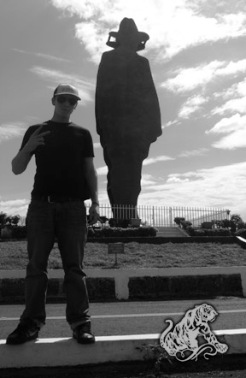
Chris Kelly of the Tesa Cigar CompanyChris—pictured in front of a national monument for Augusto Sandino in Managua, Nicaragua—recently spoke with StogieGuys.com about mastering the trade, the challenges of working in another culture, and what sets Tesa apart from the competition.

Stogie Guys: You don’t look like the typical cigar maker. Your age, your base in Chicago…What gives? How did you get involved in the industry?

Chris Kelly: I am the atypical cigar manufacturer. I’m a 24-year-old Irish kid from the South Side of Chicago. I was blessed to grow up in the cigar business, as my father has had a cigar store there for almost 30 years. I have spent the better portion of my life from infancy to now around cigars and cigar smokers. Needless to say, they have become my life’s passion. My father has always been ahead of industry trends and in the early 90s he began taking trips to Nicaragua with the Padróns and Perdomos. While there, he developed a relationship with a small factory and began having brands made for his store. A couple years later we began wholesaling product. When quantities went up we ran into problems. I couldn’t sell bad cigars. My father bought a building in Nicaragua and offered to let me make cigars. At 18 I said, “Hell yes!” and have been doing it ever since.

SG: In terms of blending and cigar production, what sets Tesa apart from other manufacturers?

CK: We’re unique in our blending. When I was learning to blend, the level of guidance from experienced people was about zero. This industry is very family-oriented for the most part and so great-grandfathers pass their knowledge of tobacco down to grandfathers and then fathers and so on. I had none of that generational knowledge passed on to me, which made my start in blending and manufacturing a very difficult task. When I began in Nicaragua, I was a cigar smoker and that was it. Just about zero Spanish, one or two contacts in the country, no raw material knowledge, no processing knowledge, blending or construction knowledge—let alone how to deal with people from another culture. That was an awful lot to take in at 18, but this was what I wanted to be. I wanted to be a tobacco man. I was forced to approach everything thinking outside the box. This has helped define both our cigars and our company. It has also cost quite a bit of money from my earlier ignorance.

SG: What are some of the biggest challenges in making cigars the way you do?

CK: The biggest challenges are definitely with tobacco, both availability and the lack of deep pockets. We had some serious availability issues to overcome for the first two and a half years. Finally, I was permitted by tobacco growers to purchase Grade A tobaccos. Those tobaccos were just “not available” to me in the beginning, which forced me to be totally involved in my manufacturing process. A lot of oversight is needed with “workable” material and not top grade. That practice has become a part of why we’re different.

SG: What was the most difficult Tesa line to blend? Which line is the best-selling?

CK: Each blend has had its peculiarities that we’ve run into, every single leaf of tobacco is different, and tobaccos react differently with other tobaccos. The difficulty level becomes a major factor when you’re driven to make a cigar that is complex, well-balanced, rich, and well-constructed. That is very difficult. Right now our best cigar is a toss-up between the Cabinet 312 (a nice medium-full body with big and dark flavors of espresso, bittersweet chocolate, with fleeting hints of citrus) and the Vintage Especial (a mild-bodied Connecticut with a very creamy texture to the smoke, subtle yet intricate flavors of almonds and butterscotch—very complex for a mild blend).

SG: How long have you had a lounge in Chicago? What sort of surprises does that enterprise present?

CK: We have had the lounge in Chicago for about a year and a half. The biggest surprise to me has been people’s gravitation to the lounge. Obviously, in opening the lounge I anticipated customers, but there is a wonderful energy in that place. People don’t want to leave and, when they do, they’ve already planned when they can come back. We have created upwards of 100 new cigar smokers out of that store. Twenty-something’s think it’s the coolest thing they’ve seen. They stumble in looking for cigarettes and say, “Wow, what’s this all about? I didn’t know people still smoke cigars.” More women frequent our lounge than I’ve seen in many cigar shops. The synergy of people is top shelf. The lounge is critical for the longevity of this industry and society as a whole.

SG: Regarding your factory in Estelí, how is doing business in Nicaragua different than doing business in the U.S.?

CK: Doing business in Nicaragua is very different. You are dealing with a different culture in a foreign language. It took a considerable amount of time to hone my diplomacy and people skills to work side-by-side with them. You have to understand the people, their history, beliefs, and ideals before you can begin to relate to them. It’s very humbling to be working down there; save Haiti, it’s the poorest country in our hemisphere. To be there on a daily basis seeing what true poverty is and understanding what that means to the person who is impoverished is truly life-changing. The Nicaraguan people are wonderful and very strong.

SG: What would you say to those readers who have never tried a Tesa?

CK: Why not try a Tesa? I smoke what I make and I work very hard to bring to market a superior product. It may not become your favorite, but I personally guarantee that it will be a very enjoyable experience for you. It’s difficult to get people to try products from a new company, but we’re not new. We are the best kept secret in Nicaragua and the industry. Give me a shot at your taste buds.

SG: Aside from your own creations, what else do you smoke?

CK: Right now, I’m smoking quite a few Ligas from Drew Estate—both the Number 9 and the T-52s. Personally, aside from my products, I think it’s one of the most under-appreciated sticks out right now. Great flavor, complex, lots of depth, and the construction is excellent. Other than that, some Pepin stuff here and there, the Davidoff maduro is a nice smoke, and some other odds and ends.

Many thanks to Chris Kelly for taking the time to speak with StogieGuys.com. For more information and to order Tesa cigars online, please visit TesaCigars.com.

–Patrick A

photo credit: Stogie Guys

Stogie Reviews: Padrón Family Reserve No. 45 Natural

3 May

With the 2010 International Premium Cigar & Pipe Retailers Association Trade Show coming up in three months, May is a good time to take stock in the year that was. Another barrage of cigar introductions is just around the corner. So this is an appropriate month to catch up on any releases from last year that may have fallen through the cracks.

There were many sought-after debuts at the 2009 show, but perhaps none as anticipated as Padrón’s newest creation. Padrón, unlike most cigar makers, doesn’t always put out a new cigar every year. When the company does, it’s usually in high demand.


That was certainly the case with the new Padrón Family Reserve No. 45. Released in two versions (Natural and Maduro) with one size (6 x 52), it celebrates the 45th anniversary of Padrón Cigars. Each box of ten includes an insert about the band’s little hammer—a commemoration of Cuban émigré José Orlando Padrón and his drive to work as a carpenter until he could establish a cigar company.

His dedication paid off in spades. With over 600 employees, a tremendously loyal following, and more accolades than space permits mentioning, Padrón Cigars is considered by many to be the pinnacle of cigardom. One measure—albeit a flawed one—is how the company has dominated Cigar Aficionado’s Top 25 lists, including earning top honors for the Family Reserve No. 45 Maduro.

That pick didn’t come as much of a surprise. But as popular as the Maduro has been, my recent experience with two Naturals proves that this (somewhat rarer) version shouldn’t be overlooked. It, too, is a box-pressed Nicaraguan puro with 10-year-old tobacco that sells for upwards of $25 apiece. And it, too, amounts to a memorable, special occasion smoke that beckons to be tried at least once.

After a clean cut reveals an easy draw, the somewhat wrinkly No. 45 Natural opens with a chalky, textured taste of bitter leather, earth, nuts, and wood. The raw flavor of tobacco is featured prominently, as is a background of espresso.

The big difference between this two-hour smoke and the Maduro is cocoa. While the latter has plenty of sweet, decadent chocolate notes, the Natural—while medium-bodied throughout—has more of a dry, spicy edge. Both are subtle and well-balanced; they just have different profiles.

Padrón is known for its consistency and quality. I only smoked two No. 45 Naturals because of their high price point but, based on that sample set, I found near perfect construction. I wouldn’t expect anything less from a cigar that costs more than a wonderful dinner entrée.

Smoking down to the nub, I didn’t feel the slightest bit of buyer’s remorse. Would I partake in this cigar on a regular basis? No. For an occasional treat, though, you can’t go wrong with the Padrón Family Reserve No. 45 Natural. It earns four and a half stogies out of five.

[To read more StogieGuys.com cigar reviews, please click here.]

–Patrick A

photo credit: Stogie Guys

Quick Smoke: El Museo by La Flor Dominicana

2 May

Each Saturday and Sunday we’ll post a Quick Smoke: not quite a full review, just our brief verdict on a single cigar of “buy,” “hold,” or “sell.”

ElMuseo

El Museo is likely Litto Gomez’s most exclusive smoke, released to benefit El Museo del Barrio, New York City’s only Latin American museum. Wrapped in a lush, oily habano sun-grown leaf, the Dominican puro (6.75 x 52) features remarkable pre-light chocolate flavors. El Museo starts out with a burst of peppery spice followed closely by a full-bodied combination of cocoa, clove, and leather. It’s a powerful smoke, but balanced enough to not be overwhelming. Construction is flawless with a notably stable, dense, dark gray ash. Sure, it retails for around $30, but I’d be surprised if you didn’t find it to be one of the finest cigars you’ve ever smoked.

Verdict = Buy.

–Patrick S

photo credit: Stogie Guys

Quick Smoke: La Gloria Cubana Reserva Figurados (CRA Exclusive)

1 May

Each Saturday and Sunday we’ll post a Quick Smoke: not quite a full review, just our brief verdict on a single cigar of “buy,” “hold,” or “sell.”

La Gloria Cubana Reserva Figurados (CRA Exclusive)

Available in a ten-pack exclusive to Cigar Rights of America (CRA) members, this limited edition cigar features the same components as the normal Reserva Figurados portfolio: a sun-grown Ecuadoran Sumatra wrapper, a Nicaraguan binder, and a filler blend of Nicaraguan and Dominican tobaccos. But this is a new size. Called “Regalias Perfectos” (6.25 x 57), it sports a slightly tapered foot, a belicoso-shaped head, and a wide body. The result is a smoke with lots of honey, graham, and cedar spice coupled with outstanding construction. Very similar to every other natural Reserva Figurados—and that’s OK in my book.

Verdict = Buy.

–Patrick A

photo credit: Stogie Guys

Stogie Reviews: Hammer + Sickle Robusto

28 Apr

The hammer and sickle flew on the flag of the Soviet Union from 1923 until the disintegration of the USSR in 1991. In that period and since it has served as an emblem for communism, intending to represent “proletariat” industrial and agricultural workers.

Hammer + Sickle RobustoThis controversial symbol strikes me as a curious logo to brand a product destined for sale in the U.S.—a country where communism is widely despised. But that’s exactly what the people at Hammer + Sickle Vodka did when they launched their spirit in 2005.

Hammer + Sickle is more than just a luxury vodka, according to company chairman Eric Hanson. The brand is a “lifestyle offering” that crossed over to cigars at the 2009 IPCPR Trade Show. “Like Hammer + Sickle Vodka,” says the company website, “these cigars are an authentic experience for the creative aficionado.”

While the vodka is made in Klin, Russia, the cigars are handmade in the Dominican Republic with five-year-old Connecticut wrappers and three-year-old Dominican binder and filler tobaccos. They are distributed by Victor Vitale’s The Cigar Agency. This New Hampshire outfit is also responsible for Ortsac 1962, a blend named for the Kennedy Administration’s plan for a military strike against Cuba.

Hammer + Sickle is available in four traditional sizes: Churchill, Toro, Torpedo, and a five inch by 50 ring gauge Robusto. Retailing for about $7-9 apiece, the latter features a smooth, caramel-colored wrapper with few veins, a well-applied cap, and pre-light notes of honey. The feel is slightly spongy.

Once lit, the Robusto kicks things off with a medium-bodied flavor that’s very salty and somewhat peppery. The nutty resting smoke smells far more interesting than the cigar tastes. After only half an inch, though, notes more commonly associated with Connecticut tobacco come to the fore: cream and almond. They are complemented by the original salt and pepper profile, making for a lively, mild-mannered cigar.

This well-balanced interplay continues for the remainder of the 60-minute smoke. All the while, the physical properties are near perfect with a straight burn, an effortless draw, and a gray ash that holds firm for over an inch.

I’m always on the lookout for mild cigars that strike a harmonious balance, don’t break the bank, and exhibit consistently good construction. Based on the two samples I smoked for this review (both provided by The Cigar Agency), I’ve found a winner. That’s why the Hammer + Sickle Robusto, notwithstanding its insignia, is worthy of four stogies out of five.

[To read more StogieGuys.com cigar reviews, please click here.]

–Patrick A

photo credit: Stogie Guys

Stogie Spirits: Campari-Based Cocktails

27 Apr

Campari might seem like an unusual suspect for a cigar spirit pairing, but it’s such a classic cocktail ingredient I’m determined to give it a try.

CampariBetween Steve Zissou (played by Bill Murray) ordering up rounds on the rocks in the movie Life Aquatic, and Nick Naylor, the lead character in Thank You for Smoking, ordering up one vodka negroni after another in Christopher Buckley’s classic book on the nanny state, the drink is as cool as they come.

Campari, for those who don’t know, is an Italian aperitif made with a secret blend with plenty of bitters and a distinctive bright red color. It’s the main ingredient for Campari and soda, the Americano (Campari, sweet vermouth, and soda water), and the negroni (both of the gin and vodka variety).

I decided to make a few negronis and see what cigars, if any, they pair well with. The ingredients for a negroni are simple enough: one part Campari, one part gin or vodka, and one part sweet vermouth served over ice with an orange twist.

The result is surprisingly good. The bitter/sweet combination of the negroni (in both traditional and vodka varieties) goes surprisingly well with a variety of mild- and medium-bodied smokes.

My extensive testing proved that mild smokes with creamy flavors, like the Cuban Crafters Medina 1959 and the Perdomo 10th Anniversary Champagne, proved an excellent pairing. Meanwhile, more medium-bodied smokes like the Tatuaje Reserva SW, Tatuaje P2, and the Don Pepin Blue Label also worked well.

Ultimately, Campari cocktails are a surprisingly good complement for cigars. If you like Campari-based drinks (certainly not everyone does) you should go out of the box and make yourself a proper negroni and light up a fine cigar.

No, it won’t replace traditional pairing staples like bourbon, scotch, or rum, but for something different, particularly as a pre-dinner smoke, order up a Campari cocktail. You just may find yourself pleasantly surprised.

–Patrick S

photo credit: Stogie Guys

Stogie Reviews: La Caridad del Cobre 1608 Maduro Natural Robusto

26 Apr

LCDCLa Caridad del Cobre is a fairly new cigar company having debuted at the 2009 IPCPR Trade Show. The man behind La Caridad is Frank Herrera, a South Florida intellectual property attorney and author of cigarlaw.com. Production of the La Caridad del Cobre 1608 Maduro Natural is handled by Luis Sanchez of La Tradicion Cubana.

Sanchez will also be producing a line extension, La Fiera, that La Caridad del Cobre will debut at the 2010 IPCPR. The company’s website is fairly basic but does include the information the consumer would be looking for, which is more than can be said for some others in the industry.

The Maduro Natural Robusto is five inches by 46 ring gauge and covered with a semi-toothy medium brown Brazilian arapiraca wrapper. The binder and filler are both from the Domincan.

The cigar appears to be constructed well with no soft spots and an expertly applied cap. It starts off with a very slight hint of spice and some sweetness typical of many maduros.

As the cigar progresses, the spice vanishes and the cigar settles into a flavor profile of chocolate and espresso. There is also a hint of gingerbread that comes and goes in the final third of the cigar. The burn is straight and gray ash holds firmly.

Overall, the La Caridad del Cobre Maduro 1608 Natural Robusto is an interesting and enjoyable cigar. In the end I would have liked a little more spice to balance out the overall sweetness.

The construction and burn properties are excellent and, with an MSRP of $7 per cigar, the Maduro Natural competes well with other cigars in its price range. It earns four stogies out of five.

[To read more StogieGuys.com cigar reviews, please click here.]

–Patrick M

photo credit: Stogie Guys

