Search results: site-policy/images

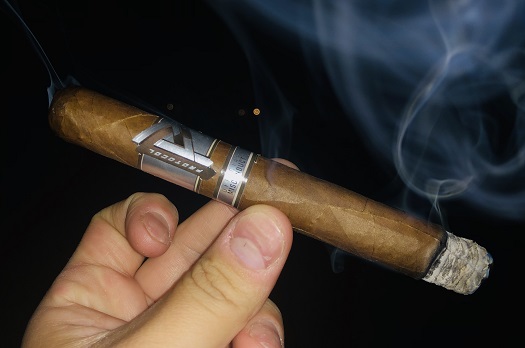
Quick Smoke: Protocol Official Misconduct Corona Gorda

29 Jun

From time to time we’ll post a Quick Smoke: not quite a full review, just our brief verdict on a single cigar of “buy,” “hold,” or “sell.”

The Cubariqueño Cigar Company’s fourth blend, Official Misconduct, was originally launched in only a Toro (6 x 50) format. The Corona Gorda (5.6 x 46, $9.95) was added later. Made at Erik Espinosa’s La Zona factory in Estelí, the blend features an Ecuadorian Habano wrapper around a Nicaraguan binder and filler tobaccos from Estelí and Jalapa. The profile is dry and oaky with a powdery mouthfeel and a concentration of cinnamon on the tip of the tongue. Background notes include almond and a bit of caramel sweetness. The physical properties—burn line, smoke production, ash firmness, and draw—are all outstanding.

Verdict = Buy.

Patrick A

photo credit: Stogie Guys

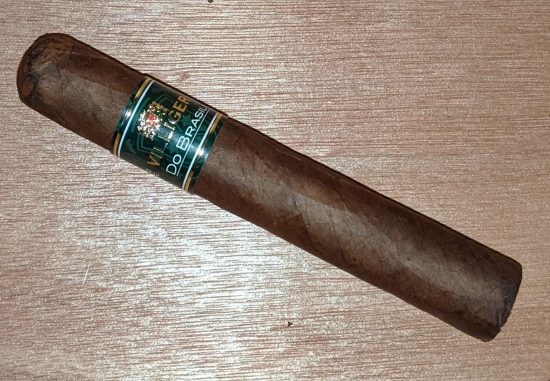
Quick Smoke: Villiger do Brasil Maduro Robusto

18 Jun

A couple times each week we’ll post a Quick Smoke: not quite a full review, just our brief verdict on a single cigar of “buy,” “hold,” or “sell.”

One of two Brazilian puros introduced by Villiger earlier this year, the Maduro blend (which retails for $9) features a splotchy Aripiraca wrapper, while the other (Claro) sports a Brazilian-grown Connecticut-seed wrapper. The cigar opens with sweet vanilla bean and coffee, but soon is dominated by heavy leather, coffee, and woody notes. It’s an enjoyable and complex, if at times unbalanced, smoke.

Verdict = Hold.

–Patrick S

photo credit: Stogie Guys

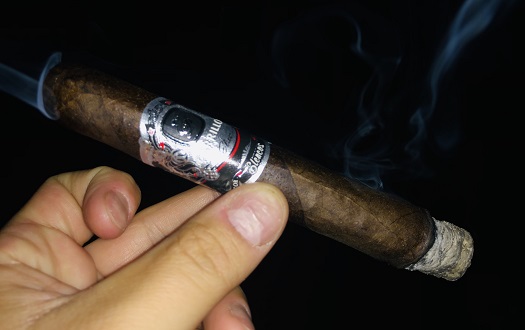
Cigar Review: E.P. Carrillo Elencos Elites

3 Jun

Last year, E.P. Carrillo introduced a five-pack featuring a sampling of some of the company’s favorites. Included are one each of the following toro-sized smokes: La Historia Doña Elena, Inch 60 Natural, Selección Oscuro Especial No. 6, New Wave Divino, and Elencos Elites. Given that the combined MSRP of these cigars is $46.50 and the five-pack is selling for $37.50, this is a solid way to explore—or reacquaint yourself with—the EPC lineup.

Today I am reviewing one of the cigars from the sampler: the Elencos Elites. The Elencos line was launched in 2011, about two years after Ernesto Perez-Carrillo ended his nine-year tenure with General Cigar to establish his own family-operated boutique. At the outset, this three-vitola line had the same blend as the E.P. Carrillo Edición Limitada 2010, and its production was likewise limited by the availability of the requisite tobaccos.

E.P. Carrillo re-released Elencos in 2017, this time as a regular production line. The blend consists of a Brazilian wrapper, a Dominican binder, and Nicaraguan filler tobaccos. (Of note: You may see the binder listed as Ecuadorian elsewhere; this is an error, as confirmed via the E.P. Carrillo Cigar Co.)

Elencos is Spanish for “cast,” as in the cast of a theatrical production. It is offered in the same three formats as it was in 2011 with prices in the $8.25-9.25 range: Don Rubino (5.25 x 50), Elites (6 x 54), and a figurado called Acto Mayor (6.25 x 52).

I smoked two Elites for this review. Like the Don Rubino I reviewed a couple years ago, this is a dark, oily cigar with an attractive wrapper that’s devoid of any large veins or imperfections. The pre-light notes are rich and reminiscent of molasses and nougat. One major difference: I had written the Don Rubino is firm to the touch, whereas the Elites is pretty soft, almost spongy.

Once lit, a rich, smooth, medium-bodied taste emerges with a well-balanced collection of flavors ranging from sweet cream and cocoa to roasted nuts and espresso. Highly enjoyable. The intro is not intense—certainly nothing like the blast-of-pepper bombs that are so prevalent these days—yet the body still dials back after about an inch. The result is a mellower experience than one might expect given the cigar’s makeup and appearance.

Heading into the midway point, I am starting to think the lack of strength will be permanent. The enjoyable flavors remain—and the cigar is not what I’d call mild, by any means—though I’d be lying if I said I wasn’t hoping for a little more concentration of taste. I’d love to try this blend in a lancero and, for my palate, the Don Rubino is the more enjoyable frontmark.

Right until the end, the construction is solid. Expect a very clear draw, good smoke production, a sturdy ash, and a burn that doesn’t require touch-ups to stay even.

At the end of the day, this is a fine cigar with great flavor—I just want more of that flavor. That’s ultimately why I’m settling on a score of three and a half stogies out of five.

[To read more StogieGuys.com cigar reviews, please click here.]

Patrick A

photo credit: Stogie Guys

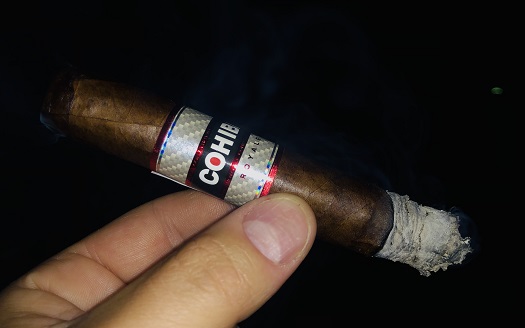
Cigar Review: Cohiba Royale Toro Royale

26 May

The last time I wrote a full review of a Cohiba was in 2017 when Cohiba Blue had just come out. This was around the same time Sean Williams of El Primer Mundo was introduced as the new Cohiba brand ambassador. “I don’t know this for sure, but my sense is the Cohiba marketing team was aiming for a differentiated look that expressed modernity and approachability,” I wrote. “The purpose of Cohiba Blue, after all, seems to be to attract more (presumably younger) consumers to the brand at a less intimidating price point.”

This April, General Cigar announced a new Cohiba line that (as far as pricing is concerned) throws caution to the wind. Cohiba Royale—dubbed the “fullest-bodied Cohiba expression to date”—is an ultra-premium offering that retails for $24-$29 per cigar.

The Cohiba Royale recipe calls for a sun-grown Nicaraguan Broadleaf wrapper, a Dominican Piloto Cubano binder, and a filler blend that includes tobaccos from Honduras (Jamastran) and Nicaragua (Estelí and Jalapa). Each leaf has been aged five to six years. “All of the tobaccos that comprise Cohiba Royale are hand-selected and deeply aged, representing the best of the best tobacco growing regions in the world,” said Williams in a press release. “The result is a cigar that is as bold as it is refined, befitting of the Cohiba name.”

Cohiba Royale is made at General Cigar’s HATSA factory in Danlí—making it the first Cohiba to be crafted in Honduras. It is packaged in five- and ten-count boxes and offered in three sizes: Gran Royale (4.5 x 52), Robusto Royale (5.5 x 54), and Toro Royale (6 x 50).

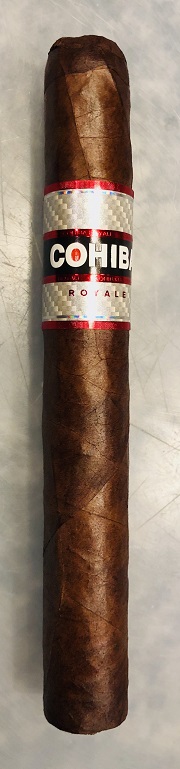
Aesthetics are not the most important trait of any cigar. That said, when you pay $29, it should be a fine-looking specimen—and, unfortunately, the Toro Royale falls short of the expectations set by its lofty price. The cap is borderline sloppy with cracks, lumps, and edges that were ineffectively smoothed down. And the seams that run the length of the cigar are likewise not as tight as they should be, and therefore prone to cracking. Other characteristics of the rough, mottled wrapper I am willing to chalk up to the rustic-ness of Broadleaf.

The real test, though, is in the taste. As advertised, the Toro Royale starts full-bodied and strong with an intense profile of black pepper, espresso, and leather. It’s the kind of powerful intro that leads you to believe there will eventually be a nicotine penance to pay—even for a seasoned cigar veteran.

After a half inch, the strength and body pull back considerably. The core flavors remain, but now the taste is better-balanced, sweeter, and more interesting. The new-arrival notes include cocoa powder and black cherry. There are also some unwelcome flavors, most notably a stale bitterness and a chewy meatiness.

From a construction standpoint, it’s all good news. The burn is straight and the cigar stays lit even when not puffed frequently. The ash holds well, the draw is smooth, and the smoke production is voluminous and aromatic.

That isn’t nearly enough to merit a recommendation, however. I smoked three for this review—each provided by General Cigar—and I’m afraid the aesthetics, flavor, and price are all disappointing. I am left with no choice but to settle on a poor score of two stogies out of five.

[To read more StogieGuys.com cigar reviews, please click here.]

Patrick A

photo credit: Stogie Guys

Cigar Review: Umbagog Corona Gorda

7 May

The Umbagog line from Steve Saka’s Dunbarton Tobacco & Trust is one of a select few blends that have been featured heavily in my personal rotation during the quarantine. I suspect Umbagog’s inclusion has a lot to do with my desire to not want to sacrifice quality while keeping my cigar budget relatively in check.
As you may recall, Umbagog (“oom-bah-gog”) was announced in the summer of 2016, along with a flurry of other new releases across the industry. (At that time, cigar makers, brand owners, blenders, and factories had been frantically scrambling to meet the August 8 deadline set forth by the FDA; cigars introduced after August 8 would have had to go through the FDA approval process before being sold or marketed). Saka called Umbagog an “extreme value-priced ten-count bundle” using a Broadleaf wrapper that didn’t visually make the grade for his more expensive Broadleaf cigar, Mi Querida. The cigar is named for a New Hampshire lake that’s a favorite fishing locale of Saka’s.

Umbagog “is a perfect cigar for my time upon her waters,” writes Saka on the Dunbarton website. “It is robust and durable, designed to endure the rigors of outside activity with its thick Broadleaf capa and easy-burning liga. This is a cigar that doesn’t pretend to be special or seek to elicit the ‘oohs’ or ‘aahs’ of the cigar snobs. It is an honest, hardworking cigar that is meant to be smoked, chewed upon, and lit however many times you wish.”

The Umbagog recipe calls for a Connecticut Broadleaf wrapper around Nicaraguan binder and filler tobaccos. It is handmade at the Nicaraguan American Cigar S.A. factory (NACSA) in Estelí and available in six formats: Corona Gorda (6 x 48), Robusto Plus (5 x 52), Toro Toro (6 x 52), Gordo Gordo (6 x 56), Short & Fat (4.75 x 56), and Churchill (7 x 50).

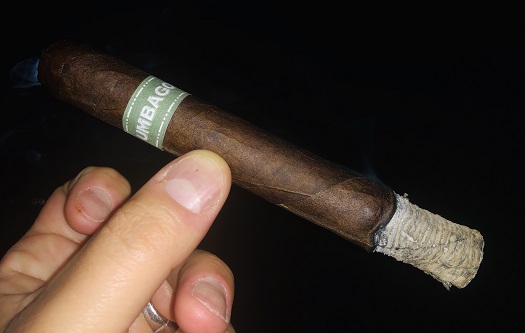
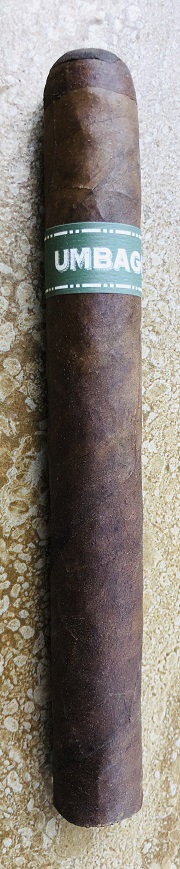
I paid $8.25 apiece for five singles in the Corona Gorda vitola. With its firm roll, tight seams, well-executed cap, smooth cold draw, and mouth-watering pre-light armoa of hickory and cocoa, there’s nothing appearance-wise to suggest this is a value bundle cigar. And, no, I can’t really tell what’s wrong with the wrappers on the five I smoked for this review. The lone exception, I suppose, is the simple, understated band, which has no raised lettering or frills of any kind (OK in my book, since I’d rather pay for the tobacco).

Quick side note: The original band (as seen here in Saka’s Instagram post announcing the blend, and here in our first review) was brown lettering on white—not the current white lettering on green. I asked Saka about this last week. “The brown on white was a temp ring used on a few hundred cigars to ensure they were imported before the FDA Aug. 8 deadline, as the green ones were delayed from printer,” he wrote via a Facebook message. “They were all sold as ‘misfits’ to one vendor before we officially launched the brand with the correct packaging.”

Beyond the wrapper, Saka has said this cigar isn’t exactly the same blend as Mi Querida, though it’s very similar. Think different primings or grades of tobacco, but the same basic Nicaraguan components. I actually think Umbagog is smoother and slightly milder than Mi Querida, which I would characterize as moist and full-bodied with a grainy texture, ample spice, and notes of espresso, cinnamon, damp wood, and leather. In contrast, the Umbagog Corona Gorda is a drier, woodsier smoke with a bready texture and plenty of earth, cocoa powder, charred oak, and white pepper.

The physical properties are absolutely stellar. The draw is smooth throughout, the smoke production is better than average, the straight burn line is razor-sharp, and the white ash holds well off the foot.

I realize the term “value bundle” is relative.  There are plenty of factory seconds and discount smokes out there, and I wouldn’t put Umbagog close to that category. This is only a value play when viewed against the rest of the Dunbarton portfolio, which is made to Saka’s exacting standards and therefore commands relatively expensive prices. Whether you decide to take the Corona Gorda for a spin while golfing, fishing, or simply sitting back with some sipping rum, I think you’ll be pleased. In my book, it earns four stogies out of five.

[To read more StogieGuys.com cigar reviews, please click here.]

Patrick A

photo credit: Stogie Guys
Cigar Review: CroMagnon EMH Black Irish

17 Apr

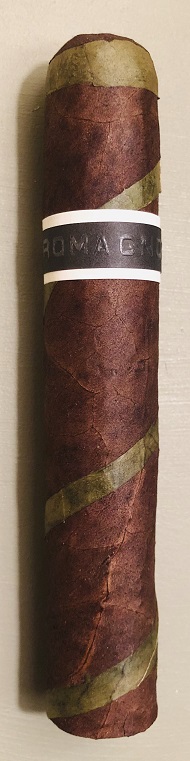
In 2017, Skip Martin’s RoMa Craft Tobac released a limited edition offshoot of its popular CroMagnon EMH (“Early Modern Human”) cigar called Black Irish. The twist (pun intended) is a thin barber pole of Ecuadorian Connecticut Candela included in the regular EMH recipe. It’s a strategy that makes for a striking cigar—and one that’s highly sought-after among the dedicated RoMa fan base.

In an exchange with Danny Vazquez, RoMa’s sales director for North America, I learned there were about 60 boxes made in that inaugural year. In 2018 the release grew to 100 boxes. And while there were none made in 2019, 2020 production is about 200 boxes. While that’s double the number from 2018, “this limited edition is being released slower because of COVID restrictions, but after it’s done they are gone for the year,” says Vazquez.

Black Irish has the same dimensions as the original EMH (5 x 56) and, other than the Candela stripe, is the same recipe. The wrapper is Connecticut Broadleaf, the binder is Cameroon, and the filler is comprised of three different tobaccos from Nicaragua: Estelí, Condega, and a small farm on the Honduran border. “This third leaf, a Ligero, brings a strong, smoky, savory flavor to the blend,” read a description on the old RoMa website. “When combined with the mildly sweet characteristics of the Broadleaf Maduro wrapper, the exotic bite of the Cameroon binder, and the clean finish of its Viso and Seco companions, the blend delivers the precise, deep, rich tobacco flavor we wanted to present…”

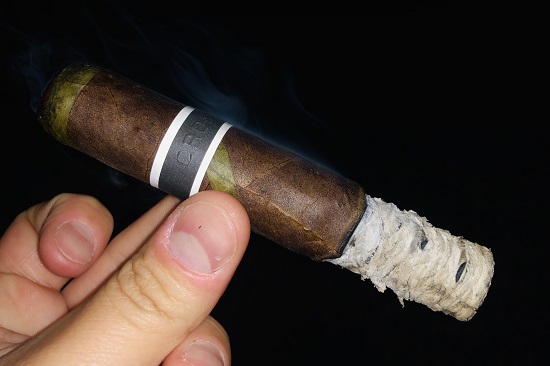
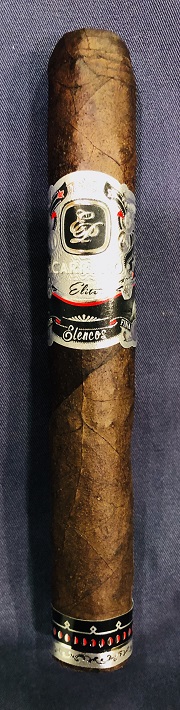
Speaking of presentation, Black Irish makes quite the first impression. The thin Candela stripe appears to be applied directly over the diagonal line that I’d typically refer to as the cigar’s “seams.” This strip of green leaf is not completely uniform—it’s slightly thicker in some spots, thinner in others—but the overall effect, especially at the cap, is one of impressive attention to detail. The cigar is adorned by the familiar CroMagnon band of charcoal over cream, with black raised lettering that’s nearly illegible.

The thick robusto is firm to the touch. Pre-light notes include damp hay, sawdust, and licorice. The cold draw is smooth to moderate.

As with the regular CroMagnon EMH, the profile is dark, chalky, and full-bodied from the get-go. Not surprisingly, there are also sweet grassy notes on the background. But given the Candela placement versus the burn line, these grassy notes come and go, never taking center stage—perfect for the cigar enthusiast who’s just looking for a hint of something different.

After the first inch, the body settles a bit. But while the profile is slightly mellower, it never ventures out of the full-bodied spectrum. That’s about where the Black Irish stays until the finale. All the while, the burn line is OK (though, to its credit, it never requires any touch-ups). The white ash holds impeccably well. And the smoke volume is as generous as it is aromatic.

The MSRP is $288 for a box of 24, or $12 for a single. If you come across it, I’d absolutely recommend picking some up—especially if you’re in the mood for something unique and different. In my book, the CroMagnon EMH Black Irish is worthy of a very admirable rating of four stogies out of five.

[To read more StogieGuys.com cigar reviews, please click here.]

Patrick A

photo credit: Stogie Guys

Cigar Tip: Five Green Cigars for St. Patrick’s Day

17 Mar

I’ll be honest. I’m not a huge fan of green-colored candela cigars. For the most part, I smoke them for the same reason I drink green beer: Because it’s fun once a year. That’s why, even in light of events that mean not many of us are enjoying big St. Patrick’s Day parties, I’m updating our list of St. Patrick’s Day smokes.

It’s not that candela cigars are bad. It’s just that I’ve yet to find a candela that’s better than the same blend with a traditional wrapper (and the cigars below are no exception). That’s probably why candela cigars make up a fraction of one percent of the premium cigar market, and a proportional percentage of my cigar purchases.

And yet it wasn’t always that way. Green candela wrappers were once very popular with American cigar smokers. So much so that candela wrapper leafs—which go through a special quick and hot fermentation process that locks in the green color—were once known as “American Market Selection,” as opposed to more traditional brown “English Market Selection” wrappers.

If you’re thinking about trying a candela, St. Patrick’s Day is as good a time to take the plunge. To that end, here’s a quick rundown of some of the green cigars available:

Black Market Filthy Hooligan by Alec Bradley — First released last year, it’s back with a wrapper that’s a year older. It features the same blend as the regular Black Market (Panamanian and Honduran filler with a Sumatra binder) coupled with a candela wrapper. If you like the regular Black Market cigar, this is your best bet.

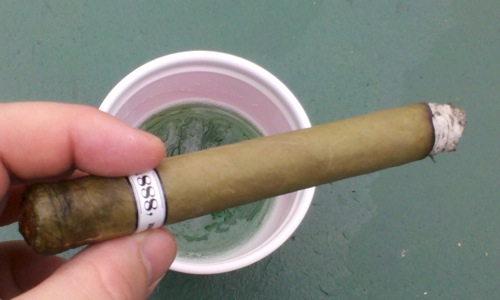
Illusione Candela — Illusione makes it’s original blend (Nicaraguan binder and filler) with candela in a few sizes. Back in 2011 when it first came out, we found the 88 size to be a pleasant smoke with tea and plenty of sweet flavors, and lacking the bitterness that sometimes characterizes candela cigars.

Viaje WLP St. Patrick’s Day — I smoked a few of the 2012 edition, which features the brightest candela wrapper I’ve ever seen, and found that it equaled the Illusione as my favorite candela. It also has the brightest green wrapper of the bunch.

Don Tomás Candela — My colleague reviewed this candela with some skepticism when the company claimed it was the result of three bales of candela wrappers that had been “lost” for 18 years. Ultimately, though, he found it to be a “respectable” smoke with enjoyable flavors, even if it wasn’t destined to be a regular in his rotation.

Fuente 8-5-8 Candela — Fuente’s regular line is known for smooth, mild flavors produced by Dominican binder and filler tobaccos. I smoked one of these with a candela wrapper a few years back and recall just that: a mild, balanced smoke with a hint of classic grassy candela flavors.

Patrick S

photo credit: Stogie Guys