Search results: site-policy/images

Cigar Spirits: Breckenridge Bourbon

22 May
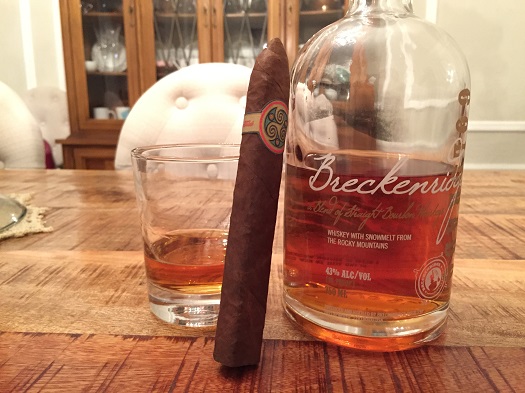
I’ll admit it. When I saw the tagline for Breckenridge Distillery—“the world’s highest distillery”—I first thought of Colorado’s legalization of marijuana. Only seconds later did I realize the slogan was instead a nod to Breckenridge’s elevation of 9,600 feet above sea level. Such a clever play on words.

Credit for this double-meaning is probably due to Bryan Nolt, the young man who is founder and CEO of Breckenridge Distillery. “In 2007, I had the arguably really bad idea of starting a distillery in Breckenridge, Colorado,” Nolt writes on his company’s website. “Cashing out my life savings, kids’ college fund, and eventually selling my house to cover monthly payroll and taxes, we bootstrapped our way through the early years loving every minute of it.”

Today, Nolt says, it would be fair to call his distillery successful. In part, this is due to the “unique features of the Breckenridge water we use for proofing and blending every bottle of our spirits.” The Breckenridge product catalog includes a gin, several vodkas, a spiced rum, a bitter, a whiskey distilled from malt mash, and a blend of straight bourbon whiskeys simply called Breckenridge Bourbon.

I recently bought a bottle of the latter for about $40 here in Chicago (750 ml. bottle, 86-proof). “We mash, ferment, and distill a lot of bourbon in-house,” reads the Breckenridge website. “Our blend of straight bourbon whiskeys also consists of barrels selected from Kentucky, Tennessee, and Indiana chosen for their unique qualities, heritage, and ability to marry in our blend, always made from a high-rye mash bill.”

That mash bill is 56% corn, 38% rye, and 6% malted barley. It is fermented in an open-top fermenter and twice-distilled in a copper-pot still. It is then set to barrel-age at 120-proof (no one knows for sure how long, but most seem to think only for two or three years; if true, the bourbon should have an age statement, which it does not). After aging, it is diluted with melted snow from the Rocky Mountains.

In the glass, Breckenridge Bourbon sports a dark copper color with a nose of brown sugar, candied pecan, green raisin, and banana. The flavor is nicely balanced and complex with a bready texture and abundant warm spice. The taste includes vanilla, buttered corn, honey, caramel, oak, and cinnamon. The finish is incredibly long-lasting with a pronounced spice and a numbing heat.

That numbing heat, to me, is the signature characteristic of this spirit, and a highly enjoyable sensation. It is significantly reduced if you add more than a drop of water, or if you serve the bourbon on the rocks. Therefore, I suggest you first try Breckenridge Bourbon neat (or, at the very most, add just a drop of room-temperature water).

Is this a young bourbon? Yes. Does it carry an age statement? No. That said, I think $40 is a very fair price since it delivers such a unique, satisfying, harmonious experience. I highly doubt you will be disappointed if you pick up a bottle. When you do, pair it with a medium-bodied smoke that brings its own complexity to the table. For starters, I would suggest the Gaaja Maduro Torpedo or the El Güegüense Churchill.

Patrick A

photo credit: Stogie Guys

Quick Smoke: Umbagog Gordo Gordo

21 May

Each Saturday and Sunday we’ll post a Quick Smoke: not quite a full review, just our brief verdict on a single cigar of “buy,” “hold,” or “sell.”

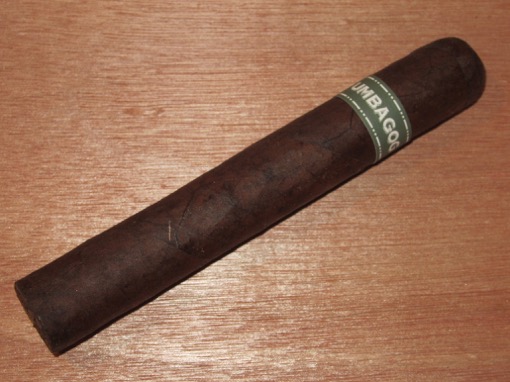
No major visible flaws on this Umbagog by Steve Saka’s Dumbarton Tobacco & Trust, despite using Connecticut Broadleaf wrappers that don’t make the grade for the higher-end Mi Querida, both of which are made at at the NACSA favtory in Estelí, Nicaragua. The large toro (6 x 56) features rich earth flavors with dark chocolate, bread, and black pepper. With an easy draw and flawless combustion, this is an easy cigar to recommend given its sub-$7 price tag. I may even prefer it to the more traditionally-sized Toro Toro vitola.

Verdict = Buy.

–Patrick S

photo credit: Stogie Guys

Quick Smoke: Room 101 HN 305

20 May

Each Saturday and Sunday we’ll post a Quick Smoke: not quite a full review, just our brief verdict on a single cigar of “buy,” “hold,” or “sell.”

Once Matt Booth announced earlier this year he was ending his partnership with Davidoff and exiting the cigar business, it was only a matter of time before the discounts began on his Room 101 lines. I recently picked up a 10-pack of these robustos (5 x 50) for $2.25 each. At that price, the HN 305 is easy to like. With a complex blend of a Honduran Criollo ’98 wrapper, Brazilian Mata Fina binder, and filler from Honduras and the Dominican Republic, the flavors may not blow you away, but they also aren’t likely to disappoint. I’ve smoked several and all have performed excellently. Keep an eye out for a sale if you’d like to try something a little different.

Verdict = Buy.

–George E

photo credit: Stogie Guys

Cigar Review: Tatuaje Reserva Broadleaf Collection K222

17 May

Tatuaje-Broadleaf-Collection

As I’ve noted before, with the FDA deadline just days away at the time, the 2016 IPCPR Trade Show saw a flurry of new cigar announcements, as expected. Pete Johnson’s Tatuaje was no exception. And I don’t think I have to go out on a limb to say fans of Tatuaje were most excited for the new Tatuaje Reserva Broadleaf Collection.

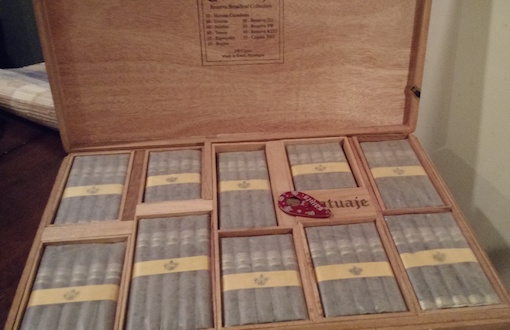
The Tatuaje Reserva Broadleaf Collection consists of a whopping 100 cigars selling for $1,200, featuring ten each of the six original Miami Seleccion del Cazador (Brown Label) “HUNTER” sizes, plus the J21, SW, K222, and Cojonu 2003 blends. Originally, the cigars were set to only be available in 5,000 master cases of 100 (pictured above). More recently, though, Tatuaje has announced some will be released in boxes of ten of each size.

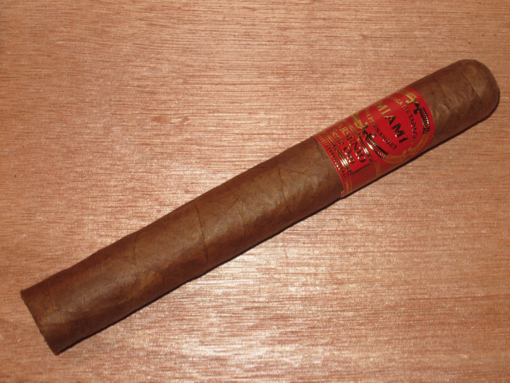
The master cases of 100 began arriving at retailers earlier this year and StogieGuys.com secured one. In addition to master cases of 100, Tatuaje owner Pete Johnson announced this year that the cigars will also be available in boxes of 10 of each vitola ($140 for the K222 box of 10).  In March, I reviewed the lonsdale-sized (6.4 x 43) Havana Cazadores vitola. Today, we evaluate the toro-esque K222 (5.9 x 52), the most recent addition to the Brown Label offerings.

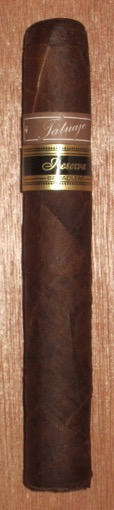
The original K222 was released last year as a tribute to Pete Johnson’s late dog, Kona, who passed away at 2:22 PM on April 26, 2015. That version features a dark Ecuadorian Habano wrapper around Nicaraguan binder and filler tobacco. The Broadleaf Collection edition swaps out the Ecuadorian Habano for Connecticut Broadleaf. To differentiate from other Reserva lines (including the original K222, which also uses the Reserva secondary band), the Broadleaf Collection bands say Broadleaf below Reserva on the second band.

I smoked four K222 Reserva Broadleaf Collection cigars for this review. The deep brown wrapper has just a little oil. One of my samples featured some oversized veins running from the cap to the foot, but all four exhibited excellent combustion qualities.

Once lit, I found a cigar heavy on tannin and oak notes combined with a roasted flavor that reminded me stale coffee. Through the 90-minute smoke, I also found bread and black pepper notes.

The K222 Reserva is strong and full-bodied, but neither balanced nor complex. I frankly was underwhelmed by the cigar, which caught me by surprise since I gave very high marks to the original K222 and the previous Broadleaf Collection (Havana Cazadores) I reviewed.

Maybe the explanation is that this is more an experiment than a polished blend, as the original K222 was clearly blended for the rich Habano wrapper and not a Connecticut Broadleaf wrapper. Whatever the reason, while hardly an unpleasant cigar, it doesn’t come close to the original K222 blend, nor is it among the best of the Broadleaf Reserva Collection. This is why the K222 Broadleaf Reserva earns three and a half stogies out of five.

[To read more StogieGuys.com cigar reviews, please click here.]

–Patrick S

photo credit: Stogie Guys

Cigar Review: Cohiba Blue Robusto

15 May

A few weeks ago, not long before announcing Sean Williams of El Primer Mundo as the new Cohiba brand ambassador, General Cigar Co. revealed Cohiba Blue. From a packaging perspective, the new line is a departure from the silvers and blacks that dominate the rest of the Dominican-based brand’s portfolio.

I don’t know this for sure, but my sense is the Cohiba marketing team was aiming for a differentiated look that expressed modernity and approachability. The purpose of Cohiba Blue, after all, seems to be to attract more (presumably younger) consumers to the brand at a less intimidating price point.
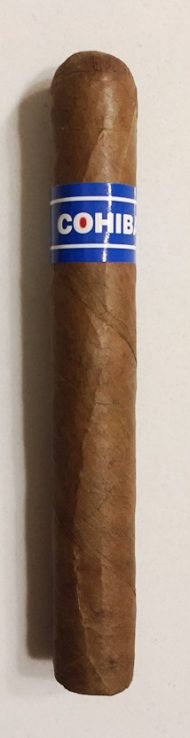
The four inaugural vitolas that are just now arriving at retailers nationwide—Churchill (7.5 x 50), Robusto (5.5 x 50), Rothschild (4.5 x 50), and Toro (6 x 54)—sell in the $8.99 to 10.99 range. While they are by no means discount or value smokes, they are less expensive than many of the other options within the Cohiba collection. Each vitola is presented in a box of 20 that’s hand-painted—you guessed it—bright blue.

The Cohiba Blue recipe includes a Honduran Olancho San Agustin (OSA) wrapper and binder (no, cigars do not typically use the same kind of tobacco for both the wrapper and binder) around Honduran Jamastran, Nicaraguan Ometepe, and Dominican Piloto Cubano filler tobaccos. “The layered wrapper-binder deepens the smoking experience and imparts subtle, earthy notes,” reads a General Cigar press release. “The unique, three-country blend represents the world’s most revered tobacco growing regions and delivers a sophisticated, memorable smoke.”

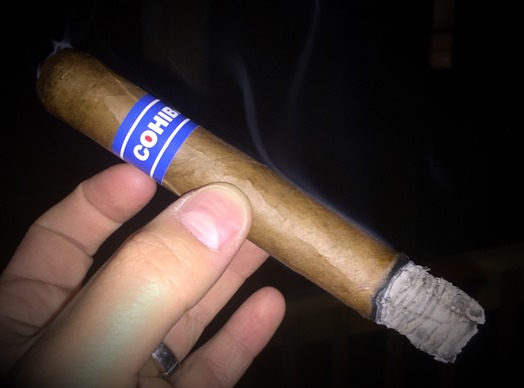
I smoked a handful of Cohiba Blue Robustos for this review. Appearance-wise, this cigar is unimpressive. The OSA wrapper is grayish and pale with several prominent veins that leave the splotchy, moderately oily surface rugged and unrefined. And the band seems quite cheap—not because it’s blue, but because it’s flat and plain.

Looks are far from the most important aspects of any cigar. So I went into lighting up my first Robusto with an open mind. What I found was a well-balanced, spice-forward, medium-bodied profile that’s best characterized by cinnamon, cedar, roasted nuts, warm tobacco, and a bit of honey. From the outset, both the draw is a bit tight and the smoke production at bit light.

After half an inch, the draw opens considerably, the smoke production becomes more in line with expectations, and the spice recedes. The cedar becomes oak and the cinnamon is replaced by a sweet, creamy backdrop akin to nougat. Thereafter, there are few changes, save for a slight increase in intensity in the final third. Throughout, the burn line is well-behaved, though don’t be surprised if you need to employ a few torch touch-ups.

All things considered, the Blue Robusto is a satisfying, well-made smoke with good flavors. I don’t think it’s going to wow anyone, yet there’s still a lot to like about this new Cohiba. In my book, it earns a solid rating of three and a half stogies out of five.

[To read more StogieGuys.com cigar reviews, please click here.]

Patrick A

photo credit: Stogie Guys

Quick Smoke: Casa Fernandez Arsenio Serie Oro Toro

14 May

Each Saturday and Sunday we’ll post a Quick Smoke: not quite a full review, just our brief verdict on a single cigar of “buy,” “hold,” or “sell.”

One of the first cigars I smoked under the Casa Fernandez brand was Arsenio, which is named after Casa Fernandez master blender Arsenio Ramos. It’s a tremendous value considering $45 gets you a box of ten. In 2014, Casa Fernandez added a new Arsenio line called Serie Oro. Today I’m smoking the large Toro (6.5 x 54), which retails for just under $10. The Nicaraguan puro features a Corojo wrapper grown at an Aganorsa farm in Estelí. With a soft, box-pressed shape, the cigar produces medium-bodied flavors with plenty of graham cracker sweetness and black coffee notes. Construction is excellent. It is hard to beat the original Arsenio when it comes to valye, but the Serie Oro is a fine, balanced, well-made cigar.

Verdict = Buy.

–Patrick S

photo credit: Stogie Guys,

Cigar Review: Davidoff 702 Series 2000

10 May

For more than a decade, Davidoff seems to have been looking to add a full-bodied cigar to the Davidoff line. Known for its classic, complex, balanced cigars that tend toward the milder end of the spectrum, various additions over the years have been aimed at consumers who appreciate Davidoff but want a fuller-bodied cigar.

Recent “Black Label” releases—Davidoff Nicaragua, Escurio, and Yamasa—as well as previous releases—Davidoff Millennium, Maduro, Puro Dominicano, and Puro D’Oro—all were marketed in part as Davidoff’s answer to consumers seeking a bolder Davidoff. From a branding and blending prospective, it’s a fine line to walk: something new without betraying a carefully cultivated image and profile. (Success has been mixed: Maduro and Puro D’Oro have been discontinued along with some Millennium vitolas, while Nicaragua was just expanded to a box-pressed line.)

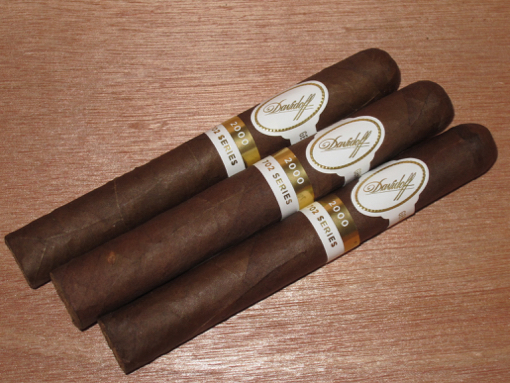
This year, another bolder Davidoff offering was introduced: the 702 Series. For the line, the the company took seven popular White Label vitolas and swapped out the traditional Connecticut wrapper for an Ecuadorian-grown Habano.

The deep brown wrapper was originally featured on a limited edition 2009 Toro Especial cigar and was created by Davidoff as a hybrid of three Cuban seeds. The binder and filler for each of the seven 702 cigars is the same as the non-702 version.

I smoked three of the 2000 size (5.1 x 43). The cigar features an Ecuadorian binder and Dominican filler. The suggested retail price is $15.80.

The cigar starts out with a burst of caramel and cinnamon sweetness, but soon settles into a more traditional combination of roasted nuttiness, café au lait, and warm, well-aged tobacco.

With a perfect draw, solid ash, and even burn, the cigar delivers medium-bodied flavors from start to finish. With the exception of occasional black pepper there isn’t much spice, though towards the final third leather and biscotti flavors emerge.

As mentioned above, Davidoff’s challenge has always been staying true to what makes Davidoff so appreciated as it caters to consumers whose tastes tend toward fuller-bodied flavors. By bifurcating its Black Label and White Label lines, Davidoff has finally settled on a successful formula.

The addition of the 702 Series adds a new twist, but ultimately fits into the White Label line as a medium-bodied cigar that is subtly complex and exquisitely balanced. Davidoff cigars are always priced as premium cigars but they usually deliver, and the 702 Series 2000 is no exception, which is why it earns a rating of four and a half stogies out of five.

[To read more StogieGuys.com cigar reviews, please click here.]

–Patrick S

photo credit: Stogie Guys