
Archive | Tips RSS feed for this section

Stogie Tips: Time for a (Better) Light

26 Aug 2009

I’m always amazed when I see someone who’s meticulous about keeping the temperature and humidity just right for their cigars and then lights up like a late-night arsonist intent on scorching away all the evidence.

Torch

If there’s a faster way to start your smoke off the wrong way than by overheating and charring the tobacco, I don‘t know what it is. Remember, you’re lighting a cigar, not practicing for a job as a welder.

If you’re a regular StogieGuys.com reader, you know we’re serious about this. Over the years we’ve written numerous times about lighters, matches, and tips for lighting up.

What you use to bring the stick to life, of course, is up to you. I believe it’s possible to light a cigar correctly with nearly any form of flame that doesn’t carry a taste or odor. And there are really only a few points to keep in mind.

First, keep the flame from directly hitting the foot of the cigar, especially if you’re using a butane torch, which can easily exceed 2,000 °F. Such extreme heat can virtually obliterate tobacco on contact, something you have to worry about much less with matches or a burning cedar strip (known as a spill).

Also, don’t light the cigar in your mouth. Hold it in one hand, the flame in the other, and rotate the stick. Stop and take a light draw a couple of times during the process to help make it even.

Finally, take your time—advice that fits with nearly every aspect of cigar smoking. Going slowly will pay off when you take those first few puffs and enjoy the tastes the blender intended, not burned tobacco.

So save the caveman flames for the barbeque grill. I guarantee you’ll enjoy the cigar afterward much more.

George E

photo credit: Wikimedia

Stogie Tips: Time to Smoke THAT Cigar

1 Jul 2009

It’s a phenomenon that isn’t unique to cigars: Once you’ve got a good collection you probably find that some truly rare cigars sit in your humidor month after month, year after year.

Big BenMaybe it’s a limited edition Opus X with a few years of age, or that last highly acclaimed Cuban that’s been sitting in your humidor for half a decade. It’s like you’re waiting for a perfect cigar moment that may never come.
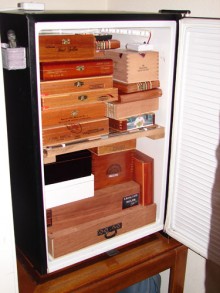
It’s a problem that isn’t unique to cigars. I’ve heard wine collectors express the same dilemma. With a cellar of thousands of bottles, the very best ones never get opened.  Instead, they get passed over as some of them age beyond their peak.

Like wine, many cigars peak after only a bit of aging before going downhill.  Other cigars are meant to be smoked soon after they’re released. After all, that’s why the master cigar makers who created them released them when they did.

So don’t wait forever for some perfect situation to smoke that extra special cigar. It might be getting worse, not better, while you patiently pass it over. Instead, make your own occasion to light up that special smoke. Maybe just invite a good cigar-loving friend over, grill up some steaks, and light them up after a dinner where you open that special bottle of wine.

If you’re worried this will leave your humidor without a special smoke, just use a trick that wine collectors do: Every time you smoke a truly special cigar, replace it with two of equal or better quality. Soon you’ll have a nice little collection of extraordinary cigars.

Personally, on the Fourth of July, I’m going to light up an Opus X Chili Pepper that’s been resting for two years. Why wait any longer?

Patrick S

photo credit: VisitingDC

Stogie Tips: Keeping Your Cool

26 May 2009

With summer fast approaching, the temperature isn’t the only thing going up. Cigar smokers level of fear for the nasty cigar beetle increases right along with it.

coolidorWhile most cigar makers have taken dramatic steps in recent years to control and eliminate the voracious pests, there’s no question that they remain a potential danger. For example, one of my Stogie Guy colleagues had beetle problems with some Cubans recently, and last year our friend Chris Verhoeven wrote about his sticks coming alive.

There’s so much information, and so much misinformation, about beetles that  it’s nearly impossible to sort it all out. Suffice it to say that their eggs, laid in tobacco, may begin to hatch when the environment is very warm and moist. Once free, the little pests just start burrowing, eating, and reproducing.

So, here are some tips for keeping your cigars out of harm’s way during the hot summer:

1) Make sure you have a good digital thermometer and hygrometer. Put in a fresh battery and check the readings frequently.

2) Depending on the nature of your home, simply moving the humidor to a cellar, basement, or cool spot can do the trick. Avoid putting the box too close to an air-conditioning duct to protect the wood and the cigars.

3) A simple remedy is a coolidor (if this isn‘t familiar, just Google it and you’ll find all you ever wanted to know). You can lower the temperature cheaply with freezer packs. Some experimentation will likely be necessary to figure out how many packs you need and how long they last. Also, even though they don’t melt, they may sweat, so keep them in a container or suspended tray to remove any possibility of cigars getting damp.

4) For a more permanent solution, you can try a thermoelectric wine cooler. It’s what I use year-round here in the Sunshine State.

George E

photo credit: StogieFresh

Stogie Tips: The Amazing Flying Cigar Man

21 Apr 2009

In addition to all the smoking bans and tobacco taxes, today’s cigar smokers, particularly those who often travel by air, are confronted with a relatively new nuisance: the growing number of air carriers that charge for checking luggage.

O'HareI experienced this unfortunate burden this weekend when my travels took me from DC to Minneapolis. Liquids aside, I had a hard time figuring out how to avoid that $15 fee for the first checked bag due to my love of the leaf and desire to bring along cigars.
Torch lighters, you see, are expressly prohibited by the Transportation Security Administration as a carry-on. And, while the TSA makes no specific mention of cigar cutters on its website, it does ban other similar items like scissors and box cutters.

So what’s a frequent-flying cigar enthusiast to do? Here are a few tips that might make your trips a little easier and a lot cigar-ier.

Light cheap. Since they may or may not be confiscated, don’t pack expensive cigar paraphernalia in your carry-on luggage. In lieu of a fancy lighter, for example, bring along a Ronson Jetlite. I haven’t had mine taken away yet but, if it is, I’ll only be down a few bucks. Or, better yet, skip bringing a lighter altogether and instead take a few wooden matchbooks from a restaurant or hotel in your destination city.

Punch cut or plastic. When it comes to cutters, opt for a simple keychain punch cutter or a plastic guillotine. Either is easy to get past TSA officials and, if confiscated, will set you back next to nothing. And don’t sweat it if you end up without a traditional cutting implement at your destination; everyday items like fingernail clippers, while imperfect, often get the job done without incident if handled with care.

Ziploc to the rescue. While good for the golf course or the trunk of your car, those cigar travel cases that are sold online and in magazines can be too bulky for a simple weekend plane trip—especially since overhead storage space is at a premium these days. Instead, I pack my goodies in a simple Ziploc bag with one of those little humi-packets that often come in shipments from retailers. And I prevent damage to the sticks themselves by wrapping the bag in softer items (i.e., clean boxer shorts) that I planned to bring along anyways.

You can go a long way with these three rules of thumb but, as always, I don’t have all the answers myself. Feel free to share your own airport travel tips below.

Patrick A

photo credit: Flickr

Stogie Tips: Fill ’er Up

19 Mar 2009

If you go looking for cigar bargains in these tough economic times, you will undoubtedly come across some sticks labeled “short filler,” “mixed filler,” “sandwich,” or “Cuban sandwich.” You may have to hunt for the description, though. While manufacturers love to tout “long filler,” they often aren’t nearly as eager to proclaim any of the other terms.

Short FillerHere‘s what the terms generally mean:

Long filler involves leaves that are folded or rolled to create the inner part of the cigar, which comprises the majority of the stick. This is where specific leaf sections and different leaves are combined to create the blender’s desired taste. I’ve never heard of a premium, hand-rolled cigar that is anything other than long filler.

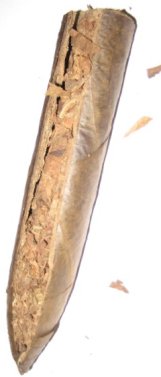
Short filler is the opposite. Small pieces of tobacco, and occasionally chopped stems, are secured inside the binder leaf. These pieces may be leftovers trimmed from leaves used in long filler cigars, or simply poorer grade tobacco chopped specifically for short filler.

Mixed filler is a combination of the two, though the longer part of the mix is often not true long filler but simply larger pieces that haven’t been fully chopped. And to make it more confusing, the term “sandwich” is sometimes used interchangeably with mixed filler.

Cuban sandwich, or sandwich cigars, are a mixture, often said to have the short filler rolled inside the longer filler leaves. Another variation is to use the longer leaves at the head so there’s less likelihood bits of tobacco will come off on the smoker’s tongue or lips.

Obviously, the poorer quality and inconsistency of the tobacco as well as the simplicity of construction means cheaper prices for any of these styles. However, that doesn’t automatically make them bad. I enjoy Pepin Garcia’s Benchmade, others swear by Arturo Fuente Curly Heads, Drew Estate’s La Vieja Habana, or the Tatauje Series P. Still others tell of finding bargains among the no-names.

Here are a few of my suggestions to help explore these lower-cost cigars:

1) Don’t buy bundles or boxes of anything without smoking it first. Period. Some of these cigars aren’t just bad, they’re horrible. Unless the seller is going to pay you to take them, there’s no bargain in an unsmokeable smoke.

2) Increase your odds of success by purchasing at a B&M. When you smoke one you like, buy more then and there. It’s likely they were rolled at the same time, using most, if not all, the same tobacco. Order online or wait to purchase and you could get a radically different taste.

3) Remember that short and mixed filler cigars from well-known manufacturers usually cost a little more because they’re much more likely to be well-constructed and consistent.

4)  Smoke these cigars even slower than usual. The draw is often loose, and the tobacco can burn ruinously hot. And don’t expect to nub many of them.

George E

photo credit: CigarPass.com

Stogie Tips: Begin at the End

2 Mar 2009

Passing along pointers to novice cigar smokers is one of our major goals at StogieGuys.com. So, with that in mind, here are a few more tips to help you enjoy this beloved hobby even more.

stubNo stubbing! Absolutely, positively, do not put your premium cigar out as you would a cigarette. It will release a mass of foul odors and unpleasant smoke. Always, repeat, always, let cigars die peacefully on their own. Premium cigars are pure tobacco and, unlike cigarettes or most machine-made cigars, will not burn on their own.
Carrying a torch. Some torch lighters are incredibly hot, particularly multi-jet and tabletop models. Occasionally, I’ll fire one up and think I should be wearing a welder’s helmet. Ponder for a moment what all that heat is doing to the cigar. It’s burning it nearly like the surface of the sun. Now, there’s nothing wrong with torch lighters. Just be careful and use the farthest reaches of the flame to ignite your cigar. You just want to light it, not charbroil it.

White ash. You’ll undoubtedly hear it said that a white ash is the sign of a good cigar. Well, tobacco people tell me that isn’t true. The color of the ash, they say, is mainly just a reflection of the minerals, salts, and chemical compounds absorbed by the tobacco from its soil. Some Cuban cigars, though by no means all, have very white ashes and that may be the origin of this belief.

George E

photo credit: Flickr

Stogie Tips: Check Out the Revolucion Cigar Scissor Cutter

7 Jan 2009

In addition to creating some of my favorite sticks, Cuban Crafters is also a purveyor of fine cigar accessories. Among their humidors, cases, lighters, and cutters, you can find the aptly titled Revolucion cigar scissors the on the Miami-based boutique manufacturer’s website.

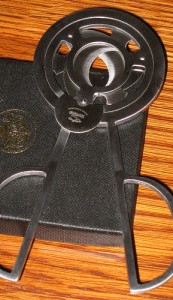
Cuban Crafters Revolucion Cigar Scissor CutterNow before you dismiss this cutter as another useless cigar gadget that will drain your wallet and add little to your smoking enjoyment, consider that the Revolucion passes the three tests that every smoker should check when buying stogie accessories. First, it makes performing a very necessary, very frequent task easier.

With three self-sharpening blades, the Revolucion quickly and cleanly slices through any cigar head up to a 60 ring gauge. It’s almost impossible to tear, rip, or crush tobacco given that the stainless steel envelops each side of a cigar simultaneously and evenly. Cuban Crafters also throws in a handy little brush for removing the bits of filler tobacco that flake away.

Now, despite my praise, I’m not quite ready to throw out all my other cutting devices—especially since most of them work well and travel easily. But I often use the Revolucion at home, especially if I have company; its creative design is a real head-turner.

Second on my stogie accessories test list is price. Here the Revolucion also passes with flying colors. The pictured model only costs $20 and a black version of the same product sells for $25. Compare either price to what you have to pay for high-end double guillotine cutters that may not perform as well.

Finally, the Revolucion includes Cuban Crafters’ excellent service (easy to reach a human via phone, very customer friendly) and a lifetime guarantee. As the company says, “If it should ever break or fail to function as expected, simply return it and include a self-addressed stamped envelope. It will be replaced free of charge. You will never have to buy another one.”

For these reasons and more, the Revolucion is an easy recommendation for stogie enthusiasts who demand clean cuts and want to avoid the hazards presented by traditional cigar scissors. It can also serve as an interesting and unique gift for that smoker who has everything.

Even though Cuban Crafters debuted the technology at the RTDA back in 2006, I have yet to cross paths with another smoker who owns a Revolucion. While I’m not sure why that is, I’m certainly glad I have mine. This cutter certainly isn’t necessary for every smoker, but it works well, costs little, and looks damn cool.

Patrick A

photo credit: Stogie Guys