
Commentary: Holy Grail Cigars
19 Apr
Recently, Empire Cigars in Raleigh, North Carolina, held an auction for some rare, old, non-Cuban cigars. Billed as “the Holy Grail” of cigar auctions, it got me thinking about what smokes were my “Holy Grail cigars.”
 Frankly, many of the cigars available in Empire’s auction were cigars that I don’t think necessarily benefit from more age. (High-end Fuente-made smokes like the Opus X, Añejo, and Ashton VSG often lose flavor after a few years, in my opinion, because the tobacco is already extensively aged.) But that doesn’t mean there aren’t old, hard-to-find cigars that I wouldn’t snap up in a second.
I’ve had the privilege of smoking hundreds (probably thousands) of different blends, from cheap bundles to pre-embargo Cubans over half a century old. Still, there are plenty of cigars I’d still like to try.
A quick list of my “Holy Grail” cigars would have to include these four cigars, two of which I’ve smoked before and two of which I haven’t ever come across (at least not at a price I could justify purchasing them at):
Cuban Davidoffs – Until they pulled out of Cuba in 1991 because of sub-standard tobacco (which Zino Davidoff symbolically burned to show that it wasn’t up to his standards), Davidoff Cubans were the perfect combination of capitalist production standards and the ideal climate of Cuban tobacco. Ironically, my father, who isn’t much of a cigar smoker, tells me he used to come across, and occasionally enjoy, a Cuban Davidoff cigar regularly in the 80s and early 90s while in Europe. I always wished he had picked up a few extra cigars for me (though I was quite a few years from cigar smoking at that point) since early and mid-80s Cuban Davidoffs were considered some of the finest cigars ever made.
Pepin-made Padilla 1932 – The current version of the Padilla 1932 is a good cigar, but the original 1932 was one that made me appreciate just how complex, balanced, and exquisite a cigar really could be. In 2008 Pepin stopped making cigars for Padilla, but for a while I could still find Pepin-made Padillas, which had a different band from the post-Pepin variety. I still regret not having scooped up more than I did.
Tatuaje Black Corona Gordo “Ceramic Jar” – Here’s another cigar I wish I had scooped up when I had the chance. Only 1,000 jars of 19 were made. From the dozen or so I have smoked, no other Tatuaje quite compares (high praise when you look at all the high ratings Tatuaje has received). I’ve smoked nearly all of the Tatuaje Blacks, including those exclusive to the Saints & Sinners package, and while all are excellent, none have the perfect balance, sweetness, and smooth flavor of the Ceramic Jar.
Pre-Sandinista Joya de Nicaragua – After the Cuban embargo, Joya de Nicaragua was widely considered to be one of the finest cigars legally available in the U.S. Then, in the late 1970s, all that was destroyed when the Sandinista regime took over. Today, Joya de Nicaragua makes some tasty cigars, but none that compare to what I’ve heard about the original Joya de Nicaraguas, which were the inspiration for Illusione.
So those are my “Holy Grail” cigars. Let us know yours in the comments.
photo credit: Indiana Jones and the Last Crusade
 That line, Small Batch Reserve, was due out some time ago, but it is only now hitting tobacconist shelves. And while you won’t find any information about the cigar on the PDR

 “The FDA is considering the creation of regulations for the premium cigar industry. These regulations will jeopardize over 85,000 American jobs, destroy America’s “mom & pop†premium cigar retailers & manufacturers, and risk over 250,000 jobs in Latin America that produce cigars, impacting the economic/political stability in the region. We hope you will stand up for small businesses that dot Main Street America & recognize that premium cigars are enjoyed by adults, are not addictive, and therefore do not conform to the Congressional intent of the Family Smoking Prevention & Tobacco Control Act. Tell the FDA to leave our premium cigars alone. With this nation’s more pressing issues, harming my simple ability to enjoy a cigar should not be a priority of the government.”
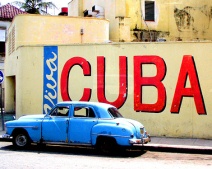 Last year Cigar Aficionado published a colorful report of Havana’s top tourist spots. For a view of life on the island for those who live there, check the March 24-30 issue of The Economist. Its 10-page report has such startling revelations as the fact that while state farms hold 75% of Cuba’s agricultural land, 45% of it was idle and weed-choked as of 2007; the post office sells email access for $1.50 a minute; and Cuba is the only Latin American country with a declining population, a population whose percentage of those under 15 and those over 60 is about equal.
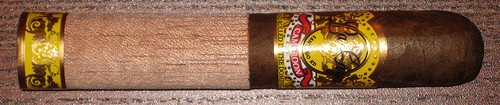
 1) Ever since June 2009 when President Obama signed the “Family Smoking Prevention and Tobacco Control Act,†my colleagues and I have written ad nauseam about the severe dangers of granting the Food & Drug Administration jurisdiction over handmade cigars. We’ve also vociferously supported the “Traditional Cigar Manufacturing and Small Business Jobs Preservation Act of 2011,†a bill that would protect premium cigars from FDA oversight. Now Cigar Rights of America and the International Premium Cigar & Pipe Retailers Association are also looking to the Executive Branch for protection, filing a petition with the White House to designate premium cigars outside the jurisdiction of the FDA. Please
 Patrick Ashby
Co-Founder & Editor in Chief
 Patrick Semmens
Co-Founder & Publisher
 George Edmonson
Tampa Bureau Chief