Search results: 2006/05/stogie-guys.html

Commentary: Give Us More than Country of Origin

22 Mar

A good cigar enthusiast is an informed cigar enthusiast. That’s why I’m so thankful for the vibrant online cigar community as a whole, and why my colleagues and I continuously strive to accurately and comprehensively provide information about the cigars on the market, who makes them, which ones are worth smoking, and what legislation is threatening cigar rights.

In each cigar review, for example, we always try to provide the country (or countries) of origin of the wrapper, binder, and filler, when that information is available. And it often is. So most of our full reviews include a sentence like this: “The blend boasts an Ecuadorian wrapper with a Nicaraguan binder and a three-country filler blend from Nicaragua, Honduras, and the Dominican Republic.” Now that information is important, but it doesn’t really tell us all that much about the cigar or how the cigar will taste. Almost every cigar on the market is some combination of the aforementioned nations, or maybe it also has tobacco from Connecticut, Mexico, Cameroon, etc.

Do I want to know that a cigar has a Mexican wrapper? Yes. But I also want to know a whole lot more. And what I want to know isn’t typically so easily found.

Now I’m not calling for industry standards or government regulations. But it would be nice if cigar manufacturers and retailers listed the kind of tobacco in a cigar, not just the countries of origin. Most already do this for the wrapper, listing it as maduro, corojo, criollo, etc. It gets tougher to find this info on binders and fillers. In a perfect world, I would be able to tell if a stick is, say, stuffed with ligero.

Another huge variable is time. Wouldn’t it be nice if everyone listed the box date, or the age of the tobaccos within the cigars, or both? That would help us all better determine if recently purchased smokes need more age or if they’re ready to smoke immediately. And personnel can also make a big difference, especially in terms of setting expectations for quality and consistency. We often know who blended a cigar and where the cigar is rolled. Sometimes, though, those answers are either vague or hard to come by.

As someone who writes often about cigars, you could say I have a vested interest in getting access to information. True. But I would say the same thing about cigar smokers, who need that information in order to make decisions about purchases. To those cigar manufacturers and retailers who already make a lot of the above information available, I applaud you. Those that are more secretive might consider opening up a little.

–Patrick A

photo credit: Flickr

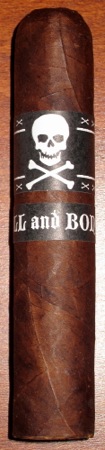
Cigar Review: Viaje Skull and Bones (FOAB)

21 Mar

Viaje has made a name for itself creating extremely limited production cigars. In fact, Viaje’s cigars are made in such limited quantities that they often sell out in mere days.

Since chances are the Viaje cigar you have your eye on will be sold before you have a chance to sample one, purchasing many is pretty much an act of faith. Maybe Viaje’s small batches are a brilliant marketing strategy (some might call it a gimmick) but the incredibly small size of the release drives demand for these rare cigars.


That is certainly the case with the Skull and Bones series, of which the three new editions of only 300 boxes of 25 (7,500 total cigars) were released. Two of those were a second edition of a cigar released a year ago: the WMD “Weapon of Mass Destruction” (3.75 x 54) and the MOAB “Mother of All Bombs” (4.5 x 52). A third, the FOAB “Father of All Bombs,” was a new addition to the Skull and Bones line.

FOAB is slightly fatter than the MOAB with a 56 ring gauge and the same 4.5 inches in length. Like all Viaje cigars, it is made at the Raices Cubana factory in Honduras, which also produces cigars for Illusione, Padilla, Alec Bradley, La Palina, and others. The Viaje FOAB is an all Nicaraguan blend with a dark sun-grown criollo wrapper. The cigar sells for $9.20 each ($230 for a box of 25), a substantial price for a cigar you might call a petite robusto.

With a name like Father of All Bombs, you’d expect a full-bodied a bomb of a cigar, and while FOAB is definitely full-bodied (no matter what your definition is), it isn’t overwhelmingly so. Perhaps that’s why Viaje owner Andre Farkas says he doesn’t include the FOAB (or MOAB) in the Skull and Bones red line, because MOAB and FOAB aren’t nuclear but conventional weapons.

The cigar features charred oak, chocolate, and dark coffee. There’s also bready and roasted nuts present, notes you wouldn’t usually identify with a full-bodied smoke. It’s surprisingly well-balanced, though the flavors don’t change much throughout.

Construction was excellent for each of the three cigars I sampled with a solid gray ash, firm-but-not-difficult draw, and straight burn. Given that this little cigar costs almost $10 each, it would have been very disappointing if it weren’t well-constructed.

I only picked up a five-pack (it cost me $46), and there are very few left so I look forward to seeing how my remaining cigars deal with a bit of age (and I should note that I smoked these within days of receiving them). Ultimately, though, I really did enjoy the FOAB. I was pleasantly surprised to find this cigar not overwhelmingly strong. It may not be a cigar for beginners, but it has enough balance to be enjoyed by a seasoned smoker. That earns the Viaje FOAB (“Father of All Bombs”) a rating of four stogies out of five.

[To read more StogieGuys.com cigar reviews, please click here.]

–Patrick S

photo credit: Stogie Guys

Cigar News: Rolando Reyes Sr. Passes Away

20 Mar

It was announced yesterday that longtime cigar pioneer Rolando Reyes Sr. died at the age of 89 on Sunday. Reyes will be fondly remembered as the founder of the Puros Indios brand and a mentor for many in the industry.

“My grandfather has been around this industry so long that many of the great manufacturers of today have come to him at one time or another for help and guidance, but left our factory with an incredible life-long friendship,” said Carlos Diez, current president of Puros Indios.

Reyes was also a longtime member of the International Premium Cigar & Pipe Retailers Association (IPCPR). An IPCPR statement released yesterday called him “an inspiration to many in his industry, with a tireless work ethic and an extreme dedication to his craft.”

Rolando Reyes Sr. embodied the very essence of perseverance. Born in Cuba in 1924, he made his dream of becoming a “tabacalero” true when, at age 21, he established his own cigar factory—only to have his “Los Aliados” trademark and properties seized by the communist government. Then, when he refused to work at the nationalized El Rey del Mundo factory, he was forced to labor in rice fields.

A lesser man might have given up. But Don Rolando moved to America to get his feet back on the ground, working in textiles by day and rolling cigars by night. By 1989, after overcoming a trademark setback, he had his own cigar operation again, this time with an office in Miami and a factory in Danlí, Honduras.

Reyes’ impact on the cigar industry will be felt long after his death. I think I can speak for the entire StogieGuys.com community when I say that our thoughts are with his family. Don Rolando will be missed.

–Patrick A

photo credit: N/A

Cigar Review: La Palina El Diario KB

19 Mar

This new addition to La Palina’s El Diario line has been anticipated since late last summer. KB, short for “Kill Bill,” is a small corona (4.5 x 40).

The name is a reference to the cigar’s strength and La Palina owner William Paley, who is called Bill or “Little Bill” to his family. As the re-founder of La Palina (his grandfather Samuel Paley founded the brand in 1896 but Bill Paley re-established it a few years ago) explains in this video, it is La Palina’s strongest cigar yet.

Like the other El Diario sizes, the blend is a collaboration between La Palina and Alan Rubin of Alec Bradley. Paley used Rubin as his point man to produce the cigars at the Raices Cubana factory in Honduras, where many Alec Bradley cigars are made, in addition to such highly regarded cigars as Illusione, Viaje, and many of the Padilla lines.

The cigar features Nicaraguan and Honduran tobacco. The wrapper is an oily Honduran corojo ’99 rosado leaf. Underneath are dual Honduran criollo ’98 binders that surround the Nicaraguan filler composed of corojo ’99 and criollo ’98 leaf.

Paley is right about this being the most potent La Palina yet. Even though the blend is the same, the size intensifies the flavors. There’s a spicy dark chocolate flavor that’s reminiscent of Mexican mole. Additionally, there’s a syrupy sweetness, oak, and dark charred notes.

Construction was perfect in each of the two samples I smoked, which you’d expect from a $9 cigar. The KB comes in a four-pack ($35 MSRP) and has just shipped to retailers who will get sleeves of five four-packs (20 cigars each). The sixth size in the El Diario line will be regular production, but is only being made in limited numbers right now.

While not perfectly balanced, KB makes up for it with bountiful flavors and a substantial nicotine kick. This new smoke is my favorite vitola in the El Diario line. That earns the La Palina El Diario KB an impressive rating of four and a half stogies out of five.

[To read more StogieGuys.com cigar reviews, please click here.]

–Patrick S

photo credit: Stogie Guys

Quick Smoke: Hoja de Flores

18 Mar

Each Saturday and Sunday we’ll post a Quick Smoke: not quite a full review, just our brief verdict on a single cigar of “buy,” “hold,” or “sell.”

I’ll admit I hadn’t heard of this new Dominican puro until a friend pointed it out to me when I was visiting one of my local cigar shops. The $10 smoke features a a medium brown corojo wrapper with just a bit of shine. I don’t know the exact size but I’d guess it’s about 6 inches long with a ring gauge of 52. It starts off very mild with slightly damp woody notes. I nearly wrote it off as bland and boring when, about a third of the way in, it developed a more interesting edge with cedar and cinnamon spice, and became more medium-bodied. With excellent construction, it was good enough that I’d want to try a few more before rendering a full judgement.

Verdict = Hold

–Patrick S

photo credit: Stogie Guys

Quick Smoke: Joya de Nicaragua Fuerte Serie B Corona Gorda

17 Mar

Each Saturday and Sunday we’ll post a Quick Smoke: not quite a full review, just our brief verdict on a single cigar of “buy,” “hold,” or “sell.”

While I really don’t remember purchasing these cigars, I do remember that I wasn’t particularly impressed when I smoked them. Unlike reviewers who found the Joya de Nicaragua Fuerte Serie B to be a good, cheap smoke, I found the blend to be harsh. So, I tucked them into my humidor and forgot about them. That’s been a couple of years. When I ran across one the other day I thought I’d give it a try. And I was pleasantly surprised. Not all the harshness had dissipated, but it had been subdued enough to let some of the tobacco’s better qualities come through. Among the tobacco flavors I found some leather and wood, though neither predominated. Construction, draw, and burn were fine. So if you’re looking for a very inexpensive cigar—the Corona Gorda (5 x 46) runs around $50 for a bundle of 20—that you can smoke while doing something else, this is worth a shot. Worth it, that is, if you’re willing to invest a couple of years to file down the splinters.

Verdict = Hold.

–George E

photo credit: N/A

Stogie Guys Friday Sampler No. 281

16 Mar

As we have since July 2006, each Friday we’ll post a mixed bag of quick cigar news and other items of interest. Below is our latest Friday Sampler.

1) Cigar Rights Alerts: Legislation has been proposed in Kansas that would increase the state tax on cigars by 30%, and proponents concede the move has little to do with increasing revenue and much to do with discouraging the use of tobacco among consenting adults. Meanwhile, in Maryland, the Senate passed a bill that would criminalize smoking in cars that carry passengers younger than the age of eight. And at the College of DuPage, a two-year community college outside Chicago with a student population of 30,000, administrators are considering a campus-wide smoking ban.

2) The Beach Cigar Group has officially changed its name to the Gurkha Cigar Group to reinforce the connection between the company name and its cigars. “This is a natural and progressive move for the company as we link our identity even more with the Gurkha brand,” said Gary Hyams, president of Gurkha Cigar Group. “The new name is also appropriate to further signal the positive direction the company is taking and will be a tremendous help as we position the Gurkha brand internationally.”

3) Inside the Industry: Two Guys Smoke Shop in Nashua is now the 55th Diamond Crown Cigar Lounge in the nation and the first in New Hampshire. The Midwest Smoke Out, an event planned for April 19 at the Horseshoe Casino in Hammond, Indiana, announced a partnership with Cigar Rights of America. La Aurora is expanding its popular 107 line with a new Salomon (7.25 x 52) vitola.

4) Around the Blogs: Stogie Review reviews a La Flor Dominicana Double Claro No. 42. Cigar Inspector inspects a Hoyo de Monterrey Petit Robusto. Cigar Explorer explores a Quesada Q D’Etat Molotov. Cigar Fan fires up a Rocky Patel Edicion Unica 2011.

5) Deal of the Week: This weekly special features ten top Dominican smokes for just $3 per cigar. In addition to five Montecristo Platinums, you get five Hammer & Sickle cigars, which are made by Davidoff master blender Henke Kelner.

–The Stogie Guys

photo credit: Stogie Guys