Search results: site-policy/images

Quick Smoke: Tatuaje Pudgy Monster Wolf

29 Nov

Each Saturday and Sunday we’ll post a Quick Smoke: not quite a full review, just our brief verdict on a single cigar of “buy,” “hold,” or “sell.”

IMG_20151129_004803

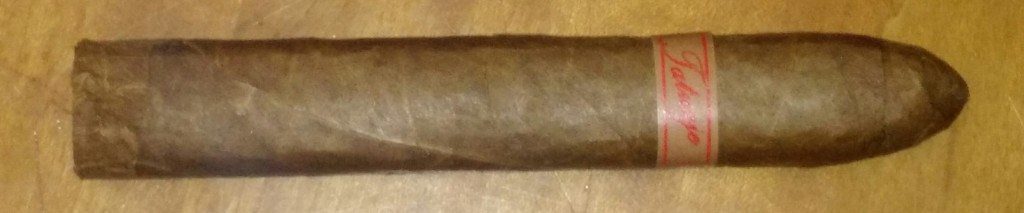
The Wolfman was one of the best Tatuaje Monster Series cigars, and the Pudgy Monster version (5.5 x 52) doesn’t fall far from the tree. The combination of a box press on the torpedo and an unfinished foot creates an airy draw, but it doesn’t impact construction or the flavors. Spice, wood, and leather dominate, but there’s also roasted notes and a hint of cola. With interesting, full flavors, this is a cigar worth seeking out, and fortunately, with a bit of searching, you can still get your hands on this smoke.

Verdict = Buy.

–Patrick S

photo credit: Stogie Guys

Quick Smoke: Sobremesa El Americano

28 Nov

Each Saturday and Sunday we’ll post a Quick Smoke: not quite a full review, just our brief verdict on a single cigar of “buy,” “hold,” or “sell.”

Sobremesa El Americano

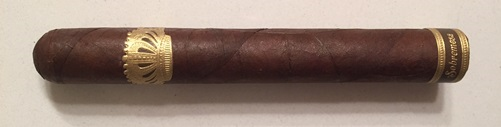
It has only been a few weeks since I reviewed Sobremesa, the debut blend from Steve Saka’s Dunbarton Tobacco & Trust. But I couldn’t resist the temptation to light up another. Plus, I was eager to see how the blend would perform in a different vitola. This time I decided to try El Americano (6 x 52), a toro that, like the Cervantes Fino, boasts an Ecuadorian Habano Rosado wrapper, a Mexican binder, and a filler blend of Pennsylvania Broadleaf Ligero with four different Nicaraguan tobaccos. The taste is balanced and complex with a syrupy texture and hints of dark cherry, spices, coffee, and some cocoa sweetness. It’s not unlike the Cervantes Fino—which is definitely a good thing—though perhaps the overall impact is a little less full-bodied. With an MSRP of $12.45, this is not an inexpensive smoke, but it’s one that’s worth every penny and teeming with rich flavor.

Verdict = Buy.

Patrick A

photo credit: Stogie Guys

Cigar Spirits: Tariquet Armagnac XO & Millesime 1993

24 Nov

tariquet

I’ll admit to being far less familiar with brandy as I am whiskey. And yet, when dabbling in brandy, I find myself drawn to Armagnac, as opposed to its better known sibling, Cognac.

Both are made by distilling wine from each region (Cognac from the area surrounding the French town of Cognac, and Armagnac from the Armagnac region in Gascony, which is in the southwest France) and then aging it in oak barrels, often for extended periods of time. But there are key differences between the two that give each its own character.

Cognac tends to be more corporate with a few big name producers, while Armagnac has smaller, family-controlled producers. Traditionally, cognac is distilled twice in pot stills, while Armagnac is distilled only once in a column still. Armagnac fans will tell you the single distillation leaves the spirit with more complexity and character.

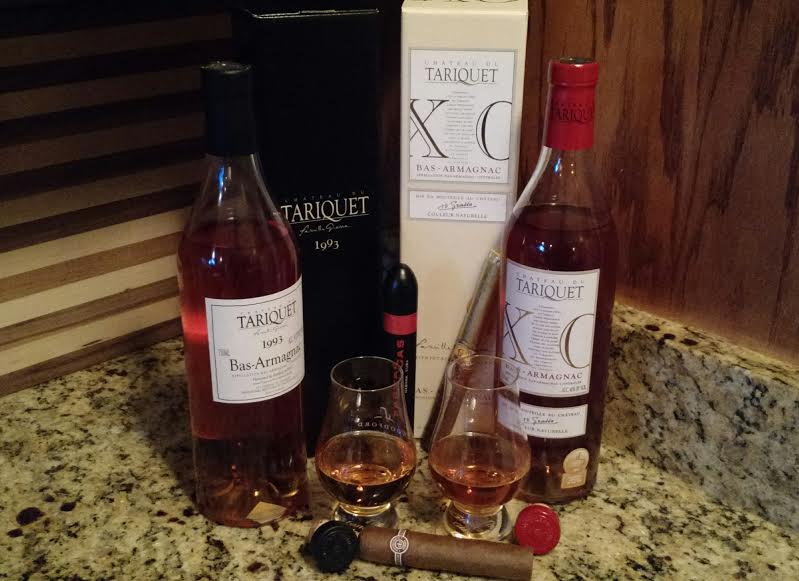
Today, I’m exploring two expressions from Tariquet, a well-known Armagnac producer from the Bas-Armagnac subregion (one of three Armagnac geographical classifications). The company relies mostly on a combination of Ugni-blanc (60%) and Baco (40%) grapes, two of the ten grape varietals permitted for Armagnac production.

Tariquet XO Bas-Armagnac ($60)

Aged for 12-15 years (longer than the required 6+ years for the XO designation), Tariquet’s XO (80-proof) expression is light copper in color with a nose that features oak, almonds, and toasted coconut. There are full flavors on the palate with wood, fruit cake, and chocolate followed by a warm spicy finish.

Tariquet Millesime 1993 Bas-Armagnac ($90)

Distilled in 1993 and bottled in 2010, this vintage offering (90.4-proof) features a golden straw color and a nose that is bright with candied orange, honey, and nougat notes. On the palate there is vanilla, soft oak, pie crust, and citrus. The finish on this refined but powerful Armagnac is long and rich with dates and butterscotch.

Both are enjoyable in their own way. The extra age of the 1993 manifests itself as sophisticated, complex, and elegant. The XO is grittier with more wood and spice, but both are worth the extra cost versus the VSOP Tariquet, which is the only expression I was familiar with before this article.

These spirits also make for natural pairings with a fine cigar. The XO calls for woodier, spicier smokes like the Cuban Hoyo de Monterrey or a Dominican Fuente Opus X. For the Vintage 1993, I’d suggest balanced, nuanced cigars like the Cohiba Behike or Nicaraguan Illusione Epernay.

–Patrick S

photo credit: Stogie Guys

Cigar Review: La Palina H-Town Lancero (Stogies World Class Cigars Exclusive)

23 Nov

Lancero fans have long lamented the trend towards large ring gauge cigars. If, like me, you tend to favor thinner vitolas over thick smokes, you’ve got to be a fan of what the folks at Stogies World Class Cigars have been up to.

La Palina H-TownBased in Houston, Stogies boasts a huge store, a public lounge, an online shop, and a series of exclusive lanceros called H-Town. Stogies has commissioned some of the industry’s best brands to produce its family of lanceros, including Crowned Heads, Quesada, Tatuaje, Room 101, Fratello, and La Palina.

In the case of the La Palina H-Town Lancero, the cigar is an entirely new blend. While the band is similar to the La Palina Black Label, the recipe is decidedly different. Filler tobaccos from the Dominican Republic and Nicaragua are wrapped in an Ecuadorian binder and an Ecuadorian Habano wrapper. Only 500 boxes of 10 will be made at the Pinar del Rio factory in the Dominican Republic.

In terms of appearance, a few things immediately strike me about the La Palina H-Town Lancero (7 x 38). For one, the cap is a work of art. In addition, the exterior is notably silky, oily, and smooth. Finally, the pre-light notes off the foot remind me of dried apricot, which is certainly unique and interesting.

Once clipped, the moderately spongy cigar yields a cold draw that’s easy, especially for a lancero. After setting an even light with a single wooden match, the initial profile is creamy, nutty, and bready with a significant kick of cayenne spice on the finish. Citrus, oak, and honey play background roles and help add to the cigar’s balanced, rounded, medium-bodied taste. At times the cigar is dry, sharp, and cedary, while other times it’s dominated by mouth-watering creaminess. The final third builds in intensity to a level I’d characterize as full-bodied.

There’s a lot of complexity. Thankfully, the combustion qualities won’t stand in your way of enjoying this lancero. The burn line is imperfect yet serviceable, the gray ash holds well off the foot, the smoke production is solid, and the draw remains clear throughout.

The La Palina H-Town Lancero retails for $8.95 per single, or $80.55 per box of 10. That’s a fair price point for a smoke with so much to offer in terms of intricacy, balance, performance, and taste. Fortunately, if you’re not in the Houston area, you can still give this a try by placing an order online. I highly doubt you’ll be disappointed. I’m awarding this excellent lancero four and a half stogies out of five.

[To read more StogieGuys.com cigar reviews, please click here.]

–Patrick A

photo credit: Stogie Guys

Quick Smoke: Ashton Symmetry Prism

22 Nov

Each Saturday and Sunday we’ll post a Quick Smoke: not quite a full review, just our brief verdict on a single cigar of “buy,” “hold,” or “sell.”

ASHTON SYMMETRY

While Ashton Cigars has been busy expanding its San Cristobal and La Aroma de Cuba brands, the namesake Ashton brand was in hibernation from when it introduced the ESG line in 2006 until 2014 when it added Symmetry. The Fuente-made Symmetry uses an Ecuadorian Habano wrapper, Dominican binder, and a combination of Dominican and Nicaraguan filler. (The Nicaraguan filler is a first for an Ashton cigar.)  The result is a medium- to full-bodied smoke with wood, leather, tea, and sawdust notes. The draw on my corona was a little tight but otherwise construction was good. This was a fine enough smoke but nothing special, which  doesn’t cut it for a cigar that costs $12.

Verdict = Hold.

–Patrick S

photo credit: Stogie Guys

Commentary: Random Thoughts from the Humidor (XXIII)

19 Nov

In this edition of Random Thoughts from the Humidor, I look at Steve Saka’s radical transparency, the origins of the word “herf,” and suggestions for finding value cigars.

saka

The Original Cigar Blogger Pulls Back the Curtain

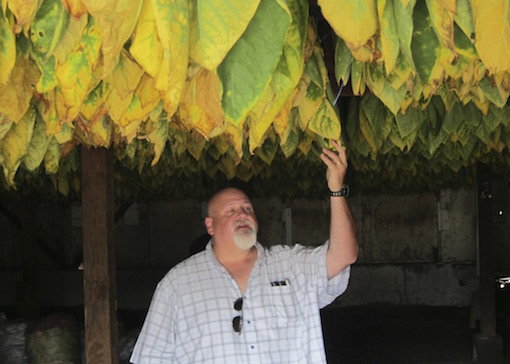
You don’t have to talk very long with Steve Saka to realize he isn’t the type to BS you. In fact, after sitting down with him during a couple of trips to Drew Estate while he was still with the company, I came to appreciate you could ask him just about anything, as long as you were prepared to hear an unvarnished, candid answer. So perhaps it shouldn’t surprise me to see his openness (especially on Facebook) about the process, including the challenges and anxiety, of creating his own cigar brand and bringing it to market. Even the info sheet that came with the samples he recently sent for review came with a leaf-by-leaf breakdown of the Sobremesa blend, something many established brands are still unwilling to provide (in part for fear of someone copying their blend). It’s a level of transparency you don’t often see. And yet maybe his candor shouldn’t come as a surprise. Before Saka was the driving force behind the creation of Liga Privada, he was the editor of what was essentially the first cigar blog, (before the word blog even existed). While the original Cigar Nexus domain is no longer online, you can still read the archive here, including the Monthly Officious Taste Test or M.O.T.T. (a not-so-subtle jab at then Cigar Aficionado executive editor Gordon Mott).

Herf, Established November 21, 1996

Speaking of Cigar Nexus, here’s a gem about the origin of the the word herf, which originated on the alt.smokers.cigars (ACS) newsgroup in 1996: “The un-official word of ASC is herf. Herf is a unique part of speech. It can be correctly used as a noun, a verb, an adjective, an adverb, an infinitive, a prefix, a suffix, and an explicative. The arcane word ‘herf’ first entered the ASC lexicon on November 21, 1996, and was quickly elevated to frenetic and common use by ASCers… Herf is now virulently spreading to worldwide common use as hip cigar parlance.”

Which Wrappers Are Most Likely to Produce Value?

Finding a good cigar isn’t all that hard these days. Finding a good cigar at a price that offers excellent value is harder. But if good values are what you are after, one thing to think about is wrappers. Connecticut wrappers, both shade-grown and broadleaf, are hardest to do on a budget, in part because good Connecticut-grown wrappers are increasingly in demand. So if you’re the type of person who seeks out that elusive bundle cigar that smokes like a pricier stick, you’ll improve your odds by sticking to Nicaraguan-grown Habano and Mexican wrappers.

–Patrick S

photo credit: Stogie Guys

Cigar Review: Drew Estate Herrera Estelí Norteño Edicion Limitada Churchill

18 Nov

Herrera

In May 2014, Drew Estate announced Willy Herrera as its new “master blender.” The move did not place Herrera in charge of La Gran Fabrica Drew Estate; rather, he was charged with maintaining current blends, producing new ones, and reporting directly to Jonathan Drew. The news came just a few days after Nick Melillo left Drew Estate, where he served for 11 years with responsibilities ranging from purchasing and fermentation to quality control and shipment planning. And it also came after Steve Saka left the company.

Drew EstateAt the time, Willy Herrera’s biggest contribution to Drew Estate was Herrera Estelí, a five-vitola line of Ecuadorian Habano-wrapped cigars with a Cuban-esque flavor profile (a sixth vitola, a Toro Tubo, was added later). The blend was well-received within the online cigar community, and also in mainstream publications. The Herrera Estelí Piramide Fino was named the eighth best cigar of 2013 by Cigar Aficionado.

In July 2014, Drew Estate announced Willy’s highly anticipated follow-up to Herrera Estelí: the Herrera Estelí Norteño. Norteño translates to “northerners,” which is what people in Nicaragua call those who live around Estelí. The blend features a Mexican San Andrés wrapper, a Honduran binder, and filler tobaccos from Nicaragua. There are six original vitolas, all box-pressed and all made at Drew Estate (despite preliminary reports listing Joya de Nicaragua as the factory of manufacture).

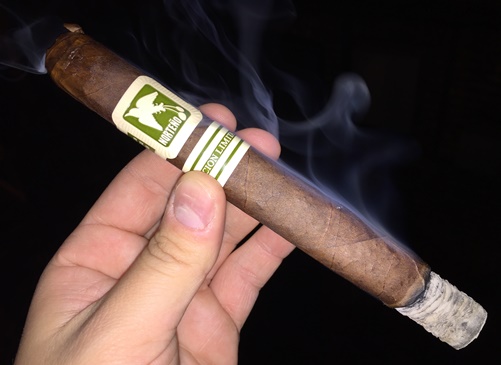
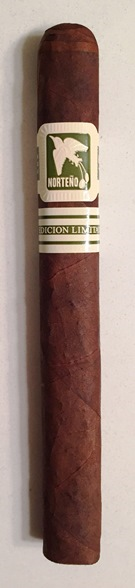
This September, retailers received a seventh Norteño vitola called Edicion Limitada Churchill (7 x 48). The flattened box-pressed smoke—almost rectangle-pressed, if you will—lends itself, I think, to a punch cut, which is all that’s needed to reveal an easy cold draw. The dark, slightly reddish, moderately oily cigar has potent pre-light notes of cocoa, sweet hay, and damp earth off the foot. The feel is consistently firm throughout.

Once lit, a chalky, medium-bodied flavor emerges with tastes of dark chocolate, black coffee, creamy nut, brown sugar, and a little cayenne spice. The finish and retrohale both exhibit a soft black pepper spice, though the overall level of spice is quite muted. Throughout the smoke, there’s an interesting interplay between what I’d call moist chocolate cake, oak, and coffee.

Construction is outstanding. The draw is very easy, the smoke production above average, the burn line straight, and the sandy, white ash holds well off the foot.

Maybe it’s my palate, maybe it’s the size, or maybe it’s some combination of the two, but the Edicion Limitada Churchill is more flavorful and less spicy than the pre-release sample I reviewed in June 2014. I’ve smoked a fair number of Norteños since, and I’m pretty confident this new size is my favorite—even with the $14 price tag. Make sure you try it before the limited run is up. This is a winner that’s worthy of an admirable rating of four stogies out of five.

[To read more StogieGuys.com cigar reviews, please click here.]

–Patrick A

photo credit: Stogie Guys