Search results: site-policy/images

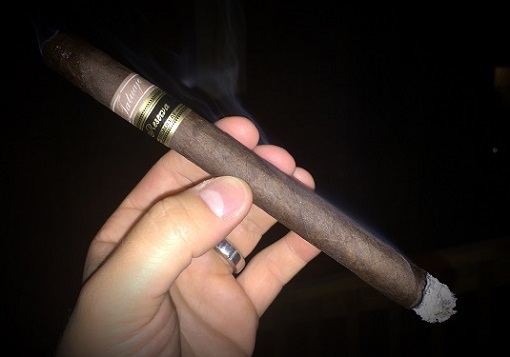
Cigar Review: Tatuaje Reserva Broadleaf Collection Especiales (Laguito No. 2)

5 Sep
Limited run? Check. Boutique manufacturer with a solid reputation among cigar enthusiasts? Check. Outrageous packaging requiring a sizable investment without the opportunity to first try a single? Check. Tweaking existing blends to create exclusivity? Check.
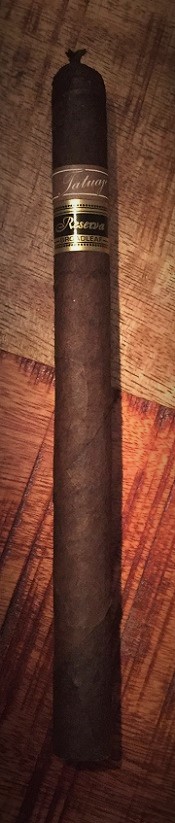
If there were ever a product release that just screams “FOR CIGAR NERDS ONLY,” the Broadleaf Collection from Pete Johnson’s famed Tatuaje brand is it. Fortunately, after burning through quite a few of these, I am happy to report I consider this purchase money well spent.

As we’ve noted previously, with the FDA deadline just days away at the time, the 2016 IPCPR Trade Show saw a flurry of new cigar announcements, as expected. Tatuaje was no exception. And I don’t think I have to go out on a limb when I say fans of Tatuaje were most excited for the new Tatuaje Reserva Broadleaf Collection. Rightfully so.

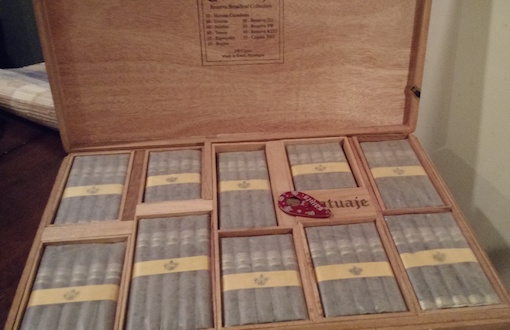
The Reserva Broadleaf Collection consists of a whopping 100 cigars selling for $1,200, featuring ten each of the six original Miami Seleccion de Cazador (Brown Label) “HUNTER” sizes, plus the J21, SW, K222, and Cojonu 2003 blends (check out our previous musings on cigars from this collection here, here, and here). Each has its normal wrapper replaced with a Broadleaf wrapper. Fortunately, while the collection was set to only be available in 5,000 master cases of 100 (pictured above), Tatuaje has since said some will be released in boxes of ten of each size.

The master cases of 100 began arriving at retailers earlier this year. Included are ten Seleccion de Cazador Especiales (7.5 x 38), a lancero from the famed Brown Label line—which was introduced by Johnson in 2003 as an “old world, full-bodied, Cuban-style cigar.”

Ordinarily, this cigar has an Ecuadorian wrapper around its Nicaraguan binder and filler tobaccos. This version, however, sports a thick, rustic, toothy, heavily veined Connecticut Broadleaf wrapper. Along with ample oils and rich pre-light notes of coca powder and dried apricot, Especiales also boasts a handsome triple-cap accented with a pigtail. The cigar is firm yet the cold draw is average. A helpful secondary band of black and gold denotes “Reserva Broadleaf” to eliminate any confusion with the original.

After setting an even light, I find a medium-bodied, slightly spicy profile with a thick, chalky texture. Flavors include cayenne heat, espresso, caramel, leather, rye, and chocolate. The draw is impressively smooth for a lancero, the smoke production solid, the resting smoke sweet and aromatic, and the burn is off to a great start.

As the cigar progresses, black pepper spice comes to the fore along with black cherry, cinnamon, and more pronounced espresso. The intensity builds at the midway point and beyond with the final third weighing in as medium- to full-bodied. All the while, the combustion properties remain solid.

I will resist the temptation to compare this to the Ecuadorian-wrapped Seleccion de Cazador Especiales because (1) it has been too long since I’ve smoked that cigar and (2) I’d prefer to evaluate this Broadleaf Collection lanerco on its own merits. All told, this is a wonderful, balanced, satisfying cigar that commands your attention from light to nub. For that, I award it an excellent rating of four and a half stogies out of five.

[To read more StogieGuys.com cigar reviews, please click here.]

Patrick A

photo credit: Stogie Guys
Quick Smoke: La Aurora Preferidos Ecuador No. 2

3 Sep

Each Saturday and Sunday we’ll post a Quick Smoke: not quite a full review, just our brief verdict on a single cigar of “buy,” “hold,” or “sell.”

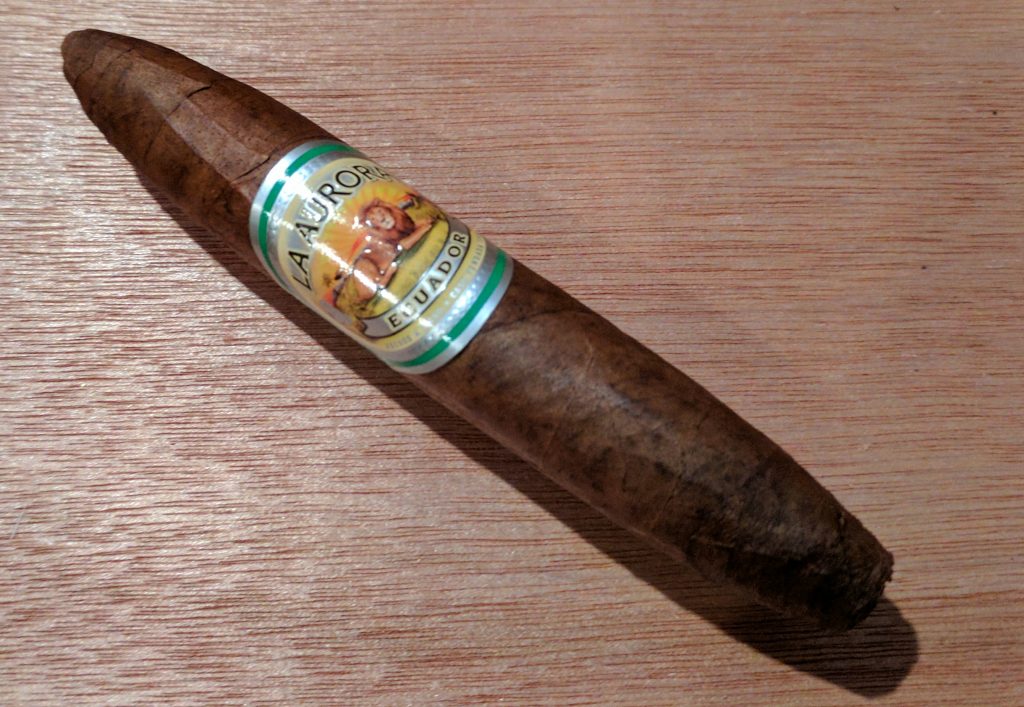
La Aurora’s super-premium Preferidos line doesn’t seem to have the luster it once did. (For example, I bought this single from a well-known internet retailer for under $5.) That doesn’t mean it isn’t a well-made cigar. The small, 5-inch perfecto has a ring gauge of 54 at its widest point. It features a slightly mottled Habano sun-grown wrapper from Ecuador with a Dominican binder and filler from the Dominican Republic, Cameroon, and Brazil. The cigar’s bold flavors include leather, cedar, coffee, and tannic notes. If you can find it for around $5, like I did, it is well worth it.

Verdict = Buy.

– Patrick S

photo credit: Stogie Guys
 

Quick Smoke: Joya de Nicaragua Antaño 1970 Robusto Grande

2 Sep

Each Saturday and Sunday we’ll post a Quick Smoke: not quite a full review, just our brief verdict on a single cigar of “buy,” “hold,” or “sell.”

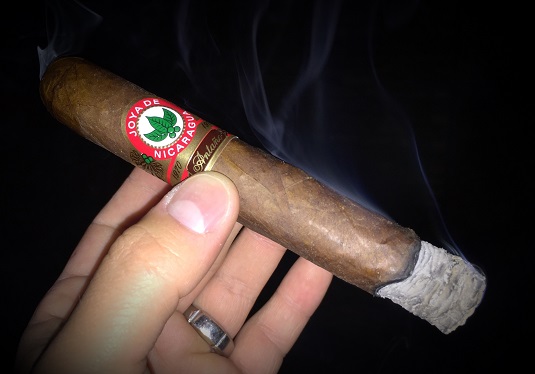
I’ve been on a bit of an Antaño 1970 kick lately. Can you blame me? I find this Joya de Nicaragua line delivers outstanding performance and value time and again. Most recently, I picked up a Robusto Grande (5.5 x 52) from my local tobacconist for $6.95. This Nicaraguan puro sports a dark Habano-seed Criollo wrapper and a full-bodied profile of dark cherry, leather, espresso, and both red and black pepper. With outstanding combustion properties and a sub-$7 price, the Antaño 1970 Robusto Grande is very easy to recommend—especially to veteran cigar enthusiasts who crave body, spice, and a balanced, smooth delivery.

Verdict = Buy.

Patrick A

photo credit: Stogie Guys
Weekly Cigar News Sampler: NYC Adopts Anti-Tobacco Measures, Benji Menendez Honored, New Herrera Estelí Size, and More

1 Sep

As we have since July 2006, each Friday we’ll post our sampling of cigar news and other items of interest from the week. Below is our latest, which is the 545th in the series.

1) Mayor Bill de Blasio signed legislation on Monday that will raise cigar prices in New York and limit the number of retailers who are licensed to sell tobacco. As summarized by Cigar Aficionado: “The bill calls for a minimum pricing structure for a cigar, which is defined by New York City as ‘any roll of tobacco for smoking that is wrapped in leaf tobacco or in any substance containing tobacco, with or without a tip or mouthpiece.’ In other words, the measure does not distinguish between machine-made and premium, handmade cigars. Under 1544-B, cigars sold individually must adhere to a price floor and be sold for no less than $8.00. The measure would also assess an excise tax on cigars at the rate of 10 percent of the $8 minimum, or 80 cents. This means that single cigars could not be sold for less than $8.80 apiece, regardless of the MSRP. And this is before state, federal, and tobacco taxes are applied. Moreover, for a box of cigars, the price floor would be calculated by counting the number of cigars in the box, multiplied by $1.75, plus $6.25. The excise tax for a box would break down to be 80 cents for the first cigar, plus .175 cents for each additional cigar.” The legislation will also limit the number of tobacco retailers allowed to operate in New York City by capping the allowable licenses at 50% of the current number (which is about 8,300). “No new tobacco retail dealer licenses will be issued in a community district until its total decreases through attrition below the cap,” reports NBC.

2) General Cigar Co. is honoring Benji Menendez with “a very special event series for Partagas” in the spring, with dates to be announced in early 2018. Menendez retired as General’s vice president of premium cigars in 2014 after a career in the handmade cigar industry that lasted over 60 years. “General Cigar is my extended family and I am grateful that they have never forgotten me,” said Menendez in a press release. “I am looking forward to doing more things with the company. I hope I can help in some small way to spread the word about the fantastic cigars they make.”

3) Drew Estate announced the release of Herrera Estelí DeSocio (6 x 60, $8.60), an exclusive vitola manufactured for Alliance Cigar, a wholesale distributor based in New York. “I’ve been asked consistently over the years at events across the nation to blend a larger ring gauge Herrera Estelí,” said Drew Estate master blender Willy Herrera. “The opportunity and challenge of bringing out the unique set of flavors in a large format cigar took many trials, and this DeSocio takes the Herrera Estelí blend… to a whole new level.”

4) A noted bourbon curmudgeon asks: Where are all the good new releases?

5) Inside the Industry: China’s Xinhua News Agency reports that Cuba is developing four new varieties of tobacco. Two are higher yield varieties of cigarette tobacco, but two others are reportedly being developed for use in handmade Cuban cigars.

6) From the Archives: It can be easy to get caught up in the cigar world thicket and miss what’s right there in front of you. We took a look a few years ago at how to tell if this is happening to you and what you might do to increase your smoking pleasure.

7) Deal of the Week: For today only, here are 100 deals, including cigars from Ashton, Oliva, Tatuaje, Rocky Patel, Davidoff, Drew Estate, and more. Free shipping is included on any purchase. If you really want to stock up, add promo code “GBP20D” at checkout to knock $20 off an order of $150 or more.

–The Stogie Guys

photo credit: Stogie Guys
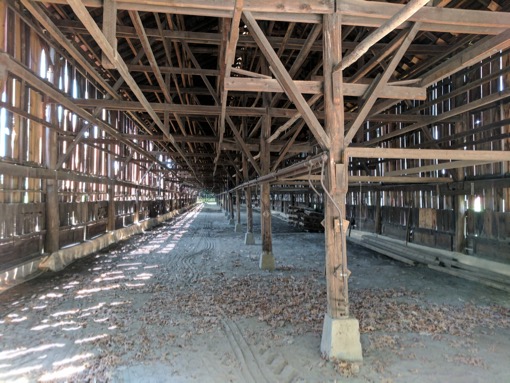
Photo Essay: A Visit to the Connecticut River Valley

30 Aug

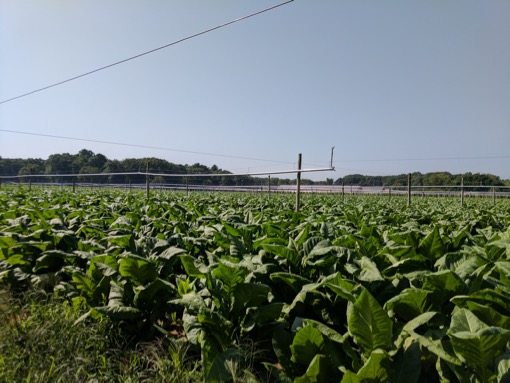
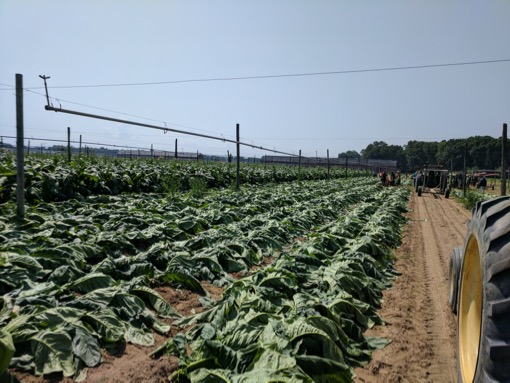
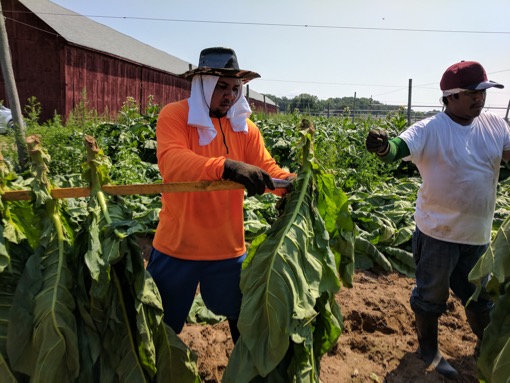
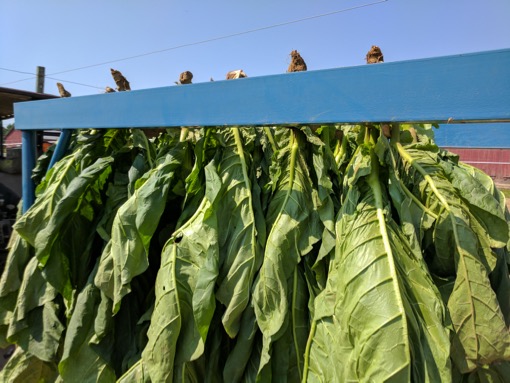
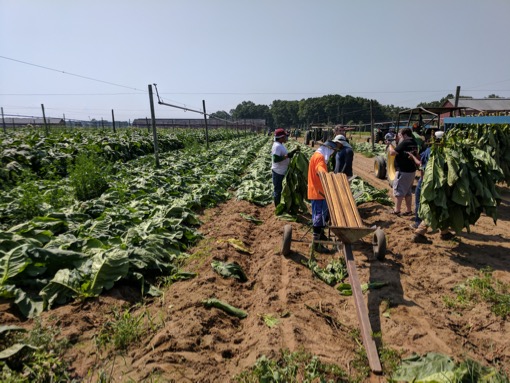
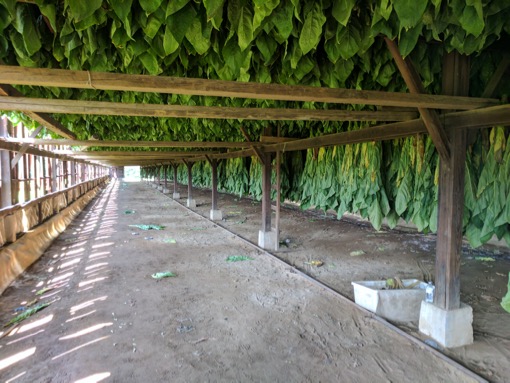
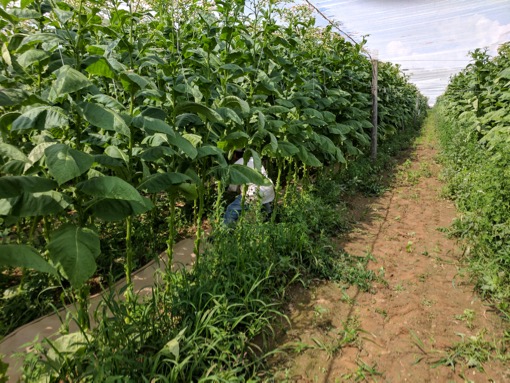
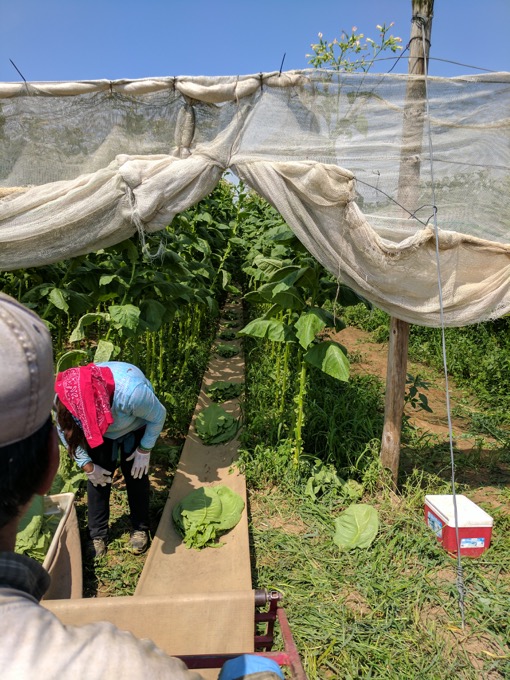
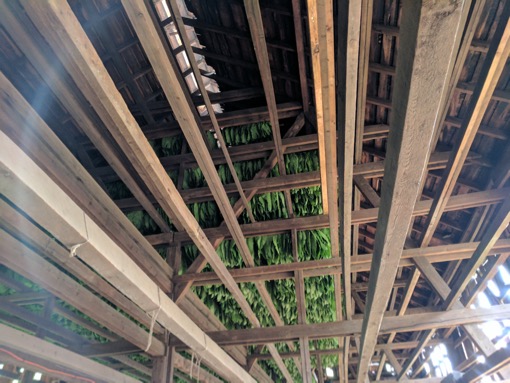
Growing up in New York and going to college in Maine, I have many friends from Connecticut. Cigar geeks aside, few realize that not only does Connecticut grow tobacco, but some of the most expensive and sought-after premium cigar wrapper is grown in the Nutmeg State. Recently I visited the Connecticut River Valley (north of Hartford) to see the farms there during the growing season, which runs from summer to early fall. Below are some of the photos from the trip.

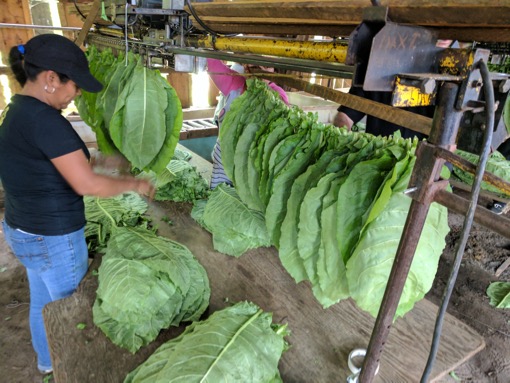
One of the most notable things you quickly see is how each type of tobacco is grown differently to maximize qualities sought in the wrapper they hope it will become. (Inevitably, some leaves will end up as binder or filler; that said, leaves are grown with the intention and hope that they become wrapper, which commands the highest price.)


Sun-grown tobacco is topped (the flower at the top is removed) and lower leaves are removed early to maximize the nutrients that reach the leaves intended for tobacco. (Yes, the photo at the top is of the Habano leaf that will eventually become the Partagas Black.)

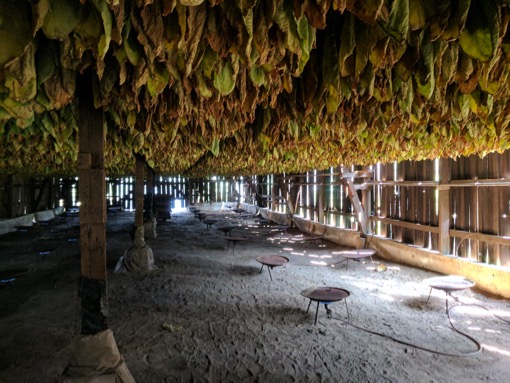
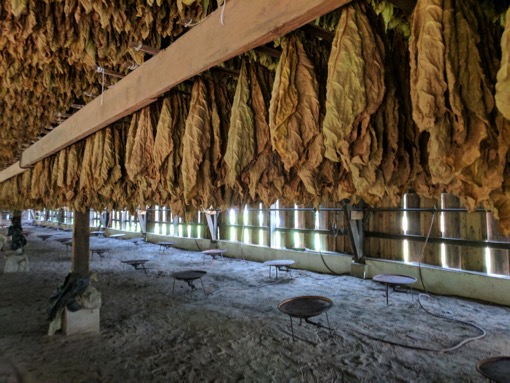
Increasingly, the leaves are then stalk-cured (the ones I saw were speared through the center of the stalk to kick-start curing) so the flavor of the nicotine in the stalk can continue to move into the leaves.

On the opposite end of the spectrum is Connecticut Shade tobacco, which is processed to keep the leaf thin and light. In addition to netting, flowers remain and all the leaves are left on so they don’t get too thick.

Leaves are sewn individually for curing, instead of being left on the stalk.

In addition, fields are left to fallow one year out of three, and rye is frequently grown (then plowed over) in the off-season to replenish nutrients in the soil.

This is big business for Connecticut farmers, with each curing barn holding up to half a million dollars worth of tobacco, depending on the leaf type. Connecticut Shade is still the most expensive leaf grown in Connecticut, but Broadleaf and Habano are also grown in ample quantities.

If you are in the area in the late summer, drive around and you shouldn’t have too much trouble spotting tobacco fields. For those not lucky enough to visit foreign tobacco growing regions, Connecticut is the most accessible place to see the tobacco that ends up as a key component of the handmade cigars we enjoy.

– Patrick S

photo credits: Stogie Guys

Cigar Spirits: Laphroaig Cairdeas Quarter Cask 2017

28 Aug

Depending on my mood, I find few spirits pair as well with a fine cigar as scotch—especially those scotch whiskeys from Islay that are characterized by a hearty dose of smoky peat. For me, along with bourbon and rye, scotch is a mainstay cigar companion in the colder months (whereas I typically turn to rum in the summer heat).

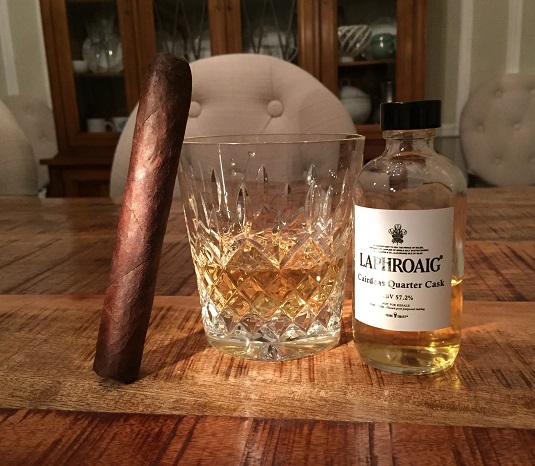
There’s certainly nothing wrong with scotch in the summer, though, especially when there’s a new release to try that stirs my interest. Case in point: the new Cairdeas Quarter Cask from Laphroaig. Cairdeas (“friendship” in Gaelic) is, according to Laphroaig, a response to market demand for “a cask-strength version of the popular Laphroaig Quarter Cask expression, which offers an irresistible doubling of flavor, due to the double maturation in two American oak barrels.”

The strategy behind the 2017 Cairdeas Quarter Cask includes blending different ages (at least five years old) of Laphroaig in “first-fill bourbon casks” before undergoing a second round of maturation in smaller quarter casks. After another six months, these casks are then bottled at cask-strength without the addition of any coloring agents. The result is a 114.4-proof (57.2% alcohol by volume) spirit that sells for $80 per bottle.

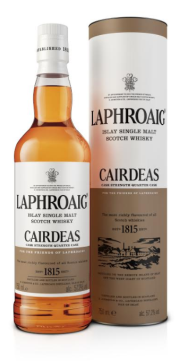
As you can see from the photo above, I received a miniature bottle sample from Laphroaig to make this review possible (a gesture that is much appreciated but, as always, has zero impact on my assessment of the product). In contrast, the photo to the right shows the 2017 Cairdeas Quarter Cask bottle and its decorative sleeve (this photo is courtesy of Laphroaig). Notably, in the promotional photo, the whiskey has a darker, reddish hue, whereas my sample poured a crisp, bright golden color.

The Laphroaig reputation is one of power and peat. This is due to Laphroaig being “one of only a few distilleries that still uses traditional malting floors and dries and infuses its own malt with the thick blue smoke from old peat-fired kilns.” So you would expect a cask-strength Laphroaig to bring a bold, powerful, peaty, smoky nose to the table. And that’s exactly what you get. Even with the addition of a little water to open it up, the nose on this whiskey is absolutely huge with brine, fresh peat, black pepper, minerals, and vanilla.

On the palate, Cairdeas Quarter Cask arrives relatively gently, then slowly builds in strength as the finish lingers. Flavors include peat, ginger spice, smoke, oak, molasses, and white pepper. The intensity of the finish reaches its zenith with a spicy, warm, tingly, crisp sensation that concentrates on the tip of the tongue.

I am a fan of Laphroaig 18 (48% alcohol by volume) and decided to taste some side-by-side with Cairdeas Quarter Cask. Frankly, Cairdeas Quarter Cask renders 18—a hearty, spicy, peat-forward whiskey by any stanard—relatively harmless and approachable.

In my book, the 2017 Laphroaig Cairdeas Quarter Cask is an intense expression that offers solid value for the dollar (it should, after all; quarter casking is, effectively, a strategy to get whiskey in the bottle quicker since the smaller barrels provide a higher ratio of wood surface to liquid volume, thereby requiring less of a distillery’s most precious asset: time). When you try this whiskey, I think you’ll agree that it begs to be enjoyed with a fine cigar. And when you select your stick, I suggest you look for something bold that won’t get drowned out by this spirit’s incredible, powerful flavors. I found the Tatuaje Reserva Broadleaf Collection Havana Cazadores, for example, does the trick.

Patrick A

photo credit: Stogie Guys / Laphroaig
Quick Smoke: Curivari Reserva Limitada Classica Epicure

27 Aug

Each Saturday and Sunday we’ll post a Quick Smoke: not quite a full review, just our brief verdict on a single cigar of “buy,” “hold,” or “sell.”

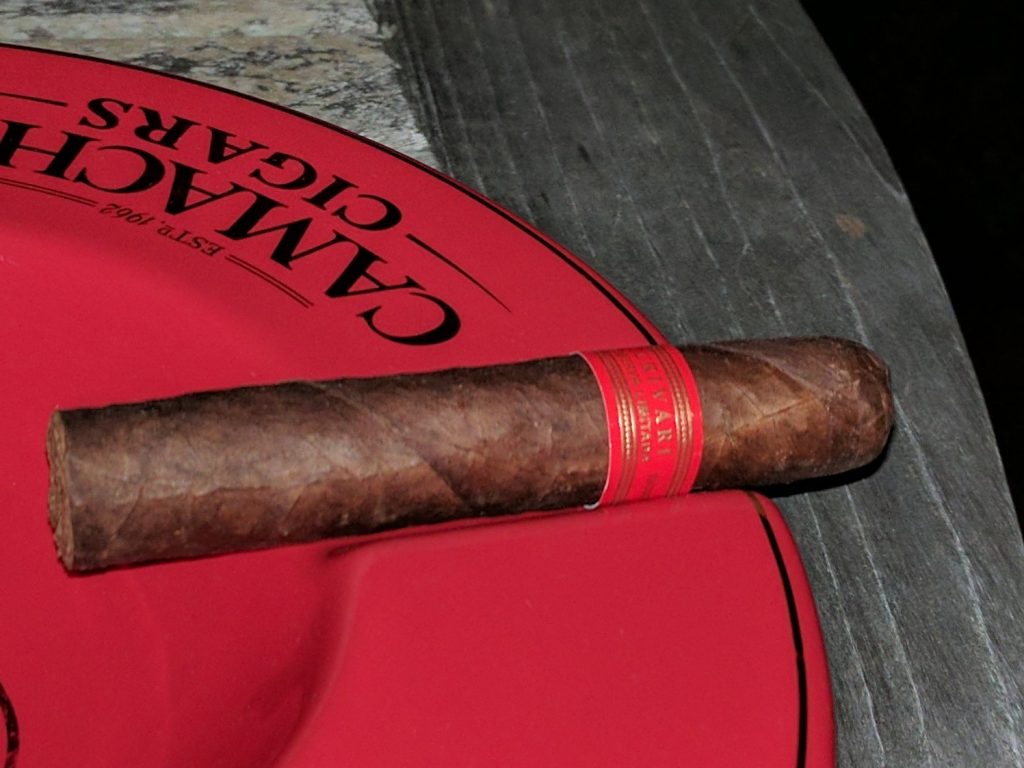
As my colleague noted recently, I’ve long hailed Curivari’s Buenaventura line as an excellent value. Buenaventura is hardly the only Curivari creation to provide great bang for the buck, though. Recently, I smoked a Curivari Reserva Limitada Classica Epicure (4.5 x 52), a Nicarguan puro featuring a dark, oily wrapper. The cigar exhibits rich earth, milk chocolate, and woody spices. Construction is excellent on this 50-minute smoke. Best of all, it sells for just over $50 for a box of 10.
Verdict = Buy.

– Patrick S

photo credit: Stogie Guys