Search results: site-policy/images

Cigar Review: Cornelius & Anthony Venganza Robusto

7 Sep
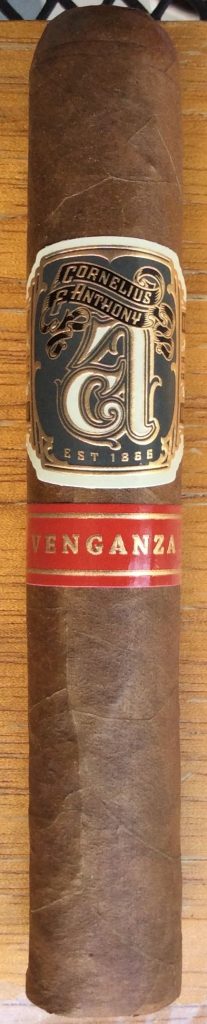
VenganzaThis new offering from Cornelius & Anthony (C&A) is a powerful, rich cigar that expands the company’s relationship with Erik Espinosa’s La Zona factory in Nicaragua.

It also represents what is probably C&A’s strongest smoke to date, with an Ecuadorian Habano wrapper and filler and binder from Nicaragua. I found its power to be a notch up from the Daddy Mac, which also sports a Habano wrapper, that one from Brazil.

Venganza, Spanish for revenge, was released at this summer’s industry convention. It comes in four sizes. I smoked two samples of the Robusto (5 x 52) that were supplied by C&A. It lists for $9.25. All of the vitolas come in boxes of 20.

The pre-light aroma is mouthwatering and rich. But when I lit the first one, it was a bit sharp, especially in the initial third. That diminished a little going along, but I decided to give the second one more humidor time before I smoked it.

Wise decision. Even just a few weeks rest seemed to have smoothed out the rough edges. In fact, in the second smoke, the sharpness was replaced by a rich woodsiness in the opening.

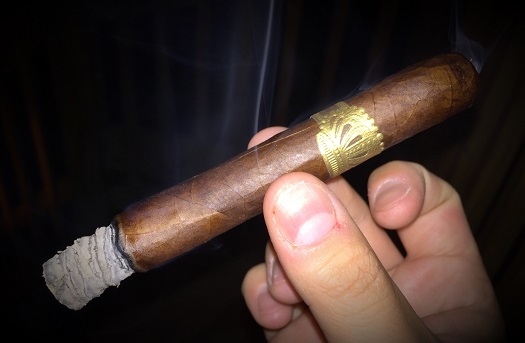
Venganza, which sports the regular ornate C&A band and a secondary identifying one, is a fairly complex smoke. I picked up some pepper, cedar, and flavors of coffee and nuts along the way. The final third was marked by a tobacco sweetness.

And, while it is a strong smoke, it is by no means a barn-burner, nor is it likely to take the top of your head off.

Burn and smoke production were first-rate. The draw in each was excellent, and the white ash held firm until I tapped it off.

All in all, a very good cigar, and one I’d recommend. I rate Venganza four stogies out of five.

[To read more StogieGuys.com cigar reviews, please click here.]

–George E

photo credit: Stogie Guys
Cigar Review: Sobremesa Corona Grande

6 Sep

20160905_041459000_iOS

Instead of fizzling after its hyped-up launch, Dunbarton Tobacco & Trust’s visibility on social media has only snowballed into a boutique juggernaut. I can scarcely scroll through my Facebook feed for a few minutes without seeing one of the company’s cigars triumphantly photographed by a Dunbarton devotee, or perhaps even Steve Saka himself.

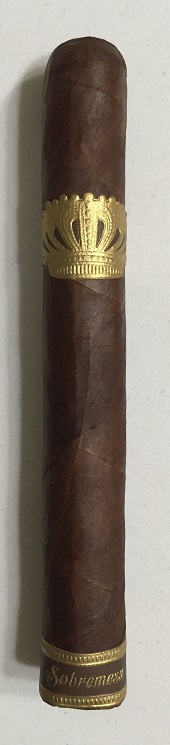
20160905_035425054_iOSThese days, I’m starting to see more pictures of Mi Querida than Sobremesa. That’s not entirely surprising, I think, because the Broadleaf-wrapped Mi Querida is new to the market, whereas Sobremesa was introduced last summer. Personally, I haven’t had a chance to try Mi Querida yet (rest assured it’s on my short list). To tide myself over, today I thought I’d review the only Sobremesa vitola I haven’t yet sampled: the Corona Grande.
As you surely know by now, Dunbarton was launched by Saka, former CEO of Drew Estate, where he played a critical role in growing the company into a Nicaraguan powerhouse that makes some of the most sought-after cigars in the world. Several lines have been announced in advance of the August 8 deadline imposed by the FDA regulations, including Mi Querida, Umbagog, and Muestra de Saka. But Sobremesa was the first. It sports an Ecuadorian Habano Rosado wrapper, a Mexican binder, and a filler blend of Pennsylvania Broadleaf Ligero with four different Nicaraguan tobaccos (Gk Condega C-SG Seco, Pueblo Nuevo Criollo Viso, La Joya Estelí C-98 Viso, and ASP Estelí Hybrid Ligero). It is handmade at Joya de Nicaragua.

The Corona Grande ($9.95 per single, $248.50 per box of 25) is the smallest Sobremesa vitola at 5.25 inches long with a narrow ring gauge of 44. Velvety and oily to the touch, its surface is moderately veined and dark with a slightly reddish hue. The pre-light notes remind me of cocoa powder, earth, and caramel, and the perfectly constructed cap clips easily to reveal a smooth cold draw.

Once lit, I find the familiar—and wonderful—Sobremesa core of cocoa, dark cherry, pepper, café au lait, baking spices, and creamy caramel. This time, though, a dry, cedar-like sensation is more pronounced, especially on the finish. The texture is syrupy and thick, and the black pepper spice coupled with the rich, spicy mouthfeel renders the Corona Grande the strongest of the Sobremesa formats.

The complexity is palpable and highly enjoyable, and the sweetness of the resting smoke is mouth-wateringly intoxicating. Fortunately, the combustion qualities do not detract from the experience; rather, they enhance it. The burn line is straight, the smoke production above average, the draw easy, and the ash holds well off the foot.

Saka says over 40 varieties of black tobacco were sampled during production, with the 27th blend ultimately being selected as the final Sobremesa recipe. I count myself lucky he went to the trouble to compose a cigar that’s truly “sin compromiso.” While not quite my favorite vitola—that honor belongs to the Cervantes Fino—the Corona Grande is a finely balanced treat that’s worthy of the excellent rating of four and a half stogies out of five.

[To read more StogieGuys.com cigar reviews, please click here.]

–Patrick A

photo credit: Stogie Guys

Cigar Review: CroMagnon Breuil

31 Aug

CroMagnon-Breuil

In 2014, RoMa Craft introduced El Catador de las Panetelas, a sampler featuring two each of four cigars all in a panatela (5.5 x 37) size. Included were two different Intemperance blends, along with an Acquitaine and a CroMagnon blend, all made at the Fabrica de Tabacos Nica Sueño.

More recently, each blend was sold separately by the box as a limited editions, with the Intemperance cigars coming boxes of 12 and the Acquitaine and CroMagnon coming in ten-count boxes ($7.50 MSRP per cigar).

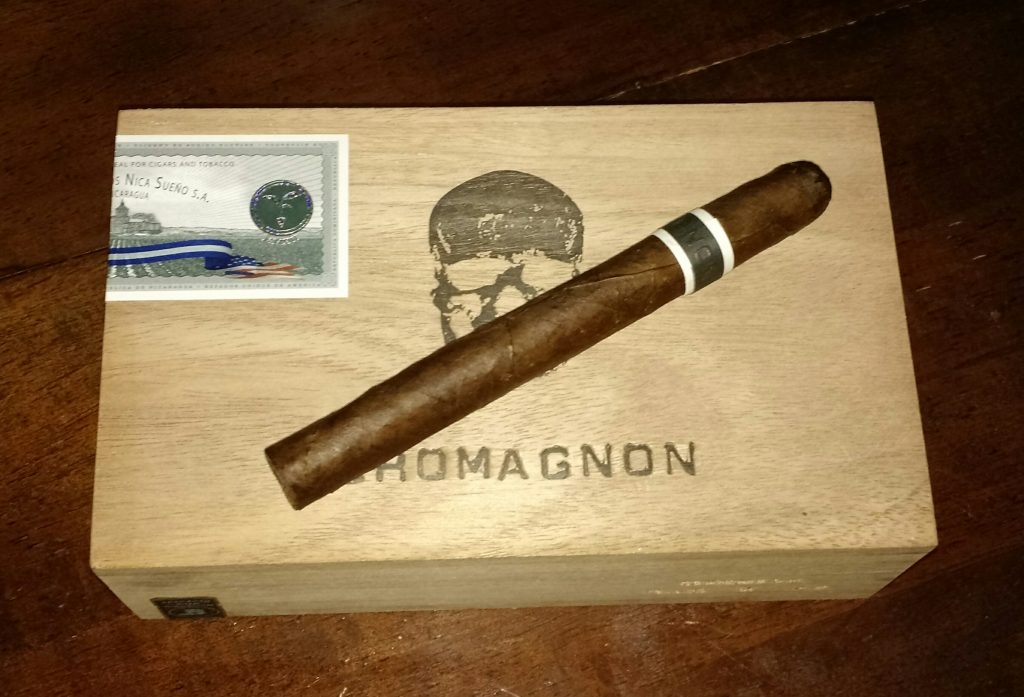
I smoked three of the CroMagnon Breuil cigars for this review from a box purchased recently. Like the rest of the CroMagnon line, the cigar features a dark Connecticut Broadleaf wrapper, Cameroon binder, and Nicaraguan filler from three separate growing regions in Nicaragua: Estelí, Condega, and a small farm north of Estelí on the Honduran border.

Initial flavors are what I’ve come to expect from CroMagnon: powdered earth, cocoa, and spice. But there are also some unique additions to the flavor profile with a slightly metallic taste and flora notes. The flavors held steady from beginning to end.

Construction was excellent on the hour-long smoke, which is particularly impressive given that the small size can sometimes prove challenging. The cigar featured a sturdy white ash and an even burn.

While I found the Breuil (the name comes from a French archeologist who documented many early human cave drawings) enjoyable, I didn’t think it was better than the larger sizes of the CroMagnon blend. Although generally I prefer smaller ring gauge smokes, I think this shows why the original CroMagnon cigars were almost all thicker smokes. The wider format shows the best of this strong, full-bodied blend.

All told, the RoMa Craft CroMagnon Breuil earns a rating of three and a half stogies out of five.

[To read more StogieGuys.com cigar reviews, please click here.]

–Patrick S

photo credits: Stogie Guys

Commentary: Cigar Consistency is No Hobgoblin

29 Aug

Tobacco Field

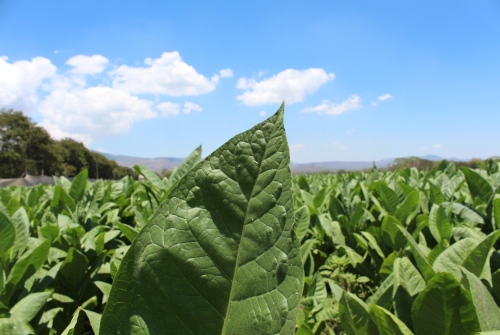
Consistency with cigars is a trait often observed in the breach. We can all think of manufacturers who’ve had a hard time shaking a reputation for a lack of consistency.

Of course, we can also think of companies whose products are remarkably consistent. Yet it is not often included among the common compliments cited when cigars are reviewed.

Nowadays, with the proliferation of limited editions and one-shot issues where consistency is of little import, I fear it may be regarded even less. I think that’s a shame.

Knowing that a cigar you smoke today will be like one you smoked last month or last year—as well as a year or two from now—is important.

I thought about this the other day when I lit a Perdomo Lot 23 Robusto. I first smoked a Lot 23 (a Toro) more than nine years ago. My review wasn’t particularly favorable. Then, about three years ago, I went back to the line and sampled the Robusto. I changed my mind. It was a most enjoyable smoke.

And, since that time, I’ve almost always had at least a few of the moderately priced Lot 23s in my humidor. When I pick one up I know I’ll have a good experience.

Making consistent cigars is no small trick. It involves a great deal of investment. Investment in time, material, and personnel.

First, there’s got to be enough tobacco to keep making the cigars. And that tobacco must be carefully processed and aged. Only a talented and skilled blender can note the natural variances in harvest years and make the necessary tweaks to get the same results. Only skilled workers can produce the cigars to standards year in and year out.

Consistency, too, seems to be something many cigar smokers don’t value much when looking at cigar prices. Paying $15 or $20—or more—without complaint for a limited edition cigar is quite common. Yet many smokers resent a similar price for a cigar that’s been manufactured to consistent high standards for years.

All of which is something to contemplate the next time you light up or go searching through the humidor at your local tobacconist.

–George E

photo credit: Stogie Guys

Quick Smoke: E.P. Carrillo Capa de Sol Sultan

28 Aug

Each Saturday and Sunday we’ll post a Quick Smoke: not quite a full review, just our brief verdict on a single cigar of “buy,” “hold,” or “sell.”

EPC-CapaDelSol

This new blend from the new lineup from E.P. Carrillo is part of what they deem their “Elite Series.” It sports an Ecuadorian sun-grown wrapper around Nicaraguan binder and filler. The large Gordo (6 x 60) was noticeably under-filled, resulting in a uneven burn that required multiple touch-ups. I found an interesting medium-bodied combination of almond butter, toast, earth, and cayenne spice. Flavor-wise, there is a lot of potential here, but the construction issues just detracted from the upside too much. When I try this blend again, I will probably be more inclined to go for a smaller ring gauge size.

Verdict = Hold.

–Patrick S

photo credit: Stogie Guys

Cigar Spirits: Laphroaig Lore

24 Aug

I generally reach for bourbon or rum in the summer months, while reserving single malt for when the weather cools down. Something about the smokey style of Islay Malts especially, like Laphroaig, are perfect for a chilly evening in the fall or winter.

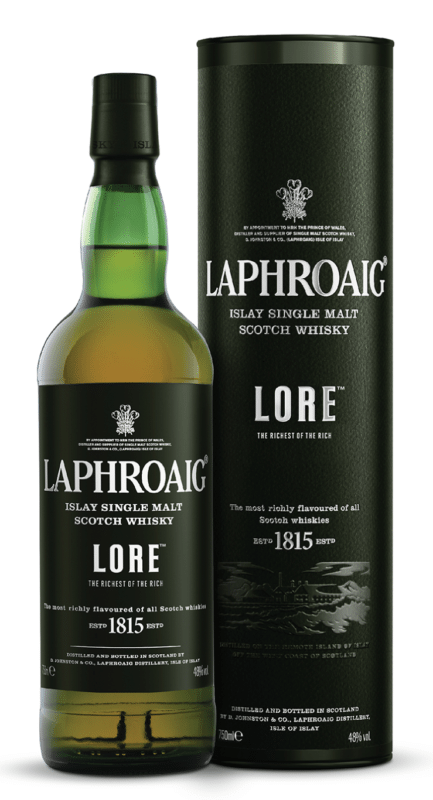
Laphroaig LoreBut I didn’t want to wait to try the new Lore. Introduced earlier this year, Lore fills the vacancy in the Laphroaig lineup left by the 18-year-old expression, which was discontinued last year. A bottle retails for a hefty $125.
Lore doesn’t carry an age statement but mixes older and newer whisky, described on the Laphroaig website as “a marriage of classical Laphroaig styles and many ages of Laphroaig; some as old as vintage 1993. The marriage draws from the peaty power of Laphroaig with the smoothness of double matured stock finished in European oak hogsheads.”

The result is a totally new Laphroaig from what you might be used to, but one I found extremely enjoyable. The classic smoke and peat provide the background of the whisky but there is whole lot more going on here.

The nose features smoke and seaweed along with pear and shortbread. The palate layers sherried notes of fruit and fudge over brine, spice, and maltiness. The finish is both rich and clean with peat, honey, sugar cookies, and oak.

I understand those who are frustrated by the trend towards NAS (non age statement) whiskies on both sides of the Atlantic. That said, Lore is an example of how a whisky not locked into an age statement can provide plenty of depth and complexity by blending old and new whisky.

Somewhat by chance, I smoked a Cameroon-wrapped cigar while sampling Lore, and I can’t recommend the combination enough, as the light spice of the Cameroon wrapper goes perfectly with the rich peat. Specifically, try La Flor Dominicana Cameroon Cabinet, Arturo Fuente Don Carlos, or Drew Estate Nirvana.

–Patrick S

photo credit: Laphroaig

Cigar Review: Drew Estate Liga Privada No. 9 Toro

22 Aug

Privada

I still think of Drew Estate as a newer cigar company, probably due to its modern marketing, sleek packaging, unique fan base, and urban, non-traditional vibe. How many other cigar outfits have an in-house art studio turning out graffiti and tattoos, or their own social media app? How many other brands have such a dedicated cult following among younger clientele?

LigaBut while Drew Estate lacks the history of industry stalwarts like Arturo Fuente or Joya de Nicaragua, it’s no spring chicken, either. It also can’t be considered among the ranks of small boutique outfits anymore. Drew Estate runs the largest cigar factory in Nicaragua—producing over 10,000 cigars a day—and in 2014 it was acquired by Swisher International, the largest cigar company in the world.

Drew Estate’s size and parent carry some advantages. For example, in the midst of all the FDA malaise, I’ve been thinking a lot about what cigars in my current rotation will still be available in a few years. It’s hard to imagine Swisher will have any trouble coming up with the capital necessary to overcome the yet-to-be-detailed-though-surely-onerous approval process for any Drew Estate cigars that are selling.

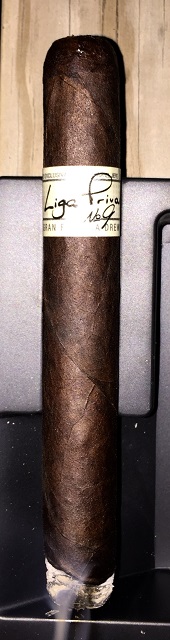
Surely they’ll do so for the Liga Privada No. 9 blends, which became available in the summer of 2007—just after the February 2007 exemption deadline. Today, I thought I’d revisit my favorite cigar in that line, the Toro (6 x 52). While I might not have much new to say about a cigar that’s been on the market for nearly a decade, it’s helpful to reexamine old favorites. And, heck, I guess I just wanted an excuse to fire a few Toros up.

By now, we all know the story. Former Drew Estate chief Steve Saka, now owner of Dunbarton Tobacco & Trust, began work in 2005 on a personal blend for his own enjoyment. After over 50 blends of testing with Jonathan Drew and Nick Melillo (now owner of Foundation Cigar Co.), a final recipe was arrived at: a dark Connecticut Broadleaf wrapper fermented for at least 18 months, a Brazilian Mata Fina binder, and filler tobaccos from Honduras and Nicaragua.

Liga production is still limited—a limitation, according to Drew Estate, that’s due to tobacco availability—so the cigars can be tough to find and expensive. When you get your hands on a Toro, though, you’ll find a highly pleasurable, full-bodied cigar with tons of flavor and a fair amount of spice. Leathery in texture, the core tastes include black pepper, cocoa, espresso, cream, and that infectious sweet grassiness that can only be found in certain Drew Estate cigars.

Construction is outstanding, including a straight burn line and a solid white ash. Notably, the draw is incredibly easy and the smoke production is intense—welcome characteristics that have become trademarks of Drew Estate over the years.

You can expect to pay $12 or more for the Toro. While that’s a considerable cost, you can be assured of a solid, consistent, tasty experience. I’ve been smoking this cigar for a long time, and I think the most fitting rating is an exceptional four and a half stogies out of five.

[To read more StogieGuys.com cigar reviews, please click here.]

–Patrick A

photo credit: Stogie Guys