
Cigar Spirits: Rittenhouse 100 Rye Whisky
14 Jan 2014
These days there are plenty of bourbons and ryes that appeal to their esteemed heritage to justify a premium price point. It usually goes something like this: In 18XX, Captain John so-and-so was the first to create this amazing American whiskey, which was renowned for its special distilling techniques and smooth, complex flavor. Today, his great-great-grandson has re-created that recipe to introduce this special whiskey, which sells for $50-80.
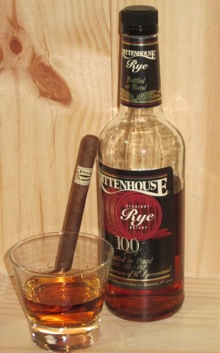 Usually such stories are stretching the truth at best. This is particularly true of new whiskeys that tend to rely heavily on marketing hype to justify a higher price because they don’t make their own whiskey, but buy wholesale and need to sell it for more because they’re a glorified middle-man.
Rittenhouse isn’t such a whiskey. It’s a bottled-in-bond, 100-proof rye made by Heaven Hill Distillery in Bardstown, Kentucky, that sells for $25. (Heaven Hill also makes Elijah Craig, Evan Williams, Larceny, Parker’s Heritage, and a number of other bourbons.)
The burnt umber-colored spirit features a fairly standard nose with vanilla, oak, and a hint of citrus. But it’s on the palate that the Rittenhouse gets interesting with fudge and marshmallow, orange marmalade, and hints of pine. Spice comes through on the finish, with wood and ginger zing.
This is an incredibly rich rye for just $25, with a lot more than just the woody spice you’d expect from a non-age statement rye. It’s perfect for a Manhattan (which, although it will likely be made with bourbon, traditionally rye was used) or other rye-based cocktails. I enjoy it straight.
Pair it with an earthy cigar like the Cuban Cohiba Maduro, Liga Privada No. 9, or Tatuaje Noella Reserva.
No matter what you choose, I highly recommend Rittenhouse as an American whiskey that provides tremendous value for an incredibly reasonable price. People seem to have caught on to how good Rittenhouse is, which is why it’s becoming increasingly difficult to find. It’s well worth seeking out.
photo credit: Stogie Guys
 The result was
 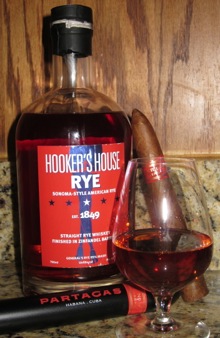 I’ve become skeptical of bourbon (or rye) bottled by companies that don’t distill their own whiskey, many of which just seem to slap their label on spirit they had no role in making. Hooker’s House, on the other hand, doesn’t hide the fact that they didn’t make the whiskey, but they do finish it in wine barrels that create a distinct spirit.
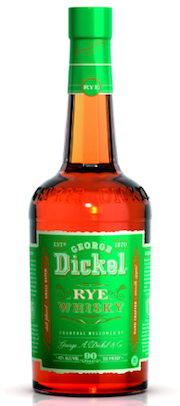 George Dickel’s parent company, Diageo, is the same as Bulleit’s, and the similarities between the ryes don’t end there. Both are distilled at Lawrenceburg Distillers Indiana (LDI) using the same rye-heavy recipe (95% rye and 5% malted barley). But of course whisky is far more than just the ingredients that go into it, and the Dickel rye takes its own distinct journey from barrel to bottle.
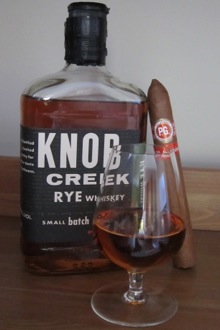 So when I saw Knob Creek was adding a third line (their second was a
 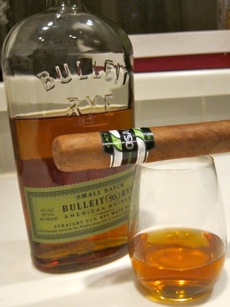 Bulleit is most notable for it’s high rye content. In order to be a rye, a whiskey must use at least 51% rye mash, supplemented by corn, barley, and wheat. Bulleit surpasses that minimum by leaps and bounds with 95% (the highest of any production rye), with just 5% barley.
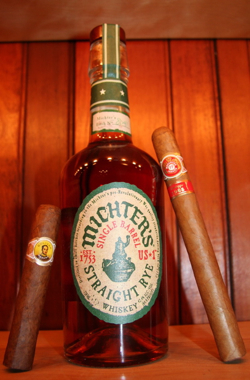 This Stogie Spirit article is of one of those post-Schaefferstown Michter’s whiskeys. It’s called
  Patrick Ashby
Co-Founder & Editor in Chief
Patrick Ashby
Co-Founder & Editor in Chief Patrick Semmens
Co-Founder & Publisher
Patrick Semmens
Co-Founder & Publisher George Edmonson
Tampa Bureau Chief
George Edmonson
Tampa Bureau Chief