
Stogie Commentary: The Case Against Smoker Discrimination
16 Jan 2007
Yesterday the country honored Martin Luther King for his promotion of equality under the law and his dedication to ending racial discrimination. Thankfully, we have certainly made much progress towards those goals, in no small part because of King, since his assassination in 1968.
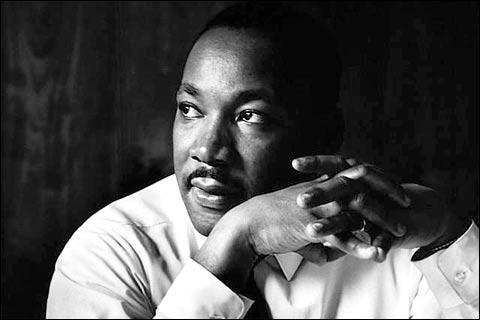 But as Tampa Tribune editorial writer Joseph Brown noted in a recent column, while racial equality under the law has increasingly become a reality in the decades since King’s death, in the same period it has become acceptable to discriminate against another group:
Since King’s assassination nearly 40 years ago, however, one group of Americans has increasingly become a target for legal discrimination. They are barred from many public places – and even bleeding-heart liberals go along with it. Additionally, they are taxed unfairly.
The group: smokers.
Brown points out correctly what many smokers acutely notice regularly, that unlike almost any other segment of the population, discrimination – and particularly legal discrimination – is accepted against smokers where elsewhere it is condemned.
Meanwhile, in an article in the winter issue of Regulation Magazine, which is on the shelves now (unfortunately the article isn’t online, but an edited version is available on the Washington Post website), University of Missouri Law School Professor Thomas Lambert explores the reasons anti-tobacco activists give for that discrimination. Specifically, he looks at the most drastic anti-smoking measure – the smoking ban – and ultimately finds that these justifications just don’t cut it:
Contrary to ban advocates’ claims, the costs of smoking’s externalities are ultimately borne by the owners of smoking-allowed establishments who, as a group, have incentives to efficiently accommodate smokers and nonsmokers. Efforts to shape people’s preferences regarding smoking run into individual choice issues and may be counterproductive. Scientific evidence on the risk of ETS (“environmental tobacco smoke†– more commonly called second-hand smoke) may be overstated and never addresses the important point that some people are willing to take that risk.
A better approach would be a hands-off policy permitting business owners to set their own smoking policies. Motivated by the pursuit of profits, the owners would have the proper incentive to maximize social welfare. The market would be far more likely than government regulation to accommodate the various preferences of nonsmokers and smokers alike.
Lambert’s analysis is a bit dry and academic, but it is also thorough and quite convincing.
StogieGuys.com readers should take the time to read these articles. This way, the next time some anti-smoking zealot tries to tell you why your state or city should ban smoking, you’ll be ready to explain to them just how wrong they are.
Tags: cigars
 Patrick Ashby
Co-Founder & Editor in Chief
Patrick Ashby
Co-Founder & Editor in Chief Patrick Semmens
Co-Founder & Publisher
Patrick Semmens
Co-Founder & Publisher George Edmonson
Tampa Bureau Chief
George Edmonson
Tampa Bureau Chief
I, for one, see this as a very interesting post. On one hand, I think it's important to highlight the injustices forced upon smokers.
But, on the other, I'm weary of comparing the plight of smokers (which is no doubt serious) to the plight of black Americans and their struggle for civil rights. I want to make it clear we are in no way intending to offend anyone…except for anti-smoking zealots.
I just wanted to make that clear.
Nice poster. Where can I get one?
I don't think being able to argue against a zealot is effective. Most of their arguments are inflammatory and aimed at the popular masses. Politicians follow suit as they always do. The coalition for Children's Rights in Canada claims that smoking kills 40,000 Canadians every year. Somehow people don't question the absurdities of these numbers and go on a moral quest akin to genocide prevention.
I just don't see how smokers can win this one. Funny how liberals always rush to embrace Dr. King's desire for equality but completely neglect the drive for freedom.
James-
It's true that convincing the most radical anti-smoking zealots probably won't get you anywhere. But they aren't really the target.
The people who matter are the non-smokers in the middle, who may buy into the anti-smoking arguments if they aren't challenged.
Patrick A-
My reading of the article is that it doesn't "equate" discrimination against smokers to racial discrimination. It simply notes some similarities, as opposed to making moral judgements.
Anyone who is offended is either not a good reader or they're so sensitive that they aren't being rational!
The difference here is that smokers have a choice. They are not being told they cannot enter an establishment and enjoy accomodations as non-smokers. They are just being told they cannot engage in specific activities in public. It is equivalent to saying a person can go anywhere they want, as long as they do not molest a child. African-Americans were not able to change the color of their skin, smokers can choose not to smoke. Moreover, being African-American is not hazardous to the health of oneself and those around that person.
Furthermore, if one were to read a book by Mancur Olson called the "Logic of Collective Action" one will quickly realize that allowing businesses to make decisions concerning progress does not work. If we take restaurants as an example, they did not voluntarily make their establishments non-smoking, which is healthier for everyone. Why did they not do this; because of a collective action problem. No restaurant wanted to be the first, for fear they would lose business, so no restaurant did. When the government stepped in as a joining force amongst these restuarants, however, all of them went non-smoking at once, and the fear of losing business was avoided. Moreover, many establishments have seen their business improve since smoking bans were put into effect.
So to summarize, the entire argument that smokers are being discriminated against is ridiculous, and the idea that private business can make decisions on such issues as allowing smoking in restuarants, bars and other public buildings is downright fascist.
John Smith-
I was actually tking you seriously until I came to the end: "the entire argument that smokers are being discriminated against is ridiculous, and the idea that private business can make decisions on such issues as allowing smoking in restuarants, bars and other public buildings is downright fascist"
You're just a dumbass!
The following link can direct you to the full paper.
http://papers.ssrn.com/sol3/papers.cfm?abstract_i…
I was told today by an employer that I was not hirable do to the fact that I legally smoke ciggeretts … and people say smokers are not discrimanated against maybe all this politically correctness can find me a job huh ??
Well maybe one day they'll do us some justice and make morbidly obese people pay a huge health insurance surcharge because of their high risk for health complications. While we're at it people who don't exercise 30 minutes a day, they aren't the optimum working machine now are they? If you let the government pick out a target and completely erradicate(ie oppress in taxes or employment) it is similar to genocide, it'll eventually choose your niche.