Stogie Guys Friday Sampler No. 324

15 Feb 2013

As we have since July 2006, each Friday we’ll post a mixed bag of quick cigar news and other items of interest. Below is our latest Friday Sampler.

1) Yesterday, the International Premium Cigar & Pipe Retailers Association (IPCPR) announced it would be increasing its annual dues by $100, in recognition of the mounting issues facing cigar rights and the “substantial financial resources” required to engage those battles. “We must not relent in our fight to guarantee the safety of our industry,” said IPCPR CEO Bill Spann. “Our House and Senate bills have gained immense support, and we must not lose this momentum and prominence while we still have it.” Spann also said the recently unveiled plans to debut a “Consumer Day” and “Roast” at this year’s IPCPR Trade Show—plans we wrote about here—have been “tabled” due to negative feedback from various members. StogieGuys.com is an online media member of IPCPR.

2) General Cigar’s new website went live this week. Victoria McKee Jaworski, General’s director of public relations, likens it to a “digital cigar lounge” with “interactive features like a virtual humidor and a cigar bomb component.” General Cigar is one of the world’s largest manufacturers with blends like Partagas, La Gloria Cubana, and Punch in its portfolio.

3) Just because you haven’t heard much lately about the FDA’s proposal to regulate cigars doesn’t mean the idea is dead. The FDA recently posted a notice on its website that it “intends to propose a regulation” that would extend its authority to “all products that meet the statutory definition of ‘tobacco product’…” That’s virtually anything made from tobacco. The FDA gave no timeframe and did note that the public would be able to comment on any proposal.

4) Inside the Industry: La Palina is dropping prices on its El Diario and Maduro lines by 10% to reflect supply chain savings and to demonstrate its dedication to consumers and retailers. Davidoff is introducing a new size in its Puro d’Oro line, a Gordito (3.75 x 58) that will sell for $56 for a 4-pack or $350 for a box of 25. The new Puro d’Oro Gordito is also part of Davidoff’s new “Short Pleasures” assortment pack along with Davidoff’s Grand Cru No. 5, Entreacto, and Millennium Blend Short Robusto.

5) Around the Blogs: Nice Tight Ash checks out the Alex Bradley Maxx Brazil. Tiki Bar kicks back with a Nestor Miranda Special Selection Connecticut. Stogie Review reviews the Davidoff Royal Salomones. Cigar Inspector inspects the Inception 518.

6) Deal of the Week: StogieGuys.com recommends Bespoke Post, a monthly collection of awesome items delivered to your door. Past boxes include fine bar accessories, shaving kits, coffee, and more. You can skip or purchase every month. Click here to sign up.

The Stogie Guys

photo credit: IPCPR

Commentary: Helping to Light a Fire (Part II)

14 Feb 2013

[See yesterday’s article for Part I of this two-part series discussing what you can do to stop anti-cigar legislation in your state.]

The first step in combating more smoking restrictions in your state, or supporting changes in existing ones, is to know what’s going on. That’s not always easy, though you can stay informed with a little effort.

Few newspapers today cover legislatures with the depth they once did. Local TV reports are usually limited to top agenda items. But you can keep up with minimal effort. I’ve got two suggestions. If you Google your state name, legislature, 2013, and tobacco once a week or so, you’ll probably learn what’s up. Another way is to spend a little time online to find an active anti-tobacco group in your state and get on their email list. These people are dedicated, financed, and resourceful. They work hard to drum up support, and rarely miss anything.

If you see that a bill has been introduced, you’ll want to find pertinent details: which chamber, the bill number, who introduced it, and whether it’s been assigned to a committee.

With the bill number, you should be able to locate the text, though deciphering it can be a trick. If it’s unclear and you can’t find an explanation online, call the sponsor’s office. Or check with that anti-smoking group because they’ll almost certainly know.

Armed with that information, contact your state representative and/or senator to let them know how you feel about the bill. In many states, it’s pretty easy to get in touch directly, but email can also be effective.

If it’s a particularly important or contentious issue, try to get your local shop to invite the solon for a meet-and-greet.

However you go about it, there are several things that I think will enhance the likelihood of success, regardless of the format.

Emphasize your concern is about adults smoking cigars. Many people know nothing about cigars; heck, these days, you almost never even see anybody smoking one. Make sure they know you’re talking about the craft of handmade cigars, not “Big Tobacco” or drug store sticks.

Focus on cigars. As far as I’m concerned, the cigarette battle is over, (and, yes, I know all about Niemöller’s statement) but I believe there’s still a chance for premium cigars to carve out a separate position. Most legislation is written with cigarettes primarily in mind, so you can often find an opening for premium cigars.

Push the small business aspect of cigars and cigar shops. These days, it’s a sacred cow, and one politicians are loathe to ignore. It’s also great fodder for local newspapers and TV stations. Get in touch with their assignment desks and suggest that they can find a good story in the area’s potentially endangered cigar shops.

If you’re at a public meeting, be prepared for strong pushback. Here’s an example of the kind of specific attacks you can expect. Arm yourself with strong, specific data, which is readily available.

Don’t mount a soapbox about your rights. Despite the tobacco leaves adorning the U.S. Capitol, there’s no constitutional right to smoke. At best you’ll end up in an unproductive argument. At worst, you’ll alienate potential supporters. Whatever the circumstances, stay calm, polite, and professional.

If you want assistance or feel better being part of a group, check into Cigar Rights of America.

I hope all this gets you enthused and willing to fight the good fight because that’s what is necessary if we’re going to continue to enjoy cigars. I welcome any feedback, and if you have questions leave a comment and I’ll do my best to reply.

George E

photo credit: N/A

Commentary: Get Fired Up or Get Snuffed Out (Part I)

13 Feb 2013

It’s that time of year when most state legislatures are gearing up. If you’re a cigar smoker, it’s also time to get ready to fight.

Although much of the cigar world’s attention is on federal efforts, such as the Food & Drug Administration’s proposal to regulate cigars, states are often where the most important legislation originates. The good news is this is also the area where individuals—especially when they’re organized—can have significant influence. Local and state politicians recognize their elections are usually low-turnout affairs and even a small, committed cadre can wield tremendous clout.

Last week, the International Premium Cigar & Pipe Retailers Association (IPCPR) sent out a legislative update highlighting a dozen states where bills have been introduced that could impact cigar smokers. Not all are negative. Some would be positive. Quite a few deal with taxes, so they could affect what you pay. It’s imperative that cigar smokers in each state understand what’s at stake and get involved early.

In the first part of this StogieGuys.com report, we’ll highlight the latest pending legislation, using (to a large extent) material from IPCPR. If you don’t see your state don’t be complacent; this is not a comprehensive list, and developments can happen at nearly any time.

Kansas: House Bill 2219 would expand the exemptions allowed under the current law, which permits smoking in retail tobacco shops, casino gaming floors, private clubs, and some other establishments. Opponents claim the bill would allow smoking in virtually any business, but my reading is that probably the only real effect would be to allow smoking in bars. A similar bill last year went nowhere.

Kentucky: House Bill 190, the “Smoke-Free Kentucky Act,” would pretty much rule out smoking in any enclosed public or employment place, and there are no exemptions for tobacco shops.

Oklahoma: Senate Bill 36 would give localities the power to control tobacco, authority that is now reserved for the state. Senate Bill 327 would repeal a current law that prohibits discrimination against smokers and allow employers to reject applicants and fire workers who smoke.

Washington: Senate Bill 5070 would create an exemption to the statewide smoking ban by allowing retail tobacco shops to purchase a license that would permit smoking.

Florida: Two proposals have been introduced, House Bill 439 and Senate Bill 258, that would weaken the state’s sole authority to regulate smoking by granting localities the right to institute bans on municipal property (parks and beaches, for example).

Oregon: Senate Bill 119 and House Bill 2481 would permit localities to impose their own taxes on tobacco products.

The Oregon proposal is one of many involving taxes, but it’s about the only one that’s so straightforward. Cigars usually fall under the broad category of “other tobacco products,” and deciphering exactly what tax gets applied can be tricky.

These states are considering tax changes, according to the IPCPR’s update: Kentucky, Maryland, Minnesota, Nebraska, New Mexico and Tennessee.

In Part II, we’ll look at ways you can find out what’s up in your state and exert influence.

George E

photo credit: N/A

Commentary: What’s on the Label?

12 Feb 2013

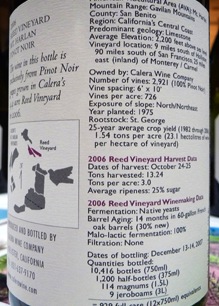
We’ve pontificated about the lack of information for many cigars before, but I recently came across this post about wine labels that got me thinking again about the state of cigar disclosures. Or more accurately, the terrible lack of information about cigars.

calera-labelIf you take a look at this wine label (which I’ll readily admit is hardly typical) you’ll see tons of information, virtually all of which could be just as easily at home on a cigar box: type of grapes (or tobacco), location of vineyards (or farms), yield per acre, year originally planted, date of harvest, aging information, blend information, date bottled (or boxed), and quantity made.

And yet, you won’t find that information on any cigar box. At most you’ll find a list of the countries where the tobacco comes from and a box date.

One rare exception is the Tatuaje La Vérité (the label can be seen here) which does contain virtually all available information: the farm that grew the tobacco, vintage of crops, tobacco varietals and percentages, factory where it was rolled, dates rolled, and quantity produced.

But perhaps it’s no coincidence that La Vérité is based off of a wine model (for better or worse including the futures model). For the other 99% of cigars, it seems like cigar makers give us only enough information as they feel they can get away with.

There are a few reasons why I think this lack of specific information persists for cigars. The one legitimate reason for the lack of disclosure regards protection of innovation. But even this is often cop-out, designed to give cigar makers the option of changing the blend later if they can’t secure enough tobacco from the same tobacco farms down the line.

More generally, I suspect it’s a laziness on the part of of cigar makers who’d rather shroud their creations in mystery instead of explaining why their blend is superior. While wine tends to get more specific as the price goes up (buy a First Growth Bordeaux, for example, and you know exactly what small plot of land the grapes were grown on and in which year), there exists an inverse correlation between cigar cost and the availability of cigar information. Expensive cigars are usually aged significantly before they come to market, but the years of harvest, rolling, or boxing are rarely divulged.

Aesthetically, I have great respect for making cigar boxes look good, and I understand that too much text clutters up a good-looking cigar box (let alone a cigar band). But even on cigar makers’ websites, it’s too hard to come by more than just the general information about a specific cigar blend.

To that end, I think cigar makers grossly underestimate cigar smokers’ thirst for more information. (And the millions of visitors we’ve had to StogieGuys.com suggest I’m right.) So here’s to hoping cigar makers will start increasing the information they make available about their cigars. Because a critical part of enjoying a cigar is learning why you enjoy it.

Patrick S

photo credit: Dr. Vino

Cigar Review: La Musa Mοῦσα Toro

11 Feb 2013

When I reviewed the Grimalkin Toro by Emilio Cigars back in 2011, I liked everything about the cigar. Everything, that is, except for the name and the creepy band.

La Musa ToroGary Griffith must have gotten similar feedback pretty regularly, or perhaps he just had a change of heart about the best way to market this stellar creation. Whatever the case, he decided to re-brand the line as La Musa Mοῦσα, which—as Cigar Fan eloquently describes—may be a nod to the first line of Homer’s The Odyssey.

La Musa Mοῦσα features a Habano Rosado wrapper and is handmade in Estelí with production “based on harvest conditions,” according to the Emilio website. It is available in a limited Lancero vitola, along with traditional Robusto, Torpedo, Corona, and Toro formats.

The latter retails for $8-9 apiece and measures six inches long with a ring gauge of 50. It boasts an oily, reddish wrapper with nary an imperfection and wonderful notes of milk chocolate and nut off the foot. Moderately firm throughout, the Toro is downright beautiful with (what I think is) a significant improvement in the band.

La Musa Mοῦσα is “designed for the refined palate with an appreciation of subtle nuance in texture and flavor of the smoke.” Fittingly, the initial profile is neither monolithic nor overbearing—even though many have speculated this smoke is made by Don Pepin Garica, a cigar maker with a knack for powerful, peppery introductions. Flavors of almond, caramel, cocoa, and cream emerge in a balanced, medium-bodied taste.

And that’s pretty much how the Toro smokes from light to nub, save for some increases in spice down the stretch. Not surprisingly since the blend is the same, I’ll agree with my previous assessment of the Grimalkin Toro that the “balance and syrupy texture stand out as the most memorable characteristics of the smoke, imparting a uniqueness that’s lacking from other cigars that take on a more predictable profile.”

Also not surprisingly, the combustion qualities are the same as the Grimalkin—an excellent draw with large volumes of smoke, a straight burn line, and a solid ash.

When Grimalkin was introduced, I nodded in agreement as I read positive review after positive review. The quality, subtlety, and balance of the blend cannot be denied. And so is the case with La Musa Mοῦσα Toro, my favorite of Gary Griffith’s creations to date. It’s worthy of four and a half stogies out of five.

[To read more StogieGuys.com cigar reviews, please click here.]

Patrick A

photo credit: Stogie Guys

Quick Smoke: El Pimer Mundo La Hermandad Caballito

10 Feb 2013

Each Saturday and Sunday we’ll post a Quick Smoke: not quite a full review, just our brief verdict on a single cigar of “buy,” “hold,” or “sell.”

PM-La-Hermandad

For whatever reason I’ve waited until now to smoke this pre-release edition (hence the unofficial band) of the new La Hermandad by Sean Williams’ El Primer Mundo. The cigar is produced at Abe Flores’ Pinar del Rio factory in the Dominican Republic (as opposed to El Titan de Bronze in Miami where previous Primer Mundo cigars have been made). The robusto-sized Caballito utilizes a dark, oily Brazilian Arapiraca wrapper around Nicaraguan binder and filler. The result is a rich, spicy smoke with a tasty combination of charred oak, black coffee, and mole spice.

Verdict = Buy.

Patrick S

photo credit: Stogie Guys

Quick Smoke: La Riqueza No. 4

9 Feb 2013

Each Saturday and Sunday we’ll post a Quick Smoke: not quite a full review, just our brief verdict on a single cigar of “buy,” “hold,” or “sell.”

La Riqueza No. 4

Billed as an “old-world, medium-bodied, Cuban-style” cigar by Tatuaje’s Pete Johnson, La Riqueza (Spanish for “riches”) is a unique and wonderful smoke. The No. 4 (5 x 48) delivers a sweet aroma with a balanced, powdery flavor of dry wood, cocoa, and leather. The finish is spicy. The robusto-sized smoke also boasts a dark Connecticut broadleaf wrapper, Nicaraguan binder and filler tobaccos, a slight box press, and excellent construction. Pick one up for about $8 and I doubt you’ll be disappointed.

Verdict = Buy.

Patrick A

photo credit: Stogie Guys