Stogie Guys Friday Sampler No. 313

16 Nov 2012

As we have since July 2006, each Friday we’ll post a mixed bag of quick cigar news and other items of interest. Below is our latest Friday Sampler.

1) The 14th annual Ybor City Heritage & Cigar Festival takes place tomorrow from 10am to 5pm in the historic Ybor City neighborhood of Tampa. The event will include craft beer, food, cigar rolling, and representatives from such cigar companies as Arturo Fuente, J.C. Newman, San Lotano, Rocky Patel, and Alec Bradley. Tickets are $5 in advance and $10 at the gate with proceeds benefiting the Ybor City Museum Society. If you’re within driving distance and looking for something fun to do tomorrow, we’d highly recommend it. The Stogie Guys team has enjoyed visiting Ybor City in the past, and this is a great opportunity to take in the best the neighborhood has to offer.

2) In other cigar event news, tickets are now on sale for the 2012 Big Smoke in New York City, which will be hosted by Cigar Aficionado on Thursday, November 29 at Pier 92. The $240 ticket price includes drinks, food, and cigars from some of the biggest names in the industry, including Padrón, General Cigar, Arturo Fuente, Oliva, and Rocky Patel.

3) Inside the Industry: Best Cigar Prices is releasing a new house blend called 2012 Limited that features a Habano Jalapa wrapper and is made by Alec Bradley. Archie Mishkin, former president of the Bayuk Cigar Co., passed away on October 30 at the age of 94. The details aren’t clear, but proceeds go to a good cause so check out this charitable giveaway.

4) Around the Blogs: Cigar Brief smokes the Inch by E.P. Carrillo. Cigar Fan fires up a T.L. Johnson Tempio Extreme Box Press. Nice Tight Ash checks out a Montana Azul. Stogie Review reviews an Alec Bradley Fine and Rare 2012. Cigar Inspector inspects a Cohiba Siglo VI Reserve. Tiki Bar kicks back with an Avo 25th.

5) Deal of the Week: Stuffing vs. dressing may be the debate for Thanksgiving dinner, but when it comes to cigars humidor stuffing is a no-brainer. This Humidor Stuffing Sampler features 10 cigars for $30 including CAO Cameroon, Don Pepin JJ Maduro, CAO Gold, and Perdomo Lot 23.

The Stogie Guys

photo credit: cltampa.com

Commentary: Random Thoughts from the Humidor (XIII)

15 Nov 2012

In this latest segment of Random Thoughts from the Humidor, I ponder the evolution of Drew Estate and if larger cigar companies that buy smaller ones are getting good value.

Rebirth of Drew Estate

Drew Estate’s tagline is “the rebirth of cigars,” but the most impressive rebirth is that of Drew Estate itself. It’s easy to forget, but no cigar company has changed more in recent years than Drew Estate. I was recently searching for some information and found a thread on a message board consisting almost entirely of seasoned cigar smokers complaining about Drew Estate.

The complaints consisted of rants about gimmicky flavored cigars (though Drew Estate calls their cigars “infused”).  Today that complaint would be inconceivable, but back then Drew Estate hadn’t introduced Chateau Real yet, let alone Liga Privada or Undercrown. For me, reading through that thread was a stark reminder of how Drew Estate has reinvented itself in a relatively short period of time to become a leader in the industry when it comes to “traditional” cigars, while still dominating the “infused” cigar market.

Thinking About Industry Consolidation

Along with the emergence of Drew Estate, we’ve seen many cigar makers reemerge from “retirement” to start their own companies. Some—Ernesto Perez-Carrillo and Cristian Eiroa—”retired” after selling their brands to larger companies. The newer, smaller, family-run companies are now creating innovative cigars, but my question is: Do the large cigar companies (General Cigar and Davidoff, in these examples) left owning their original brands (La Gloria Cubana and Camacho, respectively) get good value even after the principles who built the brands leave?

Certainly they feel the brands they purchase fill a void in their portfolio that they want to fill, and if they can keep the quality of the cigars high, they will keep a significant percentage of the customers who are loyal to those brands at least for a while. I suspect, though, that this type of consolidation isn’t as profitable as it once was. These days cigar smokers, particularly those that smoke cigars with the most regularity, are less loyal to any particular brand, and seem more interested in trying different cigars.

If the people most responsible for creating the identity of a given brand are no longer active in the brand (or even creating cigars for another company) is buying a smaller company still worth it? It seems perhaps that four or five years later all they are left with is a trademark and a list of customers. I don’t discount the largest cigar companies’ marketing expertise and distribution advantages, but I’d wonder if that is enough to make shelling out millions for a smaller brand worthwhile.

Maybe the future isn’t buying cigar brands or factories wholesale for millions of dollars, but partnering with companies to help them market and distribute their cigars. One example is Don Sixto, made by Plasencia and marketed and distributed by General Cigar. This may be a template for future partnerships.

Patrick S

photo credit: Drew Estate

Cigar Review: Padrón 2000 Maduro

14 Nov 2012

If you peruse Padrón’s website, you’ll undoubtedly notice the image of a hammer in several not-so-subtle places. The symbol commemorates Cuban émigré José Orlando Padrón and his drive to work as a carpenter until he could establish a cigar company.

His patience and dedication paid off in spades. With over 600 employees, a tremendously loyal following, and more accolades than space permits mentioning, Padrón Cigars is considered by many to be the pinnacle of cigardom. The company’s place in cigar history is cemented by such super-premium offerings as the Anniversary Series (both 1926 and 1964) and Family Reserve.

Not to be overlooked is the original Padrón line, which includes over a dozen vitolas that are available in either Natural or Maduro formats. (By the way, with similar wrapper shades and no distinguishing markings, it’s really hard to tell a Natural from a Maduro without holding two next to each other.) Each is comprised of Cuban-seed Nicaraguan tobacco that’s sun-grown and aged for two and a half years.

The 2000 Maduro is a robusto that measures five inches long with a ring gauge of 50. I picked it up for under $6 at a tobacconist in downtown Chicago. Like the other vitolas in the blend, it isn’t the prettiest specimen, sporting thick veins, coarse seams, a hastily applied cap, and a lumpy surface. Yet its strong pre-light fragrance of dark chocolate and earth begs you to smoke it.

Right off the bat, what this cigar lacks in appearance it makes up in flavor. The taste is peppery, full-bodied, and characterized by espresso, cocoa, dark chocolate, and a little raisin. The resting smoke is exceptionally fragrant and the white ash is a stark contrast to the wrapper. The burn line and draw are excellent.

Like the Executive Maduro, which is a considerably longer vitola (7.5 x 50) that takes two hours to smoke, the 2000 Maduro doesn’t change much in flavor from light to nub. And that’s one reason why I prefer the 2000 Maduro: It draws to a close just as I start to lose interest.

At this point, it would be cliché to say the so-called “Thousand Series” is a great way to get Padrón quality and consistency without paying top dollar. Well I’m going to say that anyways. Again. And if you’re interested in one of the 15 cigars in Padrón’s original line, you can’t go wrong with the 2000 Maduro, which never overstays its welcome and is worthy of four stogies out of five.

[To read more StogieGuys.com cigar reviews, please click here.]

Patrick A

photo credit: Stogie Guys

Cigar Spirits: Edradour 10 Year Single Malt

13 Nov 2012

While I’m hardly an expert on the thousands of varieties of scotch, I’ve gotten to know my way around most of the better-known brands and a few lesser-known malts. So when I noticed a bottle I hadn’t seen before at my local Virginia ABC liquor store (I’m still getting used to the fact that in Virginia liquor stores are a state-run monopoly), it piqued my interest.

Edradour is billed as “Scotland’s smallest distillery” and the numbers support the claim, although recently even smaller distilleries have opened. Edradour is a three-man operation (though I read they recently are down to two) and it produces only 95,000 liters per year, or 12 casks a week. (By comparison, Glenlivet, the best-selling scotch in the U.S., produces just under 6 million liters a year.) Interesting fact: With 100,000 visitors a year, Edradour is almost certainly the only whisky distillery in Scotland with more visitors than liters produced per year.

While the distillery traces its roots to 1825, it upped its quality in the past decade when new owners took over. Before that it was known for variation from batch to batch. With those problems behind them, it now makes a variety of single malts, including a number of special finishes using Bordeaux, Sauternes, and port barrels.

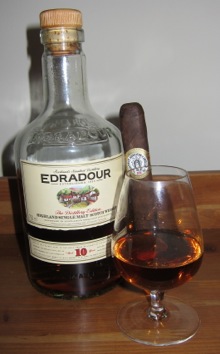
The only variety available at my store was the 10 Year, which I picked up for about $50. It’s bottled at 86-proof and is copper amber in color. The nose shows sherry, dates, and candied almonds. On the palate, it’s thick with rum notes, toffee, dried fruit, and toasted barley. The relatively short finish features more dried fruit, cream, and hints of vanilla.

It’s hardly the most refined single malt I’ve tried, but its rich mouthfeel and thick sweetness make it an excellent pairing with a fine cigar. It stands up to full-bodied Nicaraguan smokes. I tasted it with both the Tatuaje TAA Edition 2012 and the Cuenca y Blanco (now known as CyB), and found both to be excellent with a straight pour of Edradour 10.

Patrick S

photo credit: Stogie Guys

Cigar Review: Aging Room Haváo Canon

12 Nov 2012

Crafted by Jochi Blanco of Tabacalera La Palma and owned by Rafael Nodal of Oliveros, Aging Room is still a new brand on the cigar scene.
Yet Aging Room seems to be gaining in popularity as its blends continue to score well with the online cigar community and the mainstream cigar media. Among these blends is M356 (rated 4.5 stogies by us and named the 16th best smoke of 2011 by Cigar Aficionado) and F55 Quattro, which earned a rare 5-stogie rating back in September.

In 2012 Aging Room released Haváo to round out its portfolio. Offered in seven formats—Brio (5.25 x 42), Canon (6 x 46), Impromptu (5 x 48), Largo (7 x 50), Sharp (6.25 x 52), and Treble—the blend features a golden Ecuadoran Connecticut wrapper around Dominican tobaccos. It is marketed as mild- to medium-bodied.

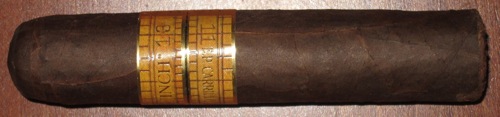
The Canon sells for less that $6 and comes dressed in double bands of maroon, cream, and gold with a delicate exterior leaf that has the faintest tooth. Firm from head to foot, it also sports a nice cap and pre-light notes of sweet hay. A simple punch cut reveals a moderate draw.

With Connecticut smokes, I’m usually anticipating creaminess, bread, and a bit of sweetness, while hoping to avoid the major pitfalls of the genre: chemical tastes, or a complete lack of flavor that leaves me feeling like I’m smoking paper. All the Canons I sampled for this review exceeded those expectations. This slender cigar has a toasty profile with background notes of citrus and peanut. The finish is sharp and a little spicy.

Not much changes flavor-wise over the course of the smoke, and the profile always stays towards the mild side of the medium-bodied spectrum with very little nicotine kick. Yet it’s remarkably satisfying for such a light cigar (although it must be noted that I’ve always been very appreciative of milder smokes). With excellent construction, my only complaint would be that the Canon burns a tad too quickly. It nubs in less than an hour.

Without question, this is another winner from Aging Room. And at such an affordable price, it’s a must-try for fans of Connecticut-wrapped cigars. My verdict: It’s worthy of four stogies out of five.

[To read more StogieGuys.com cigar reviews, please click here.]

Patrick A

photo credit: Stogie Guys

Quick Smoke: E.P. Carrillo Inch No. 64 Maduro

11 Nov 2012

Each Saturday and Sunday we’ll post a Quick Smoke: not quite a full review, just our brief verdict on a single cigar of “buy,” “hold,” or “sell.”

This monster-sized cigar is 6.1 inches long with a 64 ring gauge (that’s one full inch in width). It sports a Connecticut broadleaf wrapper, a Nicaraguan binder, and Nicaraguan and Dominican filler tobaccos. The profile is of earth, oak, cocoa, and coffee. It’s full-bodied with little variation from stat to finish, which takes a full 90 minutes. At $10 each, less by the box, it’s not cheap, but then it’s a well-made, full-bodied smoke that will last most of a football game. Still, I prefer the Natural variation to the Maduro, which has more complexity to go with it’s large size and full-bodied flavors.

Verdict = Hold.

Patrick S

photo credit: Stogie Guys

Quick Smoke: Emilio Cigars Series H Maduro Robusto

10 Nov 2012

Each Saturday and Sunday we’ll post a Quick Smoke: not quite a full review, just our brief verdict on a single cigar of “buy,” “hold,” or “sell.”

This just might be the definition of a good-looking cigar that makes a great first impression. The Series H Maduro Robusto (5.5 x 50) from Emilio Cigars sports a beautifully dark ligero wrapper from Jamastran, an extraordinarily firm feel, and a rich pre-light aroma of dark chocolate and earth. Once lit, the wrapper combines with Nicaraguan and Costa Rican tobaccos to yield a full-bodied, complex taste of dark coffee, creamy nut, cocoa, and a touch of leather. It’s downright outstanding and well worth the going rate of $7 for a single.

Verdict = Buy.

Patrick A

photo credit: Stogie Guys