
Commentary: Cigar Renaissance or Unhealthy Bubble?
5 Mar

Discerning cigar smokers still flinch at memories of the cigar boom of the mid ’90s. From 1993 to 1997, annual handmade cigar imports skyrocketed from under 100 million to well over 400 million.
The result wasn’t good for consumers. Many established manufacturers couldn’t ramp up production while still meeting quality standards, and lesser quality “Don Nobody” brands flooded the market.
Good cigars were suddenly difficult or sometimes impossible to find, while poor and mediocre cigars were being sold for high prices. From the perspective of consumers for whom cigar smoking was more than a fad, the bursting of this cigar bubble was a good thing, even if it took a few years for things to stabilize.
For the industry, the boom wasn’t so bad. First off, they sold a lot of cigars in the peak of the boom, and the smart ones had enough foresight to be ready to weather the coming bust.
The longer-term benefits to the industry were the lessons learned. Cigar makers are rightfully weary of sacrificing quality for quantity, even as total handmade cigar production has crept up towards mid-boom numbers.
So, at some point, the question has to be asked: Are handmade cigars approaching another bubble that’s about to burst? There are good reasons to think not, but maybe some warning signs too. First off, the growth has been far more steady this time. Also, you don’t hear as much from industry types about a coming end to boom times, which I’m told was seen by many as almost inevitable during the mid ’90s, even if the exact timing or speed of the collapse were largely unanticipated. The counter is that it’s hardly unusual for bursting bubbles to not be anticipated by most people in them, otherwise people wouldn’t lose so much money in those bubbles.
One of the things that worries me is the ever-increasing price of new cigars, especially the increasing number of cigars sold by companies that aren’t themselves cigar makers. Many of these cigars are of good quality, but they don’t always offer particularly good value for smokers, in part because they have to buy their cigars before they sell them to retailers.
Then there are the pending potential shocks to the established cigar industry. FDA regulation has the potential to wipe out numerous brands introduced in the past few years. Other possible market-shattering events include the full end of the Cuban Embargo, or a natural disaster striking a major growing region.
I don’t want to bum anyone out here, but cautious optimism is usually a more intelligent outlook than unrestrained exuberance. While a collapse like the cigar industry saw after the peak of the ’90s cigar boom seems unlikely, industries don’t usually grow forever.
photo credit: Stogie Guys
 Today, Rojas’ company, called Guayacan, is part of the


 So far, this effort to tap into the growing market for stronger cigars has met with much success since its debut at last year’s IPCPR Trade Show. Many bloggers have praised Untamed, and Dominican Cigar Review chose it 2014’s Cigar of the Year.

 Sucker Punch debuted in June 2014, made by General Cigar exclusively for


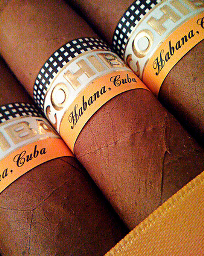 1) On Monday, officials from Habanos S.A.—the Cuban state tobacco company that controls the promotion, distribution, and export of Cuban cigars—said they expect “to immediately gain 25 to 30 percent of the U.S. premium cigar market if the United States lifts its trade embargo, and up to 70 percent of the market within a few years,†according to
 A quick note on terms for American whiskey: Bourye has no legal meaning. Federal regulations have strict definitions about what certain terms mean, so although a combination of straight bourbon whiskeys can still be straight bourbon (and multiple straight ryes still can be called straight rye), a combination of straight rye and straight bourbon cannot be called straight whiskey, even if it is (as High West calls says on the bottle) “a blend of straight whiskies.”
 Patrick Ashby
Co-Founder & Editor in Chief
 Patrick Semmens
Co-Founder & Publisher
 George Edmonson
Tampa Bureau Chief