
Search results: site-policy/images

Cigar Review: La Palina Collection Mr. Sam Robusto

3 Jun

La Palina has made their cigars in a number of factories: 1896 and the Family Series at the Graycliff’s factory in the Bahamas; El Diario and the La Palina Maduro at Raices Cubanas; Classic at the PDR Factory in the Dominican Republic; and Goldie and Mr. Sam at El Titan de Bronze in Miami.la-palina-collection-mr-sam-box

La-Palina-Mr-SamMr. Sam—named after Bill Paley’s grandfather and broadcasting pioneer, as well as William Paley‘s father—was originally a limited edition release last year, but now it has expanded into a regular offering. Samuel Paley founded the original La Palina cigar line which, as it grew, began radio advertising. Eventually that advertising spurred the purchase of a chain of radio stations that in turn William Paley grew into CBS radio and television.

The Mr. Sam line now consists of the original Robusto (4.25 x 54, $12.50) size, plus a Corona (5.5 x 42, $11) and a Toro (6 x 50, $13.50). While it’s no longer a limited edition, the small size of the El Titan de Bronze factory will almost certainly limit the number available.

The blend pairs a reddish-brown Ecuadorian Habano wrapper with Nicaraguan binder and filler tobaccos. I smoked two samples provided by La Palina for this review and found the construction on each to be flawless with a firm but not tight draw, a sturdy ash, and a consistently straight burn.

The primary flavors are medium- to medium-full with oak and dry chocolate. Secondary flavors include coffee, clove, and subtle woody spice. It’s a well-rounded cigar with only a slight variation from start to finish.

La Palina has a lineup of solid cigars, but I can’t remember enjoying any as much as Mr. Sam. If you’re looking for an after-dinner pairing you should smoke this with a Sherried Single Malt like the a Macallan 12 or (if you want to kick the intensity up a notch) the cask-strength Aberlour A’Bunadh.

In short, it’s an impressive cigar full of flavor, but also balanced: the kind of cigar that will be enjoyed by all types of cigar smokers (though certainly the more experienced aficionados will appreciate it the most).  That makes it worthy of a rare rating of five stogies out of five.

[To read more StogieGuys.com cigar reviews, please click here. A list of other five-stogie rated cigars can be found here.]

–Patrick S

photo credit: Stogie Guys

Cigar Review: Drew Estate Herrera Estelí Norteño (Pre-Release)

2 Jun

A few weeks ago, Drew Estate announced the naming of Willy Herrera as “master blender.” The move does not place Herrera in charge of La Gran Fabrica Drew Estate; rather, he will maintain current blends, produce new ones, and report directly to Jonathan Drew.

Herrera Norteno“This represents a major change for Drew Estate, marking the first occasion where someone of Cuban descent has held a top-level position at the company,” read a press release. The news came just a few days after Nick Melillo left Drew Estate, where he served for 11 years with responsibilities ranging from purchasing and fermentation to quality control and shipment planning.

To date, Willy Herrera’s biggest contribution to Drew Estate has been Herrera Estelí, a five-vitola line of Ecuadorian Habano-wrapped cigars with a Cuban-esque flavor profile. The blend has been well-received within the online cigar community, and also in mainstream publications. The Herrera Estelí Piramide Fino was named the eighth best cigar of 2013 by Cigar Aficionado.

Due out soon is Willy’s follow-up to Herrera Estelí: the Herrera Estelí Norteño. Norteño translates to “northerners,” which is what people in Nicaragua call those who live around Estelí, which is in the north of the country. It will come in six box-pressed sizes and feature a Mexican San Andrés wrapper, a Honduran binder, and filler tobaccos from Nicaragua. Like the core line, Norteño will be manufactured at Drew Estate, despite earlier reports it will be made at Joya de Nicaragua.

When I was in Nicaragua earlier this year, Willy gave me a single Herrera Estelí Norteño sample (4.75 x 48). It’s a flattened box-pressed smoke—almost rectangle-pressed, if you will—with a dark, dry exterior and pungent pre-light notes of cocoa and earth. Given the unique format, I decided to use a punch cut, and that was enough to yield a smooth draw.

Herrera’s highly anticipated sophomore effort is a chalky, chocolaty smoke with espresso, cashew, and a lingering spice on the tip of the tongue. Red pepper and cocoa seem to fight for control of the palate. The texture is heavy and coarse, and the body straddles the border between medium and full.

On the single sample I smoked for this review, I needed to touch up the burn with my torch several times to keep the cigar burning straight. The other combustion qualities leave no room for criticism. The draw is very easy, the smoke production above average, and the sandy, white ash holds well off the foot.

Given the quality and popularity of Herrera Estelí, I expect large numbers of cigar fans to actively seek out Norteño and take this blend for a test drive. They won’t be disappointed, though they may be surprised by the lack of Cuban-eqsue-ness given Willy Herrera’s reputation. My take is Norteño is a unique line that fits nicely into the overall Drew Estate portfolio, and it showcases the range of Herrera’s talents. I’m awarding this pre-release sample a solid rating of four stogies out of five.

[To read more StogieGuys.com cigar reviews, please click here.]

–Patrick A

photo credit: Stogie Guys

Quick Smoke: Dunhill Signed Range Toro

1 Jun

Each Saturday and Sunday we’ll post a Quick Smoke: not quite a full review, just our brief verdict on a single cigar of “buy,” “hold,” or “sell.”.1907

Dunhill Signed Range toro

After reviewing Dunhill’s new 1907, I was moved to smoke a couple Dunhill Signed Range Toros (MSRP $13.70) that have been in my humidor for quite a while. Now rolled at General Cigar’s Estelí factory, Signed Range has a Nicaraguan wrapper, African Cameroon binder, and filler from Nicaragua and the Dominican Republic. It’s an extraordinarily smooth smoke, mild to medium in strength, with a light, spicy tone over coffee and cocoa. The Toro (6 x 50) burns slowly and is certainly worth a try. Patrick A gave it four stogies back in his 2013 review.

Verdict = Buy.

–George E

photo credit: Stogie Guys

Quick Smoke: Partagas Serie P No. 2 (Cuban)

31 May

Each Saturday and Sunday we’ll post a Quick Smoke: not quite a full review, just our brief verdict on a single cigar of “buy,” “hold,” or “sell.”

Partagas Serie P

In my experience, Cuban cigars—more than cigars from any other country—require extra aging post-purchase. Holding on to this Partagas Serie P No. 2 (6.1 x 52) for about two years was a smart move. Then, I liked the cigar fresh from the box. Now, the flavors are more developed as the profile is teeming with roasted nuts, white pepper, syrup, hay, and cream. Expect to pay north of $15, and expect to be wowed as long as you can be patient. I recommend a box purchase, or splitting a box of 25 with a buddy, and hiding the smokes away for a few years, if possible.

Verdict = Buy.

–Patrick A

photo credit: Stogie Guys

Stogie Guys Friday Sampler No. 385

30 May

As we have since July 2006, each Friday we’ll post a mixed bag of quick cigar news and other items of interest. Below is our latest Friday Sampler.

No Smoking1) The looming threat of Food & Drug Administration regulations being imposed on premium cigars is still priority number one for defenders of cigar rights. The proposed regulations issued on April 24 could effectively halt cigar innovation, criminalize special editions or seasonal blends, and cost countless jobs in the U.S. and abroad, among other adverse consequences. If you haven’t already done so, please make your voice heard by clicking here to participate in the public comment period. But let’s also not forget about the many battles being fought at more local levels. DC, for example, is facing a proposal that would hike cigar tax rates to those equal to cigarettes (which is 80%). New Jersey is considering a ban on smoking at public parks and beaches, as well as an increase in the minimum age for purchasing tobacco to 21. Minnesota is looking to raise cigar taxes. And there are a host of other threats at various levels of government all around the country. This is a reminder to stay involved.
2) Experts typically characterize the so-called “Cigar Bubble” of the ’90s in the following way: Increased U.S. demand drove cigar prices higher, prompting even inexperienced cigar makers to enter the market, resulting in many sub-standard, overpriced cigars. The result was a resounding bubble burst as consumers became less willing to pay high prices for lower quality smokes. An interesting article in The Atlantic asks if a similar bubble is emerging in craft distilling. According to the author, the number of small distilleries in the U.S. has grown from about 70 to more than 600 since 2003 as consumers clamor for “local” spirits that are small-batch rather than mass-produced. But there is a growing weariness that many of the spirits aren’t up to snuff and are made by inexperienced distillers who simply entered the market due to booming demand.

3) Inside the Industry: Originally released as a limited edition in 2013, La Palina’s “Mr. Sam” collection is now a permanent offering. The cigar is made at El Titan de Bronze in Miami and utilizes an Ecuadorian Habano wrapper around Nicaraguan binder and filler tobaccos. Mr. Sam—named after La Palina owner Bill Paley’s grandfather—comes in three sizes: Corona, Robusto and Toro, which sell for $11, $12.50, and $13.50, respectively.

4) Deal of the Week: Here are lots of discount codes on cigars ranging from Drew Estate and Tatuaje to Rocky Patel and Oliva. Notable deals include the Tatuaje Reserva Regios (box of 25 for $181) and Drew Estate Undercrown (box of 25 for $104).

–The Stogie Guys

photo credit: Flickr

Cigar Spirits: Redemption Rye and Riverboat Rye

29 May

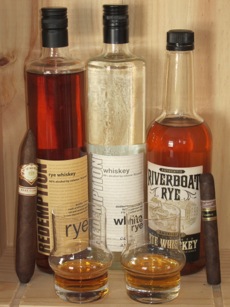
Redemption Rye and its brother Riverboat Rye don’t claim to be the result of secret recipes handed down from great-great-granddad or prohibition-era gangsters. Both are sold by “Bardstown Barrel Selections” and distilled at MPGI in Lawrenceburg, Indiana (formerly LDI), a wholesaler of whiskey.

redemption-ryesIf the Lawrenceburg address sounds familiar, it should. It’s 95/5 rye/malted barley mashbill is the basis of a number of ryes on the market: Dickel, Bulleit, Templeton, Old Scout, and others. But each takes on its own characteristics based on age, barrel selection, proof, etc.

As far as Redemption Rye and Riverboat Rye are concerned, each is relatively young: “under four years” according to their labels, probably in the 2-3 year range (although some sites selling Riverboat identify it as slightly younger than Redemption). Redemption is filtered and bottled at 92-proof. Riverboat is taken down to 80-proof, but in a twist from the usual (at least for whiskey bottled at so low a proof) it isn’t filtered before being bottled.

 Redemption Rye

The youth of this whiskey (~$27) is apparent from the nose which features fresh apple and oak. On the palate it shows flavors of cereal grain, oak, and some peppery spice swith honey sweetness. The clean finish clings to the roof of your mouth.

It has surprising sophistication for its young age and it’s pleasing neat or on the rocks. That, combined with a fair price (at a time when so many places are bottling up even younger whiskey and trying to sell it for twice as much), makes it worth checking out if you’re looking to expand your rye horizons.

Riverboat Rye

Bottled unfiltered, it’s a bit cloudy, and when you put it up to the light, a small amount of particulate is visible. The going price seems to be $25 for a 1L bottle, or a 750 ml. bottle for $20. It’s similar to Redemption though tamer, probably due to its lower 80-proof. The nose is more apple juice than raw apples and the Palate seems to feature sawdust and honey. The finish barely exists.

Riverboat rye is slightly smoother than Redemption but far less interesting. It’s a perfectly good cocktail rye that you might also consider offering to someone who wants a rye, but would be scared off by a higher proof. (On the flip side, a more seasoned rye drinker is going to find the low proof less than satisfying.)

The company also sells an un-aged rye, bottled straight from the still at 92-proof.  It’s raw, floral, and briny. I suppose this could work in the right cocktail, though more than anything it’s an educational experience. At the same proof as Redemption Rye, the side by side comparison shows how much impact a few years in a new charred oak barrel adds. (And unlike Jack Daniels’ new un-aged rye, you aren’t paying a premium for the experience.)

The unique characteristics of each rye impact the cigar pairings. Redemption Rye has the strength to stand up to a spicy Honduran cigar like a Camacho Corojo. Riverboat Rye requires a more subtle, smooth cigar, like the recently-released Dunhill 1907 or the León Family Reserve by La Aurora.

Ultimately, comparing young rye with something even twice as old is not particularly helpful since the style is so different. That said, as far as fairly priced younger rye, Redemption is a real standout in the category.

–Patrick S

photo credits: Stogie Guys

Cigar Review: Dunhill 1907 Robusto

27 May

These days, smokers are more likely to associate the Dunhill name with top-quality pipes (“The White Spot”), long-lamented pipe tobaccos (“Early Morning Pipe”), and high-priced cigarettes (Hunter Thompson’s go-to brand). Among cigars, the trademark name, sliced and diced nowadays to different corporations, is something of a second-place luxury finisher to Davidoff in the U.S. Think Omega vs. Rolex.1907

Dunhill RobustoStill, a cigar brand with a storied history of more than 100 years and ties to Winston Churchill is one not to be ignored. This new line celebrates that history, named as it is for the year in which Alfred Dunhill opened his first tobacco shop in London.

A limited edition cigar was released seven years ago to mark the centenary. This line, Dunhill’s first since introducing Signed Range in 2001, is “a tribute to the legacy and greatness of this brand rather than the mark of a specific anniversary in time,” General Cigar’s Victoria McKee told me.

She also supplied the three Robustos (5 x 52) I smoked for this review. The cigar costs $8.50. There are three others in the line: Rothschild, Toro, and Churchill, with all four packaged in 18-count boxes.

The 1907 is a varied mix of tobaccos. It sports an oily Honduran Olancho wrapper (a higher priming of the same leaf used on the CAO OSA Sol), a Dominican Olor binder, and what General calls “a proprietary blend of Dominican Ligeros and Brazillian Mata Fina.”

The 1907 starts with a lovely pre-light aroma from the wrapper and the filler. When lit, the first impression comes from a nice blast of pepper that backs down after about a half-inch. At that point, it settles into a rich tobacco taste for a bit. Also fairly prominent in the first half is wood and leather, which I often associate with Honduran tobacco. I’d put the overall strength at about medium.

I encountered a little harshness near the halfway point, but that smoothed out fairly quickly, and some spices moved in and out.

Construction was excellent. The draw was just right on each sample and they burned straight from start to finish.

If you haven’t tried a Dunhill in a while, you might want to give the 1907 a try. I rate it three and a half stogies out of five.

[To read more StogieGuys.com cigar reviews, please click here.]

–George E

photo credit: Stogie Guys