
Fact Sheet: Obama and McCain on Cigar Issues
27 Oct 2008
In a week and one day, millions of Americans will head to the polls to vote for the next leader of the free world. Both major candidates are former cigarette smokers: Republican John McCain smoked two packs a day until he quit three decades ago, while Democrat Barack Obama admitted having a cigarette as recently as this summer despite “quitting” early last year.
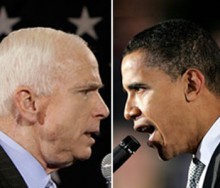 But being a former smoker (or even a current one) doesn’t make a politician good when it comes to taking positions that affect cigar smokers. Below are four areas where the next president could have a major impact on stogie enthusiasts with a look at the positions held by McCain and Obama in each area.
Tobacco Taxes
Industry insiders say a massive tobacco tax, such as the one proposed in the so-called SCHIP bill, is the most immediate threat to the cigar industry. This year only President Bush’s veto stopped what would have been a 256% increase in cigar taxes, meaning an increase of up to $3 per cigar. Obama clearly favors funding programs with tobacco taxes. He voted for the SCHIP cigar tax increase and has pledged to sign the bill into law. His campaign calls the senator “an ardent supporter of SCHIP.”
McCain’s position on tobacco taxes has been far less clear. He voted against versions of the SCHIP bill with the tobacco tax increase and has criticized the tax, taking the position that “it makes no sense to encourage people to live healthier…while making the government even more dependent on having people smoke.” However, McCain has a long history of advocating for tobacco taxes, specifically on cigarettes. Only a year ago he was quoted as saying, “I still regret we did not succeed” when asked about past efforts to increase cigarette taxes by $1.10 per pack.
Smoking Bans
Smoking bans have traditionally been a matter for state and local governments. Still, a national smoking ban (for so-called “public places” like restarants and bars) remains a possibility. McCain’s views on this issue are not entirely clear, but he did not join fellow Republican Mike Huckabee in promising to sign a natinoal smoking ban.
Meanwhile, Obama seemed to indicate support for a national smoking ban but seemed to prefer keeping bans a state issue. In a New Hampshire debate, Obama told the audience, “If we can’t provide these kinds of protections at the local level, which would be my preference, I would be supportive of a national law.â€
Regulation
As we’ve written before, Food and Drug Administration regulation of tobacco has the potential to be very damaging for cigar smokers. John McCain has been a advocate for regulating tobacco under the FDA since the mid-1990s when he co-sponsored a bill to that effect. Indeed, the issue has been called “one of the most significant efforts of his congressional career.” In the past year, however, critics of McCain claim he has backed away from that position, despite the fact that he remains a co-sponsor of the FDA bill. The Arizona senator has continued to criticize the portrayal of smoking by Hollywood, perhaps indicating that he still would favor FDA regulation if it didn’t include increased tobacco taxes.
Obama is also a co-sponsor of the bill to regulate tobacco through the FDA. Anti-tobacco advocates say FDA regulation of tobacco is “inevitable” under a McCain or Obama presidency.
Trade
Trade policies might not initially appear to be an area of interest. But since virtually every handmade cigar is either rolled in other countries or rolled in the U.S. with tobacco from foreign countries, reducing barriers to trade is vital to preserve and increase cigar smokers’ access to a wide variety of cigars at reasonable prices. There are two major policies where trade most effects cigar consumers: (1) the Cuban embargo/trade sanctions currently makes some of the world’s highest-regarded cigars illegal for Americans; and (2) the DR-CAFTA free trade agreement eliminates or lowers trade barriers with cigar-producing countries such as the Dominican Republic, Honduras, and Nicaragua.
McCain has “typically voted in support of sanctions on Cuba” and demanded free elections before the embargo is lifted. Obama seems more open to changing the U.S. policy toward Cuba, “calling for travel and remittance restrictions on Cuban-Americans to be lifted” and expressing that “he would engage in bilateral talks with Cuba to send the message that the United States is willing to normalize relations with Cuba upon evidence of a democratic opening.”
Obama opposes CAFTA and voted against it. On his website, you’ll find an article titled “Why I Oppose CAFTA,” citing labor concerns and the loss of American jobs. McCain voted for CAFTA and consistently supported similar trade agreements.
photo credit: AGORAVOX
 Patrick Ashby
Co-Founder & Editor in Chief
Patrick Ashby
Co-Founder & Editor in Chief Patrick Semmens
Co-Founder & Publisher
Patrick Semmens
Co-Founder & Publisher George Edmonson
Tampa Bureau Chief
George Edmonson
Tampa Bureau Chief
When all is said and done the differences between these two seems to be one of degree: McCain is a little socialist and Obama is a big socialist. They both backed the "bailout" package that nationalizes a huge portion of the economy and they both end up coming down on the side of bigger government control of the tobacco industry–to varying degrees. Examining them on the issues is quite illustrative in showing how far left the Republican party has gone in the last 20 or so years and just how far off the deep end the Democrats have gone as well; the scion of the Democrat party, JFK, would hardly be welcome in that party today–all his rhetoric was more suited to today's Republicans!
So, given one less-than-stellar choice and one outright-bad choice–I'll go with the less-than-stellar choice that will at least keep taxes (on cigars and pretty much everything else) low for now: go McCain!
Bad and worse… I'm so excited for November 4th
well it looks like america is about the vote for the "big socialist" so I predict the "little socialists" of the GOP will be forced to the back bench and real conservatives that support things like freedom of choice to engage in activities like smoking cigars will take control of the party and begin the process of rebuilding.
While I don't agree with Obama or McCain on the issues of tobacco, I mostly agree with Obama on the other issues that affect this country. The word "socialist" keeps coming up to describe Obama to a large extent and McCain to a lesser extent. Have any of you calling Obama a socialist ever lived in an actual socialist country? If you had, I suspect you would know that calling Obama and Mccain socialists is misguided and simply a repetition of the Fox News Network pundits who like their CNN and MSNBC counterparts have nothing else to do but guarantee their jobs by speaking nonsense 24 hours a day. Under Obama or McCain this country will not be any more socialist than it has been over the last 50 years. We just live in a time where society is gradually choosing to shun tobacco in all its forms after embracing it to excessive degrees in the last 100 years. I wish the government would stay out of my business but to be honest I don't see that happening any time soon. So I'll smoke my cigars in the privacy of my home or my friend's homes. And if the goverment decides to move in the direction to make tobacco an illegal product, then I'll fight that move with any legal means available to me.
I agree with Marc and his comments.
I may not like it but I'm okay with an increase on tobacco tax. If I have to pay more for something and in the end someone is able to get the medical care they need, then I'm okay with that. Now I do wish they wouldn't limit a tax just on tobacco but on other things that deemed unhealthy like junk and fast food.
Maybe I have a weird way of looking at politics since I've live in the DC area my whole life…for me, nothing really changes and until we move away from our electoral college system to a system where each individual vote matters, my vote in the democratic safe haven of MD, my vote doesn't mean jack.
Great article btw!
I also agree w/ Marc. And I happen to believe that any cigar tax will be modified in the legislation. As for all this talk of socialism, this is from "Wealth of Nations" by Adam Smith, who is the high priest of the capitalist free market:
"The necessaries of life occasion the great expense of the poor. They find it difficult to get food, and the greater part of their little revenue is spent in getting it. The luxuries and vanities of life occasion the principal expense of the rich, and a magnificent house embellishes and sets off to the best advantage all the other luxuries and vanities which they possess. A tax upon house-rents, therefore, would in general fall heaviest upon the rich; and in this sort of inequality there would not, perhaps, be anything very unreasonable. It is not very unreasonable that the rich should contribute to the public expense, not only in proportion to their revenue, but something more than in that proportion."
So let's watch it before we wildly throw around labels, huh?
I respect your opinion, Jerry, and you may be right about the futility of voting in certain states. But tobacco taxes are more sinister than you might realize.
Paying a few extra bucks here and there to make some middle class American kids marginally better off might be OK with many smokers, but it would completely devastate the more needy children of the cigar-producing countries. In many areas, cigar rolling is one of the highest paid occupations, and families will be torn apart if demand for cigars is stifled by a tax hike in the U.S. The Stogie Guys wrote an excellent article about this last August:
http://www.stogieguys.com/2007/08/08302007-stogie…
Just something to consider. Politics aside, I’d have a cigar with you any day of the week—especially if you’re buying.
Well I saw Obama at a convention smoking on what looked like an electric cigar/cigarette. It said Crown7 around the mouth piece. I heard him talking to fellow friends about it and he was saying how this thing beats the bans. I checked it out and it was true!
http://www.Crown7.com
Marc,
I base calling Obama a socialist on his own words regarding higher taxes on almost everything (except “the middle class”), the progressive nature of our current income tax scheme, and his desire to redistribute wealth. Perhaps it would be more accurate to call him a Marxist based upon the fact that he supports most, if not all, of the 10 planks of the Communist platform as laid out by Karl Marx. Marxism is simply one form of socialism (as are Stalinism, Fascism, and Nazism) and I didn’t want to be any more inflammatory than necessary in this venue, but..if the hammer and sickle fit…
Doug,
In some ways I agree with you…it took a Jimmy Carter for us to get a Ronald Reagan. Maybe after 4 years of B.O. the people will have had enough and decide to vote for a real conservative (unlike any Republican choice we’ve had since 1984–yes, I am saying that “W” is not really that conservative, although I thank him for his veto of SCHIP).
OK Freddie, where are the pictures? We all want to see that one!
I don't think it's accurate to label either candidate "socialist," unless you are willing to concede that we've been socialists since 1913 when the income tax was ingrained in our constitution. Distribution of wealth has been with us for a while now, and it's doesn't make us socialists, IMO.
The bottom line for cigar smokers is we're gonna get it from one side or another, and we'll have to make the best of a bad situation. (Stocking up is our best defense. Get working on that vast underground humidor.)
At least the tax will go toward a good cause, even if like Jerry I'd prefer that the burden were shared more equitably.
Jerry-
What if the SCHIP cigar tax means small cigar retailers and makers go out of business? Is it still worth it?
Freddie-
I’m suspicious of your story. You sound like their spokesman.
Mac and Nudo – I see your point but with any tax or cost increase its always passed onto the customer. I think the cigar manufacturers will still get their money to continue to operate, its us the customers who will foot the final bill. And like I always tell everyone, if you’re even in the DC area, the first smoke is on me. =)
Padronnie – Interesting point and honestly, never given that a thought so a very good point. It would suck if some of the smaller/boutique cigars that we love were no longer available. Kudos for making me think a bit more. I guess my only response would go back to any tax increase would not be shouldered by the tobacco industry alone. If a tax increase were to be spread across tobacco, junk food, fast food, soda, etc, then that may lessen the impact on the smaller retailers/manufacturers.
cigarfan – I agree…either way we are screwed. We can only hope that the impact is minimal.
SCHIP bill, would give medical insurance to families making up to $84,000 a year. This program was designed for children only, expanding the program would include adults and children of upper middle class. The median income of a typical American household is $45,000.
Expanding this program should not be on the backs of smokers. There is no reason why this country cannot have health care for everyone, paid by all income brackets! Tobacco is a declining revenue source, sooner or later we all will be paying for SCHIP. Fix the system now for everyone and we will all be better off.
I just read a great article on the website where I get all of my cigars from ( http://www.cigarfox.com .) This article is called Cigar-Loving Cities In A Smoke-Banning World and is nicely written. I live in Michigan where legislation was just passed to ban smoking in public places. Now with a National smoking ban issues it will be an interesting struggle.
I'd like to know from the people in this thread who actually support the increase in tobacco taxes where the money to fund these programs will come from when there is a decline in smoking and then the tax revenue?
I can tell you…it will come from everyone then who doesn't smoke. You will be taxed out of smoking your cigars and then your other guilty pleasures will be taxed and then all of a sudden guilty pleasures such as bread and water will be taxed to make up for the loss of tobacco taxes.
I have come to the realization that BO will be elected next Tuesday. I will then see the slow progression of the disappearance of my freedoms.
An excellent innovation for smokers
RuToo has produced the first electronic cigarette that truly looks like a cigarette. The new RuToo SH2 Minismoker is 89 millimetres long and weighs just 8 grams. You can barely tell the difference between a normal cigarette and the RuToo SH2. In short, this is an ideal replacement for cigarettes, which are no longer permitted in catering establishments.
New Year offer Electronic cigarette
By ordering the RuToo SH2 startkit you get 25 cartridges for FREE!
http://www.rutoo.eu/en