
Cigar Spirits: Sazerac Rye
11 Jun 2014
Recently, I’ve been writing up plenty of rye whiskeys (see here, here, here, here, here, here, here, here, here, here, here, here, and here) in order to put together a Rye Guide along the lines of our A-Z Guide to Bourbon. As you can see, I’ve covered quite a few ryes, but I recently noticed one glaring omission: Sazerac Rye.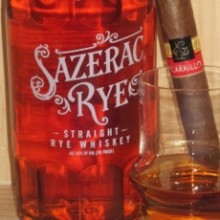
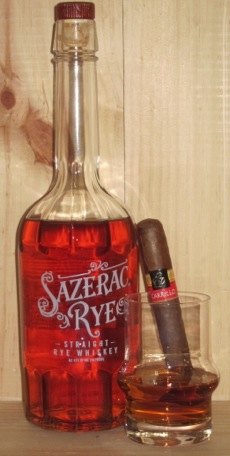 Sazerac, along with Rittenhouse and Bulleit, are three affordable rye whiskies ($20-30) that are staples at my bar. Unlike Sazerac 18 or the highly sought-after Buffalo Trace Antique Collection, standard-issue Sazerac Rye (sometimes called “Baby Saz”) is distilled at the Buffalo Trace Distillery and aged six years before being bottled at 90-proof. Another member of the Buffalo Trace Antique Collection, Thomas H. Handy Sazerac Rye, is essentially a barrel-proof limited release of Baby Saz.
Sazerac (along with Handy) is reportedly made with a mashbill of 51% rye, 39% corn, and 10% malted barley. It features a bright amber color and with a nose brimming with fresh, floral notes and hints of licorice. On the palate Sazerac shows a nicely balanced combination of buttered popcorn, toffee, and clove with bit of pepper. The finish has caramel and baking spices.
Is Sazerac Rye going to blow your mind with its amazing-ness? Probably not. But it’s very enjoyable and an obvious standout value at $25 a bottle. It’s a versatile rye that’s plenty good enough to be sipped straight (as I recommend), but you wouldn’t be heart-broken if your buddy throws a bunch of ice cubes in it or decided to mix it into a Manhattan.
Naturally, it goes great with a fine cigar. I’d recommend a balanced, medium-bodied smoke. Specific recommendations include the Arturo Fuente King T Rosado Sun Grown, Illusione Epernay Le Matin, or the Tatuaje Black.
If you’re a rye fan who hasn’t tried Sazerac Rye, you’re missing out. There are very few better ways to spend $25 on a whiskey of any kind.
photo credit: Stogie Guys
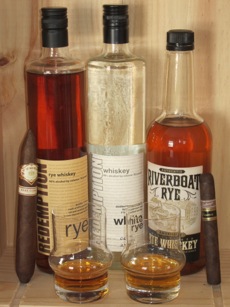 If the Lawrenceburg address sounds familiar, it should. It’s 95/5 rye/malted barley mashbill is the basis of a number of ryes on the market: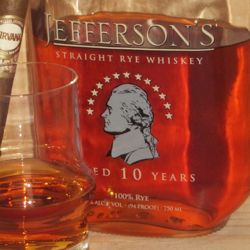
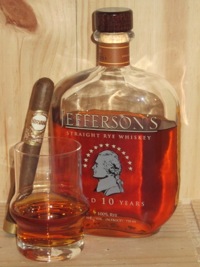 But most Canadian whiskey doesn’t meet the “straight rye” designation since the rye is often mixed with neutral grain spirits (basically vodka), to produce the low-proof, smooth-drinking Canadian whiskey you might be familiar with. And yet lots of rye is made in Canada, which caught the eye of some American whiskey sellers as old aged rye has gained a larger and larger following with American whiskey fans.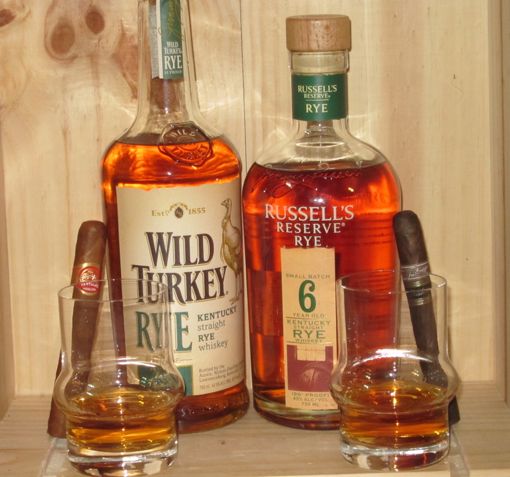
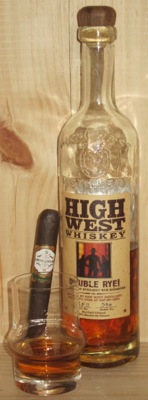 High West distills
 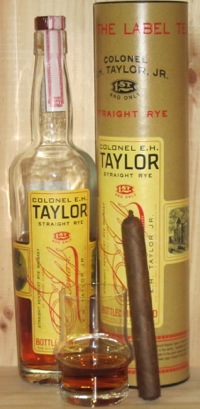 Taylor is one of the founding fathers of the bourbon industry and one-time owner of what is now called Buffalo Trace Distillery. He’s largely known as a proponent of the Bottled-in-Bond Act of 1897, which ensured quality standards for “bottled-in-bond†bourbon (back then many bourbons were mixed with things like tobacco, turpentine, or other horrible additives to appear more aged than they were). But rest assured the Feds weren’t just worried about the quality of our bourbon. The law also ensured that the federal government could more easily collect taxes.
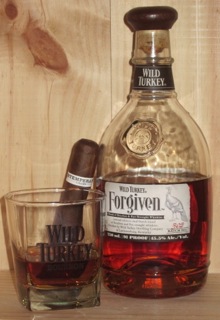 According to Wild Turkey, distillery staff “unwittingly mingled very rare, high-proof rye with perfectly-aged bourbon” (78% 6-year-old bourbon and 22% 4-year-old rye, to be more specific). Given that they named the result “Forgiven,” I guess we can assume the staff that made such a horrible error hasn’t been fired.
 Patrick Ashby
Co-Founder & Editor in Chief
Patrick Ashby
Co-Founder & Editor in Chief Patrick Semmens
Co-Founder & Publisher
Patrick Semmens
Co-Founder & Publisher George Edmonson
Tampa Bureau Chief
George Edmonson
Tampa Bureau Chief