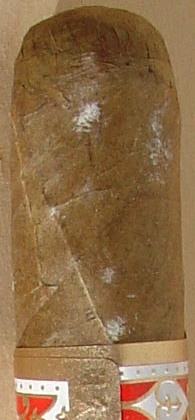
Archive | Tips RSS feed for this section

Stogie Tips: Cigar Gadgets for the Golf Course

2 Sep 2008

For my money, there are few places where cigar smoking is a better accompaniment than on the golf course. I may not be playing scratch golf, but with an excellent cigar and the panoramic views of a nice course it is easy to shake off a bad three-putt.

And entrepreneurs are not oblivious to the fact that golf and cigars go so well together, especially now that the golf course is a rare public place where smoking is largely still welcomed. To cash in on this niche, there are a host of devices on the market that are specifically designed to hold your stogie on the golf course. Over the last few months I’ve played over a dozen rounds with four such devices.

Puff Caddie (left) and Cigar Wedge (right)Heater Holder: I first mentioned the Heater Holder over a year ago and praised the device for its simplicity. The small metal cigar holder attaches to the snaps atop golf bags that are normally designed to secure a rain cover. The basic version sells for $25, but other models are available in silver, sterling silver, and gold for those looking for a little more flash. It also features a chain that attaches to your bag, so that you won’t lose the Heater Holder if you knock it off the snaps. The device is perfect for those who prefer to walk the course, but isn’t as useful if you strap your clubs to the back of a motor cart.

Cigar Wedge: In true gadget form this cigar holder resembles a golf club, only with a V-shaped top that will cradle your cigar. Don’t try and hit a golf ball with the plastic head because it or the wooden shaft will likely shatter, but that’s OK because the $25 Cigar Wedge won’t count against your 14-club limit. If your experience is anything like mine, other players in your foursome will take notice of this gadget, which is kind of the point of gadgets anyway, isn’t it?

Puff Caddie: Like the Cigar Wedge, one end of this device is embedded into the ground while the other metal top provides a stable platform for your cigar to rest on while crushing your drive or lining up your putt. The Puff Caddie is made with a modified actual steel golf shaft with a real grip near the top just below the cigar platform. The steel shaft means it is easy to push into even the firmest tee box. Also, like the Cigar Wedge, it is a sure conversation starter.

Hole in One Cigar Holder: By far the most affordable of the group was the Hole In One, which can be had for under $5. The simple plastic device resembles a golf ball on a tee, only with a hole in the middle for you to place your stogie through. I had to learn the hard way that when placing your cigar in the Hole In One, you should be sure to place the head through, otherwise you’re likely to knock the ash off. Also, don’t bother with the huge ring gauges as I’m not sure that anything larger than 56 could fit. Still, this has all the characteristics of a successful gadget; sure it’s functional, but it also reminds you that it is a gadget designed for the golf course, form and function as it were.

All in all, none of these gadgets are must buys for the average stogie-puffing hacker, and quite frankly, given that the only requirement for a cigar holder for golf is something that will keep your cigar off the chemical-filled grass, two tees will work just as well.

But gadgets are all about flash, and each of the four devices has some in its own way. So if you’re looking for flash (perhaps to distract from your triple-digit golf score) you may want to pick one up.

If you like to walk the course I’d go with the Heater Holder. If your back already aches from teeing up your balls and marking your putts, go with the flashier Puff Caddie or Cigar Wedge. If you’re looking for function at a value, pick up the Hole In One.

Most of all, remember to use your cigar gadget proudly. After all, it’s a great conversation starter. And when you do strike up a conversation about your cigar gadget with a fellow golfing cigar enthusiasist, make sure to tell him that you read about it on StogieGuys.com.

Patrick S

photo credits: Stogie Guys

Stogie Tips: A Good Beginning

28 Aug 2008

Taking up cigars is exciting. So much to enjoy, so much to explore. But it can also be an intimidating time, what with all the new lingo, aficionados, and a seemingly endless range of options.

If you’re a new smoker, my first recommendation is to take a deep breath (before lighting up) and just relax. This is, after all, cigar smoking. Not rocket science, brain surgery, or even changing the oil in your car. About the worst thing that’s likely to happen is you’ll mess up a cigar or two, and while that might be a shame, it’s certainly not a crime.

From time to time, Stogie Guys will specifically address new cigar smokers. And, who knows, maybe a grizzled vet or two will stumble across something new as well. Here’s our first round of tips:

Get a Little Salty: You need to make sure your hygrometer is properly calibrated to monitor the humidity level where your cigars are stored. There’s really only one way: the salt calibration test. Everything you need to know to perform this simple, effective operation is here.

Light Right: Wonder if you’re clipping and lighting your cigar correctly? Let Doc Stogie entertain and enlighten you with his demonstration of the proper techniques at Stogie Fresh TV, and also read our tip on choosing the proper cutting tool.

Talk is Cheap: You probably have a great cigar resource nearby: the owner of your local B&M. The next time you stop by strike up a conversation. It’s a particularly good time now because you can ask what’s new from IPCPR. Describe what you like and ask for recommendations. A good owner can greatly increase your knowledge and enjoyment.

Caveat Smoker: Sooner of later, nearly every cigar smoker is presented with the “opportunity” to buy Cuban cigars. Warning: They are almost unquestionably counterfeits. Back in 2006, Patrick S. detailed how you can avoid getting stung.

Fancy or Plain: There’s nothing wrong with expensive lighters, high-priced cutters, and other upscale cigar accouterments. If you like them, go for it. But sometimes you can get Porsche performance at Hyundai prices. Read Patrick A.’s take on a terrific butane torch lighter for under $3.

George E

photo credit: Stogie Guys

Stogie Tips: Enhance Your Smoking Experience

13 Aug 2008

Smoking a cigar is pretty simple. Ignite. Draw. Exhale. Of course, there’s quite a bit more that can enhance the experience, from pushing smoke through your nostrils to choosing a complementary drink. Here are a few suggestions you might want to explore if you haven’t already given them a try.

Swirl the smoke. First, I recommend you try this one when you’re alone. Otherwise, you’re liable to look a little silly. Fill your mouth with smoke. Swirl it around, expand and collapse your cheeks, force the smoke into every area of your mouth. Hold on to the smoke longer than usual. Engaging the smoke in this manner will almost certainly reveal new flavors. When I did this recently with a cigar I smoke fairly often I got a heavy taste of nuts that I had barely noticed before.

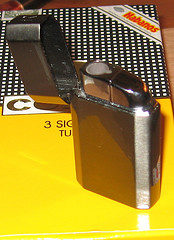
Concentrate on physical. Really examine the cigar from the moment you decide to smoke it. Note everything you can about the wrapper, from veins and color variations to how well it’s twisted and applied. Check the cap. Look at the foot and see if you can tell how the filler leaves were prepared (rolled or folded), whether there’s adequate space for the burn, and varied hues that indicate different tobaccos. As the cigar burns, pay attention to the cone and the ash. A well-rolled cigar is truly something to behold. Concentrating on the aesthetics will increase your appreciation for the extraordinary craft involved in bringing cigars to market.

Look for certain flavors. Read several reviews of a cigar you haven’t smoked and note specifics about flavors the writer encountered. You might want to look for a cigar with a flavor profile unlike those you routinely smoke. Keep your notes handy as you smoke and stay alert for those flavors. You may find them or you may not. But by heightening your awareness at the start you’ll almost certainly get a deeper taste experience.

Try three. Choose a cigar you enjoy and smoke it the next three times you have one. Look for similarities and differences in each one, whether physical or in the taste. Again, this heightens appreciation for the individual nature of hand-rolled cigars and, frankly, the amazing ability to achieve significant consistency in quality sticks. You can also learn by smoking different sizes of the same cigar in succession.

George E

photo credit: Flickr

Stogie Tips: How To Properly Cut A Cigar

23 Jul 2008

While enjoying a fine stogie is certainly more of an art than a science, there a few essential skills you should master in order to get the most out of the experience. While much of what makes cigars so great is the relaxed, ceremonial nature of smoking, when it comes to cutting your cigar, that artistry takes a back seat to function. The goal is simple: a cut that best allows you to enjoy the cigar.

The cut that is best will enhance the flavors of the cigar by regulating the draw and appropriately focusing the flavors on your palette.

It’s worth pointing out that when it comes to cigar cutting, there are many different tools. Some people use specially-crafted cigar scissors, some use a sharp knife, a cigar punch, a V-cutter—some even use their teeth. But the most common tool, by far, is the guillotine-style cigar cutter, which comes in both the one blade (single) and two blade (double) varieties.

Here are a few general tips on deciding what tool to use:

  • ● Cigar scissors are quite elegant, but tend to require a bit more skill and precision than other cutters. Also, while a dull blade hurts any cutter, scissors become particularly difficult if the blades aren’t ideally sharp and calibrated.
  • ● Guillotines are the most popular cigar cutters with good reason. They are easy to use and are the most versatile. A double blade guillotine will usually prevent the pinching and tearing that can occur with a single blade cutter. Also remember to use firm, consistent pressure to get a clean cut.
  • ● V-cutters can be perfect for cigars with small ring gauges, since they increase the surface area of the cut.
  • ● Punch cutters are ideal for stogies with tightly-packed fillers because they can ease the draw, but a punch cutter is almost useless on a belicoso.
  • ● If you find yourself without a cutting tool, skip your teeth and use your fingernail. A relatively precise cut can be made on non-torpedo cigars by using your nail to slice a circle in the wrapper and binder, which can then be lifted off to expose the filler.
  • ● Knives are rarely a good idea, but if you are going to use one, use it to cut like you would your fingernail (see above).

Where to place your cut is another variable in the science of cigar cutting. With a guillotine cutter, take the head of the cigar (that’s the uncut end) and position it so the blade will enter the stogie just above the shoulder (where the cigar stops being round). If you’re planning to smoke a torpedo, a good rule of thumb is to slice off about half an inch, but it really depends on how much you want to focus the smoke with a smaller cut, versus how large you need the cut to have a draw that isn’t difficult.

Finally, remember to try out different cutters. While a cutter can’t actually improve a cigar, the cut can either bring out the best of a cigar or ruin it.

Patrick S

photo credit: Flickr

Stogie Tips: Pick Up a Ronson JetLite or Three

24 Jun 2008

As I wrote in January when I recommended readers check out the Zippo Blu lighter, “every cigar enthusiast should have at least one good butane lighter” because “certain situations just call for a burst of clean-burning flame.” All this from the same old-fashioned guy who repeatedly extols the virtues of wooden matches.

As much as I enjoy the novelty of my Zipp Blu, I have to admit it’s a bit finicky. Cold weather seems to diminish its performance, the flame requires a short recharge break before it will ignite again, and replacing the flint every month isn’t all that fun. That’s why, time and again, I find myself reaching for my Ronson JetLite instead.

This product shouldn’t be unfamiliar to regular StogieGuys.com readers. We first recommended the refillable, windproof lighter in December 2006 and have mentioned it off and on since. But many of the enthusiasts I meet still have never heard of this particular lighter and are always amazed when I tell them about it. In any event, I thought a full post was merited for several reasons.

First, mine has been working exceptionally well. Flame adjustment is a cinch and I haven’t run into the same problems that often befall many other butane lighters—including inconsistency and a general lack of durability. Granted, I haven’t owned a Ronson for a terribly long time (George E was nice enough to send one up from Florida a few months ago), but I’ve really put it to the test.

Second, and perhaps most importantly, the JetLite is surprisingly inexpensive. It sells for under $3 at Wal-Mart (look for them at the register that displays goodies like cigars, cigarettes, and lighters). This is an important quality in an item that often gets lost between seat cushions or “accidentally” commandeered by fellow smokers.

Finally, this lighter proves you don’t need to spend hundreds of dollars on fancy cigar lighters and other gadgets to get the most out of your smoking experience. You just need to be informed and prepared.

So go ahead and pick up a few Ronson JetLites—for your home, your car, your golf bag, etc. You never know when or where you’ll need one, and you can certainly afford to have several on hand.

Patrick A

photo credit: Stogie Guys

Stogie Tip: Smoking and Smiling in St. Thomas

16 Jun 2008

CHARLOTTE AMALIE, ST. THOMAS — I am happy to tell you from firsthand experience that the capital and largest city in the U.S. Virgin Islands makes for an absolutely wonderful vacation. That is, of course, if you’re into gorgeous beaches, terrific seafood, unyielding sunshine, and a laid back atmosphere that almost gives Jamaica a run for its money.

I happen to enjoy all of those things, and I’m having an unforgettable time catching up with my family in this Caribbean paradise. But I thought I’d take a quick break in the shade and share a few cigar-related travel tips about St. Thomas in case you’re planning a trip. And if you’re not, this photo I snapped a few days ago might entice you to consider the journey.

First thing’s first: St. Thomas is a wonderful place to smoke cigars. Finding a nice spot under a palm tree midday is as easy as finding sand in a desert—and the view is likely to be spectacular. If you didn’t bring your own cooler, beachside bars are happy to pour your favorite libation or any of their frozen specialties.

When you need a break from the sun and decide to head indoors, cigar smoking is likely to be welcome there too, especially since most bars and restaurants are of the open air variety. Unlike the British Virgin Islands, which enacted a smoking ban in 2006, St. Thomas continues to embrace freedom of choice and property rights. As a result, “No Smoking” signs are awfully hard to come by.

This, I think, is all part of the island’s easy-going lifestyle, which includes a widespread tolerance of open bottles in automobiles, drinking in public, and marijuana. Service will be slow at restaurants but, for reasons beyond my understanding, taxi drivers are excessively speedy on the island’s narrow, winding roads.

While St. Thomas is an exceptional place to smoke cigars, it is not a great place to buy them. Cubans are hard to come by (remember: it’s still the U.S.), Cuban counterfeits are readily available, and premiums will cost quite a bit more than at your local B&M. Since nonsmokers are more willing to try cigars at such a beautiful locale, prices are high.

So what’s a stogie enthusiast to do on such a smoker friendly, buyer beware island? Bring your own from home. I packed a hefty bundle for my father and I and that proved to be the right strategy. And since you only go through customs on the way back to the mainland, feel free to bring some Cubans in your checked luggage—just be sure to smoke ’em before your return flight.

Patrick A

photo credit: Stogie Guys

Stogie Tips: Winning the War on Mold

9 Jun 2008

Ask 100 cigar aficionados to name the deadliest predator known to the hobby, and at least 75 of them will identify the dreaded tobacco beetle. That pinhead-sized critter, with its appetite for destruction and its prodigious reproduction rate, is certainly a nasty pest. And just the thought of finding tiny worms boring through your collection of premium smokes is enough to send shivers down your spine.

But there’s a much more insidious – if a bit more prosaic – enemy that is far more likely to devour your stogies. It’s common mold. And if you’re not careful, an outbreak is not just possible; it’s probable.

So how do we know our enemy when we see it? For one thing, mold is almost always going to be a white, green, black, or even blue substance. It’ll smell like mildew – not unlike a dirty gym sock that’s been sitting in the laundry pile for a few days. It will brush off of the cigar when rubbed, but will leave a stain or discoloration in its wake. It will start as small discolorations here and there, but can grow into a thick, fuzzy substance. If the infestation is particularly severe, there might be some mold coating the sides of bottom of your humidor. Mold can spread through both direct contact with an infected stick, or through airborne spores – so it’s easy to see why an outbreak can gradually become a serious issue. If left unmolested, the mold will eat through your sticks and even the cedar lining inside your box.

What’s to be done? The first, and always the best, solution is prevention. Keeping all traces of mold out of your humidor at all times is impossible in certain climates. But you can prevent major outbreaks by keeping humidity levels at the low end of ideal (say, 65-69 RH) and/or never letting humidity climb too much beyond 70 RH (which is good policy anyway). Also make sure that your sticks are getting some air circulation every now and then. If you’re keeping cigars in an airtight container, such as Tupperware, make sure you open the container at least once a month – and preferably more often – to let some fresh air in. Always used distilled water when filling and refilling your humidification devices. Doing so won’t guarantee an end to mold, but it’ll provide much better odds than tapwater.

If you’ve already got some mold in your humidor, assess the extent of the damage before acting. If the mold seems to be localized to just one or two sticks, and if the spots seem small and easily brushed off, simply take those sticks out and plan to smoke them soon. For good measure, sort through your remaining stash for any additional signs of infection. If the mold is widespread – say, coating large portions of individual cigars, or clinging to the walls and floor of your humidor – you need to take more decisive action. First, remove and dispose of the infected cigars; they’re not smokeable and are of no use to you. Next, quarantine the unaffected sticks while you carefully remove the mold from your cedar with a hand vacuum or cloth.

Once the mold is gone, wet the tip of a cloth or Q-tip with isopropyl alcohol, and lightly rub the interior of your humidor to kill off the remaining (invisible) spores. Too much alcohol can damage the cedar lining, so rub/tap lightly and do not drench the cedar. A proper application should dry almost immediately. When it does, rub down the wood (very lightly) with a bit of warm, distilled water. Dry everything very thoroughly, and allow the humidor a few days to air out. During this time you should keep your cigars quarantined before reintroducing them to the humidor. Once the cigars are back in the humidor, monitor everything very closely for a few weeks to make sure no mold has reappeared.

Note that not every whitish coating in your cigars is mold. In fact, a grayish/whitish coating of dust on the skins of your smokes is probably plume (or bloom), an accretion of oils on the wrapper due to age. It’s considered a sign that everything is in good working order, and that your sticks are maturing nicely. Plume will brush off a cigar easily and will not discolor the wrapper; white mold will leave a mark.

Jon N

photo credit: Keepers of the Flame