Search results: 2006/05/stogie-guys.html

Commentary: Forming Cake in a Pipe

19 May

First, I’d like to apologize for the lack of pipe content in the last couple weeks (you may recall my previous articles on why I smoke a pipe, tools of the trade, beginner pipe blends, and how to properly pack a pipe). I have been in a swamp of finals and term papers finishing up my first semester at graduate school, and I just have had no time to write anything about pipes, much less to smoke any. But, the semester is over, summer is here, and I’m back to smoking! So today we will talk about building cake in a pipe.
Pipe

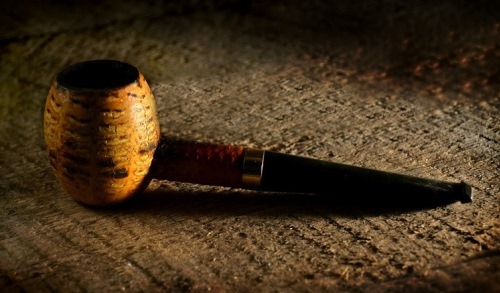
So, first off, what is cake? Cake is the term for the carbon build-up left in a pipe after you smoke a bowl of tobacco. Cake is a good thing. You want a nice, even cake lining the bowl of your pipe. This will help keep the smoke cool, and it will also lend a particular flavor to your smoking, depending on what types of tobacco you’ve built that cake with.

A very important thing to remember from this definition is that we want cake to be even. If your pipe’s cake gets too thick, you can crack the pipe and permanently break it. So, anytime you think it might be getting too thick, take the scraping part of your pipe tool and just break it down. Exactly how much cake one wants is up to debate, but the general rule I’ve heard is about the thickness of a dime.

How does one build cake? There are a lot of tricks. Some will tell you to fill your pipe with honey or jelly so that the ash will stick to it, others will recommend plugging the pipe somehow, etc. All of these tricks have one thing in common: They are unproven, and risky. The only way to reliably build cake is to smoke your pipe, evenly, to the bottom of the bowl.

The method I use to break in a pipe takes quite a long time, but it’s a great way to do so, and it ensures you get a consistently even cake. All you’re going to do is pack about a quarter of your pipe and smoke it, all the way to the bottom of the bowl. If you cannot finish all the tobacco in one sitting, just place the pipe down and come back to it. After you’ve done maybe six or eight bowls at a quarter full, bump it up to a half bowl, and, again, smoke six or eight bowls. If you keep doing this, afterwards jumping to 3/4 of a bowl and then finally full bowls, you’ll experience a cool, sweet, broken-in pipe.

If you have any questions about how to build cake, if you have any tobaccos that you think perform particularly well for cake-building (I prefer a burly blend like Prince Albert), or if you have any other experiences or stories about breaking in a pipe, let me know.

–Joey J

photo credit: Flickr

Quick Smoke: Tatuaje Black Lancero

18 May

Each Saturday and Sunday we’ll post a Quick Smoke: not quite a full review, just our brief verdict on a single cigar of “buy,” “hold,” or “sell.”tatuaje-black-sq

tatuaje-black-lancero

The Tatuaje Black Lancero has come in a few different packages, from “The Old Man and the C” (culebra/lancero pack) to a New York/New Jersey retailer exclusive (a show of support for the region in the wake of Superstorm Sandy). This particular one comes from the recently released Tatuaje Lancero sampler, featuring 10 different Tatuaje blends each in a classic format (7.5 x 38). The result is a creamy, nuanced, medium-bodied cigar with nuttiness, cocoa, and just a bit of spice. I always measure Tatuaje Blacks against the original ceramic jar release, which is one of the finest cigars I’ve ever smoked. Against that high bar, this doesn’t quite stack up. Still, it’s a well-made, enjoyable cigar that’s easy to recommend.

Verdict = Buy.

–Patrick S

photo credit: Stogie Guys

Quick Smoke: Drew Estate Liga Privada Único Serie Velvet Rat

17 May

Each Saturday and Sunday we’ll post a Quick Smoke: not quite a full review, just our brief verdict on a single cigar of “buy,” “hold,” or “sell.”

Velvet Rat

While Drew Estate crafts many excellent cigars, in my opinion there is none finer than the elusive Velvet Rat (one of only a few cigars to ever receive our five-out-of-five rating). Yes, it’s hard to find. Yes, it’s expensive at about $14. But this Connecticut Broadleaf-wrapped beauty is a lighter, creamier, more harmonious blend than the famed Liga Privada No. 9. I love me some Liga, however the Velvet Rat (6.25 x 46) elevates the blend to a new level. Expect Drew Estate’s trademark draw with notes of coffee bean, cocoa, pepper spice, syrup, and caramel. Think moist chocolate cake.

Verdict = Buy.

–Patrick A

photo credit: Stogie Guys

Stogie Guys Friday Sampler No. 383

16 May

As we have since July 2006, each Friday we’ll post a mixed bag of quick cigar news and other items of interest. Below is our latest Friday Sampler.

FDA1) Several days ago, amid little attention and without fanfare, the White House finally responded to the petition that was submitted to two years ago asking the president to instruct the Food & Drug Administration not to regulate cigars. Many of you likely signed this petition. As you may recall, any petition that collects 25,000 signatures in 30 days is owed an official response. The answer, penned by Mitch Zeller, director of the FDA’s Center for Tobacco Products, predictably changes nothing. Zeller says “it’s important to remember that regulating a tobacco product isn’t the same as banning it,” however he fails to mention that, without an exemption for premium cigars, the creation of new cigar blends will almost certainly grind to a halt. The deeming document the FDA recently issued with its proposed rules is still in effect—though the document provides more questions than answers—and the public now has the opportunity to formally provide comments before final regulations are issued. If you’d like to participate in the comment process to ensure your voice is heard, you can do so here.
2) National shipments of José Blanco’s Señorial, the inaugural blend from his new Dominican-based Las Cumbres Tabaco company, are scheduled for June 9. The blend follows Blanco’s departure from Joya de Nicaragua, where he crafted the CyB brand. Señorial will be available in five sizes ranging from $7 to $11 apiece. It will only be sold at tobacconist shops, not online. The cigars are made by Blanco’s cousin, Jochi Blanco, at Tabacalera La Palma.

3) Inside the Industry: Drew Estate announced yesterday that Willy Herrera has been named “master blender.” Herrera will not be in charge of La Gran Fabrica Drew Estate; rather, in this newly created role, he will maintain current blends, produce new ones, and report directly to Jonathan Drew. “Herrera was originally recruited by Drew Estate to create a signature brand illustrating his Cuban heritage and ‘Cubanesque’ blending style,” reads a press release. “After working with him over the past three years in Nicaragua, Drew Estate determined he was suited to lead their blending team. This represents a major change for Drew Estate, marking the first occasion where someone of Cuban descent has held a top-level position at the company.” The announcement comes at the heels of Nick Melillo’s departure.

4) Around the Blogs: Stogie Fresh fires up the Davidoff Colorado Claro. Cigar Inspector inspects Nestor Miranda Grand Reserva. Nice Tight Ash checks out Ezra Zion Tantrum. Stogie Review reviews Hex. Leaf Enthusiast smokes the EPC Inch Short Run 2014.

5) Deal of the Week: Casa Magna has won some pretty high accolades, which makes this deal particularly noteworthy. Buy a box ($79 and up) from any of the five Casa Magna lines and you get a five-pack of Casa Magna Perfectos thrown in for free.

–The Stogie Guys

photo credit: Stogie Guys

News: New Releases ‘Area 9’ and ‘Sinister Sam’ from CAO

15 May

You can pretty much bank on CAO introducing a new line at the upcoming IPCPR Trade Show, but don’t expect any details on that cigar for a while. Still, right now there are some limited release blends coming out from the CAO team at General Cigar.

I was able to catch up with brand frontman and chief blender Rick Rodriguez at an event yesterday to get the scoop on the new CAO offerings, as well as clear up some misinformation that has been circulating.

CAO-Area-9

Area 9

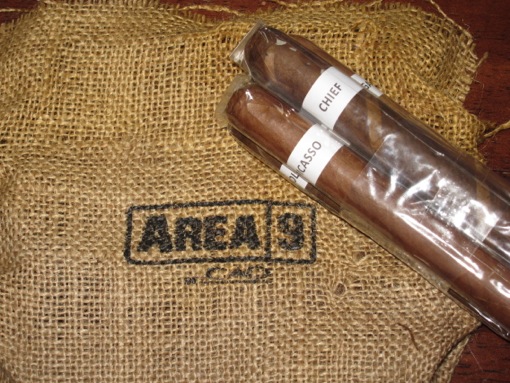
Out now is CAO Area 9, a selection of cigars from CAO’s vast archives. The cigars consist of old blends that have been aging at CAO’s Estelí factory.

Included are cigars (some released a long time ago, others have never been released) that were made in the factory before it came under the General Cigar umbrella, along with possibly some post-General Cigar test blends. Some may be original release CAO cigars like Brazilia, America, Vision, or others that were made prior to 2007. Others include special blends that never made it to market, including, I’m told, one for a project CAO briefly had with Kid Rock that never came to fruition.

The cigars come in a bundle of six tied up in a burlap sack (though there are more than six Area 9 cigars). They have plain white bands with cryptic names like Picasso, Chief, Liga M35, Ciprus, Parabola, and Rica, with no details on their origins. In early June a special section of the CAO website will let consumers look up more details on the cigars in their Area 9 bundle. For now, the Area 9 cigars are event-only cigars that are included as a promotion for those who purchase a box. But there are hopes that it may eventually be available for sale.

Sinister Sam

Another new cigar coming before the late July Trade Show is Sinister Sam, a one-off blend along the lines of Hurricane and Angry Santa. Though, in a way, it is most similar to the Brazilia Carnivale.

While the Carnivale was Rick Rodriguez’s twist on the original Brazilia blend he inherited, Sinister Sam is his own take on the CAO America blend, which forms the base for the one-size blend.

“Sam” is a reference to Uncle Sam (hence a twist on CAO America). And contrary to rumors, there was never any plan to release it under the name ‘Son of Uncle Sam,’ a name that at most was briefly kicked around in a brainstorm session before being quickly rejected. Look for it to come out in June.

–Patrick S

photo credits: Stogie Guys

Cigar Review: CroMagnon EMH

14 May

Last year, two of my favorite cigars happened to be Abaddon and Ouroboros, both of which are made for Blue Havana, a tobacconist in the Lakeview neighborhood of Chicago. They are crafted at Fabrica de Tabacos Nica Sueño in Estelí by Skip Martin of RoMa Craft Tobac.

CroMagnon EMHI was so impressed by these cigars that I decided to better acquaint myself with RoMa Craft and its core lines: CroMagnon, Intemperance (EC XVIII and BA XXI), and Aquitaine. If you haven’t already done so, you should do the same. After all, Skip Martin’s Estelí operation may be small with limited production, but he’s undoubtedly making some of the best cigars in the world.

By way of background, RoMa Craft was born after the Hava Cigar Shop and Lounge in Galveston, Texas, was decimated by Hurricane Ike in 2008. At first it was an online version of the old brick-and-mortar store, but distribution and cigar production grew. Today, while RoMa Craft’s production is nowhere near the levels of its neighbors Drew Estate or Joya de Nicaragua, the outfit is nimble, efficient, and turning out excellent smokes.

I visited the factory last month to learn about cigar blending (and sample some of Martin’s rum collection). There, I received a sampler of RoMa Craft smokes, including the CroMagnon EMH, a robusto extra (5 x 56) that’s short for “Early Modern Human.” Like the Cranium (6 x 54) my colleague reviewed in 2011, EMH has an oily Connecticut Broadleaf wrapper around a Cameroon binder.

The long-filler includes three types of Nicaraguan filler tobaccos. They hail from Estelí, Condega, and a small farm on the Honduran border. “This third leaf, a Ligero, brings a strong, smoky, savory flavor to the blend,” according to the RoMa Craft website. “When combined with the mildly sweet characteristics of the Broadleaf Maduro wrapper, the exotic bite of the Cameroon binder, and the clean finish of its Viso and Seco companions, the blend delivers the precise, deep, rich tobacco flavor we wanted to present…”

In my own experience, smoking the sample I received from Martin and several others I purchased myself, the EMH’s hearty, musty, leathery pre-light notes transition to bold, full-bodied flavors ranging from pepper and savory char to cocoa and espresso. The texture is dark and chalky. Still, I agree with my colleague that the CroMagnon EMH is “more than just a club of strength across the palate.” There’s depth and complexity, some of which can be attributed to the sweetness of the Cameroon binder. And it certainly doesn’t hurt that the combustion qualities—burn, draw, ash, and smoke production—are all up to snuff.

This slow-burning power-bomb runs about $8, which is a very fair price for this level of quality. If given the choice between the two, I prefer the slightly cheaper Intemperance BA XXI. But the CroMagnon EMH is an outstanding selection if you’re looking for body and impact. In my book, it’s worthy of an admirable rating of four stogies out of five.

[To read more StogieGuys.com cigar reviews, please click here.]

–Patrick A

photo credit: Stogie Guys

Commentary: Questions for the FDA About the Proposed Regulation of Cigars

13 May

The Food & Drug Administration (FDA) is now seeking comments on its deeming document to regulate cigars under the Tobacco Control Act. Comments are due by July 9 and can be submitted here. (We’ll be putting together some suggested issues to raise in your comments as we get closer to the deadline.)

FDA-cigars-large

But as I thought about putting together my comments, I realized there are many significant issues that are almost impossible on which to comment. There are so many questions raised in the deeming document about what the proposal would even look like if implemented. It’s just one of the reasons the FDA should grant the Cigar Association of America extension.

To that end, here are just a few questions the FDA should answer so the public can submit informed comments about the proposal, not just ones based on an overly vague proposal.

What counts as a new cigar?

Under the FDA proposal, new cigars (or, under Option 2, new cigars that don’t meet the definition of a “premium cigar”) must receive the approval of the FDA before they can be sold. Is a new line of five sizes of the same blend one new product or five? Is an annual release of a cigar a new product, or just the same as a previous one? What if the factory where a cigar is made changes, or the sources of tobacco change? Does that make a cigar new?

Does the FDA even have the capacity to regulate cigars?

So far the FDA has approved or denied only 34 out of roughly 4,000 pending applications for new products. Given its current budget constraints, does the FDA have the capacity to rule on the hundreds or thousands (depending on the definition of a new cigar) of new cigars that are released in a given year?

What would be necessary to list the ingredients of a cigar?

One of the rules cigars would have to meet is a “required submission of ingredient listing” to the FDA. Is 100% tobacco leaf adequate? Would manufacturers be required to list the types of tobacco and where they were grown?

What constitutes the “distribution of free samples”?

The proposal includes a “prohibition on the distribution of free samples,” but would that include only samples to consumers? What about free samples at a trade show, or to professional reviewers? Would a buy-one-get-one-free promotion violate this prohibition? Would this only apply to manufacturers, or also to professional tobacconists who might want to give a favorite customer a new cigar to try for free?

What qualifies a cigar as containing “primarily long-filler tobacco”?

The FDA proposal states that under its option for a premium cigar exemption a cigar could qualify if it “contains primarily long-filler tobacco.” Would a Liga Privada Papas Fritas count? It uses clippings from the $10+ Liga Privada No. 9 cigar, but also some long-filler. Would 51% be adequate and, if so, how is that measured?

What do you mean by “characterizing flavor”?

The FDA proposal states that under its option for a premium cigar exemption a cigar would only qualify if it “does not have a characterizing flavor other than tobacco.” Would using tobacco aged in rum barrels (a common practice) be a violation? Would using betunes with wine or curing with aromatic woods like maple, hickory, or oak be a “characterizing flavor”? What about aging a finished cigar in cedar? (The FDA has been asked before about cedar aging and has refused to answer.)

Where did the $10 price floor come from in your option for a premium cigar exemption and how is it applied?

We’ve already covered the problems with the $10 number before. Did this number come from any government or scientific sources, or is it completely random? Also, how is “a retail price (after any discounts or coupons) of no less than $10 per cigar” determined? If the suggested retail price is $10 but it is sold by one retailer for less, is that a violation? And, if so, who violated the rule: the manufacturer or the retailer?

–Patrick S

photo credits: Stogie Guys