Archive by Author

Stogie Guys Friday Sampler CXXXIII

20 Mar 2009

In our ongoing effort to make StogieGuys.com as entertaining and informative as possible, each Friday we’ll post a mixed bag of quick cigar news and other items of interest. We call ‘em Friday Samplers. Enjoy.

Capitol Building in Lansing, MI1) According to an IPCPR press release, Michigan politicians are mulling a doubling of the state’s tax rate on tobacco products to 64 percent of the manufacturer’s wholesale price. The move would be disastrous for the B&Ms, producers, and distributors who already must struggle to survive the looming federal SCHIP tax hikes. All this comes as the anti-tobacco campaign to impose a statewide smoking ban is revived. “It should be left up to individual business owners to decide whether or not they allow smoking on their premises,” said Chris McCalla, legislative director of IPCPR. “Their employees and customers can then decide whether to work there or patronize them.”

2) In more positive news, a move to prohibit tobacco at all North Dakota college campuses failed to muster the support it needed from the state Board of Higher Education. And Kansas lawmakers balked on a statewide bill, likely deferring discussions of a smoking ban until 2010.

3) Inside the Industry: Toraño is releasing a new version of its Exodus line, the Liga-H blend, that will come in a five-cigar sampler with special versions of the original two Exodus lines. Former employees of high-end cigar accessory maker Colibri protested as  the bankrupt company’s assets were auctioned off. Rocky Patel’s Sumatra-wrapped Spring Collection hits the shelves of limited cigar stores soon.

4) Around the Blogs: Stogie Review reviews the Camacho Candela. Keepers of the Flame lights up a Tobacco Baez. Cigar Inspector inspects the Illusione 68. Stogie Fresh smokes a Los Blancos Sumatra.

5) Deal of the Week: Need (another) humidor filled with great cigars? Let us suggest this deal which includes a 50-count humidor and 25 big name smokes. Included are 5 cigars each by Don Pepin, Graycliff, Gurkha, and Rocky Patel. Compared to what you might pay for everything alone, you’re getting over 50% off plus free shipping. Grab yours here.

The Stogie Guys

photo credit: Flickr

Stogie Tips: Fill ’er Up

19 Mar 2009

If you go looking for cigar bargains in these tough economic times, you will undoubtedly come across some sticks labeled “short filler,” “mixed filler,” “sandwich,” or “Cuban sandwich.” You may have to hunt for the description, though. While manufacturers love to tout “long filler,” they often aren’t nearly as eager to proclaim any of the other terms.

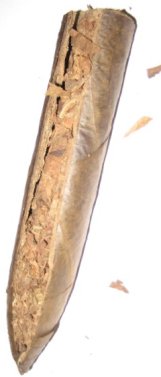
Short FillerHere‘s what the terms generally mean:

Long filler involves leaves that are folded or rolled to create the inner part of the cigar, which comprises the majority of the stick. This is where specific leaf sections and different leaves are combined to create the blender’s desired taste. I’ve never heard of a premium, hand-rolled cigar that is anything other than long filler.

Short filler is the opposite. Small pieces of tobacco, and occasionally chopped stems, are secured inside the binder leaf. These pieces may be leftovers trimmed from leaves used in long filler cigars, or simply poorer grade tobacco chopped specifically for short filler.

Mixed filler is a combination of the two, though the longer part of the mix is often not true long filler but simply larger pieces that haven’t been fully chopped. And to make it more confusing, the term “sandwich” is sometimes used interchangeably with mixed filler.

Cuban sandwich, or sandwich cigars, are a mixture, often said to have the short filler rolled inside the longer filler leaves. Another variation is to use the longer leaves at the head so there’s less likelihood bits of tobacco will come off on the smoker’s tongue or lips.

Obviously, the poorer quality and inconsistency of the tobacco as well as the simplicity of construction means cheaper prices for any of these styles. However, that doesn’t automatically make them bad. I enjoy Pepin Garcia’s Benchmade, others swear by Arturo Fuente Curly Heads, Drew Estate’s La Vieja Habana, or the Tatauje Series P. Still others tell of finding bargains among the no-names.

Here are a few of my suggestions to help explore these lower-cost cigars:

1) Don’t buy bundles or boxes of anything without smoking it first. Period. Some of these cigars aren’t just bad, they’re horrible. Unless the seller is going to pay you to take them, there’s no bargain in an unsmokeable smoke.

2) Increase your odds of success by purchasing at a B&M. When you smoke one you like, buy more then and there. It’s likely they were rolled at the same time, using most, if not all, the same tobacco. Order online or wait to purchase and you could get a radically different taste.

3) Remember that short and mixed filler cigars from well-known manufacturers usually cost a little more because they’re much more likely to be well-constructed and consistent.

4)  Smoke these cigars even slower than usual. The draw is often loose, and the tobacco can burn ruinously hot. And don’t expect to nub many of them.

George E

photo credit: CigarPass.com

Stogie Reviews: Por Larrañaga Cuban Grade Corona Gorda Maduro

18 Mar 2009

Por Larrañaga is a famous Cuban brand that holds the title of oldest continuously produced cigar in the world, having first been created in 1834. And as detailed in this review, there are no shortage of non-Cuban imitations to this famous frontmark, with at least three different lines being produced.

Por Larranaga Cuban GradeThe Cuban Grade is a recent addition to the Por Larrañaga universe. In early 2007, Cuban Imports began distributing the line, which is made in the Flor de Copán factory in Honduras.


The 5.5 inch by 44 ring gauge corona gorda is made with a deep brown maduro wrapper from the San Andres Valley of Mexico. Inside is a Mexican binder and a mixture of Dominican and Honduran long-fillers. The cigars I sampled tended to be a bit spongy, and a few had one particularly soft side that would go on to create burn problems.

With a dark toothy appearance, this maduro tasted a lot like it looked: rich and earthy but with a bit of dry bitterness. The flavor reminds me of dark bitersweet chocolate. It’s not a particularly complex smoke, but it has a nice medium-bodied profile that goes well with a cup of espresso.

The construction, however, wasn’t very impressive. The ash is flaky and tends to fall off unexpectedly, often after only a half inch. And while most of the samples I tried burned evenly, one in four sticks required a touch-up. Fortunately, the firm draw was not problematic.

One of the most interesting aspects of the Por Larrañaga Cuban Grade line is the price. The suggested retail price for abox of 20 is $120. On some websites, though, they can be found for the most reasonable price of $40 a box. At that price I suspect a smoker would be willing to deal with some of the construction issues that I found.

All in all, this relatively new Por Larrañaga won’t blow anyone away and the persistent construction issues were disappointing. But that doesn’t mean it won’t make a pleasant accompaniment to a cup of coffee or a round of golf—at least for 45 minutes of it. For that, the Por Larrañaga Cuban Grade Corona Gorda Maduro earns a rating of three stogies out of five.

[To read more StogieGuys.com cigar reviews, please click here.]

Patrick S

photo credit: Stogie Guys

Stogie Reviews: Graycliff 1666 Pirate

17 Mar 2009

With limited production, high prices, and few retailers, Graycliff is among the most elusive of the super premium cigar brands. And I suspect, for many of us, Enrico Garzaroli’s creations will become even more obscure as today’s economic turmoil continues to take its toll.

Graycliff 1666 PirateNevertheless, there are deals to be had. You can avoid this 6 inch by 52 ring gauge cigar’s regular price tag by picking it up in online samplers—a good strategy if you haven’t yet tried a 1666, since the Pirate vitola retails for $12-16 apiece by the box or 5-pack.

Various Graycliff lines, from Château Grand Cru and Espresso to Profesionale and Emerald, have earned high marks in mainstream publications like Cigar Aficionado and Smoke Magazine. To date, I’ve enjoyed every Graycliff I’ve encountered. I remain skeptical, however, that they’re worth the extremely high cost.

I set out to see if the 1666 blend would be an exception with the help of two Pirates from my humidor. Created to commemorate the year a church was built on the land that now holds the Graycliff Hotel, this line includes a Jaltepec maduro wrapper, an Ecuador Sumatra binder, and long filler tobaccos from Peru, Colombia, Brazil, and Mexico.

I found tons of hearty flavors off the dark, textured, and splotchy wrapper, including raisin, espresso, and cocoa. Dare I say it almost captures the prelight aroma of an Opus X?

While this stick is undoubtedly firmer than other Graycliffs (which isn’t saying much), it clips cleanly to reveal a light, airy draw. The foot lights effortlessly and starts with a surprisingly gentle flavor of plum, cream, and coffee. Each puff yields plentiful tufts of smoke.

As the straight burn progresses past the first inch, I am reminded of a moist chocolate cake flavor that is found in cigars with mata fina wrappers like the Alonso Menendez. Delicious. Maintaining a flavorful, medium-bodied profile throughout, the final third sees a slightly lamentable departure to more typical cigar tastes of tobacco and pepper.

The well-behaved burn stays even to the nub with only rare instances of required maintenance. The ash builds nicely off the foot for up to two inches, but it’s less sturdy than it looks; ash early and often if you’re smoking indoors or if you want to avoid a lapful.

All things considered, and even though this creation isn’t worthy of such an obnoxious price tag, the Graycliff 1666 Pirate earns four stogies out of five.

[To read more StogieGuys.com cigar reviews, please click here.]

Patrick A

photo credit: Stogie Guys

Stogie Commentary: Risk Is Where You Find It

16 Mar 2009

Last month, Patrick S wrote a most interesting article on junk science. If you haven’t read it, you should take a few minutes and do so; it’ll  get you thinking.

That commentary prompted me to wonder about the related issue of risk. I find it fascinating how we perceive risk, how we deal with it, interpret it, and how we so often disregard it. So many factors play a part it’s impossible to generalize. But I think a large part is our general mathematical ignorance and our faith in what we think we know despite the evidence.

RiskOne recent example is a study that found exposure to secondhand smoke could double the likelihood of suffering from depression. Could be. Does it matter? Maybe, maybe not. It’s impossible to tell without a reference point, such as the general rate for depression.


No stories I saw provided that, which isn’t surprising since my cursory checks indicate authorities tend to disagree on the U.S. rate. For adults, many reports put it somewhere between 5-6% during a year. That’s roughly 1 in 18. Double it you’ve got 1 in 9. Sure, it’s greater, but I’ll guarantee you that isn’t how most people react when they hear “double.” If the change was reported as going from about 1 in 20 to about 1 in 10, would that sound as alarming?

Similarly, we don’t tend to associate high risk with things we’re comfortable with. Otherwise, why would we be willing to risk consuming so much rodent hair, excretion, insect parts, mold, maggots, and other disgusting things in what we eat and drink every day? Just take a spin through the FDA’s “Food Defect Action Levels: Levels of Natural or Unavoidable Defects in Foods that Present No Health Hazards for Humans.” Commenting in the New York Times, an op-ed writer noted “you’re probably ingesting one to two pounds of flies, maggots, and mites each year without knowing it.”

The cause of the risk is also important to the way we see it. And this is where we get closer to tobacco. First, though, detour to a substance nearly everyone would agree is more dangerous: crack cocaine. It’s been viewed as so dangerous, in fact, women have been imprisoned for using it while pregnant in the belief they were subjecting their babies to extreme risk. Now scientists who’ve actually studied the children as they grew report the impact “on children’s brain development and behavior appear relatively small,” according to the Times. The director of a major study said that while there are differences, “Are they big? No.”

Some things, I guess, can’t just be risky; they’ve got to be life-threatening.

We deal with risk and chance all the time. Some exploit it, some exaggerate it, some minimize it, and many don’t really understand it. That’s why we’re often so amazed with such statements as, “The odds are nearly 200 times greater you will die from flesh-eating bacteria (1 in 1 million) than you will win the Powerball lottery (1 in 200 million).”

Me, I’m getting ready to light up a 601 Red Robusto, and I know the risk of not enjoying it is very, very small.

George E

photo credit: Blogspot.com

Quick Smoke: Don Pepin Garcia Cuban Classic Robusto

15 Mar 2009

Each Saturday and Sunday we’ll post a Quick Smoke: not quite a full review, just our brief take on a single cigar.

Don Pepin Cuban Classic

I don’t know what it is about these Don Pepin Cuban Classics, but they’ve been difficult to figure out—at times excellent, other times just fair. Unfortunately, this wasn’t one of the better cigars I’ve smoked from what is, in my experience, Don Pepin’s most inconsistent blend. The smoke was woody and full-bodied but lacking the complexity and balance that accompanies some of the Pepin Blacks I’ve most enjoyed. Along with the woodiness was a hint of bitterness that wandered in and out. Despite that, the construction was excellent, and this cigar is certainly worth a look as one of Pepin’s most affordable creations.

Verdict = Hold.

Patrick S

photo credit: Stogie Guys

Quick Smoke: Puros Indios Piramide No. 2

14 Mar 2009

Each Saturday and Sunday we’ll post a Quick Smoke: not quite a full review, just our brief take on a single cigar.

Puros Indios Piramide No. 2

When I reviewed the shorter Piramide No. 3 two years ago to the day, I found its harsh flavors and numerous combustion flaws to be less than enticing. Thankfully, the six and a half inch by 54 ring gauge Piramide No. 2 doesn’t fall into the same traps. But with a dry, unbalanced flavor that remains consistent to a fault, it is very forgettable. I’d save this modestly priced blend of Ecuadorian, Dominican, Brazilian, and Nicaraguan tobaccos for the golf course or the poker table.

Verdict = Hold.

Patrick A

photo credit: Stogie Guys