Search results: index.php

Stogie Reviews: Tesa Series Gran Cru No. 2

27 Apr

It wasn’t so long ago that I named Isla de Cuba, Cuban Crafters, and Bucanero as my favorite boutique manufacturers. Well, after smoking a handful of exceptional cigars from Tesa’s Series Gran Cru line—one of nine blends from the Chicago-based producer—I’m ready to add that company to my short list of top boutiques.

Tesa Series Gran Cru No. 2Located in a shop on the Near North Side of the Windy City, Tesa cigars are “meticulously blended by Chicago area resident Chris Kelly and crafted in the Tesa Cigar factory in Estelí.” Their naked, tiger-endorsed blends make use of a variety of enticing wrappers and filler tobaccos from Nicaragua.

The criollo ’98 maduro-wrapped Gran Cru line is no exception. It was created to fill the need for a cigar with balance yet full flavor “without the in-your-face strength,” according to Tesa’s website.

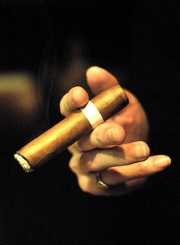
The six inch by 54 ring gauge No. 2, a torpedo-shaped vitola with a beautiful cap, features hearty pre-light aromas of espresso and cocoa. It manages to command attention without flash (or a band for that matter) due to its oily sheen, dark and textured wrapper leaf, and solid cross-section of filler tobaccos. Veins are plentiful but not a cause for concern.

Right off the bat I could tell this cigar had little in common with the Series Finos F500 I reviewed (and loved) earlier this month. While that Connecticut shade  smoke is mild and creamy, the Series Gran Cru No. 2 starts with a flavor that instantly reminds me of a 601 Green—specifically, a rich and well-rounded profile of black coffee, roasted nuts, leather, and cocoa bean.

I would say that this cigar, however, is better balanced, complete with subtle nuances that drift in and out. If you pay attention and smoke through the nose, for example, it isn’t difficult to detect a sweet flavor that’s akin to moist chocolate cake. Delicious. And with a fairly straight burn that requires just a few touch-ups, a smooth draw, and a solid ash, the combustion qualities are fine.

One drawback of this outstanding smoke is its limited availability and relatively high cost. As far as I can tell, the only way to get it is to either visit the shop in person or purchase it from Tesa’s online shop for $11.70 per single. Before you dismiss trying this cigar for those reasons—a huge mistake in my opinion—consider that Tesa donates 10% of its profits to benefit the housing, education, and sustenance of the Nicaraguan people.

Still, I realize that’s a lot to pay for a cigar you’ve probably never heard of. Despite that likelihood, I have no reservations about wholeheartedly endorsing the Tesa Series Gran Cru No. 2 and giving it four and a half stogies out of five.

[To read more StogieGuys.com cigar reviews, please click here.]

Patrick A

photo credit: Stogie Guys

Stogie Guys Friday Sampler CXXXVIII

24 Apr

In our ongoing effort to make StogieGuys.com as entertaining and informative as possible, each Friday we’ll post a mixed bag of quick cigar news and other items of interest. We call ‘em Friday Samplers. Enjoy.

Cigar bar1) Criminalizing the act of smoking inside tobacco shops is ridiculous at best and tyrannical at worst. But that’s exactly what some Vermont politicians are pushing for in a bill that would aggressively expand the Green Mountain State’s longstanding smoking ban. “If the right to smoke a cigar, pipe, or other tobacco product in…a cigar store is legislated away,” says Chris McCalla, legislative director for IPCPR, “then these same lawmakers will be voting to eliminate these businesses and the jobs and taxes that go with them.”

2) Meanwhile, in Nebraska, an IPCPR-supported bill was signed into law by Gov. Dave Heineman on Wednesday that excuses cigar bars from the state’s smoking ban. In order to qualify for the exemption, 10% or more of an establishment’s revenue must come from the sale of cigars or other tobacco-related items.

3) Inside the Industry: Don Pepin Garcia is expanding his My Father line with two new sizes—a Cervantes (6.5 x 44) and an Eminentes (5.6 x 46)—both of which retail for around $9 per cigar. Newman’s Nicaraguan puro line, El Baton, is also adding two new sizes, a Robusto and a Double Torpedo. In anticipation of the SCHIP tax that hit on April 1, cigar makers imported almost 50% more cigars in March 2009 than they did in March 2008, the last month before the tax hike went into effect.

4) Around the Blogs: Stogie Review reviews the Cabaiguan Guapos Maduro. Keepers of the Flame lights up a Siglo Limited Reserve. Cigar Inspector inspects the Sancho Panza Molinos. Cigar Spy tries the Cruzado. Matt smokes a La Gloria Serie R Maduro.

5) Deal of the Week: This “Mega Sampler III” features 16 fine cigars for the bargain price of $30. You get to try smokes by Gurkha, Rocky Patel, La Flor Dominicana, La Gloria Cubana, Camacho, Cusano, Cuesta-Rey, Alec Bradley, Hoyo de Monterrey, and CAO, all for under $2 per stick. Pick yours up here.

The Stogie Guys

photo credit: Flickr

Stogie Commentary: Griping While Lighting

14 Apr

Smoking cigars is far too enjoyable to let any one aspect of the hobby upset you very much. Still, there are a few things I see over and over again that get my goat, even if only momentarily. Here’s a handful. Feel free to add your own.

1. Bands applied too tightly or too sloppily. Having to struggle to break the glue bond and remove the band, only to have it tear the wrapper, is inexcusable. It makes me wonder about all that loving care cigar makers talk about when they don’t pay enough attention to this critical element.

complaint2. Catalogs with different prices for the same cigars. Usually, you’ll spot this with five-packs. They’ll be listed at one price in the advertisement that features the cigar and then listed with another, frequently lower, price in a section promoting five-packs. Is this simply slipshod work or deliberate deception?

3. Retailers who charge $4 or $5 for empty boxes. Let’s get real. With few exceptions, most cigar boxes are cheaply made and assembled. I think that’s good. They protect the cigars during shipment and on the shelves without adding significantly to the price. And selling them is surely better than throwing them away. But shouldn’t the price be close to the value?

4. Shoppers who buy online based solely on price and then complain about service. How do you think they can sell at those prices? Skimping—or virtually ignoring—some things is one of the ways they save money. Service is likely to be high on the hit list. So, don’t be surprised if you have trouble getting emails answered or telephone calls returned.

George E

photo credit: econedlink

Stogie Commentary: Smoking Bans Revisited

7 Apr

With traditionally cigar-friendly locales like Dallas and North Carolina set to enact smoking bans soon, today presents a good opportunity to revisit our case against these unjust and tyrannical laws.

No SmokingRegular readers will recall that, over the years, we’ve written a great deal about the lamentable spread of state and local smoking bans. While my colleagues and I try to keep our web magazine focused more on tobacco and less on politics, some issues—predominantly taxes and bans—cannot and should not be avoided.

So, here I intend to piece together many of the arguments we and others have made against the draconian smoking ban movement. My goals are threefold: (1) to potentially convince those who remain unconvinced, (2) to refresh our memories, and (3) to provide fellow brothers of the leaf with ammunition for their own debates on the subject.

Protect Whom?

One of our first commentaries on this subject was written back in May of 2006. It was prompted by city officials in Calabasas, California, who had approved a law that prohibits all smoking outdoors (except for in city-approved designated “smoking areas”). Given the complete lack of scientific data regarding outdoor secondhand smoke, I concluded that Calabasas officials weren’t trying to “protect” nonsmokers—they were trying to “protect” smokers, the very people who are consciously choosing to smoke.

That realization shouldn’t have come as a surprise. After all, the aim of every smoking ban, whether outdoors or inside private buildings, is for the government to control the actions of consenting adults.

The argument that bans are needed to protect the waitresses, bartenders, busboys, etc. who work in smoking facilities is also ill-conceived. As our friend Jacob Grier (a bartender) recently pointed out in an op-ed, there are many jobs that expose workers to riskier activities (such as Oregon’s requirement of full-service gas stations, which exposes attendants to harmful gas fumes). Besides, if secondhand smoke is a main concern, one can simply opt for a career or an employer that self-regulates tobacco use in the workplace.

Funny Science

In the open air or inside a bar, “health concerns” seem to be a mere ruse to disguise a movement of politicians, bureaucrats, and busybodies who would simply rather not smell, be near, or tolerate tobacco. Keep in mind that the notion of secondhand smoke as an epidemic is totally overblown.

While the AFL-CIO claims that “secondhand smoke is estimated to cause 65,000 deaths per year in the U.S.,” that number is just plain wrong. It’s 20 times the estimate of the Center for Disease Control, and even the CDC estimate was roundly rejected by a federal court. Thomas A. Lambert’s “The Case Against Smoking Bans” summarizes how various agencies and groups used biased “scientific” studies to make secondhand smoke appear to be risky enough to merit “a significant intrusion on the personal liberty of business owners and their customers.”

It’s Economics, Stupid

Famed George Mason University economist Walter E. Williams argues that smoking bans persist and spread despite common sense because “the cost to nonsmokers to impose their will on smokers, say, in a restaurant, bar, or airplane, is zero, or close to it.” The act of voting for politicians who will impose majority rule over minority rights is inexpensive, and zero-priced activities have sub-optimal outcomes.

Allowing the market to dictate smoking preferences, however, provides for choice. Some establishments will cater to smokers. Others, if demand merits, will spring up as profit-motivated business owners ban smoking to cater to desired preferences. Here in northern Virginia, in the absence of any smoking ban (though a statewide ban is forthcoming), many if not most restaurants are currently smoke-free.

Choose Liberty

The most compelling argument against smoking bans, in my opinion, is the notion that consenting adults have rights to do with their bodies what they so please, and private business owners have rights to offer the accommodations they so choose. Whatever the perceived social ill, government regulation and intervention is usually a “cure” worse than the disease.

Patrick A

photo credit: Flickr

Stogie Reviews: Vegas Cubanas Invictos

6 Apr

Vegas Cubanas InvictosMy first run-in with this Don Pepin Garcia line was, I’d have to say, not nearly as pleasant as the experience my colleague described about one year ago.

A product of Miami’s El Rey de Los Habanos factory, this five inch by 50 ring gauge Nicaraguan puro is covered in a slightly veiny “habano rosado claro” wrapper. The only information I could find on the filler is that it is a “Cuban-seed corojo 99 blend.”

The overall feel is spongy, but the perfectly applied triple cap clips off easily. The foot lights well and produces an abundant volume of smoke with a draw that’s a little on the loose side. While the initial blast of pepper is quickly replaced with strong flavors of cedar and leather, the first third is characterized by a finish that’s a little too harsh.

Progressing into second half, the cedar-like flavor remains prominent. The harsh finish fortunately mellows into the sort of sweet finish that I’ve grown to expect from cedar-flavored cigars. At this point, the burn starts to go awry and several corrections are needed before the smoke is complete.

It’s also worth noting that the label is adhered too firmly to the wrapper, which ultimately results in cracks. That setback, however, doesn’t seem to affect the cigar at all because the combustion malfunctions start before the band needs to be removed.

Ultimately, while the flavors are consistent throughout, they don’t seem to ever evolve. What’s more, the burn problems and the wrapper cracks combine to present a subpar smoking experience.

That’s why this blend, launched in 2005 before Don Pepin Garcia was a household name, isn’t one of my favorites. And the $7 per stick price point makes it easy to pass up on. For that, the Vegas Cubanas Invictos earns only two and a half stogies out of five.

[To read more StogieGuys.com cigar reviews, please click here.]

Patrick M

photo credit: Stogie Guys

Stogie Tips: Fill ’er Up

19 Mar

If you go looking for cigar bargains in these tough economic times, you will undoubtedly come across some sticks labeled “short filler,” “mixed filler,” “sandwich,” or “Cuban sandwich.” You may have to hunt for the description, though. While manufacturers love to tout “long filler,” they often aren’t nearly as eager to proclaim any of the other terms.

Short FillerHere‘s what the terms generally mean:

Long filler involves leaves that are folded or rolled to create the inner part of the cigar, which comprises the majority of the stick. This is where specific leaf sections and different leaves are combined to create the blender’s desired taste. I’ve never heard of a premium, hand-rolled cigar that is anything other than long filler.

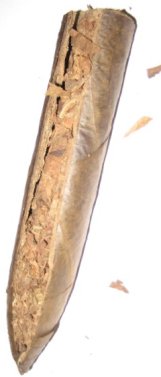
Short filler is the opposite. Small pieces of tobacco, and occasionally chopped stems, are secured inside the binder leaf. These pieces may be leftovers trimmed from leaves used in long filler cigars, or simply poorer grade tobacco chopped specifically for short filler.

Mixed filler is a combination of the two, though the longer part of the mix is often not true long filler but simply larger pieces that haven’t been fully chopped. And to make it more confusing, the term “sandwich” is sometimes used interchangeably with mixed filler.

Cuban sandwich, or sandwich cigars, are a mixture, often said to have the short filler rolled inside the longer filler leaves. Another variation is to use the longer leaves at the head so there’s less likelihood bits of tobacco will come off on the smoker’s tongue or lips.

Obviously, the poorer quality and inconsistency of the tobacco as well as the simplicity of construction means cheaper prices for any of these styles. However, that doesn’t automatically make them bad. I enjoy Pepin Garcia’s Benchmade, others swear by Arturo Fuente Curly Heads, Drew Estate’s La Vieja Habana, or the Tatauje Series P. Still others tell of finding bargains among the no-names.

Here are a few of my suggestions to help explore these lower-cost cigars:

1) Don’t buy bundles or boxes of anything without smoking it first. Period. Some of these cigars aren’t just bad, they’re horrible. Unless the seller is going to pay you to take them, there’s no bargain in an unsmokeable smoke.

2) Increase your odds of success by purchasing at a B&M. When you smoke one you like, buy more then and there. It’s likely they were rolled at the same time, using most, if not all, the same tobacco. Order online or wait to purchase and you could get a radically different taste.

3) Remember that short and mixed filler cigars from well-known manufacturers usually cost a little more because they’re much more likely to be well-constructed and consistent.

4)  Smoke these cigars even slower than usual. The draw is often loose, and the tobacco can burn ruinously hot. And don’t expect to nub many of them.

George E

photo credit: CigarPass.com

Stogie Reviews: Graycliff 1666 Pirate

17 Mar

With limited production, high prices, and few retailers, Graycliff is among the most elusive of the super premium cigar brands. And I suspect, for many of us, Enrico Garzaroli’s creations will become even more obscure as today’s economic turmoil continues to take its toll.

Graycliff 1666 PirateNevertheless, there are deals to be had. You can avoid this 6 inch by 52 ring gauge cigar’s regular price tag by picking it up in online samplers—a good strategy if you haven’t yet tried a 1666, since the Pirate vitola retails for $12-16 apiece by the box or 5-pack.

Various Graycliff lines, from Château Grand Cru and Espresso to Profesionale and Emerald, have earned high marks in mainstream publications like Cigar Aficionado and Smoke Magazine. To date, I’ve enjoyed every Graycliff I’ve encountered. I remain skeptical, however, that they’re worth the extremely high cost.

I set out to see if the 1666 blend would be an exception with the help of two Pirates from my humidor. Created to commemorate the year a church was built on the land that now holds the Graycliff Hotel, this line includes a Jaltepec maduro wrapper, an Ecuador Sumatra binder, and long filler tobaccos from Peru, Colombia, Brazil, and Mexico.

I found tons of hearty flavors off the dark, textured, and splotchy wrapper, including raisin, espresso, and cocoa. Dare I say it almost captures the prelight aroma of an Opus X?

While this stick is undoubtedly firmer than other Graycliffs (which isn’t saying much), it clips cleanly to reveal a light, airy draw. The foot lights effortlessly and starts with a surprisingly gentle flavor of plum, cream, and coffee. Each puff yields plentiful tufts of smoke.

As the straight burn progresses past the first inch, I am reminded of a moist chocolate cake flavor that is found in cigars with mata fina wrappers like the Alonso Menendez. Delicious. Maintaining a flavorful, medium-bodied profile throughout, the final third sees a slightly lamentable departure to more typical cigar tastes of tobacco and pepper.

The well-behaved burn stays even to the nub with only rare instances of required maintenance. The ash builds nicely off the foot for up to two inches, but it’s less sturdy than it looks; ash early and often if you’re smoking indoors or if you want to avoid a lapful.

All things considered, and even though this creation isn’t worthy of such an obnoxious price tag, the Graycliff 1666 Pirate earns four stogies out of five.

[To read more StogieGuys.com cigar reviews, please click here.]

Patrick A

photo credit: Stogie Guys